
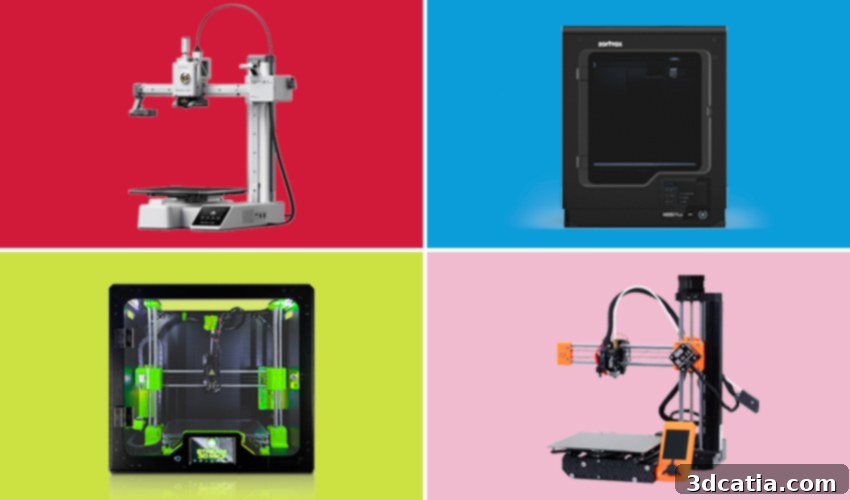
The Ultimate Guide to Choosing the Best 3D Printers for Education and Classroom Innovation
3D printers have rapidly transitioned from specialized industrial tools to invaluable educational assets, fundamentally transforming learning opportunities for students across all levels, from elementary school to advanced university programs. Integrating this cutting-edge technology into the classroom empowers students to transcend theoretical concepts, enabling them to literally bring their innovative ideas to life. Through hands-on engagement, students cultivate essential design skills, nurture their innate creativity, and foster a deep understanding of engineering principles. Older students, in particular, can gain invaluable practical experience by operating these machines, delving into their mechanics, and exploring the intricate processes of additive manufacturing. Given the accelerating integration of 3D printing across diverse industries such as engineering, product design, entertainment, and especially healthcare, providing students with early exposure to this technology is not just beneficial, but crucial for their future readiness in a rapidly evolving job market.
The educational sector’s growing demand for 3D printing solutions has prompted many leading manufacturers to develop specialized resources. Numerous 3D printer companies, including the notable brands highlighted in this guide, now offer comprehensive lesson plans, curriculum integrations, and a wealth of educational materials specifically designed to support teachers. While 3D printers are often a natural fit for Science, Technology, Engineering, and Mathematics (STEM) lessons, their pedagogical applications extend far beyond these traditional boundaries. Educators can leverage these versatile tools to create custom teaching aids on demand, craft engaging prototypes for historical studies, design anatomical models for biology, or even produce architectural miniatures for geography and art classes, adding an entirely new dimension of interactivity and engagement to their lessons. This flexibility ensures that 3D printing can enhance learning across the entire curriculum, stimulating interdisciplinary exploration.
Selecting the ideal 3D printer for a dynamic learning environment can be a challenging task, given the multitude of options available. To simplify this decision-making process for educators and institutions, we have meticulously compiled a list of top-tier 3D printers that are exceptionally well-suited for classroom use. Our rigorous selection criteria prioritize key factors vital for educational settings: affordability to ensure accessibility for various budgets, robust safety features paramount for student use, and intuitive ease of use to minimize setup time and learning curves for both teachers and students. Furthermore, our diverse selection aims to cater to a wide spectrum of educational needs, from foundational learning in primary schools to advanced prototyping in higher education. Each recommendation is presented alphabetically to facilitate easy comparison and navigation, ensuring you find the perfect additive manufacturing solution to inspire your students.
Bambu Lab A1 Mini: The Entry Point to Accessible 3D Printing
Bambu Lab has quickly established itself as a frontrunner in accessible 3D printing, and their tagline, “the go-to choice for a beginner,” accurately reflects their commitment to user-friendliness. Among their impressive lineup, the A1 Mini stands out as an exceptional choice for any classroom setting, from elementary schools introducing basic concepts to high schools exploring practical applications. Its key advantage for educational environments is its unparalleled ease of setup: the printer arrives largely pre-assembled, pre-squared, and boasts full auto-calibration. This means educators can have the machine operational in approximately twenty minutes, significantly reducing initial setup time and allowing more focus on teaching. For convenient project monitoring and management, the A1 Mini offers robust remote control capabilities via the Bambu Studio online platform or the intuitive Bambu Handy mobile app. This feature is particularly beneficial for teachers managing multiple students or projects, allowing them to oversee print progress without being physically present at the machine. A built-in camera further enhances this, enabling the recording of time-lapse videos of prints, which can be fantastic educational content for reviewing the printing process. Noise levels are often a concern in classrooms, and the A1 Mini addresses this with active motor noise canceling, ensuring the printer operates quietly and doesn’t disrupt the learning environment. Despite its beginner-friendly design, the A1 Mini does not compromise on quality. It delivers high-speed precision printing and features active flow rate compensation, resulting in consistently accurate and high-quality models. While the printer isn’t fully enclosed, making it unsuitable for advanced materials requiring temperature control, it is perfectly capable of printing with the most common and safest materials for schools, such as PLA, PETG, TPU, and their support filaments. With a maximum print size of 180 x 180 x 180 mm and impressive multi-color print capabilities, the A1 Mini allows students to create vibrant, intricate, and impactful small-scale designs, making it a fantastic and versatile addition to any educational program seeking to inspire innovation.
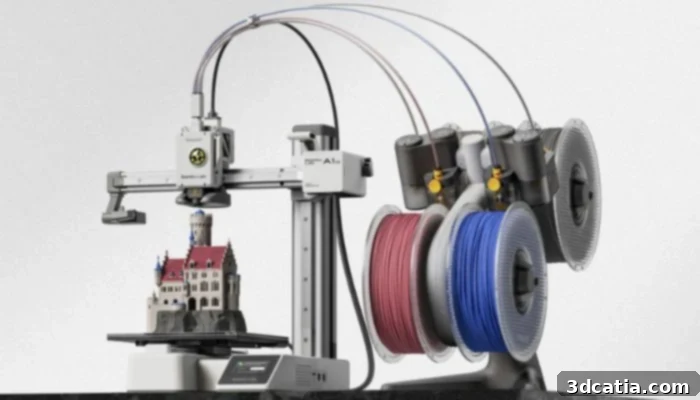
Photo credits: Bambu Lab
Flashforge Adventurer 5M Pro: Prioritizing Classroom Safety and Performance
The Flashforge Adventurer 5M Pro 3D printer is meticulously engineered with a strong emphasis on safety and ease of use, two paramount considerations for any educational environment where children and young adults will be operating technology. Its most significant feature for classroom integration is its completely enclosed structure. This design not only protects students from accidentally touching moving parts and hot components during the printing process, thereby significantly reducing the risk of accidents, but also helps in maintaining a stable print environment. Beyond physical safety, the Adventurer 5M Pro addresses air quality concerns, which are vital in enclosed classroom spaces. It incorporates an advanced internal filtration system featuring both HEPA and activated carbon filters, effectively blocking an impressive 99% of particulate matter and volatile organic compounds (VOCs). This ensures a cleaner, healthier, and safer air quality within the classroom, making it suitable for prolonged use. Furthermore, an integrated air circulation system actively maintains an optimal internal temperature, a feature that broadens its compatibility with various types of filaments beyond just PLA, allowing for more diverse material exploration in projects. The printer’s flexible printing plate is another practical advantage, particularly for younger students or those new to 3D printing, as it allows for effortless removal of printed objects once they have cooled, minimizing damage to prints and simplifying the post-processing stage. The Adventurer 5M Pro arrives 95% pre-assembled, meaning that educators or students can quickly set it up and begin printing, maximizing valuable instructional time and reducing the initial technical barrier to entry. This combination of robust safety, advanced filtration, and user-friendly design makes it an ideal choice for educational institutions seeking a reliable and responsible 3D printing solution.
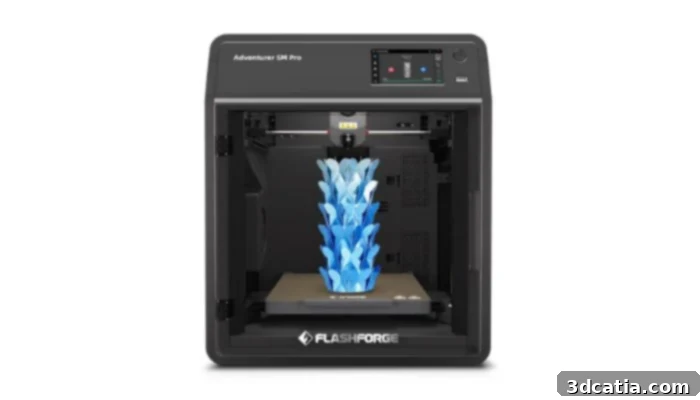
Photo credits: Flashforge
CoLiDo 3.0 WiFi 3D Printer: Simplicity and Quality for Learning
The CoLiDo 3.0 WiFi 3D Printer, originally developed by CoLiDo (and now part of IT3D’s portfolio), is a desktop additive manufacturing solution that is exceptionally well-suited for educational environments. One of its standout innovations is its patented glass platform, which significantly simplifies the post-printing process. Once a part has cooled, it can be easily removed by hand, eliminating the need for specialized tools and reducing the risk of damaging delicate prints or the print bed itself. This feature is particularly beneficial for students, making the entire experience smoother and more accessible. With a respectable build volume of 225 x 145 x 140 mm and a print resolution capability of up to 0.1 mm, the CoLiDo 3.0 WiFi is capable of producing high-quality 3D models with excellent detail, suitable for a wide array of educational projects, from intricate science models to creative art pieces. Its lightweight design and virtually odorless operation are critical attributes for any training or classroom setting, ensuring it can be comfortably integrated without creating distractions or concerns about air quality. The printer’s one-button control panel exemplifies its commitment to ease of use, making operation intuitive even for novice users. Connectivity options include both USB and SD card, offering flexibility for transferring print files. The modern design, featuring a transparent housing, serves an important pedagogical purpose by allowing students to clearly observe the entire 3D printing process as it unfolds. This visual learning experience can deepen their understanding of additive manufacturing. Coupled with its low noise level of only 45dB, the CoLiDo 3.0 WiFi is an ideal choice for quiet learning environments, minimizing disruption while maximizing educational impact.
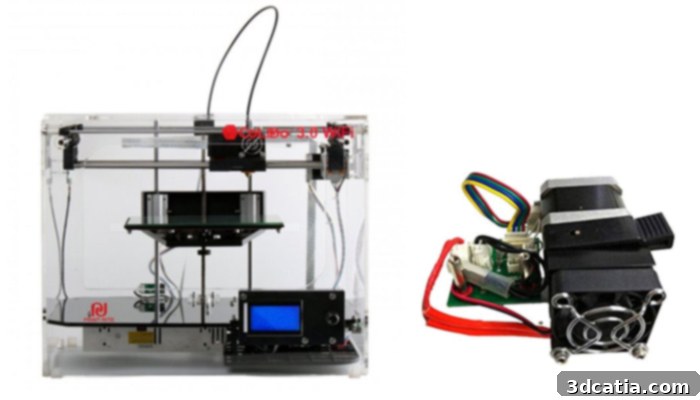
The CoLiDo 3.0 WiFi 3D printer is on the left, and the CoLiDo 3.0 WiFi-compatible extruder is on the right (Photo credits: CoLiDo)
Anycubic Kobra 2 Pro: Speed and Versatility for Dynamic Classrooms
The Anycubic Kobra 2 Pro 3D printer presents itself as a highly compelling option for educational purposes, distinguished by its exceptional ease of operation and an array of features designed to ensure an efficient and productive user experience. A standout characteristic is its automatic leveling system, LeviQ 2.0, which dramatically simplifies the preparation process. This intelligent system eliminates the need for complicated manual adjustments, freeing up valuable instructional time for teachers and allowing students to focus more on design and iteration rather than printer calibration. In a fast-paced educational environment where project timelines can be tight, the Kobra 2 Pro’s maximum print speed of 500 mm/s is a significant advantage. This high speed allows for the rapid completion of projects, meaning students can iterate more, learn more quickly from their designs, and tackle a greater number of assignments within a given period. The generous print volume of 250 x 220 x 220 mm is well-suited for a wide variety of school projects, accommodating everything from individual student models to collaborative class endeavors. Furthermore, its robust dual-gear direct extruder offers broad compatibility with various common filaments, including PLA, ABS, PETG, and TPU, allowing students to explore different material properties and their applications. The printer also incorporates a flexible, magnetic build plate, which is a game-changer for part removal. This feature makes it incredibly easy to detach finished objects without force, significantly reducing the risk of damaging prints or the print surface and ensuring a smooth workflow for students of all skill levels. The Anycubic Kobra 2 Pro effectively balances performance, versatility, and user-friendliness, making it an excellent tool to enhance practical learning in any academic setting.
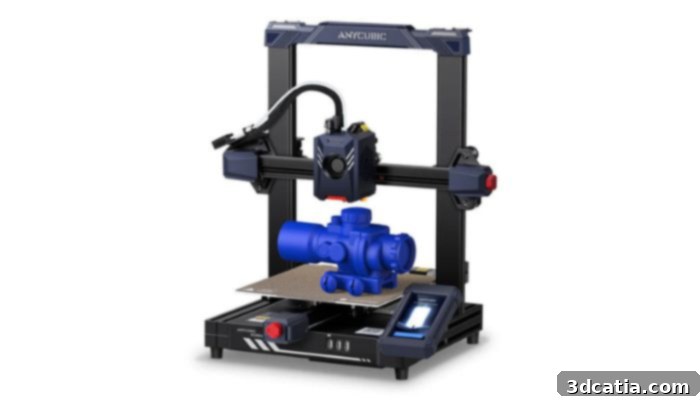
Photo credits: Anycubic
LulzBot Mini 3 Desktop Solution: Robust Prototyping for Learning
The LulzBot Mini 3 is a highly capable and versatile 3D printer that stands as an ideal solution for a multitude of applications within educational settings, encompassing prototyping, the creation of detailed educational models, and facilitating diverse creative projects. Developed by the renowned company LulzBot, this particular solution expertly merges robust performance with intuitive ease of use, making it accessible for both educators and students. A key feature for modern classrooms is its integrated Wi-Fi connectivity, which enables print jobs to be wirelessly sent from any networked device. This flexibility significantly streamlines project management and workflow, allowing students to submit designs from their workstations and teachers to queue prints efficiently. With its robust and compact, space-saving design, the LulzBot Mini 3 fits comfortably in various learning environments, from cramped classrooms to dedicated lab spaces. Despite its compact footprint, it offers a respectable print volume of 180 x 180 x 180 mm, sufficient for a wide range of educational tasks. It is an excellent choice not just for classrooms but also for offices and home-based learning, demonstrating its adaptability. The enhanced user interface, featuring a responsive touch panel, simplifies navigation and empowers users to make real-time adjustments to print settings, fostering a deeper understanding of print parameters. Furthermore, the LulzBot Mini 3 boasts advanced calibration technology and upgraded hardware, ensuring consistently accurate and high-quality prints—a critical aspect for reliable educational output. Designed for immediate usability, the LulzBot Mini 3 is ready to operate right out of the box. Its automatic tray leveling and nozzle cleaning functions are particularly beneficial for novice users, as they eliminate common hurdles and optimize the manufacturing experience, allowing students to focus on the creative and problem-solving aspects of 3D printing rather than tedious maintenance.
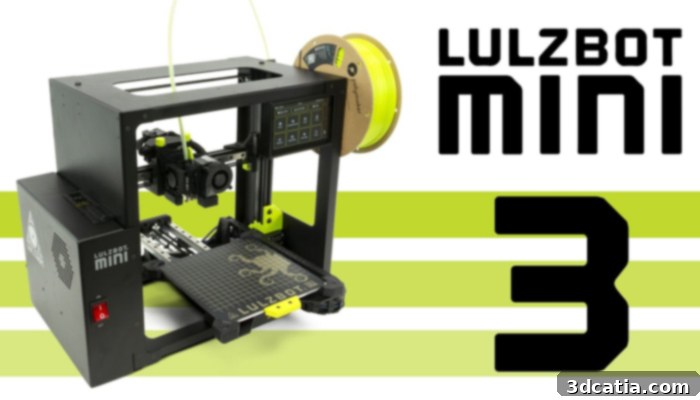
Photo credits: Lulzbot
Zortrax M200 Plus 3D Printer: Reliable Performance for Comprehensive Education
The Zortrax M200 Plus 3D printer is meticulously engineered to deliver consistent, reliable performance, making it an ideal candidate for demanding educational environments where machines are often subjected to prolonged periods of continuous use. This “plug-and-play” printer from Zortrax distinguishes itself with an impressive ease of use, being ready for operation almost immediately after installation. Its intuitive touch screen provides direct, on-device control, while robust remote management capabilities via Wi-Fi or Ethernet offer unparalleled flexibility for educators, allowing them to monitor and control prints from anywhere on the school network. These features collectively make the M200 Plus an exceptional solution for educational institutions, catering effectively to all levels from primary school students taking their first steps in 3D design to high schoolers working on complex STEM projects. The printer is equipped with a suite of advanced features designed to enhance the learning and operational experience. These include end-of-material detection, which prevents failed prints due to filament depletion and saves valuable material; a high-performance cooling system that ensures optimal print quality for various materials; and an integrated camera for real-time remote monitoring of prints, allowing teachers to observe student progress or troubleshoot issues from a distance. Its broad compatibility with a wide range of filaments encourages students to experiment with different material properties, fostering a deeper understanding of material science. With a practical print volume of 200 x 200 x 180 mm and robust integrated safety features, the Zortrax M200 Plus is perfectly aligned with the stringent requirements and dynamic challenges of modern educational establishments, providing both reliability and a rich learning experience.
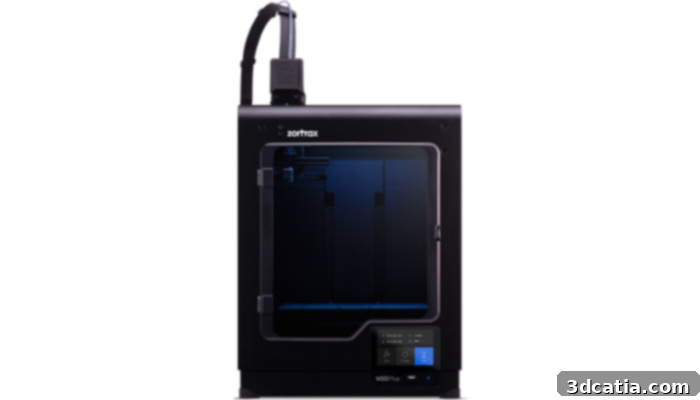
Photo credits: Zortrax
Volumic MK3+ 3D Printer: High-Performance, Made in France for Schools
The French manufacturer Volumic 3D has earned a reputation for producing fast, scalable FFF (Fused Filament Fabrication) machines, often tailored for demanding professional applications. However, their MK3+ 3D printer remarkably demonstrates that high performance can also be packaged into an accessible and easy-to-use solution, making it particularly well-suited for younger users, especially in secondary schools and technical colleges. This printer offers a substantial print volume of 300 x 200 x 310 mm, providing ample space for larger projects and facilitating multi-component assemblies – ideal for collaborative learning. Its advanced thermal capabilities include a print bed that can reach up to 100°C and a nozzle capable of 300°C. This wide temperature range is crucial for unlocking compatibility with a diverse array of materials beyond standard PLA, enabling students to delve into advanced material properties and experiment with engineering-grade filaments. The intuitive 5-inch touchscreen simplifies operation and allows for easy monitoring of print jobs, empowering students to manage their projects with greater independence. A significant educational advantage of the MK3+ is its compatibility with over 60 different materials. This extensive material palette encourages students to experiment, compare, and understand firsthand the varying mechanical, aesthetic, and functional properties that different filaments offer. This hands-on material science exploration is invaluable for budding engineers and designers. Designed to seamlessly integrate into a school environment, the Volumic MK3+ offers an exceptional first experience of additive manufacturing, providing students with a robust and versatile tool to develop critical skills, all while proudly being “Made in France,” emphasizing local manufacturing quality and support.
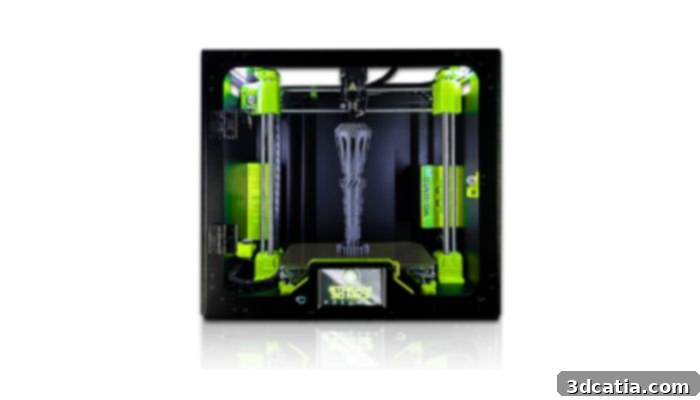
Photo credits: Volumic
Original Prusa MINI+: Compact Power for Every Classroom
The Original Prusa MINI+ stands out as one of the most highly regarded 3D printers for educational use, primarily due to its combination of user-friendliness, reliability, and affordability. Offered in both kit and semi-assembled versions, it provides an excellent opportunity for students to learn about the inner workings of a 3D printer by building it themselves (with supervision for the kit version), fostering a deeper understanding of its components and functions. Prusa also offers the convenient option of purchasing a separate print chamber, allowing schools to transform the open-frame MINI+ into an enclosed and more secure printer. This enclosure enhances safety by containing potential fumes and reducing access to hot parts, making it even more suitable for a bustling classroom environment and enabling the use of a wider range of filaments. This FDM 3D printer is renowned for its ease of use and assembly, compact footprint, and impressive print speed, making it an efficient tool for educational projects. It boasts a solid print volume of 18cm cubed, which is ample for most school-level assignments and prototypes. Advanced features like automatic printbed calibration ensure consistent first layers and reliable adhesion, minimizing print failures and saving precious classroom time. The ability to use replaceable nozzles offers flexibility for different print requirements and allows for easier maintenance. Connectivity options include Ethernet and Wi-Fi, providing versatile ways to send print jobs, along with USB printing capability for direct file transfer. A vibrant color LCD screen makes navigation intuitive and provides clear feedback on print status. According to Prusa, the MINI+ might be small in stature, but its capabilities rival those of much larger machines, offering a robust and high-quality 3D printing experience that can truly inspire and educate learners without breaking the bank.
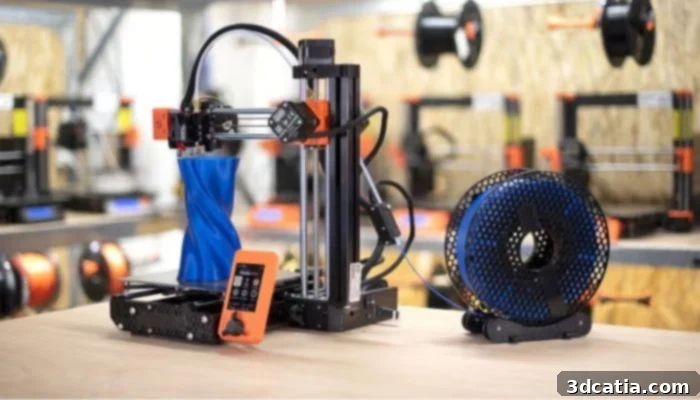
Photo credits: Prusa
Robo E3 from Robo 3D: Built for Educational Excellence
Robo 3D has carved a niche for itself by specializing in the production of 3D printers tailored specifically for educational purposes, and the Robo E3 exemplifies this dedication. It is therefore perfectly positioned for widespread use in schools, universities, and other institutions, while also being an excellent choice for motivated individual makers and students exploring additive manufacturing at home. The printer is designed with a core philosophy of being safe, smart, and simple, ensuring that even young children and absolute beginners can comfortably and confidently take their initial steps into the exciting world of 3D printing. With a manageable weight of 9 kg and compact dimensions of 388 x 340 x 405 mm, the Robo E3 is engineered for easy integration into typical classroom setups or similar learning environments without occupying excessive space. Its print bed, measuring 150 x 150 x 150 mm, is well-suited for a wide range of educational projects, providing enough volume for meaningful creations without being overwhelming. A standout feature is the auto-calibration function, which automatically adjusts the print bed for optimal leveling. This significantly reduces setup time and frustration, allowing educators to focus on teaching concepts rather than printer maintenance. The inclusion of a heated print bed further enhances print quality and material adhesion, particularly important when experimenting with different filaments. This versatile desktop printer is capable of processing around 30 different types of filaments, offering students ample opportunity to explore various material properties, all at an efficient printing speed of 100 mm/sec. Embodying a true “plug-and-play” philosophy, the Robo E3 makes both installation and the initial printing process incredibly user-friendly, ensuring a smooth and engaging introduction to 3D printing for everyone.
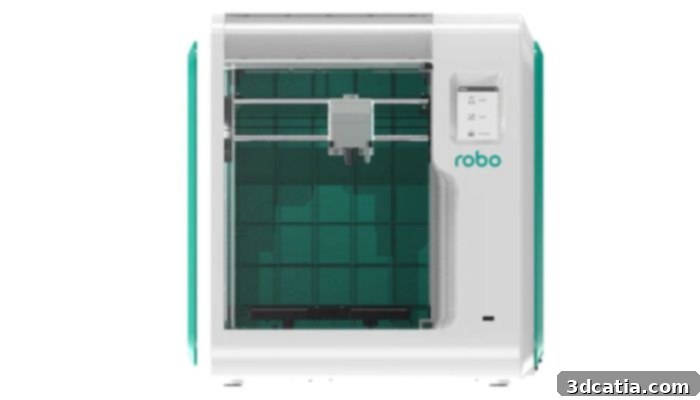
Photo credits: Robo 3D
UltiMaker MakerBot Sketch Sprint 3D Printer: Speed, Safety, and Ecosystem for Education
UltiMaker, a prominent name in professional 3D printing, has recently reinforced its commitment to the education sector with the release of the MakerBot Sketch Sprint. This FDM (Fused Deposition Modeling) solution is purpose-built and specifically designed for the unique demands of education and training environments, making it an outstanding choice for classroom integration. According to the manufacturer, the MakerBot Sketch Sprint masterfully combines impressive speed with unwavering quality, reaching print speeds of up to 300 mm/s without compromising the precision and finish of the printed objects. This efficiency is critical in educational settings where time is often limited and multiple students need access. A paramount feature for classroom safety is its fully enclosed printing chamber. This design ensures maximum safety for students by containing hot components, moving parts, and any potential fumes, creating a secure and worry-free learning environment. The printer is robust, weighing 22.26 kg, and offers a substantial print volume of 220mm x 220mm x 220mm, capable of accommodating a wide array of educational projects. It comes equipped with a versatile 0.4 mm nozzle and offers a 200-micron resolution, balancing speed with detail. Its maximum extruder temperature of 280°C and heated build plate capable of reaching 110°C enable compatibility with a broader range of educational materials, allowing students to explore more advanced filaments. An integrated color touchscreen provides an intuitive interface for students and teachers to manage print jobs directly. Crucially, the MakerBot Sketch Sprint seamlessly integrates into the UltiMaker ecosystem, allowing students to utilize powerful software like UltiMaker Cura for slicing and design preparation, and to manage their projects efficiently in the cloud with the Digital Factory function. This comprehensive hardware and software ecosystem makes the Sketch Sprint not just a printer, but a complete solution for fostering design thinking, engineering skills, and collaborative learning in the modern classroom.
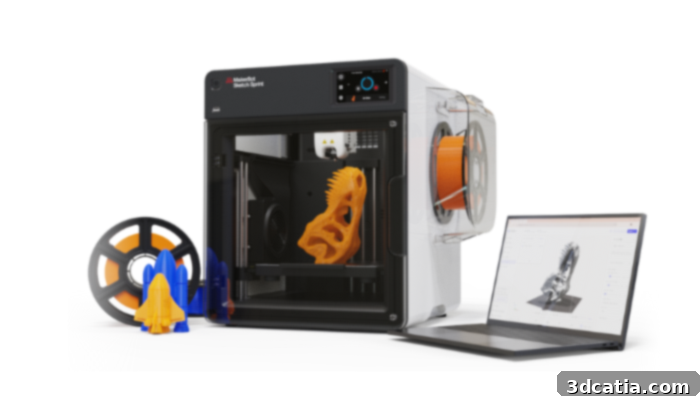
Photo credits: UltiMaker
The integration of 3D printers into educational environments represents a profound shift in how students engage with learning, moving from abstract concepts to tangible, real-world applications. These innovative tools empower learners to become active creators, fostering critical skills in design, problem-solving, engineering, and digital literacy – competencies that are indispensable in the 21st century. Each of the 3D printers highlighted in this guide offers unique advantages, carefully selected for their suitability in diverse classroom settings, prioritizing safety, ease of use, and educational value. From the beginner-friendly setup of the Bambu Lab A1 Mini to the robust safety features of the Flashforge Adventurer 5M Pro, the intuitive operation of the CoLiDo 3.0 WiFi, the speed of the Anycubic Kobra 2 Pro, the prototyping capabilities of the LulzBot Mini 3, the reliability of the Zortrax M200 Plus, the material versatility of the Volumic MK3+, the compact power of the Original Prusa MINI+, the tailored educational design of the Robo E3, and the comprehensive ecosystem of the UltiMaker MakerBot Sketch Sprint – there’s a perfect 3D printing solution to ignite curiosity and drive innovation in every learning environment. By equipping students with these powerful tools, educators can truly inspire the next generation of engineers, designers, artists, and problem-solvers, preparing them for a future where creativity and practical skills are paramount.
We’d love to hear your thoughts! Which of these fantastic 3D printers would you choose for your learning environment, and how do you envision using it to inspire and engage your students? Share your insights and ideas in a comment below, or connect with us on our LinkedIn, Facebook, and Twitter pages! Don’t miss out on the latest advancements and breaking news in additive manufacturing – sign up for our free weekly Newsletter here to get all the essential 3D printing news delivered straight to your inbox! You can also explore a wealth of educational and informational content by visiting our YouTube channel.