
Weekly Innovations: How 3D Printing and Additive Manufacturing Are Revolutionizing Industries
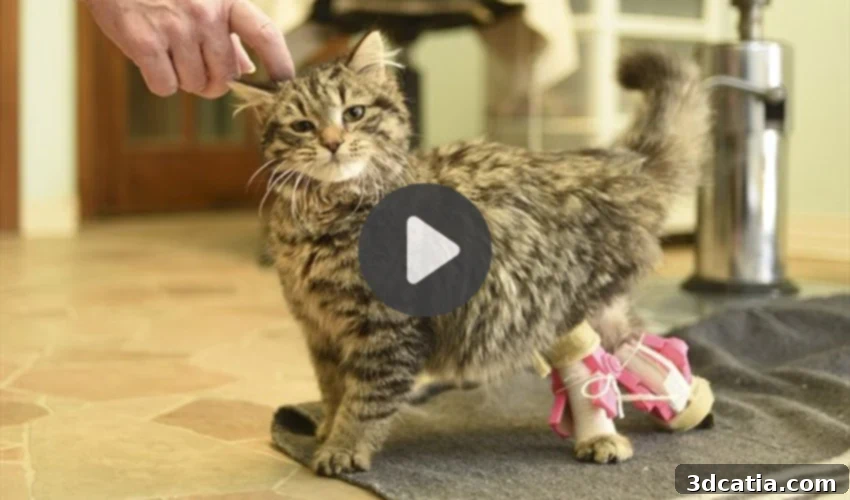
Welcome to our weekly roundup of the most captivating developments in the world of 3D printing. Each week, we scour the landscape of additive manufacturing to bring you the top five videos showcasing how this transformative technology is profoundly shaping and changing our society. From heartwarming medical applications that restore mobility to cutting-edge industrial processes and strategic military advancements, 3D printing continues to push the boundaries of what’s possible. This edition highlights incredible stories, including Carly the cat walking again thanks to custom 3D printed braces, the use of additive manufacturing to heal a broken collarbone, and much more. Dive into these fascinating insights and discover the diverse impact of digital fabrication. For even more compelling 3D printing content, be sure to visit and subscribe to our YouTube channel. We hope you enjoy this week’s selection and have a fantastic Sunday!
Top 1: Restoring Mobility – Carly the Cat Walks Again Thanks to 3D Printing
In an incredibly heartwarming display of how 3D printing can enhance quality of life, two innovative brothers from Guelph, Ontario, utilized their personal 3D printer to create custom leg braces for Carly the cat. Carly suffered from a debilitating condition that severely weakened her hind legs, making even simple movements like walking incredibly difficult and painful. Her story gained widespread attention through a social media campaign aimed at finding her a loving home, which ultimately led to this life-changing intervention. The precision and customization offered by 3D printing were crucial here; traditional off-the-shelf braces would not have provided the perfect fit necessary for Carly’s specific needs. The brothers were able to design and print lightweight, durable orthotics tailored exactly to her anatomy, providing the support she needed to regain her mobility. This inspiring case exemplifies the profound impact additive manufacturing is having not just in human medicine, but also in veterinary science, offering hope and practical solutions for pets suffering from similar conditions. It underscores the accessibility of modern technology, empowering individuals to create custom, life-altering devices with relative ease. Witness Carly’s incredible journey in the video below:
Top 2: Duke Engineering Students Leverage 3D Printing for Athlete Recovery
The innovative applications of 3D printing in the medical field continue to expand, with collegiate engineering students demonstrating its potential for rapid athletic recovery. Clark Bullet and Kevin Gesmann, senior engineering students at Duke University, garnered national attention on ‘The Exchange’ for their remarkable project. They played a pivotal role in getting Duke University quarterback Daniel Jones back on the field after he sustained a broken collarbone. Utilizing their engineering expertise and access to advanced 3D printing technology, the students designed and fabricated a custom protective brace that allowed Jones to safely return to play sooner than expected. This case highlights how 3D printing enables highly personalized medical devices, offering superior fit, comfort, and protection compared to mass-produced alternatives. The ability to quickly prototype and iterate on designs ensures optimal performance and support, which is critical for athletes. This isn’t an isolated incident; additive manufacturing has been increasingly deployed for various medical applications, from custom prosthetics and surgical guides to biocompatible implants and advanced orthotics for treating fractures. As the technology continues to evolve, we can anticipate a future where customized medical devices become even more commonplace, significantly improving patient outcomes and accelerating recovery times across a wide spectrum of injuries and conditions. Discover the full story behind their ingenuity in the video below!
Top 3: BASF Embraces 3D Printing for Enhanced Site Efficiency and Optimization
The German chemical giant, BASF, a leader in its industry, is demonstrating the significant advantages of integrating additive manufacturing into its vast operational facilities. The company is actively adapting its traditional industrial designs to leverage the unique capabilities of 3D printing, thereby transforming its approach to manufacturing and maintenance. This strategic shift has enabled BASF to 3D print critical parts in exceptionally short timeframes, dramatically increasing the overall efficiency of complex chemical processes. For a company of BASF’s scale, even marginal improvements in efficiency can lead to substantial savings and operational advantages. Felix Volkmann, a Design Engineer at BASF, elaborates in the featured video on the immense opportunities that additive manufacturing presents, particularly for spare parts production and the optimization of existing components. By utilizing 3D printing, BASF can produce highly customized parts with intricate geometries that would be difficult or impossible to achieve with conventional manufacturing methods. This not only reduces lead times and inventory costs associated with traditional spare parts but also allows for on-demand production, minimizing downtime and streamlining maintenance operations. The adoption of 3D printing also opens avenues for topological optimization, leading to lighter, yet stronger components, and improved fluid dynamics within their chemical processing equipment. This proactive integration of digital manufacturing highlights a broader trend across heavy industries, where 3D printing is recognized as a key enabler for Industry 4.0, fostering agility, innovation, and sustainability. Discover how BASF is revolutionizing its operations by checking out the video!
Top 4: Uniform Wares and Betatype Pioneer 3D Printed Titanium Watch Straps
In a testament to how 3D printing is re-imagining even the most traditional industries, Uniform Wares, a distinguished watchmaker, partnered with additive manufacturing specialist Betatype to push the boundaries of luxury watch design. The collaboration aimed to explore the inherent advantages of 3D technologies within an industry deeply rooted in heritage and meticulous craftsmanship. The exciting results of this partnership led to the production of an exceptionally high-quality, additively manufactured titanium watch strap for their 2019 collection. Titanium, renowned for its strength, lightweight properties, and hypoallergenic nature, is an ideal material for premium watch components. However, achieving complex, intricate designs with traditional machining methods can be prohibitively expensive and time-consuming. Through 3D printing, Uniform Wares and Betatype were able to develop a sophisticated mesh strap that was not only significantly stronger and lighter than anything achievable through conventional manufacturing but also offered unparalleled design freedom. This innovative approach allowed them to overcome the typical time limitations faced by traditional production methods, accelerating design iterations and bringing advanced concepts to market faster. This project exemplifies how 3D printing is not just a tool for industrial efficiency but also a catalyst for innovation in luxury consumer goods, enabling bespoke designs, enhanced material performance, and a fresh perspective on timeless accessories. Learn more about this fusion of tradition and technology in the video below!
Top 5: The US Army’s Strategic Investment in Battlefield 3D Printing
The United States Army is making substantial investments in 3D printing technology, recognizing its immense potential to revolutionize military logistics, readiness, and battlefield sustainment. This strategic initiative focuses on providing soldiers with on-demand access to replacement reliable and ultra-strong metal parts, a critical need in complex and often remote operational environments. As comprehensively explained in the featured video, additive manufacturing is poised to dramatically impact the military’s supply chain, transforming how equipment is maintained and missions are executed. The traditional logistical challenge of transporting vast quantities of spare parts to various forward operating bases is immense. With 3D printing, the paradigm shifts: instead of meticulously planning and shipping every conceivable piece of equipment, it could become sufficient to deploy the raw materials and a robust 3D printer. This capability would enable soldiers and support personnel to fabricate any needed spares, tools, or even custom components on-site and on-demand. This not only significantly reduces the logistical footprint and associated costs but also drastically cuts down lead times for critical parts, ensuring that vital equipment remains operational and soldiers are always mission-ready. The U.S. Army Combat Capabilities Development Command Research Laboratory’s new research into these advanced capabilities, which we covered in more detail earlier this week, underscores the long-term vision for this technology. From rapid prototyping of new combat gear to localized production of replacement vehicle parts, 3D printing offers an unparalleled level of agility and resilience to military operations. Discover the full scope of this groundbreaking military application in the video below!
What did you think of this week’s #TOP5 videos showcasing the power of 3D printing and additive manufacturing? We’d love to hear your thoughts! Drop a comment below or join the conversation on our Facebook and Twitter pages. And don’t forget to sign up for our free weekly Newsletter to keep completely updated on all the latest news, innovations, and trends in the dynamic 3D printing industry, delivered straight to your inbox!