
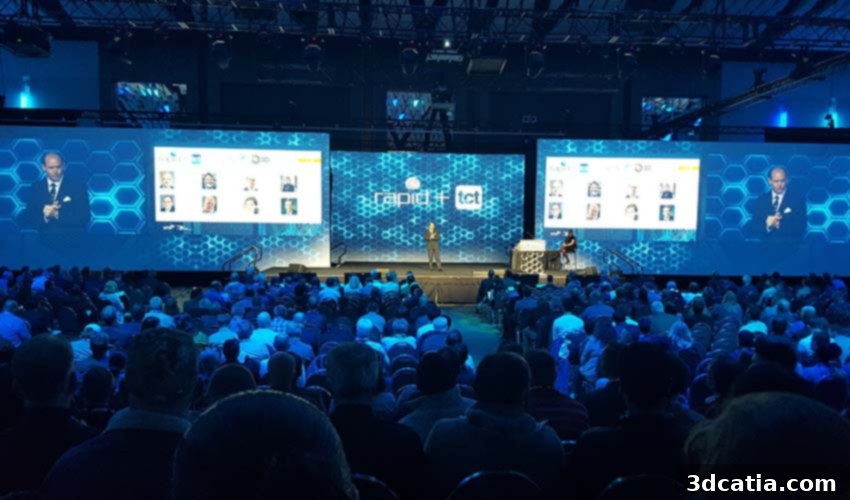
RAPID + TCT 2019: Unveiling the Future of Additive Manufacturing Through Groundbreaking Innovations and Strategic Partnerships
The landscape of additive manufacturing (AM) is undergoing an unprecedented transformation, fueled by the relentless emergence of new technologies, sophisticated machines, and advanced materials. This rapid evolution underscores the critical importance of industry events like RAPID + TCT 2019, which serves as a pivotal platform for innovation and collaboration. For industry professionals, it presented a unique opportunity to connect with key stakeholders in the sector, discover cutting-edge solutions, and gain invaluable insights into the latest technological advancements and strategic alliances. Indeed, “partnership” emerged as a defining theme of the event, with numerous companies forging synergistic collaborations to drive mutual growth and accelerate industry-wide progress. Attracting over 6,000 industry peers and 300 exhibiting companies, RAPID + TCT 2019 was a vibrant hub for networking and knowledge exchange. Below, we delve into some of the most impactful announcements that captured our attention.
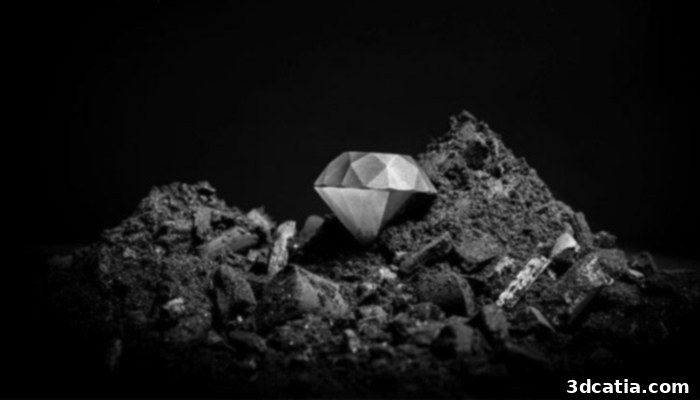
1. Sandvik Unveils the World’s First 3D Printed Diamond Composite
In a monumental leap for material science, Sandvik introduced a revolutionary composite material, claiming it to be the first of its kind to incorporate diamond. This groundbreaking material is produced using a Stereolithography (SLA) process, where a specialized resin, imbued with diamond powder and a polymer, is selectively cured by light. The ingenious formulation allows the resulting composite to largely retain the extraordinary physical properties of pure diamond, particularly its unparalleled hardness and wear resistance. Anders Ohlsson, Delivery Manager at Sandvik Additive Manufacturing, articulated the significance of this achievement, stating, “Historically, 3D printing in diamond was something that none of us imagined was achievable. Even now we are just starting to grasp the possibilities and applications that this breakthrough could have.” While the printed diamond composite does not possess the optically glossy characteristics typically associated with natural diamonds – focusing instead on functional performance – its exceptional hardness presents immense potential. This innovation is poised to revolutionize applications in demanding industries such as aerospace and automotive, where ultra-hard, wear-resistant components are critical for enhancing durability and operational efficiency. Imagine cutting tools, drill bits, or specialized wear parts manufactured with this material, offering extended lifespan and superior performance in extreme conditions.
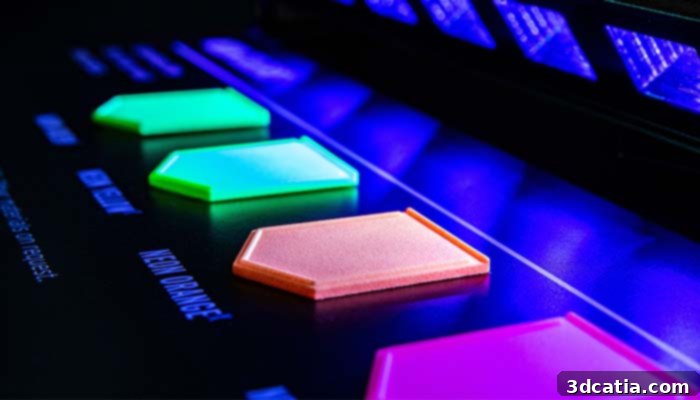
2. DyeMansion Launches Expansive New ColorsX Line for Advanced Post-Processing
Addressing the growing industrial demand for sophisticated color solutions in the additive manufacturing sector, DyeMansion, the acclaimed post-processing expert from Bavaria, presented its innovative ColorsX line. At RAPID + TCT 2019, DyeMansion showcased a vibrant spectrum of new colors designed to achieve perfect finishes, particularly for high-end automotive parts and eye-catching neon applications. This expansion of their color palette signifies a major step towards enabling true aesthetic and functional customization for 3D printed components. Kai Witter, Chief Customer Officer at DyeMansion, emphasized the strategic importance of this launch, noting, “Some of our earliest customers who made use of DyeMansion Print-to-Product technologies for serial production are from the Automotive and Lifestyle industries. While working closely with our customers, joint strategies are always about creating even more value to their businesses. So, I feel very delighted to now offer additional value creating products.” The ColorsX line is not merely about adding more hues; it’s about providing industrial-grade consistency, durability, and a flawless surface quality that meets stringent industry standards. This enables manufacturers to seamlessly integrate 3D printed parts into final products with a polished, professional aesthetic, further bridging the gap between prototyping and mass production.
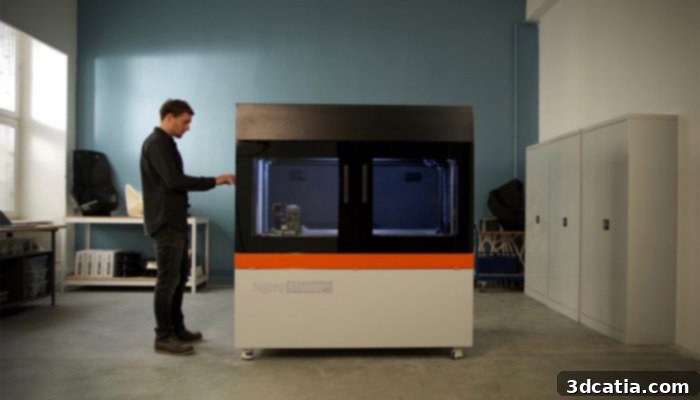
3. BigRep Introduces the STUDIO G2: A New Standard for Large-Format Industrial 3D Printing
BigRep, the renowned German manufacturer specializing in large-format 3D printers, unveiled its latest innovation in Detroit: the STUDIO G2. This advanced machine represents a significant evolution from its predecessor, the BigRep STUDIO, designed to meet the rigorous demands of industrial applications. A key enhancement of the STUDIO G2 is its new slicing software, “BLADE,” which empowers users with superior control over printing parameters, enabling greater precision and optimization for complex geometries. The printer boasts an impressive build volume of 500 x 1000 x 500 mm, complemented by a pressure bed that can be heated to 100ºC and a fully temperature-controlled printing chamber. These features are crucial for ensuring material stability and part accuracy, particularly when working with engineering-grade polymers prone to warping. The STUDIO G2 is meticulously engineered for a diverse range of industrial tasks, including large-scale rapid prototyping, efficient production of tooling and jigs, creation of durable molds, and the direct manufacturing of functional end-use parts. Dr. Stephan Beyer, BigRep CEO, commented on the launch, stating, “The STUDIO G2 marks a new generation of printers and is an excellent addition to our growing range of large format 3D printers for the industry. The STUDIO G2 is based on proven, successful technology, but has been optimised for industrial customers with critical features.” This machine solidifies BigRep’s commitment to providing reliable, high-performance additive solutions for the industrial sector.
4. Origin One 3D Printer: Redefining High-Volume Production with P³ Technology and Strategic Partnerships
Origin, a dynamic Californian startup founded in 2015, has made a name for itself with its pioneering Open Additive Production platform. This innovative approach offers an alternative manufacturing method characterized by open materials, expandable software, and modular hardware, all designed to address the surging demand for higher quality materials and unprecedented customization capabilities. At RAPID + TCT 2019, Origin marked another significant milestone with the unveiling of their new machine: the Origin One 3D printer. This advanced SLA/DLP 3D printer leverages Origin’s proprietary Programmable Photopolymerization (P³) technology. While it features a build volume of 192 x 108 x 350 mm—perhaps not the largest, but notably tall for specific applications—its core strength lies in enabling high-volume production of end-use parts with exceptional detail and surface finish. Beyond the hardware, Origin also announced an exciting strategic partnership with ECCO, the globally renowned shoe manufacturer. ECCO will integrate Origin’s 3D printing solution into its Research & Development department in Denmark. This collaboration is set to dramatically reduce development time, significantly lower costs associated with prototyping and iteration, and accelerate the time-to-market for ECCO’s innovative footwear products, showcasing the transformative power of additive manufacturing in consumer goods.
5. XJet’s Carmel 1400: Empowering Marvel Medtech in the Fight Against Breast Cancer
A compelling announcement at RAPID + TCT 2019 highlighted the life-changing potential of additive manufacturing in healthcare: the American startup Marvel Medtech acquired the Carmel 1400 3D printer from XJet. This sophisticated system is powered by XJet’s NanoParticle Jetting™ (NPJ) technology, renowned for its ability to produce highly accurate and intricate ceramic and metal parts. Marvel Medtech plans to utilize the Carmel 1400 to 3D print a critical ceramic cryotherapy probe. This finely engineered component is central to their innovative robotic intervention guidance system, which is designed to precisely freeze and destroy tiny, dangerous breast cancer tumors, thereby preventing their growth. The system is intended for use during MRI scans in clinics across the USA, representing a completely novel and less invasive approach to breast cancer prevention and early intervention. Marvel Medtech explained that prior to discovering XJet’s solution, they faced considerable challenges in finding a ceramic-based 3D printer capable of accurately and cost-effectively producing the complex geometries required for their probe. The Carmel 1400’s unparalleled precision and ability to work with advanced ceramic materials proved to be the ideal fit, demonstrating how specialized AM technologies can unlock breakthroughs in medical device manufacturing.
6. Impossible Objects Unleashes CBAM-2: The Next Generation in Composite 3D Printing
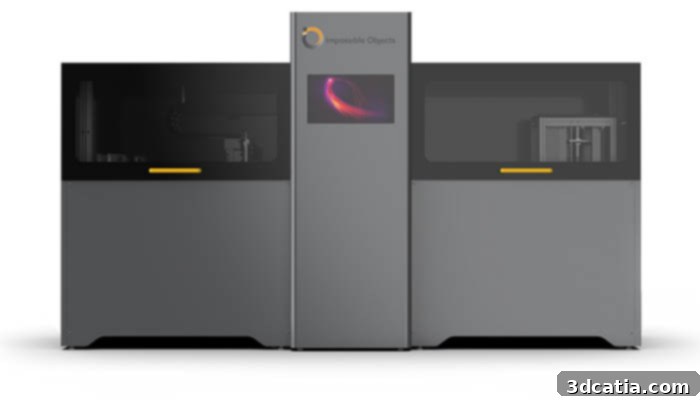
Impossible Objects, a forward-thinking manufacturer of 3D printers and advanced materials, captivated attendees at RAPID + TCT 2019 with the unveiling of its new CBAM-2 3D printer. This machine is built upon the company’s proprietary Composite-Based Additive Manufacturing (CBAM) technology, which is specifically engineered to produce high-performance composite parts for industrial production needs. The CBAM-2 AM solution promises to deliver complex components at an industrial scale, significantly accelerating production processes by as much as tenfold compared to traditional methods. The system uniquely combines high-performance polymers with long-fiber glass carbon and fiberglass sheets. This innovative layering process results in composite parts that are not only considerably stronger and lighter but also exhibit superior temperature performance—critical attributes for demanding engineering applications. Furthermore, Impossible Objects announced a strategic collaboration with BASF, a global chemical giant. Under this partnership, both the Model One and the new CBAM-2 3D printers will support BASF’s Ultrasint PA6 powder, enabling customers to print high-performance carbon fiber-PA6 composite parts for the very first time. This specific composite is touted to be stronger than PA12, yet more cost-effective, offering up to four times the strength of FDM parts and double the strength of Multi Jet Fusion (MJF) parts made with PA12. This innovation dramatically expands the possibilities for lightweight, high-strength parts in aerospace, automotive, and other advanced manufacturing sectors.
In summary, RAPID + TCT 2019 proved to be an exceptionally dynamic event, brimming with groundbreaking announcements and pivotal new partnerships that are shaping the future of additive manufacturing. Established leaders within the AM industry made exciting revelations regarding strategic collaborations set to redefine market segments. For instance, the materials giant Solvay announced its new role as an AM materials partner to Stratasys, tasked with developing novel high-performance AM filaments exclusively for Stratasys’ industrial FDM F900 printers. This partnership underscores the growing importance of material science in advancing AM capabilities. Similarly, HP unveiled a significant collaboration with SmileDirectClub, a partnership poised to revolutionize the orthodontic industry by enabling the mass production of custom-made 3D printed mouth molds at an unprecedented scale—potentially up to 20 million units in a single year. This highlights the power of AM in mass customization and personalized healthcare. We also heard from Desktop Metal and Indo-MIM, who announced a strategic alliance aimed at accelerating the global adoption of metal 3D printing, moving it beyond prototyping to full-scale production. It’s clear that RAPID + TCT 2019 was more than just a trade show; it was a key event for the 3D printing industry, where forward-thinking announcements and transformative collaborations are consistently expected and delivered, setting the trajectory for years to come.
Explore other vital industry events you can still attend this year HERE.
We invite you to share your thoughts on this ranking in the comments section below, or connect with us on our Facebook and Twitter pages! Don’t miss out on the latest advancements in 3D printing; sign up for our free weekly Newsletter, delivered straight to your inbox.