
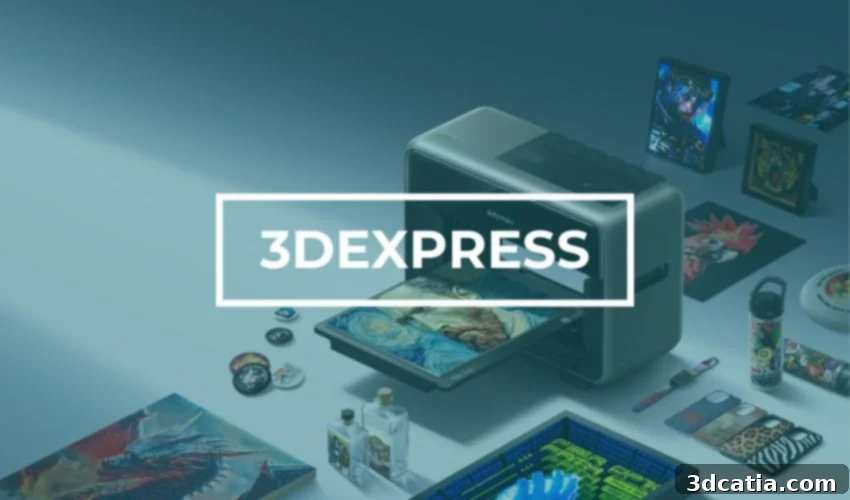
3D Printing Takes Center Stage: Anker’s Record-Breaking Campaign, HP’s Mobile Factories, Hugo Boss’s Futuristic Footwear, and More Industry Innovations
The world of additive manufacturing continues its rapid evolution, pushing boundaries across diverse sectors from consumer electronics to high fashion, and critical remote manufacturing. This week, we delve into some of the most impactful developments, starting with Anker’s groundbreaking success on Kickstarter, which not only set a new funding record but also signaled a significant shift in consumer accessibility to advanced UV printing technology. We’ll also explore strategic partnerships like Firestorm and HP bringing manufacturing to the edge, Hugo Boss’s bold venture into 3D printed footwear, UltiMaker’s innovative educational platform, and Elegoo’s new mobile application for seamless 3D printer control. These stories collectively highlight the dynamic growth and transformative potential of 3D printing.
Anker Shatters Kickstarter Records, Raising $46 Million for the Revolutionary eufyMake E1 UV Printer
Anker, a global leader in charging technology and consumer electronics, officially closed its Kickstarter campaign for the eufyMake E1 on June 28, making an indelible mark on crowdfunding history. With an astounding 17,000 backers pledging over $46 million, Anker’s campaign for its new 3D texture UV printer not only surpassed its funding goal but also eclipsed the previous Kickstarter record of $41.7 million. This monumental achievement underscores a burgeoning consumer interest in sophisticated yet user-friendly additive manufacturing solutions and places the eufyMake E1 firmly in the spotlight as a game-changer for homes and small studios.
The eufyMake E1 is positioned to democratize access to advanced UV printing capabilities, offering an all-in-one modular build, a sleek, compact design, and intelligent AI-powered software. Unlike traditional FDM or SLA printers, the E1 specializes in UV printing, which cures liquid resin using UV light to create highly detailed and durable objects. Its standout feature is its ability to add up to 5 mm of rich, tactile texture on an impressive range of over 300 materials, including delicate leather, natural wood, reflective glass, and various metals. This opens up unprecedented avenues for personalization, artistic expression, and small-batch production that were previously out of reach for the average consumer or small business.
One of the most innovative aspects of the E1 is its roll-to-film attachment, which facilitates continuous printing on surfaces up to 33 feet long. This capability is particularly beneficial for artists creating large murals, designers customizing extensive textile patterns, or businesses producing unique branded merchandise in bulk. Beyond its impressive technical specifications, the E1 is designed for convenience, featuring a self-cleaning mechanism that significantly reduces the typically messy and time-consuming post-processing associated with many resin-based 3D printers. This focus on ease of use, coupled with its versatile material compatibility and high-fidelity texture capabilities, makes the eufyMake E1 a compelling solution for various applications, from crafting personalized gifts and home decor to prototyping unique product designs. With such a high-profile and successful launch, the industry and its eager backers are now watching Anker closely to ensure the eufyMake E1 delivers on its ambitious promises and truly transforms the landscape of consumer UV printing.
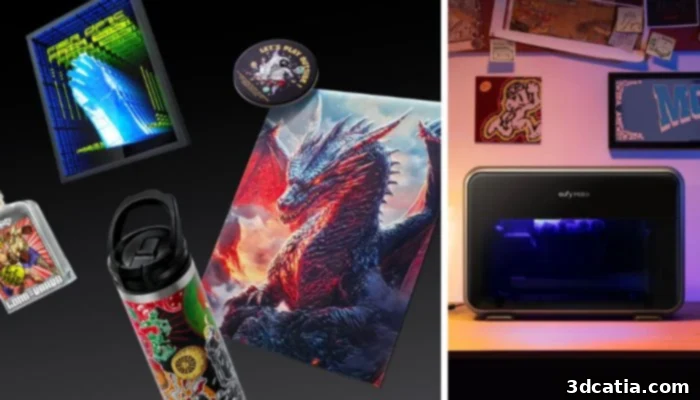
Objects customized with eufyMake E1 (left) and the printer itself (right). (Photo Credits: Anker/eufyMake)
Firestorm Labs and HP Forge Strategic Partnership for Expedited Remote Site Manufacturing
In a significant development for decentralized manufacturing, US-based drone manufacturer Firestorm Labs has announced a strategic partnership with HP, integrating HP’s advanced Multi Jet Fusion (MJF) technology into its innovative xCell manufacturing system. The xCell system represents a new paradigm in deployable production: a mobile, containerized “mini-factory” engineered to operate autonomously anywhere in the world, particularly in critical and remote environments.
Firestorm initially developed these robust units for the rapid manufacturing of drones, but their utility extends far beyond. The xCell systems are designed to produce essential spare parts and other critical components on demand, drastically reducing reliance on lengthy and vulnerable traditional supply chains. The integration of HP’s Multi Jet Fusion 3D printing technology is a crucial enhancement, enabling the xCell units to produce high-quality, functional polymer parts with speed and precision directly at the point of need. Firestorm plans to deploy these self-contained factories in various demanding locations, including military bases, disaster zones, and remote medical outposts, where the immediate availability of parts can be the difference between success and failure.
Ian Muceus, co-founder and CTO of Firestorm, highlighted the synergy of this collaboration, stating, “For nearly a decade, we’ve trusted HP’s technology to meet high-volume, high-quality demands of polymer additive manufacturing. Now, we’re able to take that capability directly to the edge—military bases, disaster zones, and remote medical outposts—where time and logistics matter most.” HP’s MJF technology is renowned for its ability to produce strong, detailed parts with excellent mechanical properties at a rapid pace, making it ideal for the demanding requirements of defense and emergency response applications. The xCell units are engineered for resilience and efficiency, capable of operating with minimal human intervention and powered by off-grid generators, ensuring continuous operation even in the most challenging environments. This partnership not only strengthens Firestorm’s capabilities in drone production but also sets a new standard for agile, on-demand manufacturing in critical global scenarios, promising to revolutionize how essential supplies are delivered and maintained in areas where conventional logistics are impractical or impossible.
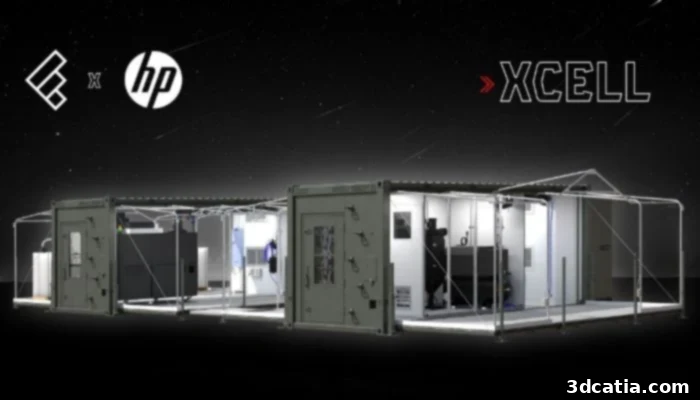
Representation of the mobile units that will feature HP’s Multi Jet Fusion technology (Photo Credits: Firestorm Labs)
Hugo Boss Steps into 3D Fashion with Limited Edition, Futuristic Loafers
During the illustrious Paris Fashion Week, the premium fashion brand Hugo Boss unveiled a groundbreaking addition to its collection: new 3D printed loafers. These limited-edition moccasins signify Hugo Boss’s bold foray into the world of additive manufacturing in high fashion, developed in an exclusive collaboration with Zellerfeld, a renowned German manufacturer specializing in 3D printed shoes. The collaboration highlights a growing trend among luxury brands to leverage cutting-edge technology for innovation, sustainability, and unique design aesthetics.
The loafers immediately captured attention for their distinct futuristic style, standing apart from traditional footwear designs. Manufactured on demand in Hamburg, Germany, these shoes are not only forward-thinking in their production method but also in their material choice, being crafted from recycled materials. This commitment to sustainability resonates deeply with contemporary consumer values and demonstrates how 3D printing can facilitate eco-conscious manufacturing practices by reducing waste and enabling circular material flows. The moccasins made their debut on the runway of the Taiwanese brand Namesake, showcasing a vibrant palette of available colors including red, classic black, sophisticated beige, cool blue, and energetic orange, allowing for diverse personal style expressions.
The partnership with Zellerfeld is particularly strategic. Zellerfeld is known for its expertise in creating intricate, comfortable, and fully printable shoe structures that are impossible to achieve with conventional manufacturing techniques. This enables Hugo Boss to offer a product that is not only visually striking but also potentially more comfortable and better fitting due to the precise customization capabilities of 3D printing. These exclusive 3D printed loafers will be available for purchase through Zellerfeld’s official website, Zellerfeld.com, and at select flagship Hugo Boss stores in fashion capitals Amsterdam and Milan. This controlled distribution strategy underscores their status as a premium, limited-edition item, further enhancing their appeal to discerning fashion enthusiasts and early adopters of innovative design. Hugo Boss’s move into 3D printed footwear is a clear indication that additive manufacturing is no longer just for industrial applications but is increasingly becoming an integral part of shaping the future of fashion.
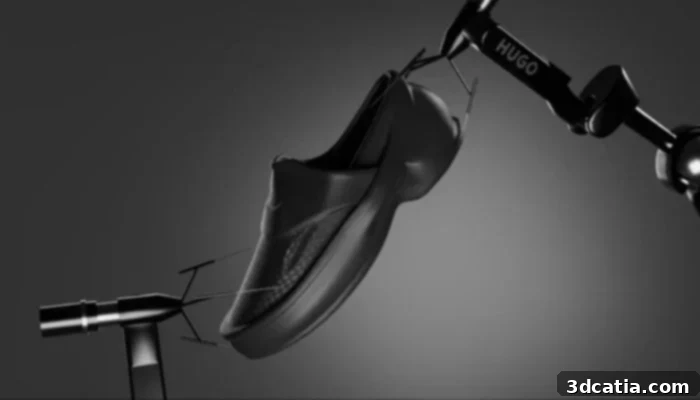
The new Hugo Boss 3D printed moccasin in collaboration with Zellerfeld (Photo Credits: Fashion United)
UltiMaker Unveils MakerBot Nebula: An AI-Powered Platform to Revolutionize 3D Printing Education
UltiMaker, a leading expert in FDM (Fused Deposition Modeling) 3D printing, has announced a significant stride in educational technology with the development of MakerBot Nebula. This innovative platform, powered by artificial intelligence, is meticulously designed to transform the learning experience of additive manufacturing within the education sector. Recognizing the growing demand for skilled professionals in STEM fields, UltiMaker has crafted Nebula with classrooms and teachers explicitly in mind, aiming to provide unparalleled learning experiences around 3D printing for students of all ages.
The core objective of MakerBot Nebula is to foster more effective training and promote the integration of 3D printing technology from an early age, thereby equipping the next generation with essential skills for future careers. The platform is structured around three interconnected blocks: the Learning Station, the Experience Builder, and the Funding Assistant, each serving a distinct yet complementary role in supporting comprehensive 3D printing education.
The **Learning Station** provides a rich repository of educational content, including guided projects, tutorials, and curriculum-aligned lessons that make complex 3D printing concepts accessible and engaging. Students can explore various applications, learn design principles, and understand the practicalities of operating 3D printers, all within an intuitive interface. The **Experience Builder** empowers educators by offering tools to customize and create their own tailored learning experiences. Teachers can design unique projects, adapt existing content, and collaborate with peers, ensuring that the curriculum remains relevant and responsive to their students’ specific needs and learning styles. Finally, the **Funding Assistant** addresses a common challenge for schools: acquiring the necessary resources. This block helps institutions navigate funding opportunities, providing guidance on grant applications, suggesting equipment bundles, and offering strategies to secure investment for 3D printing initiatives, ultimately making advanced technology more attainable for educational institutions.
Dottie Stewart, VP Sales America & Global Education Strategy at UltiMaker, eloquently summarized the platform’s vision: “MakerBot has always believed in learning through making. […] As classrooms become more demanding and students’ needs more diverse, tools alone aren’t going to be enough. That’s why we created MakerBot Nebula, a new kind of learning platform that connects technology, pedagogy, and creativity in one seamless experience.” MakerBot Nebula represents UltiMaker’s commitment to not just providing 3D printing hardware but also building an entire ecosystem that fosters creativity, critical thinking, and technical proficiency, preparing students for an increasingly technologically driven world.
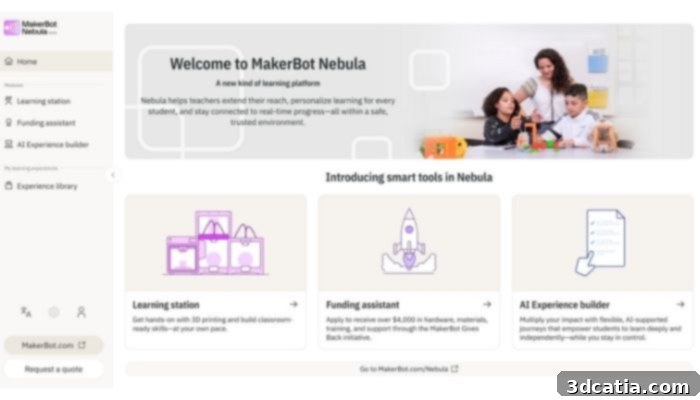
Photo Credits: MakerBot
Elegoo Launches Matrix Application for Global Remote 3D Printer Control
Elegoo, a prominent name in resin 3D printing, has officially released its highly anticipated mobile application, Matrix. This new application is set to redefine user interaction with Elegoo’s 3D printers by enabling comprehensive remote control from virtually anywhere in the world. With Matrix, users can manage their machines and optimize their production workflows directly from their smartphones, bringing a new level of convenience and efficiency to the additive manufacturing process.
The Matrix application offers robust real-time monitoring capabilities, providing users with instant access to critical printing data regardless of their physical location. This includes displaying crucial metrics such as print temperature, overall progress percentage, and current printing speed. Such insights are invaluable for busy professionals and enthusiasts who need to keep an eye on their ongoing prints without being tethered to their machines. Moreover, Matrix is designed to enhance workflow optimization by offering a detailed print history and analytical tools. This data allows users to review past prints, identify patterns, troubleshoot potential issues, and make informed adjustments to reduce the risk of errors and improve print success rates over time. By leveraging this historical data, users can refine their settings for different resins and models, leading to more consistent and higher-quality outputs.
Currently, the Elegoo Matrix application is compatible with the popular Saturn 4 and Ultra 16K models, catering to a wide base of Elegoo resin printer owners. Elegoo has also confirmed plans for rapid expansion of compatibility, with support for other machines expected to roll out very soon – specifically in the third quarter of this year. This aggressive rollout schedule demonstrates Elegoo’s commitment to creating a connected and user-friendly ecosystem for its rapidly growing community. The Matrix application is readily available for download on both the Apple App Store and Google Play, making it accessible to a broad spectrum of smartphone users. This move positions Elegoo at the forefront of integrating smart technology with 3D printing, mirroring the ‘smart home’ trend and meeting the growing demand for remote management and intelligent automation in personal and professional fabrication environments.
The innovations discussed this week, from Anker’s record-breaking eufyMake E1 and HP’s mobile manufacturing units to Hugo Boss’s foray into 3D printed fashion, UltiMaker’s educational platform, and Elegoo’s new remote control app, collectively paint a vivid picture of a 3D printing industry that is not only advancing technologically but also expanding its reach into new markets and applications. These developments promise greater accessibility, efficiency, and creativity for users across all levels. What are your thoughts on Anker’s eufyMake E1 and these other groundbreaking advancements? Let us know in a comment below or on our LinkedIn or Facebook pages! Additionally, don’t forget to sign up for our free weekly Newsletter to get the latest 3D printing news delivered straight to your inbox. You can also find all our compelling videos and industry insights on our YouTube channel, ensuring you stay at the forefront of additive manufacturing news.