
Weekly 3D Printing Innovations: From Sustainable Food to High-Performance Motorsport and Secure Manufacturing
As another exciting week concludes, we’re thrilled to bring you the most compelling advancements and breakthroughs from the dynamic world of 3D printing and additive manufacturing. This week’s #3DExpress edition highlights a diverse range of applications, showcasing how this transformative technology continues to push boundaries across various industries. From revolutionary plant-based food products gaining market access to pioneering initiatives in waste recycling, bespoke cosmetic packaging, secure digital manufacturing platforms, and record-breaking motorsport achievements, 3D printing is undeniably shaping our future. Join us as we delve into these fascinating developments, offering insights into how innovation is driving sustainability, efficiency, and performance.
Steakholder Foods Secures U.S. Market Entry for 3D Printed Plant-Based Meat and Fish
In a landmark development for the food technology sector, Steakholder Foods, a leading innovator in 3D printed food manufacturing, has officially announced its strategic expansion into the U.S. market. The company is set to introduce its innovative SHMeat and SHFish blends to American consumers, marking a significant milestone in the journey towards sustainable and ethically produced food options. This pivotal decision follows a rigorous assessment by a consultant, who confirmed that all ingredients utilized in Steakholder Foods’ products are fully compliant with U.S. regulations and meet the stringent requirements of the Food and Drug Administration (FDA) under the “Generally Recognized as Safe (GRAS)” status.
This regulatory clearance paves the way for American households to soon access and enjoy 3D-printed, plant-based meat and fish alternatives, representing a paradigm shift in dietary choices and food production. The move not only broadens consumer access to novel food products but also underscores the growing acceptance of advanced manufacturing techniques in the culinary space. Arik Kaufman, CEO of Steakholder Foods, articulated the profound implications of this expansion, stating, “As we introduce our SHMeat and SHFish blends to the U.S. market, we stand at the cusp of a new era in food technology. Our advanced 3D printing technologies are not just a testament to innovation but also a commitment to sustainability and health. These products represent our dedication to providing consumers with food options that are not only delicious but also responsible choices for our planet. We believe that our entry into the U.S. market is a significant step towards a future where the food we eat contributes to a healthier society and a more sustainable world.”
Steakholder Foods leverages sophisticated 3D printing technology to create plant-based alternatives that meticulously mimic the texture, appearance, and taste of conventional meat and fish. This technological prowess allows for the precise layering of ingredients, resulting in products that offer an authentic sensory experience while avoiding the environmental and ethical concerns associated with traditional animal agriculture. The GRAS status is crucial, signifying that experts recognize the ingredients as safe under intended conditions of use, thus building consumer confidence and facilitating market entry. This strategic move is expected to not only accelerate the adoption of sustainable food technologies but also provide consumers with diverse and healthier dietary alternatives, ultimately contributing to a more sustainable global food system. The company’s vision extends beyond mere product introduction; it aims to foster a future where culinary innovation and environmental stewardship go hand-in-hand, making advanced food options accessible and beneficial for all.
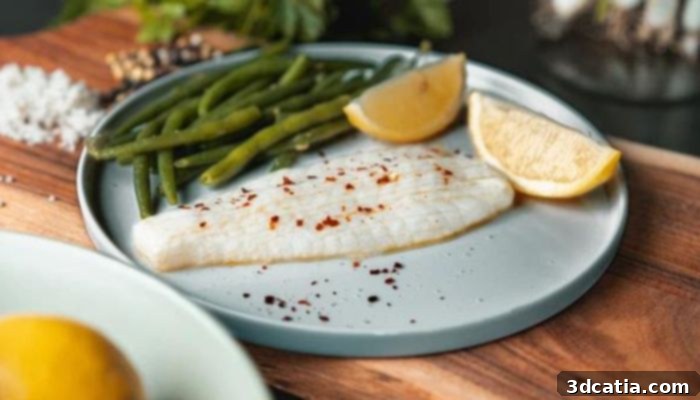
Steakholder Foods is poised to sell its innovative 3D printed plant-based fish and meat products in the U.S. market (photo credits: Steakholder Foods)
Filamentive Spearheads Initiative to Recycle Your PLA Waste in the UK
The rapid growth of the 3D printing industry has brought immense innovation, but it also presents a significant challenge: waste management. Despite the common mantra to “reduce, reuse, recycle,” a staggering amount of 3D printing waste, particularly from the widely used Polylactic Acid (PLA) material, often ends up in landfills. Recognizing this environmental issue, Filamentive, a leading eco-conscious 3D printing filament manufacturer, has been proactively working for several years to address this reality through sustainable initiatives.
Their latest and most impactful program focuses squarely on the recycling of PLA waste, a material that, while biodegradable under specific industrial conditions, is not typically recyclable through standard curbside programs. To combat this, Filamentive is now offering its customers in the UK 100% free access to a dedicated PLA waste recycling service. This ambitious initiative is made possible through an exclusive partnership with 3D Printing Waste, a specialist in material reclamation within the additive manufacturing sector. The process is remarkably straightforward and user-friendly: after purchasing a certain quantity of Filamentive’s high-quality materials, users receive a specially designed collection box. This box serves as a convenient repository for all their accumulated PLA waste, including failed prints, support structures, and filament scraps. Once the box is full, users can simply send it back to Filamentive’s partner for efficient and responsible recycling. This closed-loop system ensures that valuable PLA material is diverted from landfills and given a second life, significantly reducing the environmental footprint of 3D printing enthusiasts and businesses. While currently available only in the UK, this pilot program sets a promising precedent for expanding sustainable practices across the global 3D printing community, illustrating a tangible step towards a more circular economy in additive manufacturing.

Filamentive’s initiative simplifies PLA waste recycling for 3D printing users in the UK (Photo Credits: Filamentive)
Baralan Unveils Innovative 3D Decoration Service for Personalized Cosmetics Packaging
In the competitive and ever-evolving cosmetics industry, product differentiation and consumer engagement are paramount. Baralan, a renowned Italian company with deep expertise in the design and manufacture of premium plastic and glass packaging for the skincare, makeup, and perfume sectors, is taking a significant leap forward in personalization. The company has recently forged a strategic collaboration with leading additive manufacturing solutions provider Stratasys and the specialist firm ICA to launch a groundbreaking 3D decoration service for its extensive range of packaging solutions.
This new service, dubbed GP3DPrint, revolutionizes the way cosmetic packaging can be customized, offering unparalleled design freedom and brand distinctiveness. The core of this innovation lies in its unique water-based process, which allows for intricate and high-quality decoration directly onto various packaging materials. Specifically, ICA has ingeniously engineered a specialized paint formulation that is fully compatible with Stratasys’ cutting-edge PolyJet technology. This exclusive collaboration harnesses the precision and multi-material capabilities of PolyJet to enable customized coatings and designs that were previously unattainable with traditional manufacturing methods. PolyJet technology, known for its ability to produce highly detailed, multi-color, and multi-material prototypes and end-use parts, is perfectly suited for the demands of high-end cosmetic branding. It allows for the creation of unique textures, vibrant colors, and sophisticated graphic elements directly on glass and plastic surfaces, transforming standard packaging into bespoke pieces of art.
Maurizio Ficcadenti, Global R&D Manager at the Baralan Group, eloquently summarized the transformative potential of this project. He emphasized, “Thanks to this project, it is now possible to have a unique, recognizable and outstanding product, without having to invest in expensive equipment, while at the same time promoting eco-sustainability. 3D printing on glass and plastic is tangible thanks to its adherence to the glass, transparency and charm through the use of infinite colors and designs.” This statement highlights several key benefits: empowering brands to achieve unparalleled aesthetic differentiation without significant upfront investment in tooling, promoting sustainable practices by enabling on-demand customization and reducing waste, and delivering superior product quality with exceptional adherence, transparency, and a vast palette of colors and designs. The GP3DPrint service is set to redefine luxury packaging, offering brands a powerful tool to captivate consumers and reinforce their unique identity in a crowded market.
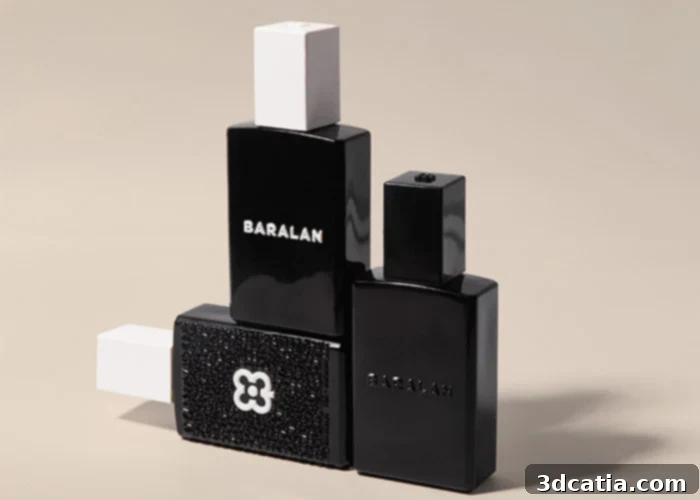
Baralan’s new 3D decoration service offers unparalleled customization for cosmetic packaging (Photo Credits: Baralan)
ProCloud3D: Enabling Secure, Digitalized, and Outsourced Additive Manufacturing Production
The widespread adoption of additive manufacturing (AM) for industrial production has brought immense advantages, yet it also introduces complexities, particularly concerning data security and intellectual property (IP) protection, especially when outsourcing projects to external service providers. The current landscape often requires sharing sensitive design models, which are susceptible to manipulation, unauthorized replication, or theft during transfer and production. Addressing these critical challenges, the ProCloud3D project emerges as a pioneering solution aimed at establishing secure, decentralized additive manufacturing workflows.
This innovative cloud-based platform represents the culmination of collaborative efforts by a German-Chinese project consortium, spearheaded by the Chair of Digital Additive Production (DAP) at RWTH Aachen University. ProCloud3D is engineered to provide a robust and secure infrastructure capable of processing, storing, and sharing valuable AM data in real-time, irrespective of geographical location. Its primary objective is to empower end-users of additive manufacturing, particularly those who regularly outsource their production projects to external service providers, with enhanced control and security over their digital assets.
One of the most significant advantages of ProCloud3D is its ability to eliminate the need for end-users to share their easily manipulable design models directly. Instead, the platform facilitates the direct transfer of encrypted and secure print data straight to the service provider’s Powder Bed Fusion (PBF) systems within a live, continuous stream. This innovative approach drastically reduces the risk of data breaches and unauthorized access, ensuring that sensitive IP remains protected throughout the entire outsourced production cycle. Furthermore, this solution alleviates the burden on companies who might otherwise feel compelled to invest in expensive PBF printers solely for the purpose of safeguarding their print data and maintaining internal control. By offering a secure, cloud-based alternative, ProCloud3D democratizes access to advanced additive manufacturing capabilities, enabling businesses of all sizes to leverage outsourced production confidently and efficiently. It represents a significant step towards fully digitalized, secure, and globally distributed additive manufacturing ecosystems, fostering greater trust and efficiency in industrial collaboration.
ProCloud3D offers a secure, decentralized platform for additive manufacturing data management (Photo Credits: RWTH DAP)
ADDiTEC Racing Dominates at Homestead-Miami Speedway with Additive Manufacturing Advantage
ADDiTEC, a cutting-edge company renowned for its advancements in high-performance metal additive manufacturing, has made a powerful entry into the competitive world of motorsport with its dedicated division, ADDiTEC Racing. Launched just a few months ago, the primary goal of ADDiTEC Racing is to unequivocally demonstrate and firmly establish the profound benefits and inherent advantages that additive manufacturing technologies bring to the high-stakes environment of racing. By integrating advanced 3D printed components, ADDiTEC aims to showcase how these technologies can lead to superior performance, reduced weight, enhanced durability, and rapid design iteration capabilities crucial for success on the track.
The recent event at the iconic Homestead-Miami Speedway provided the perfect arena to put ADDiTEC’s innovative approach and its AM-enhanced components to the ultimate test in a live racing scenario. The outcome was nothing short of spectacular. ADDiTEC Racing not only showcased the reliability and effectiveness of its technology but also achieved a triumphant victory, securing first place in the Overall Best Time record across all competing classes. This remarkable achievement serves as a resounding validation of ADDiTEC’s commitment to pushing the boundaries of engineering through additive manufacturing.
Brian Matthews, CEO and founder of ADDiTEC, expressed immense pride and excitement regarding the team’s success. “We are thrilled to have emerged victorious at the Homestead-Miami Speedway,” he stated. “This achievement is a testament to the dedication and expertise of our team, and further reinforces our excitement and ambitions to use our cutting-edge additive manufacturing technology to enable success in motorsports.” This victory is not merely a win on the track; it’s a powerful demonstration of how additive manufacturing can revolutionize motorsport by enabling the creation of lighter, stronger, and more aerodynamically optimized parts, giving ADDiTEC Racing a significant competitive edge. The success at Homestead-Miami Speedway underscores the immense potential for AM to drive innovation, performance, and ultimately, success in high-performance industries like motorsports, paving the way for future applications and advancements.

ADDiTEC Racing celebrates victory at Homestead-Miami Speedway, highlighting the power of additive manufacturing in motorsport (Photo Credits: ADDiTEC Racing)
The innovations highlighted this week truly encapsulate the transformative power of 3D printing, from revolutionizing our dinner plates with sustainable, plant-based alternatives and addressing environmental concerns through efficient recycling, to personalizing everyday luxury with bespoke cosmetic packaging, enhancing industrial security, and breaking records in high-octane motorsport. Each development underscores how additive manufacturing is not just a technology for the future, but a vital tool shaping our present.
What are your thoughts on Steakholder Foods’ entry into the U.S. market? Would you be keen to try their 3D-printed, plant-based meat and fish? We invite you to share your opinions and insights in a comment below or connect with us on our LinkedIn, Facebook, and Twitter pages! Don’t miss out on the latest advancements and breaking news in the additive manufacturing industry—sign up for our free weekly newsletter here to get the freshest 3D printing news delivered straight to your inbox! Additionally, you can explore all our insightful videos and interviews on our YouTube channel.