
Exploring the Future: Top 5 Game-Changing 3D Printing Innovations Across Diverse Industries
Welcome to an exciting showcase of how 3D printing, also known as additive manufacturing, is continually pushing the boundaries of innovation across a multitude of sectors. This week, we delve into five remarkable applications that highlight the transformative power of this technology, from creating dynamic robots and life-like medical models to revolutionizing aerospace component design, enhancing real estate visualization, and perfecting digital smile aesthetics. Each project demonstrates a unique facet of 3D printing’s versatility and its profound impact on solving complex challenges and enabling previously unimaginable possibilities. Join us as we explore these fascinating advancements that are shaping the world of tomorrow, one layer at a time.
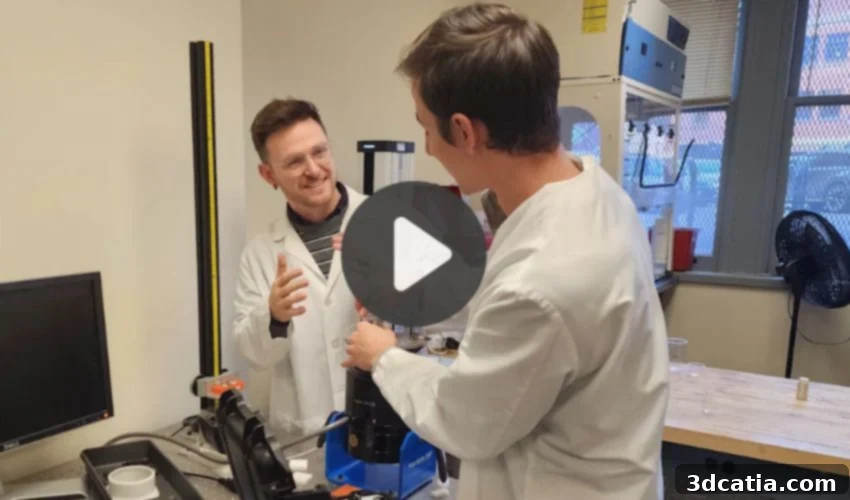
1. Oregon State University: Pioneering 3D Printed Robots with Reactive Materials
Imagine materials that spring to life, moving and reacting to their environment immediately after being printed. Researchers at Oregon State University are making this science fiction a reality through their groundbreaking work with shape-shifting materials called liquid crystalline elastomers (LCEs). Often referred to as “soft motors,” these intelligent materials can exhibit complex movements such such as crawling, folding, and snapping into precise configurations without external mechanisms. This revolutionary capability opens up a world of possibilities, fundamentally transforming our understanding and application of robotics.
The potential impact of these reactive 3D printed materials extends far beyond simple robotic movements. In the realm of robotics, LCEs could lead to the development of highly adaptable and flexible robots capable of navigating complex terrains or performing delicate tasks that traditional rigid robots cannot. Think of soft robots that can squeeze through tight spaces, change their shape to grip irregular objects, or even mimic biological movements with unprecedented fluidity. Beyond robotics, the implications for medical science are equally profound. These materials could revolutionize the design of medical implants, creating devices that integrate more seamlessly with biological tissues or even respond to the body’s internal signals. Furthermore, their application in drug delivery systems could lead to smart capsules that release medication precisely when and where it’s needed, improving therapeutic efficacy and reducing side effects. This research at Oregon State University is not just about printing objects; it’s about printing intelligent, dynamic systems that can interact with their environment in entirely new ways. Discover the intricate details and see these ‘soft motors’ in action by watching the full video.
2. Advancing Surgical Training with a 3D Printed Abdominal Aorta Simulator
The field of medical education and surgical training has long sought realistic and repeatable methods for honing complex procedures. In a significant stride forward, Professor Patrick Feugier collaborated with 3Deus Dynamics in March 2023 to conduct an endovascular training session using a groundbreaking 3D printed aortic aneurysm simulator. This innovative model, created with sophisticated Dynamic Molding technology, represents a leap beyond traditional training aids.
What makes these 3D printed anatomical models truly revolutionary is their unparalleled realism. They are designed not only to look anatomically accurate but also to provide an authentic tactile experience, mimicking the feel of actual human tissue. This tactile feedback is crucial for surgeons practicing delicate endovascular techniques. Furthermore, these advanced models are fully suturable, allowing trainees to practice closing incisions and repairing vessels, and are watertight, ensuring fluid dynamics can be accurately simulated without leakage. Critically, they are also compatible with medical imaging technologies, meaning instructors can use X-rays, fluoroscopy, or other imaging modalities during training, just as they would in a real operating room. This combination of realistic appearance, authentic feel, and functional compatibility makes them a superior, high-tech alternative to conventional cadavers or animal models, which often present logistical, ethical, and consistency challenges. By providing a consistent and realistic training environment, these 3D printed simulators are poised to transform medical training, device testing, and pre-surgical planning, ultimately leading to improved patient outcomes. Witness this cutting-edge tool in action and understand its profound implications for medical advancement by watching the video.
3. Vision Miner: Innovating Helicopter Parts Through Additive Manufacturing
The aerospace industry, with its stringent requirements for performance, durability, and safety, is a prime candidate for the benefits offered by additive manufacturing. Patrick Smith, CEO and founder of Vision Miner, perfectly illustrates this potential through an ingenious reverse engineering and 3D printing project: the upgrade of a dim tail light on a Gazelle turbine helicopter. This project showcases how 3D printing can be leveraged not just for prototyping but for creating functional, high-performance end-use parts, even in demanding environments.
The challenge was clear: the original tail light was barely visible, posing a safety risk, especially in critical flight conditions such as canyon flying or formation missions where visibility is paramount. Patrick’s approach involved a multi-faceted strategy. He began with advanced 3D scanning to accurately capture the existing part’s geometry, ensuring the new design would integrate flawlessly with the helicopter’s structure. This data was then fed into CAD software, where a new, optimized design for a brighter and safer lighting solution was developed. The choice of material was crucial for aerospace applications; Patrick opted for high-temperature materials like carbon fiber-filled PEEK (Polyether Ether Ketone). PEEK is renowned for its exceptional strength-to-weight ratio, chemical resistance, and ability to withstand extreme temperatures, making it ideal for the harsh conditions a helicopter endures. By utilizing additive manufacturing, Vision Miner was able to produce a custom-designed, robust, and highly functional replacement part that significantly enhanced the helicopter’s safety and operational capabilities. This project exemplifies how additive manufacturing enables rapid iteration, custom solutions, and the use of advanced materials to solve complex engineering challenges in high-stakes industries. Observe the meticulous process from concept to completion in the detailed video.
4. 3D Printing Architectural Models: Bringing Real Estate Projects to Life
In the competitive world of real estate and development, effectively communicating a project’s vision is paramount. Traditional blueprints and digital renderings can convey information, but they often lack the immersive and tangible quality needed to truly captivate potential buyers and investors. This is where companies like Macoma Tech, a Dubai-based Interactive Scaled Model Company, excel by leveraging 3D printing to create highly detailed and engaging custom models.
Macoma Tech specializes in crafting intricate scaled models for a variety of sectors, including real estate, industrial complexes, and factory layouts. Their expertise lies in their ability to tailor each model to highlight specific features and aspects that drive client engagement and sales. For a recent notable project, they developed a meticulously detailed residential building model for a real estate developer. The purpose was to promote an under-construction property, offering potential buyers a concrete, three-dimensional representation of what their future home or investment would look like. This tangible model allowed prospective clients to visualize the property’s scale, layout, amenities, and overall aesthetic in a way that two-dimensional plans simply cannot. It fostered a deeper connection and understanding, enabling buyers to walk around the model, examine facades, and even imagine their lives within the space. The precision and speed of 3D printing allowed Macoma Tech to rapidly produce a high-quality, accurate model that effectively showcased the project’s vision and generated significant interest. The video provides a fascinating step-by-step insight into how this impressive architectural model was conceptualized, designed, and brought to life from the ground up, demonstrating the invaluable role of 3D printing in architectural visualization and marketing.
5. Shining 3D Dental: Crafting Perfect Smiles with Digital Precision
The field of dentistry is undergoing a significant transformation driven by digital technologies, and 3D printing is at the forefront of this revolution. Dimitris Tasakos, a Digital Smile Design Master at DVDental in Athens, Greece, exemplifies this shift by crafting perfect smiles using cutting-edge Shining 3D Dental tools. His work showcases how advanced digital workflows and additive manufacturing combine to deliver unparalleled precision and aesthetic results in dental prosthetics.
In a compelling demonstration, the video features an “All-On-6” case for the lower jaw, a comprehensive dental solution for patients requiring full arch rehabilitation. The process highlights the critical step of testing the provisional fit to ensure absolute precision before the permanent replacement is fabricated. This meticulous approach guarantees optimal comfort, function, and aesthetics for the patient. A cornerstone of this digital workflow is the Aoralscan Elite’s photogrammetry system, which delivers exceptional accuracy in capturing intraoral data. This high-resolution data is then seamlessly integrated with MetiSmile’s 3D facial scanning technology. By combining intraoral scans with precise facial scans, a complete virtual patient model is created. This virtual model allows Dimitris Tasakos to design smiles that are perfectly tailored to the individual’s facial features and desired aesthetics, leading to results that are not only functionally superior but also incredibly natural-looking. This integrated approach minimizes errors, reduces chair time, and enhances the overall patient experience, setting a new standard for modern restorative and cosmetic dentistry. Witness the incredible precision and artistry of digital smile design come to life by watching the entire process in action.
Conclusion: The Limitless Potential of Additive Manufacturing
As we’ve seen through these five diverse and innovative projects, 3D printing is far more than just a prototyping tool; it’s a driving force behind transformative advancements across numerous industries. From enabling soft, reactive robots at Oregon State University to creating hyper-realistic surgical simulators, producing robust aerospace components, revolutionizing real estate visualization, and perfecting digital smile designs, additive manufacturing continues to redefine what’s possible. These examples underscore the technology’s incredible versatility, its capacity for precision, and its potential to solve complex challenges in ways previously unimaginable. The future promises even more exciting breakthroughs as researchers, engineers, and designers continue to explore the limitless applications of 3D printing.
We’d love to hear your thoughts on these incredible innovations! What do you find most fascinating about Oregon State University’s work on 3D printing robots, or perhaps the surgical models and digital smile design? Let us know your insights in a comment below or connect with us on our LinkedIn, Facebook, and Twitter pages! Don’t forget to sign up for our free weekly Newsletter here to receive the latest 3D printing news straight to your inbox! You can also find all our compelling videos and more content on our YouTube channel. Happy watching, and stay tuned for more cutting-edge developments in the world of additive manufacturing!
*Cover Photo Credits: Oregon State University