
Streamlining Additive Manufacturing: How MakerOS Transforms 3D Printing Project Management and Client Collaboration
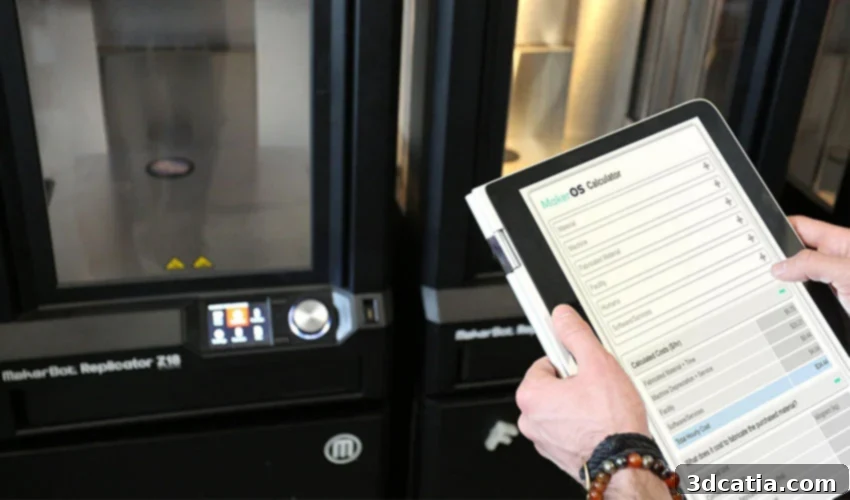
In the rapidly evolving landscape of additive manufacturing, effective communication and seamless collaboration with clients are not just advantageous—they are absolutely essential for the successful execution of projects. Yet, scaling operations in this dynamic industry often presents a significant hurdle: tools and processes are frequently scattered across a multitude of disparate platforms, leading to inefficiencies, miscommunication, and lost opportunities. This pervasive challenge became the driving force behind MakerOS. Launched as a pioneering web-based software solution, MakerOS specifically addresses the complex needs of companies providing 3D printing and other digital fabrication services. It functions as a centralized online ecosystem, meticulously designed to facilitate communication, streamline project submissions, provide real-time updates, and offer unified access to critical files and invoices—all within a single, intuitive environment. To gain deeper insights into the transformative benefits of such a comprehensive platform, we recently had the opportunity to speak with Mike Moceri, the visionary CEO and founder of MakerOS.
Meet Mike Moceri: A Pioneer in 3D Printing and the Brain Behind MakerOS
“I’m Mike Moceri, CEO and founder of MakerOS,” Mike begins, introducing himself with a clear sense of purpose. He underscores the extensive experience his team brings to the table, spanning years in both 3D printing and B2B software development. Personally, Mike boasts a profound and multifaceted background encompassing manufacturing, product design, and software innovation. His journey in the industry is marked by significant hands-on experience: he has meticulously quoted thousands of projects, overseen the production of hundreds of thousands of individual parts, and continuously collaborates with professional service providers globally who leverage additive manufacturing technologies through MakerOS. His deep understanding of the industry’s intricacies, from the shop floor to high-level strategic planning, positions him uniquely to identify and solve the challenges faced by fabrication businesses.

Mike Moceri, CEO and Founder of MakerOS
Mike’s entrepreneurial spirit and deep immersion in 3D printing began years ago. In 2013, he co-founded the world’s very first 3D printing retail service bureau located in Chicago, a groundbreaking venture that laid the foundation for his future endeavors. Building on this pioneering experience, he then established Manulith in 2014, a specialized agency focused on 3D printing and product design. Through Manulith, Mike and his team provided cutting-edge solutions to a diverse clientele, including prestigious Fortune 500 companies within highly demanding sectors such as aerospace, automotive, and medical industries. This extensive practical experience across various business models and client types would prove invaluable in recognizing the fundamental need for a unified platform like MakerOS.
The Genesis of MakerOS: Solving Real-World Fabrication Challenges
The inception of MakerOS was directly fueled by Mike’s own profound frustrations stemming from the complexities of client management and project workflow orchestration during his tenure running a 3D printing service bureau in Chicago in 2013. He recounts a pivotal moment: his team received a substantial order from a Fortune 500 company to produce approximately 15,000 individual parts for a new toy line. At the time, their pricing model involved charging slightly under $1 per cubic centimeter for PLA and Nylon PA12 printing, which led to the initial quote for the job. While seemingly straightforward, this project quickly unveiled the hidden complexities and overlooked costs inherent in large-scale additive manufacturing.
The project, while successful, proved to be immensely challenging. It became a profound learning experience. Reflecting on it years later, with the benefit of accumulated wisdom and experience, Mike realized that the initial pricing was significantly underestimated. Given the gargantuan scale of the job, they should have priced it approximately 70% higher than what was originally quoted. This glaring discrepancy highlighted numerous critical factors that were simply not accounted for in their traditional costing methods. These overlooked elements included the extensive manual labor required for pre-processing—such as preparing models, slicing, validating print files, meticulously planning print bed layouts to optimize material usage and print time, and the delicate process of removing finished parts. Furthermore, the actual software costs associated with executing these intricate tasks were not fully factored in, nor was the real-world depreciation of the expensive 3D printing machinery over the extended print duration. These hidden costs severely eroded profit margins and underscored a systemic issue in how 3D printing services approached pricing and project management.
Motivated by these profound insights and a desire to prevent others from making similar costly mistakes, Mike embarked on a mission to establish a company dedicated to empowering 3D printing and digital fabrication businesses. The core objective was to help them not only manage projects more effectively but, crucially, to master the art of accurate and profitable pricing. Before diving into development, Mike undertook an exhaustive validation process, personally engaging with over 100 fabrication shops offering a diverse range of services, including 3D printing, CNC machining, and other digital manufacturing techniques. Over a rigorous five-month period, he conducted in-depth interviews with shop floor managers, business owners, and application engineers from across the industry. The central question he sought to answer was simple yet critical: were other business owners encountering the same problems? Were valuable time and precious resources being squandered due to inadequate tools for facilitating and overseeing complex projects? The response was an unequivocal and resounding “yes.” This overwhelming validation of the problem cemented his resolve, and with a clear understanding of the widespread need, he commenced building the definitive solution: MakerOS. The platform is designed for anyone offering digital fabrication services, from sole entrepreneurs to large innovation labs, seeking to professionalize their operations, enhance client communication, and secure more profitable outcomes.
Exploring the Comprehensive Capabilities of the MakerOS Platform
MakerOS stands as a robust software platform meticulously crafted to enhance collaboration between 3D printing and digital fabrication companies and their clients throughout the entire project lifecycle, from initial concept to final delivery. This innovative platform empowers businesses to remotely manage their operations and collaborate seamlessly with their internal teams to execute client projects with unparalleled efficiency. It serves as the central nervous system for any fabrication business, integrating all critical functions into a single, cohesive ecosystem designed for optimal performance and client satisfaction.
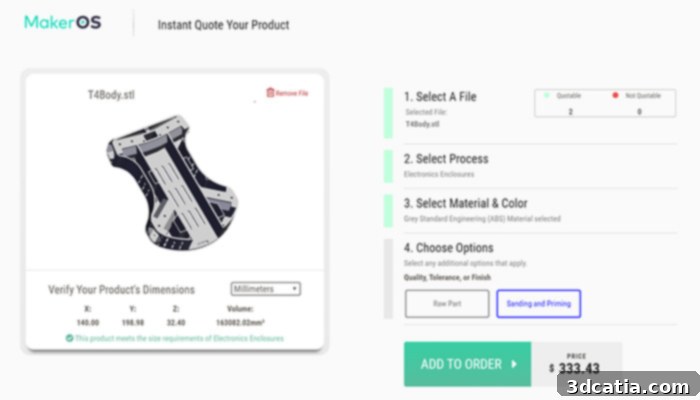
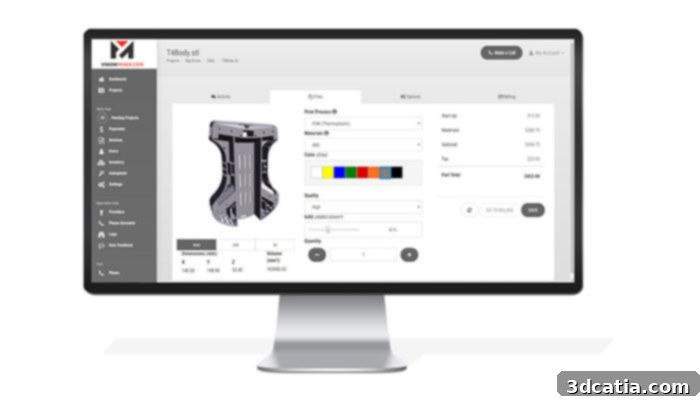
A cornerstone feature of the MakerOS platform is its Public Autoquoter, or PAQ. More than just a standard quoting tool, the PAQ is a sophisticated, fully integrated system that distinguishes MakerOS from conventional online quoting software. Its unique strength lies in its deep connectivity with all other essential project management features within MakerOS. This includes a comprehensive inventory manager, an advanced online 3D viewer for detailed model analysis, and a centralized client communication hub. This integration ensures that a quote, once generated and accepted, seamlessly transitions into the project workflow, immediately setting up all relevant parties—both internal teams and clients—for success. Furthermore, every element within the PAQ is highly customizable, allowing business owners to precisely tailor the client journey based on specific project requirements and business models. This level of customization minimizes friction, accelerates project completion times, and ultimately fosters a win-win scenario for both the service provider and their clients.
Who Benefits from MakerOS? Diverse Client Success Stories
At its heart, MakerOS serves a diverse and innovative clientele whom Mike affectionately refers to as “makers.” These individuals and organizations embody the spirit of modern-day alchemists, driven by a desire to transform the physical world according to their vision. They are futurists, leveraging cutting-edge tools and technologies to construct a better, more tangible world. Specifically, the MakerOS client base spans a broad spectrum: from ambitious solo entrepreneurs who are just embarking on their journey in the 3D printing industry, to thriving small and medium-sized shops equipped with a handful of machines, and even large-scale innovation labs and dynamic makerspaces. This versatility underscores the platform’s adaptability to various business sizes and operational models within the digital fabrication ecosystem.
One compelling example of MakerOS’s impact is Roboto.NYC, a design and fabrication shop based in the vibrant borough of Brooklyn. Roboto.NYC stands as a testament to the transformative power of the MakerOS software, having experienced tremendous growth since its adoption. The team at Roboto.NYC particularly leverages the robust communication and file-sharing capabilities of the software, referring to it as their “single source of truth” for all client interactions and project iterations. By consolidating all client-related communication, design files, and project updates into one accessible platform, they have dramatically streamlined their workflow. Within the first year of integrating MakerOS, Roboto.NYC achieved remarkable results: they successfully reduced their development cycle from an average of three weeks down to an astonishing four days, simultaneously boosting their revenue by an impressive tenfold. This tangible success highlights how effective organization and communication can directly translate into accelerated project delivery and significant financial gains.
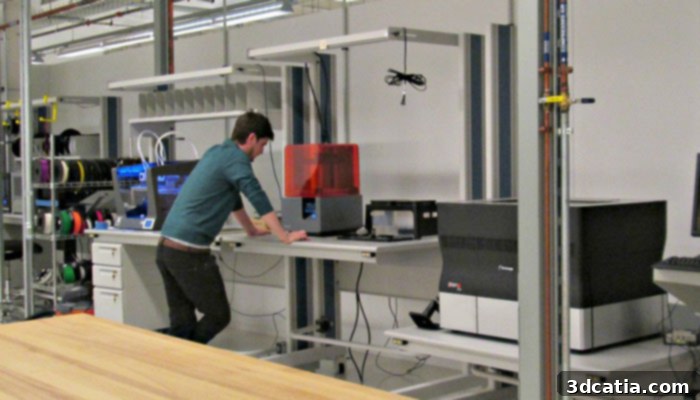
Another prominent client, mHUB, a leading product development incubator situated in Chicago, utilizes the MakerOS software in a distinct yet equally impactful manner. mHUB boasts a state-of-the-art, dedicated 3D printing lab featuring an impressive array of advanced machines, including PolyJet, SLS, SLA, FDM, and sophisticated metal 3D printers, all accessible to their hundreds of member companies. Prior to implementing MakerOS, managing the intricate schedule of machine usage—who was using which machine, on what date, and at what specific time—posed a significant logistical challenge. The process was often manual, prone to errors, and inefficient. However, with MakerOS, the mHUB team gained a powerful, centralized solution. From a single, intuitive dashboard, they are now able to efficiently review, accept, and process requests for 3D printing jobs submitted by each of their member companies. This transformation has not only enhanced operational efficiency but also significantly improved the member experience by providing a clear, equitable system for machine access and project submission.
Lastly, Visionminer, a respected name in the 3D printing service sector, represents another success story. They recently made the strategic decision to switch to MakerOS after a frustrating period of realizing that other 3D printing software solutions on the market could not manage projects effectively beyond the initial quoting phase. Visionminer dedicated a substantial ten months to rigorously testing several alternative systems, yet consistently found themselves returning to MakerOS. Their ultimate choice was driven by the MakerOS platform’s unique ability to holistically manage jobs—from the very first client inquiry and quote generation all the way through to the successful completion of the project. Critically, the comprehensive project dashboard within MakerOS allows Visionminer to meticulously track every aspect of an order, including incoming requests, ongoing client communication logs, critical CAD files, and any other pertinent project-related information. This end-to-end management capability ensures unparalleled visibility and control, a feature that proved indispensable for Visionminer’s complex operations.
Future Innovations and Strategic Initiatives at MakerOS
Looking ahead, MakerOS is committed to continuous innovation and expansion, with several exciting product developments on the horizon. “Yes, this quarter we’re rolling out a new, updated version of our platform,” Mike confirms, emphasizing the company’s dedication to optimizing collaboration between clients and manufacturers. These significant improvements are a direct response to valuable feedback gathered from their diverse client base. Key enhancements include a brand-new online 3D viewer, designed for more intuitive previewing and reviewing of design files, ensuring greater clarity and efficiency in the approval process. The project management interface is also receiving a substantial overhaul, incorporating agile management principles to provide a more flexible and responsive workflow. Furthermore, MakerOS is expanding its API integrations, promising smoother workflows and enhanced connectivity with other essential business tools. An improved onboarding experience will ensure new users can quickly and easily harness the full power of the platform, alongside a host of other beneficial updates designed to elevate the user experience and operational efficiency.
Beyond core platform enhancements, MakerOS has also demonstrated a profound commitment to societal impact, particularly in times of crisis. “We also just launched an effort to fight the spread of COVID-19 called Overflow,” Mike proudly states. Overflow is a critical supply and sales channel specifically designed for product makers. While initially slated for a later launch, the urgency presented by the global COVID-19 pandemic significantly accelerated its release. Through Overflow, MakerOS has created a dedicated online site aimed at connecting organizations in dire need of bulk orders of tools and supplies to combat COVID-19 with capable fabricators and product makers who can rapidly produce them. This network serves a wide array of entities, including local governments, health systems, real estate owners, and local businesses, all of whom are struggling to secure essential protective gear and supplies. Crucially, the Overflow network is open to any and all capable fabricators willing to contribute. MakerOS, through the Overflow initiative, handles all the intricate logistical “heavy lifting,” ensuring a smooth and efficient process so that fabricators can concentrate solely on what truly matters: production to meet critical demand. This initiative exemplifies MakerOS’s flexibility and its dedication to leveraging technology for broader humanitarian efforts.
Mike Moceri’s Vision for the Future of the 3D Printing Market
Mike Moceri expresses a clear and optimistic outlook on the future trajectory of the 3D printing market. “We envision the 3D printing market to rapidly grow in the coming few years,” he predicts with conviction. This anticipated growth, he believes, will inevitably lead to a heightened demand for sophisticated solutions like MakerOS. As the industry expands, more companies will increasingly rely on platforms that enable them to remotely manage their complex supply chains and efficiently oversee their entire workflow, adapting to new operational paradigms.
The current global crisis, exemplified by COVID-19, has significantly accelerated this forecasted transformation. With traditional global supply chains experiencing unprecedented disruptions, businesses worldwide are being compelled to rapidly evolve their operational models, often transitioning to distributed teams working remotely. In this new and challenging environment, the 3D printing market is poised to play an absolutely pivotal role. It offers resilient and localized manufacturing capabilities that can help businesses cope with their immediate and evolving needs. Moreover, solutions like MakerOS empower these businesses to not only manage their internal operations but also to collaborate effectively with their entire company remotely, ensuring continuity and agility in a world that increasingly demands both.
Final Thoughts for Our Valued Readers
In closing, Mike Moceri offers a concise yet impactful message, reflecting a sentiment of collective well-being: “Wash your hands, practice good hygiene, stay safe, and be kind to others.” These words underscore a broader human responsibility amidst technological advancement.
For those eager to delve deeper into the capabilities and offerings of MakerOS, more comprehensive information can be found on MakerOS’ official website.
We invite you, our readers, to share your thoughts on the innovative MakerOS platform! Do you see it as a game-changer for digital fabrication? Let us know your insights in a comment below or engage with us on our Facebook and Twitter pages! And don’t forget to sign up for our free weekly Newsletter, ensuring you receive all the latest news and developments in the dynamic world of 3D printing delivered directly to your inbox!