
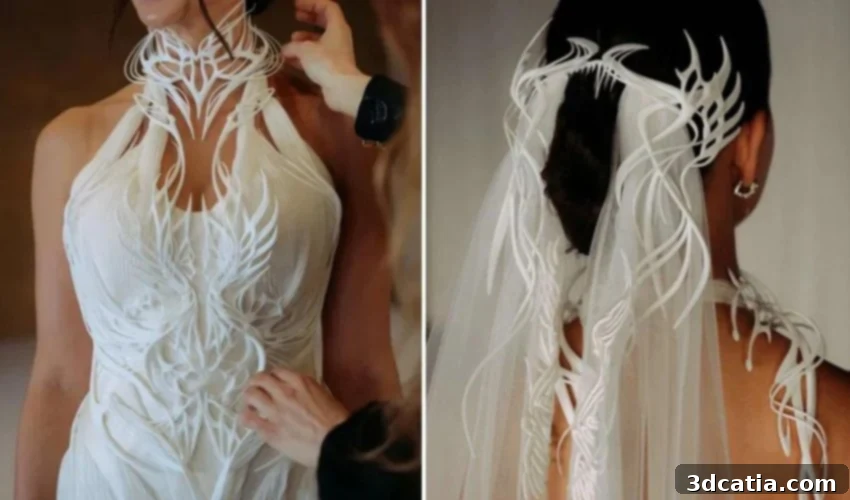
Pioneering Bridal Fashion: Iris van Herpen’s Exquisite 3D Printed Wedding Dress for Mariana Pavani
The world of haute couture is no stranger to innovation, but every so often, a creation emerges that redefines what’s possible, pushing the boundaries of design and technology. The concept of walking down the aisle in a custom 3D printed wedding dress might once have been dismissed as science fiction, yet this breathtaking vision has now become a tangible reality. This monumental achievement was brought to life through the collaborative genius of acclaimed Dutch couturier Iris van Herpen and the pioneering spirit of Brazilian tax lawyer Mariana Pavani. Pavani entrusted her most special garment to van Herpen’s unique artistic vision and expertise in additive manufacturing, resulting in a bridal gown that is nothing short of revolutionary.
Iris van Herpen, renowned for her avant-garde designs that seamlessly merge fashion, art, and technology, set out to imbue Pavani’s wedding dress with an ethereal, otherworldly delicacy. The resulting design, with its intricate, futuristic patterns adorning the bodice and neckline, appears remarkably solid while simultaneously exhibiting extraordinary flexibility and enduring durability. This harmonious fusion of high-tech elements and audacious experimental design has yielded a truly stunning creation, leaving an indelible mark on both the bride and the broader fashion landscape. The dress stands as a testament to how cutting-edge technology can be harnessed to achieve unparalleled aesthetic and functional qualities in fashion.
A Legacy of Innovation: Iris van Herpen and 3D Printing in Fashion
While Mariana Pavani’s wedding dress marks a significant milestone, it is important to note that this isn’t the first instance of additive manufacturing being employed to craft wedding dresses or high fashion. Iris van Herpen herself has a rich history with this transformative technology. Her inaugural foray into 3D printed fashion debuted back in 2010, featuring a distinctively rigid structure characterized by overlapping shells. This iconic piece was recently showcased at the prestigious “Sculpting The Senses” exhibition at the Musée des Arts Décoratifs in Paris, highlighting van Herpen’s enduring influence and foresight in the industry. Her work has consistently explored the dynamic interplay between organic forms and artificial structures, often pushing the limits of textile design through digital fabrication.
Beyond van Herpen, other innovative designers are also embracing 3D printing to revolutionize bridal wear. Designer Ada Hefetz, for instance, has skillfully integrated 3D printing to enhance conventional wedding dresses, adding intricate, bespoke touches that elevate them into unique works of art. However, van Herpen’s recent creation for Mariana Pavani transcends simple embellishment. This particular gown is a truly one-of-a-kind piece, meticulously tailored to the bride’s precise body contours, ensuring a fit and aesthetic that is utterly unparalleled. The dress made its grand debut as Pavani gracefully walked down the aisle on May 11, symbolizing a new era in personalized luxury and technological artistry in bridal fashion.
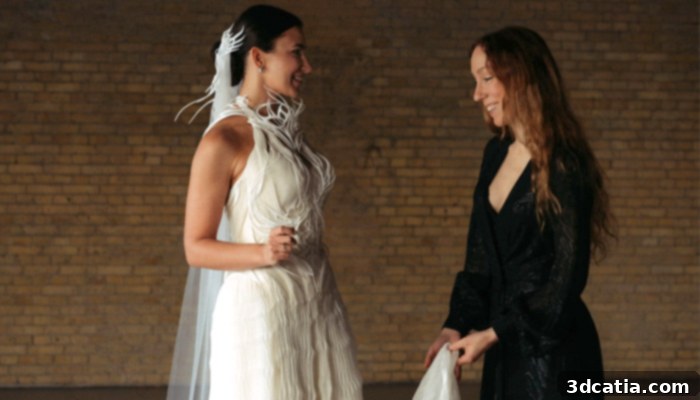
On the right, Iris van Herpen; on the left, Mariana Pavani with the 3D printed dress.
The Meticulous Creation of a 3D Printed Wedding Dress
The journey to create Mariana Pavani’s perfectly customized 3D printed wedding dress began with an advanced 3D body scan. This crucial first step allowed van Herpen’s team to capture every unique curve and dimension of Pavani’s physique with incredible precision, forming the digital blueprint for the gown. This digital foundation ensured that the subsequent design and fabrication processes would result in a garment that fit like a second skin. The design process was iterative and highly collaborative, involving several fittings of the hand-pleated base dress, crafted from delicate fabric, which would eventually integrate the complex 3D printed elements. This meticulous approach guaranteed that the intricate patterns generated digitally would align flawlessly with the underlying bodice design.
The digital file for this extraordinary dress was a massive 216.7 MB, reflecting the sheer complexity and detail embedded within its design. Iris van Herpen, a true visionary, dedicated an astonishing 600 hours to perfecting this digital design. This time involved not only artistic rendering but also intricate engineering to ensure the garment’s structural integrity, flexibility, and aesthetic appeal. Following the extensive design phase, the actual printing of the 3D elements took 41 hours, carried out at a specialized facility in Paris. The seamless nature of the dress is a defining characteristic, a feat that would be impossible to achieve with conventional pattern-making and sewing techniques. As van Herpen herself articulated, “This was really a dream project for me, because 3D-printed fashions are in museums, and on runways, but having it worn by someone on the most special day of her life, I think it’s really something else.” Her words capture the profound significance of this project, transcending the boundaries of art and daily life.
The Material and Vision: Nylon (PA12) and Blended Techniques
For the fabrication of the 3D printed components, Nylon (PA12) was chosen—a material that has long captivated the designer due to its remarkable properties. Nylon PA12 is a high-performance thermoplastic known for its exceptional strength, flexibility, and durability, making it an ideal choice for wearable art that must withstand movement and retain its form. Van Herpen elaborated on her choice, stating, “The quality of the flexible material is so, so good. She can sit in it, she can basically do anything in it without it becoming less flexible over time.” This speaks volumes about the material’s ability to offer both structural integrity and wearer comfort, challenging the perception of 3D printed garments as rigid or fragile.
Iris van Herpen’s design philosophy is characterized by a groundbreaking synergy between traditional couture techniques and cutting-edge high-tech elements. In her atelier, age-old methods such as meticulous hand-pleating, elegant draping, and intricate beading coexist harmoniously with advanced processes like silicone molding, precise laser cutting, and, of course, sophisticated 3D printing. She views both disciplines not as opposing forces but as integral, complementary aspects of her brand’s DNA. This philosophy is vividly embodied in Mariana Pavani’s unique 3D printed wedding dress, where the organic flow of traditional fabric meets the precise, architectural complexity of 3D printed forms. The result is a garment that is both deeply rooted in haute couture tradition and boldly future-facing.
Regarding the final stunning result, Mariana Pavani’s reflections underscore the success of the project. She concluded, “I really wanted an outlier dress, something unique. From the beginning, I was hoping that the dress would incorporate 3D printing in its design.” Her desire for a truly distinctive bridal gown found its perfect expression in van Herpen’s visionary approach, creating a piece that will undoubtedly inspire future generations of designers and brides. This dress is more than just a garment; it is a statement about personalization, innovation, and the endless possibilities that emerge when art, technology, and human imagination converge. To delve deeper into the captivating world of this project and Iris van Herpen’s work, we encourage you to click here.
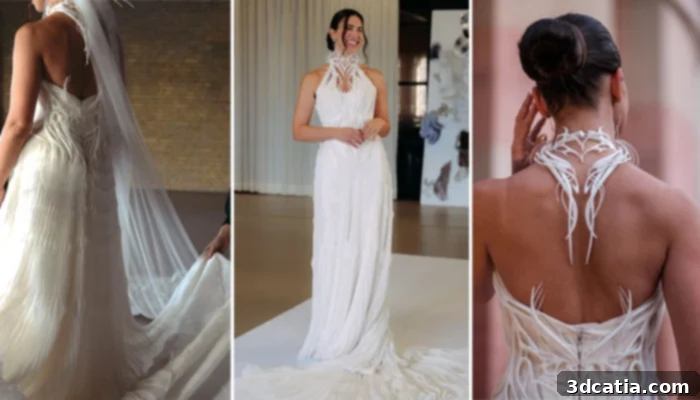
The wedding dress combines technology with tradition.
The Future of Bridal Wear and Additive Manufacturing in Fashion
The creation of Mariana Pavani’s 3D printed wedding dress signifies a pivotal moment for the fashion industry, particularly within the bridal sector. It demonstrates not only the extraordinary aesthetic potential of additive manufacturing but also its capacity for unparalleled customization. For brides seeking truly unique, personalized gowns that transcend traditional designs, 3D printing offers a limitless canvas. This technology allows for the creation of intricate geometries, complex textures, and seamless forms that would be impossible or prohibitively expensive to achieve with conventional textile manufacturing methods. Furthermore, it opens avenues for exploring sustainable practices, potentially reducing waste through precise material usage and on-demand production.
The work of Iris van Herpen, exemplified by this magnificent wedding dress, consistently challenges our preconceived notions of what clothing can be. It blurs the lines between sculpture and garment, between technology and human touch. As 3D printing technology continues to advance, becoming faster, more affordable, and capable of handling an increasing array of materials, we can anticipate a burgeoning revolution in fashion design. From bespoke everyday wear to avant-garde haute couture, the future of fashion is undeniably intertwined with digital fabrication. This particular dress is a brilliant beacon, illuminating a path towards a future where personal expression is enhanced by technological innovation, allowing individuals to truly wear their dreams.
What are your thoughts on this groundbreaking 3D printed wedding dress by the visionary Iris van Herpen? Do you believe this marks a significant shift in the world of fashion and bridal wear? We invite you to share your perspectives and comments below, or engage with us on our LinkedIn, Facebook, and Twitter pages! Don’t miss out on the latest advancements and news from the world of 3D printing – remember to sign up for our free weekly newsletter here, delivered straight to your inbox. You can also discover more captivating videos and stories on our YouTube channel.
*All Photo Credits: Iris van Herpen