
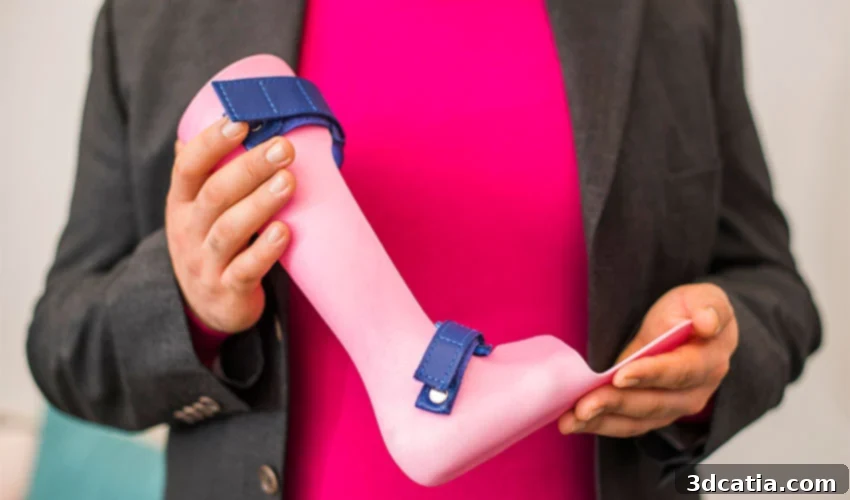
Revolutionizing Orthotics: How 3D Printing and AI are Transforming Patient Care with Andiamo
Orthoses are essential medical devices meticulously designed to stabilize, relieve pain, immobilize, guide, or correct various parts of the body. Given the unique physiological requirements of each individual, an truly effective orthotic device must be perfectly adapted to the wearer’s specific anatomy and functional needs. However, in traditional manufacturing practices, achieving this level of perfect customization has historically been a significant challenge, often resulting in devices that are suboptimal or uncomfortable.
Addressing this critical gap, Andiamo, a pioneering startup based in London, is empowering clinics and clinicians to deliver truly tailor-made orthoses to their patients. Their innovative platform leverages the power of advanced 3D printing technology combined with sophisticated Artificial Intelligence (AI). The integration of additive manufacturing into the orthotics field brings forth unparalleled benefits, most notably in terms of accuracy, production time, and cost efficiency. For example, what once took three months through conventional techniques – the delivery of a perfectly tailored brace – can now be achieved within a remarkable 48-hour timeframe thanks to Andiamo’s 3D printing capabilities. To delve deeper into Andiamo’s transformative platform and its ambitious vision for the orthotics and prosthetics (O&P) industry, we had the privilege of speaking with their Chief Commercial Officer, Hugh Sheridan.
3DN: Could you introduce yourself and elaborate on your connection to 3D printing within the orthotics sector?

Hugh Sheridan, Chief Commercial Officer at Andiamo
“I am Hugh Sheridan, Chief Commercial Officer of Andiamo, and my involvement in the Orthotics Industry spans over two decades. Prior to my role at Andiamo, I served as the CEO of the UK’s largest Orthotic Material Manufacturer and Podiatry Supplier, which provided me with a deep, firsthand understanding of the industry’s intricate workings and inherent challenges. My initial foray into 3D printing began with a project where we started test-printing foot orthotics. We utilized an FDM (Fused Deposition Modeling) 3D printer, experimenting with TPU (Thermoplastic Polyurethane) filament, specifically designing structures with a lattice infill. The material itself proved to be absolutely brilliant; its flexibility, durability, and resilience opened up a whole new spectrum of possibilities for meeting highly specific prescription variables that were previously difficult or impossible to achieve with traditional methods. Despite the enormous potential we saw, the 3D printers available at that early stage were often slow and lacked the reliability necessary for widespread clinical adoption. This early experience, however, solidified my belief in the transformative power of additive manufacturing for personalized medical devices.”
3DN: How did the foundational idea for Andiamo originally come to fruition?
“The compelling story behind Andiamo traces back to its founders, Naveed and Sam Parvez, and their deeply personal journey. Their son, Diamo, born in 2003, was diagnosed with severe developmental delay. He was quadriplegic and had extremely limited head control, necessitating extensive medical intervention and support to assist him with even the most basic bodily functions. Throughout his young life, Diamo required a multitude of orthotic braces and gaiters to aid him in performing simple actions, which for any child, should be effortless. The process of obtaining and, more critically, getting his orthotics ‘right’ was an incredibly challenging, protracted, and emotionally draining experience for the family. The traditional manufacturing workflow was notoriously slow; braces would often arrive several months after the initial measurements were taken. By that point, Diamo, like many growing children, would have already outgrown them, rendering the newly delivered devices ineffective or even uncomfortable. This repetitive cycle of anticipation, disappointment, and wasted resources was a significant source of frustration for Naveed and Sam.”
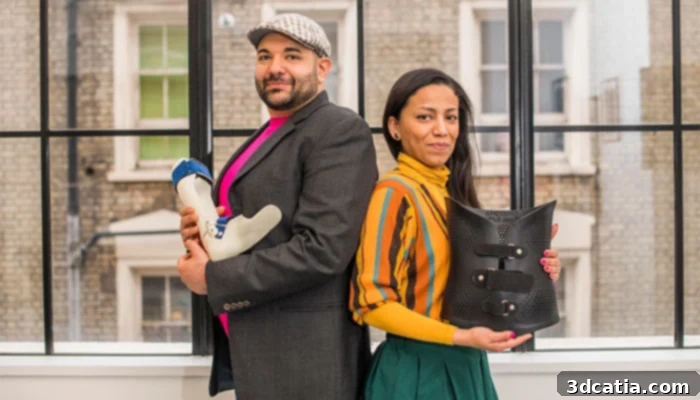
Samiya and Naveed Parvez, the parents of Diamo and founders of Andiamo
“After Diamo’s passing in March 2012, Naveed and Sam were profoundly driven by a singular, powerful mission: to ensure that no other family would ever have to endure the same agonizing and frustrating experience they did. This profound motivation spurred them to undertake a meticulous investigation into the existing orthotic service models, production methodologies, and procurement processes. Through their extensive research, they quickly realized that advanced 3D printing technology held the key to unlocking a paradigm shift in orthotic care. They envisioned a future where additive manufacturing could offer vastly more sophisticated prescription opportunities, significantly lower the cost of devices, and dramatically improve quality, often achieving a perfect ‘first-time fit.’ This, they understood, would fundamentally transform and vastly improve the entire experience for patients and their families, reducing stress and enhancing outcomes.
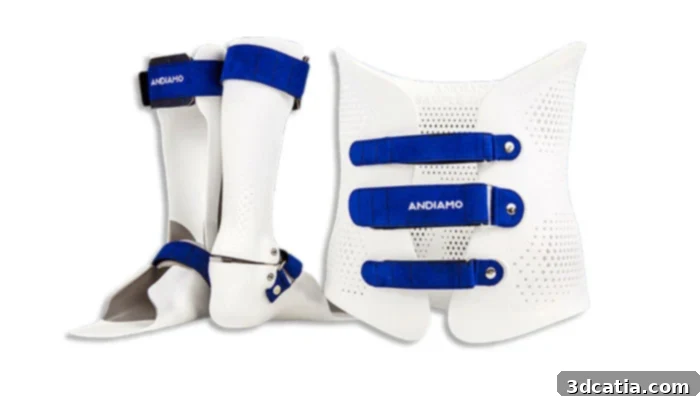
“The Andiamo platform has been meticulously developed to integrate seamlessly with several cutting-edge additive manufacturing technologies, including Selective Laser Sintering (SLS), Multi Jet Fusion (MJF), and Digital Light Synthesis (DLS). These specific technologies were chosen for their proven ability to produce highly accurate, robust, and complex medical devices. By harnessing these advanced manufacturing methods, coupled with the intelligence of the Andiamo AI platform, we are able to manufacture personalized medical devices at the lowest possible cost, at unparalleled speeds, and with the most stringent quality controls in the industry. This technological synergy is at the heart of our commitment to delivering superior orthotic solutions.”
3DN: What are the primary benefits that 3D printing brings to the orthotics industry specifically?
“The benefits of integrating 3D printing into the orthotics and prosthetics (O&P) industry can be succinctly summarized into three critical areas: Cost, Profit, and Time with patients. Traditionally, the entire O&P sector has been built around creating custom devices using a range of labor-intensive and material-heavy methods. These typically involve moulding materials around a patient’s body part, often starting with cumbersome plaster casts, foam boxes, wooden lasts, or foam blocks to capture the initial form. Once this initial form and the prescription have been established, various sheet materials are then meticulously cut, shaped, and formed to create the actual device. The most widely used materials in this traditional approach include EVA, PU, polypropylene, polyethylene, polyester, rubber, fiberglass, cotton, carbon fiber, and leather. Furthermore, in the case of prosthetic devices, specialized components such as prosthetic feet and knee joints are then mechanically attached to these moulded materials. This entire process necessitates a huge inventory of diverse products, components, raw materials, accessories, and specialized manufacturing equipment, contributing to a complex and expensive supply chain.”
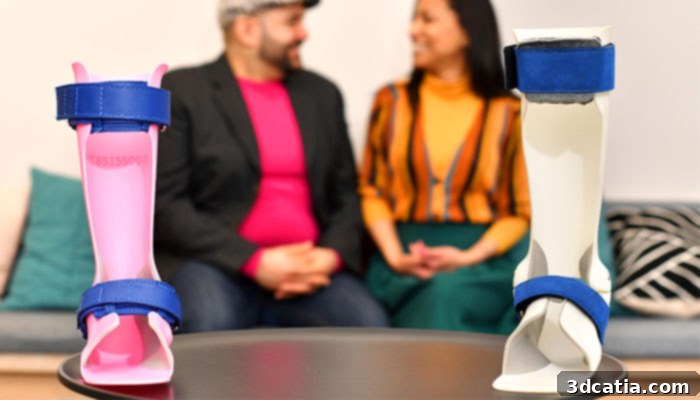
“In stark contrast, the Andiamo AI platform, by leveraging advanced 3D printing technology, fundamentally streamlines and, in many cases, entirely eliminates the traditional costs and complexities associated with this cumbersome supply chain. The impact of this transformation is profoundly beneficial for clinicians and clinic owners, as well as significantly enhancing their relationships with patients. By centralizing the manufacturing process and digitalizing the design workflow, the Andiamo platform is able to deliver immense cost savings. These savings are not merely theoretical; they translate directly into a more efficient and sustainable business model for clinics. At the same time, clinicians experience a massive return in terms of time. The promise of Andiamo’s ‘first-time fit’ devices drastically reduces the need for multiple adjustments and follow-up appointments. This reclaimed time is invaluable, allowing clinicians to dedicate more focused attention to patient interaction, education, and holistic care, rather than being bogged down by manufacturing challenges. The result is better patient experiences, superior clinical outcomes, and ultimately, a more fulfilling and impactful practice for healthcare professionals.”
3DN: What specific role does Artificial Intelligence play in Andiamo’s innovative approach?
“The integration of Artificial Intelligence within Andiamo’s platform is multifaceted and plays three crucial roles in revolutionizing orthotic design and production. Firstly, let’s consider CAD/CAM (Computer-Aided Design/Computer-Aided Manufacturing) systems. While these are used extensively in the O&P industry, particularly for insoles where templates and predefined shapes are common, their application for truly custom orthoses and prostheses has been limited. The reason is simple: every orthotic and prosthetic wearer is inherently unique. This variability means that a dedicated CAD technician is typically required to meticulously design each device, ensuring that the necessary corrections and personalized adaptations are precisely built into the machined body form. To achieve a ‘first-time fit’ with traditional CAD/CAM, a skilled CAD technician would be involved approximately 90% of the time. This reliance on human expertise, while ensuring customization, presents a significant bottleneck for scaling production. Our AI system meticulously learns from vast datasets of successful orthotic designs and patient anatomies. This enables us to automatically generate and refine device designs to an unprecedented level of accuracy and customization, allowing us to scale the number of unique designs to any required level. Crucially, this is achieved while consistently delivering first-time fit devices and rigorously upholding our core promise of not relying on generalized templates or shapes, ensuring true personalization for every patient.
“Secondly, we’ve embedded sophisticated FEA (Finite Element Analysis) engineering directly into our design process, and this critical aspect is intelligently controlled by our AI. FEA is a powerful simulation tool that predicts how a device will react under real-world stresses, forces, and movements. This allows us to optimize the material distribution, predict potential stress points, and fine-tune properties like stiffness and flexibility across different areas of the orthosis. By automating and optimizing FEA through AI, we can explore and implement a vast array of prescription possibilities that would be prohibitively complex and time-consuming to achieve manually. This translates into highly optimized devices that offer superior comfort, functionality, and durability. Finally, AI also plays an integral part in our quality assurance process. Clinicians are able to visually inspect the digitally designed device from any web browser, reviewing every intricate detail and confirming its specifications before it proceeds to the 3D printing stage. This remote, AI-facilitated sign-off process ensures that clinicians have full confidence in the device, dramatically speeding up the approval cycle while maintaining rigorous quality control.”
3DN: Can you share some insights into Andiamo’s future projects and strategic direction?
“At our core, we fundamentally believe that Andiamo is not merely a 3D printing company; we are in the profound business of creating happy families. This overarching mission drives every strategic decision we make. Our vision for the future involves offering the widest possible range of orthotic and prosthetic devices, ensuring they are available at the lowest possible cost and with the highest achievable quality, and making these accessible in all regions of the world. This global expansion and comprehensive device offering will establish a broad wearer base, which is crucial for our next major innovation phase: the integration of advanced sensors into all our devices.
“These integrated sensors will be capable of measuring vital data points such as patient compliance with wearing schedules, precise gait analysis, localized pressure distribution, and overall activity levels. We are firmly convinced that by providing clinicians with a richer, more objective dataset about their wearers’ daily lives and device interaction, we can foster significantly better health outcomes. This isn’t just about improving the patient’s physical condition; it’s about empowering the entire family unit with peace of mind and supporting a higher quality of life. This data-driven approach represents the undeniable future of personalized healthcare, enabling proactive adjustments, targeted interventions, and truly personalized care pathways that adapt to the patient’s evolving needs in real-time.”
3DN: Do you have any final thoughts or words of wisdom for our readers?
“The cloud-based platform that has been meticulously engineered and brought to life by a dedicated team of 30 individuals, working collaboratively across our offices in Gdansk and London, was in many ways born out of an accidental discovery – the pursuit of a solution to a parent’s profound problem. What this remarkable group of people has successfully built is far more than just a piece of software; it’s a revolutionary platform combined with a centralized 3D printing service that stands to offer the entire O&P industry truly massive cost savings. Furthermore, it delivers the consistent benefit of first-time fit devices, dramatically reducing the need for iterative adjustments and uncomfortable patient experiences. Crucially, thanks to the sophisticated integration of FEA technology within the design process, it unlocks an entirely new spectrum of prescription possibilities, allowing for unprecedented levels of customization and optimization tailored to each individual’s unique needs. Andiamo represents a paradigm shift towards more efficient, effective, and empathetic orthotic and prosthetic care.”
What are your thoughts on Andiamo’s innovative approach and the future of 3D printed orthotics? We invite you to share your comments below or engage with us on our Facebook and Twitter pages! Don’t forget to sign up for our free weekly Newsletter to receive all the latest news and developments about 3D printing directly in your inbox!