
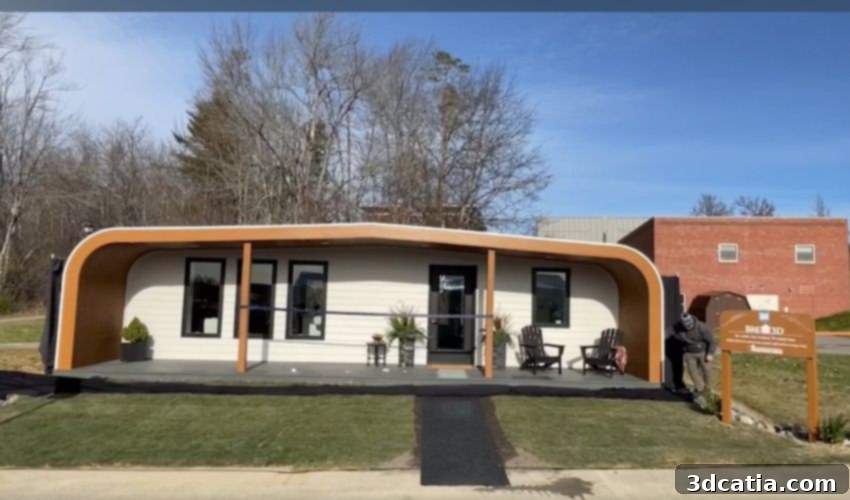
Revolutionizing Construction: University of Maine’s BioSource3D – The First 3D Printed Home from Sustainable, Biosourced Materials
The concept of 3D printed houses has rapidly moved from futuristic concept to a tangible solution, captivating researchers and innovators worldwide. This cutting-edge technology holds immense promise for addressing the global housing crisis, offering a sustainable, efficient, and reproducible method for constructing homes. At the forefront of this revolution is the University of Maine, whose Advanced Structures and Composites Center (ASCC) has achieved a significant milestone: the creation of the world’s first 3D printed house constructed entirely from biosourced materials. This groundbreaking project, named BioSource3D, is the result of a collaborative effort involving MaineHousing and the Maine Technology Institute, bolstered by crucial funding from the U.S. Department of Energy’s Hub and Spoke program, a partnership between UMaine and Oak Ridge National Laboratory. This initiative not only showcases the transformative potential of additive manufacturing in construction but also pioneers a new era of eco-friendly building practices, leveraging abundant natural resources for a greener future.
Introducing BioSource3D: A Prototype for Sustainable Living
The BioSource3D prototype is a compact yet impactful 600-square-foot home designed to demonstrate the viability and advantages of biosourced 3D printing in construction. This innovative structure represents a significant leap forward in sustainable building. What makes this project particularly remarkable is the scale of the technology employed. The house was meticulously crafted using what ASCC proudly claims to be the world’s largest polymer 3D printer, the MasterPrint x3 from Ingersoll. Ingersoll, a renowned manufacturer of large-format printers based in Illinois, developed this colossal machine, which is pivotal to realizing such ambitious projects.
The MasterPrint x3 boasts an impressive set of specifications that make it uniquely suited for large-scale construction. With a working volume of 6m x 4m x 2m and an even larger print volume of 18.3m x 6.7m x 3m, it offers unparalleled capacity for printing substantial structures. Its capability to print materials at a rapid rate of 68kg per hour, coupled with a sophisticated 5-axis machine head, ensures both speed and precision in the construction process. This advanced printer not only enables the creation of large-format objects but also facilitates intricate designs and robust structural integrity. Crucially, the BioSource3D house is constructed from fully recyclable materials, aligning perfectly with its sustainable ethos, and is engineered to be exceptionally well-insulated, promising energy efficiency and comfort for future occupants.
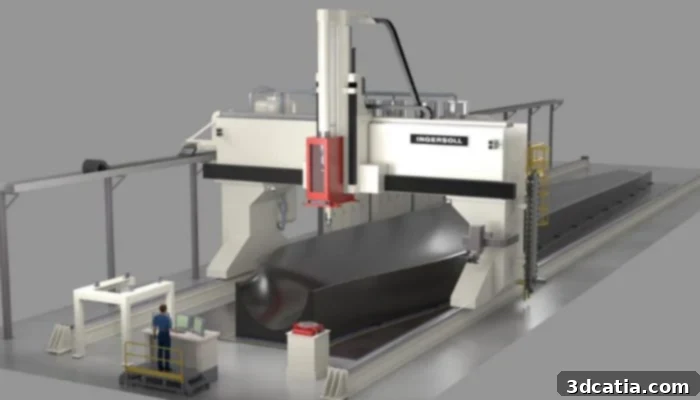
The Ingersoll 3D printer, MasterPrint x3, was instrumental in bringing the BioSource3D project to life. (Photo credit: Ingersoll)
Innovating with Forest-Derived Materials: The Power of Cellulose Nanofibers
The ASCC’s research strategy at the University of Maine is deeply rooted in leveraging the abundant natural resources of the state. Maine holds the distinction of being the most forested state in the U.S., providing an unparalleled natural laboratory for developing sustainable, forest-derived materials. This strategic advantage is central to the BioSource3D project. Researchers at the ASCC harness these vast forest resources to produce cellulose nanofibers (CNF) – a groundbreaking material derived from wood pulp. These CNFs are then carefully dried and functionalized with thermoplastics, creating a composite material that is not only robust but also entirely biosourced and recyclable.
This innovative material development is the cornerstone of the 3D-printed biosourced house. The resultant properties of these CNF-enhanced composites are remarkable, demonstrating strength, durability, and insulation capabilities that can rival or even surpass traditional building materials. This advancement is not merely about constructing a house; it’s about pioneering a new class of sustainable building composites that significantly reduce environmental impact. The ASCC’s overarching focus is encapsulated in its “GEM” initiative, standing for Green Energy and Materials. Through GEM, the center is dedicated to conducting cutting-edge research projects that actively support Maine’s ambitious goal of achieving carbon neutrality by 2045. This includes exploring ways to sequester carbon in building materials and reduce reliance on fossil fuel-derived products, positioning Maine as a leader in green innovation.
Beyond BioSource3D: UMaine’s Legacy in Large-Scale Additive Manufacturing
The success of BioSource3D is not an isolated achievement but rather a testament to the University of Maine’s ASCC’s long-standing expertise and leadership in large-scale additive manufacturing. The center has a proven track record of pushing the boundaries of what’s possible with 3D printing. A notable prior accomplishment includes the production of the world’s biggest 3D printed boat, aptly named 3Dirigo. This impressive vessel measures 25 feet long and weighs a substantial 5,000 lbs, earning it the dual distinction of being simultaneously the world’s largest 3D printed boat and the largest 3D printed object overall. Such projects underscore the ASCC’s capability to conceptualize, design, and manufacture incredibly large and complex structures using additive manufacturing techniques, laying a strong foundation for innovative endeavors like BioSource3D. These achievements firmly establish the University of Maine as a global leader in utilizing advanced composites and additive manufacturing for sustainable and large-scale applications.
Addressing the Housing Crisis with Sustainable 3D Printing
The importance of sustainable and affordable housing solutions cannot be overstated in today’s world. With global resources under increasing strain and housing becoming an increasingly scarce and expensive commodity in many regions, the ability to create homes relatively cheaply and quickly, using methods that can be replicated for years to come, is paramount. The National Housing Conference in the U.S. has highlighted a critical issue: hundreds of towns and cities are experiencing soaring house prices, leading to a growing disillusionment among young people regarding home ownership. This trend signals a fundamental challenge to social and economic stability, necessitating innovative approaches to housing development.
In this context, 3D printing emerges as a highly viable long-term alternative to traditional, often costly, and time-consuming construction methods. The technology offers several key advantages:
- Speed: 3D printers can construct walls and structural components significantly faster than conventional building teams, reducing overall project timelines.
- Cost-Effectiveness: By automating parts of the construction process and optimizing material usage, 3D printing can lead to substantial cost savings in labor and materials.
- Material Efficiency: Additive manufacturing generates less waste compared to traditional methods, as materials are deposited precisely where needed.
- Design Flexibility: The digital nature of 3D printing allows for complex and customizable architectural designs that might be cost-prohibitive with conventional construction.
- Sustainability: The ability to use locally sourced, recycled, or biosourced materials, as demonstrated by UMaine, drastically reduces the environmental footprint of new constructions.
Projects similar to UMaine’s, such as those undertaken by the American firm Azure, further illustrate the diverse applications of 3D printing in construction. Azure, for instance, constructs buildings using recycled plastic with their proprietary printer, showcasing another pathway to sustainable building through material innovation. These initiatives collectively underscore the immense potential of 3D printing to provide accessible, affordable, and eco-friendly housing solutions for communities worldwide.
For those interested in delving deeper into the specifics of this groundbreaking 3D-printed housing project and the broader research efforts at the University of Maine, additional information can be found on the ASCC website HERE. This resource provides comprehensive details on the BioSource3D project, the materials science behind it, and the vision for future sustainable construction. The pioneering work at UMaine sets a powerful precedent for how academic research, government funding, and industry collaboration can converge to tackle pressing societal challenges like housing and environmental sustainability, paving the way for a more resilient and resource-efficient future.
What are your thoughts on 3D-printed houses, especially those made from sustainable, biosourced materials? Would you consider living in such an innovative home? Share your opinions and insights with us in a comment below or join the conversation on our LinkedIn, Facebook, and Twitter pages! Don’t miss out on the latest advancements and breaking news in the world of 3D printing – sign up for our free weekly Newsletter here, delivered straight to your inbox. You can also explore all our engaging videos and exclusive content on our YouTube channel.
*Cover photo credits: University of Maine Advanced Structures and Composites Center on LinkedIn