
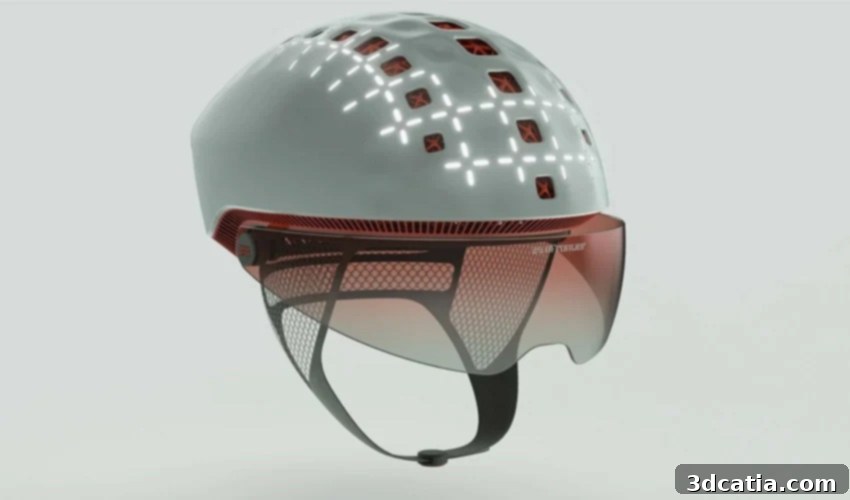
Revolutionizing Cycling Safety: The PYLO 3D Printed Smart Helmet by nFrontier
Additive manufacturing, more commonly known as 3D printing, has been a driving force behind numerous innovations in the cycling industry in recent years. This transformative technology has already brought significant advancements to various bicycle components, from performance-enhancing bicycle saddles designed for optimal comfort and ergonomics, to lightweight and structurally complex frames that push the boundaries of design and material science, and even specialized stems tailored for individual rider needs. Now, this wave of innovation has extended to one of the most critical pieces of cycling equipment: the bicycle helmet.
Introducing the PYLO, a groundbreaking 3D printed bicycle helmet developed by nFrontier, a forward-thinking company based in Berlin, Germany. What makes the PYLO helmet truly exceptional is not just its genesis through advanced additive manufacturing techniques, but also its comprehensive integration of smart, high-tech features designed to redefine cycling safety. nFrontier envisions the PYLO as more than just a product; it represents a pivotal first step towards their overarching mission of fostering a “better tomorrow enabled by impact-driven products, business models and ventures.” This commitment to purposeful innovation underscores their ambition to create products that not only perform exceptionally but also contribute positively to society and environmental sustainability.
nFrontier’s Vision: Blending Innovation and Impact with the PYLO Helmet
Since its establishment in 2020, nFrontier has focused on creating products that stand at the intersection of design, technology, and real-world impact. The PYLO bicycle helmet, their inaugural market offering, perfectly embodies this philosophy. It’s a testament to the seamless integration of various cutting-edge disciplines, bringing together sophisticated design principles, the precision and flexibility of additive manufacturing, and advanced digital high-tech components. This holistic approach was crucial for the company, as they aimed to develop a bicycle helmet that would not only meet but exceed the diverse needs of both professional athletes and everyday recreational riders.
The primary goal was to engineer a helmet that prioritizes rider comfort, protection, and modern aesthetics. This meant meticulously crafting a helmet from lightweight materials to minimize strain on the rider’s head during long rides, while simultaneously ensuring robust structural integrity for maximum protection. Furthermore, nFrontier placed significant emphasis on achieving a modern and elegant design that cyclists would be proud to wear. The result is a product that doesn’t compromise on style while setting new benchmarks for safety and technological integration in the cycling world. The PYLO is a clear demonstration of how advanced manufacturing processes can be leveraged to create intelligent, user-centric solutions for everyday challenges, ultimately making cycling a safer and more enjoyable experience for everyone.
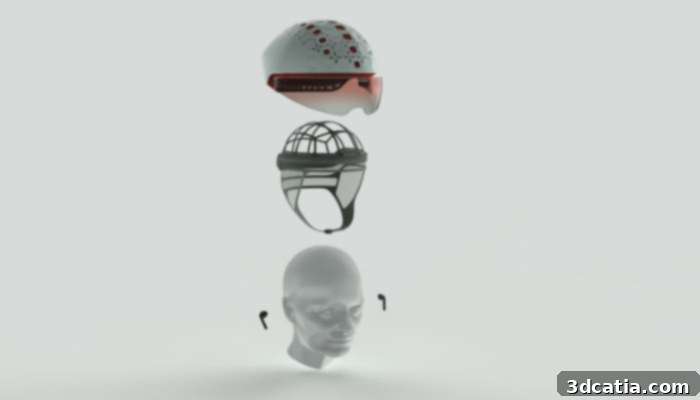
Photo Credits: nFrontier
Improving Bicycle Helmet Design and Functionality with 3D Printing
From its inception, nFrontier dedicated considerable effort to identifying the most suitable technology partners and manufacturing processes to bring the ambitious PYLO bike helmet concept to fruition. This extensive research period led them to embrace the immense potential of 3D printing and advanced digital design tools. For the intricate software design phase, nFrontier leveraged Autodesk 3DSMax, a powerful tool that allowed for precise modeling and iterative design refinements. When it came to the physical realization of the helmet’s critical components, they opted for Stratasys’s renowned F370 and J55 3D printers. These industrial-grade machines were instrumental in manufacturing the helmet’s inner lining, a component that plays a crucial role in both protection and comfort.
The decision to 3D print the inner lining of the PYLO helmet was a strategic one, offering a multitude of benefits over traditional manufacturing methods. Additive manufacturing allows for the creation of complex lattice structures and customized geometries that are impossible to achieve with injection molding or foam cutting. This design freedom translates directly into enhanced safety and comfort. The 3D printed lining is engineered to reinforce the helmet’s structural integrity, improving its ability to absorb and dissipate impact forces more effectively. Furthermore, the customizable nature of 3D printing enables nFrontier to create an inner lining that conforms more closely to the unique contours of the wearer’s head, providing an unparalleled level of comfort and a secure fit. This tailored approach minimizes pressure points and enhances overall stability, ensuring that the helmet remains comfortable even during extended periods of use. The ability to prototype quickly and iterate designs with 3D printing also significantly accelerated the development cycle, allowing nFrontier to refine the PYLO to its optimal state.
Unpacking PYLO’s Smart Safety Features: Beyond Additive Manufacturing
While its innovative use of additive manufacturing sets the PYLO helmet apart, its truly revolutionary aspect lies in its array of integrated smart safety features. nFrontier has gone far beyond basic head protection, incorporating advanced technologies typically found in automotive safety systems to offer cyclists an unprecedented level of security and situational awareness. This proactive approach to safety aims to mitigate risks before they lead to accidents, enhancing the overall cycling experience for riders of all skill levels.
Integrated Airbag System for Critical Protection
One of the most striking safety innovations in the PYLO helmet is its integrated airbag system. In the unfortunate event of an accident or significant impact, this airbag automatically deploys to provide crucial protection for some of the most vulnerable areas of a cyclist’s head and face: the jawbones, teeth, and eyes. Unlike traditional helmets that primarily focus on cranial protection, the PYLO’s airbag extends the safety zone, significantly reducing the risk of severe facial injuries. This self-deploying mechanism ensures instant protection without any manual intervention, acting as an intelligent, responsive shield when it matters most. This feature alone marks a substantial leap forward in bicycle helmet design, bringing a level of passive safety previously unavailable to cyclists.
Advanced LED Lighting for Enhanced Visibility
Visibility is paramount for cyclist safety, especially in urban environments or low-light conditions. The PYLO addresses this with intelligently placed LED lights on the back of the helmet. These lights are not merely decorative; they serve as highly effective indicators for other road users. With a simple double-tap gesture, cyclists can activate various lighting modes, including traditional head and tail lights for general visibility, as well as specialized blinder LEDs. These blinder lights can significantly increase a cyclist’s presence, particularly when navigating traffic or making turns. This intuitive control system allows riders to adapt their visibility to prevailing conditions, making them more conspicuous to drivers and pedestrians, thereby reducing the risk of collisions. The integration of such active lighting solutions underlines nFrontier’s commitment to comprehensive rider safety.
LIDAR Technology: A New Eye for Cyclists
Perhaps the most sophisticated safety feature integrated into the PYLO helmet is its LIDAR technology. LIDAR, which stands for Light Detection and Ranging, is an advanced remote sensing method that uses pulsed laser light to measure distances to objects. In the context of the PYLO helmet, this technology functions as a proactive safety system, continuously scanning the cyclist’s surroundings. It acts as an invaluable “third eye,” alerting the rider to potential dangers that might be gathering in their blind spot – areas typically obscured from view by mirrors or peripheral vision. Even more critically, the LIDAR system can detect when vehicles of all kinds are approaching the cyclist at too high a speed, or when they are closing in dangerously fast. By providing real-time alerts, the PYLO helmet empowers cyclists with enhanced situational awareness, giving them precious extra seconds to react and avoid potential accidents. This level of active threat detection is a game-changer for urban cycling and busy roads, truly bringing automotive-level safety intelligence to bicycle helmets.
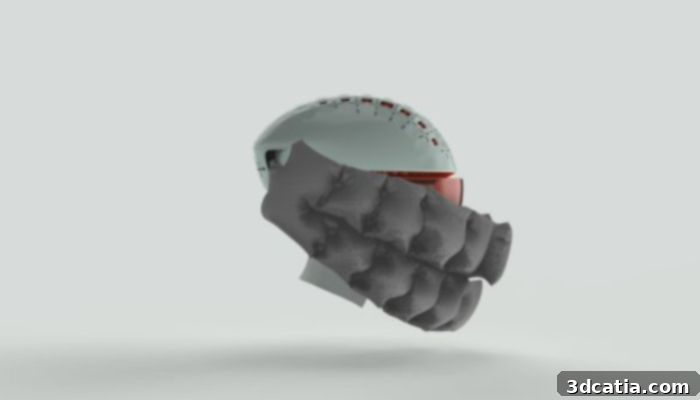
The PYLO bicycle helmet contains a self-releasing airbag (photo credits: nFrontier)
Beyond Technology: A Vision for Sustainable Mobility
Daniel Büning, CEO of nFrontier, articulated the core philosophy behind the PYLO helmet and the company’s broader mission, stating, “To enhance bike rider safety, we see the urgent need for a technology transfer from the automotive, electronic, and computer industries. Reducing the number of accidents is a key driver to bicycle utilization as a means for sustainable mobility.” This statement perfectly encapsulates nFrontier’s commitment to cross-industry innovation. By adapting proven safety technologies from sectors like automotive into cycling, they aim to significantly elevate the standard of rider protection. This, in turn, is expected to encourage greater adoption of bicycles as a primary mode of transport. A safer cycling environment not only protects individual riders but also fosters a culture where sustainable mobility choices, such as cycling, become more appealing and accessible to a wider population. The PYLO helmet is thus more than just a piece of gear; it’s a catalyst for positive societal change, promoting healthier lifestyles and reducing environmental impact through increased bicycle utilization. To delve deeper into nFrontier’s innovative projects and vision, you can visit their official website by clicking HERE.
The Future of Cycling Protection with 3D Printing and Smart Tech
The nFrontier PYLO 3D printed smart bicycle helmet represents a significant milestone in personal protective equipment for cyclists. By meticulously combining the design freedoms and precision of additive manufacturing with advanced digital technologies like airbags, intelligent LED lighting, and cutting-edge LIDAR systems, nFrontier has engineered a helmet that addresses a broad spectrum of safety concerns. This innovative product not only offers superior impact protection but also actively works to prevent accidents by enhancing rider visibility and situational awareness. The PYLO is a shining example of how interdisciplinary innovation and a focus on impact-driven solutions can lead to products that genuinely improve lives and contribute to a more sustainable future. As cycling continues to grow in popularity, solutions like the PYLO will be crucial in ensuring that this eco-friendly mode of transport remains a safe and attractive option for everyone.
Would you consider using this advanced 3D printed bicycle helmet for your daily rides or adventures? We’d love to hear your thoughts and insights! Share your opinions in a comment below or join the conversation on our LinkedIn, Facebook, and Twitter pages! Don’t forget to sign up for our free weekly Newsletter here, to get the latest 3D printing news delivered straight to your inbox! You can also find all our compelling videos and interviews on our YouTube channel.
*Cover Photo Credits: nFrontier