
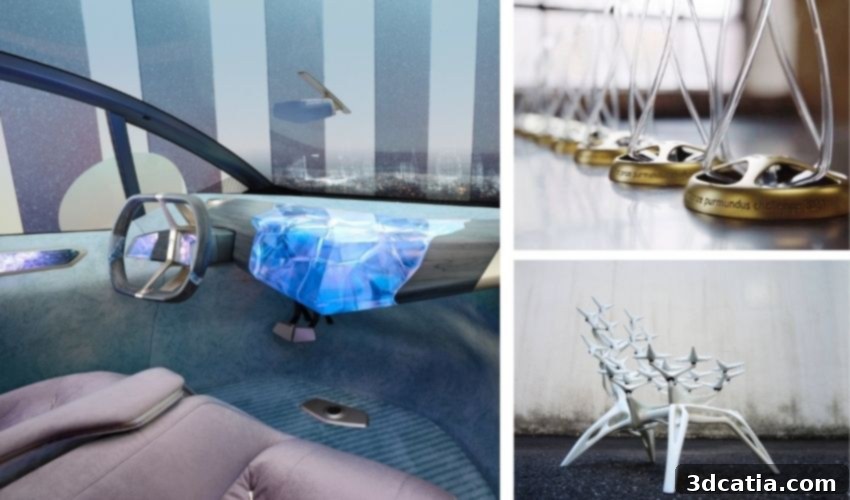
The Purmundus Challenge 2021: Unveiling Groundbreaking 3D Printing Innovations at Formnext
Under the inspiring motto “Innovations in progress,” the Purmundus Challenge returns for its ninth edition this year, solidifying its reputation as a premier platform for groundbreaking advancements in additive manufacturing. This prestigious international competition is dedicated to recognizing and celebrating the most innovative projects across a vast spectrum of fields, including medicine, biotechnology, advanced 4D printing, virtual reality (VR), robotics, renewable energy solutions, mechanical and plant engineering, e-mobility, and cutting-edge drive technology. The Purmundus Challenge has consistently highlighted how 3D printing is not just a manufacturing method but a catalyst for radical design freedom and functional integration, pushing the boundaries of what’s possible.
Last year, HUHN cycles captured the coveted Purmundus Challenge Trophy at Formnext Connect with their revolutionary 3D-printed bicycle frame crafted from titanium. Their ability to leverage additive manufacturing for superior performance, lightweight design, and complex geometries deeply impressed the expert jury. As anticipation builds, the jury once again expects a new wave of exciting ideas and transformative concepts from this year’s participants. The competition has now narrowed down to a select group of 35 finalists, each poised to present their visionary projects at Formnext, the world’s leading exhibition for additive manufacturing and industrial 3D printing. The grand winners will be announced on November 18th, an event eagerly awaited by the entire industry. We’ve delved into some of these remarkable projects, offering a glimpse into the future of design and engineering shaped by additive manufacturing, and we’re eager to see if our chosen highlights will capture the jury’s attention!
The rapid evolution of 3D printing technologies has unlocked unprecedented possibilities for designers and engineers, moving beyond mere prototyping to facilitate the production of highly complex, customized, and functionally optimized end-use parts. This design freedom allows for intricate geometries that are impossible or cost-prohibitive with traditional manufacturing methods, leading to lighter components, integrated functionalities, and superior performance characteristics. From medical implants tailored to individual patients to advanced aerospace components with optimized internal structures, additive manufacturing is redefining product development across nearly every sector. The Purmundus Challenge serves as a crucial spotlight, showcasing these transformative applications and inspiring future innovators to harness the full potential of 3D printing.
BMW’s Phygital Icon: Redefining Automotive Interiors
BMW, a titan in automotive innovation, has always been at the forefront of combining luxury with advanced technology. Their entry, “Phygital Icon,” aims to revolutionize the traditional automobile dashboard, specifically focusing on the instrument panel. This ambitious project seeks to create a truly immersive and futuristic user experience within the vehicle’s interior. BMW is strategically employing 3D printing to produce the intricate V-shaped structure that forms the core of this innovative design. This technology is not merely a manufacturing choice but an enabler for unprecedented aesthetic and functional integration.
Responsible designers Matthias Seitz, Sophie Richter, and Lee Chung Kyo have harnessed the power of additive manufacturing to integrate a genuine “eye-catcher” into the interior of future automobiles, such as the visionary i Vision Circular concept car. The crystalline body of the Phygital Icon is designed to impress with its profound visual depth, dynamic light effects, and a sophisticated, nerve-like internal structure. The overarching goal is to achieve a “phygital experience,” a seamless blend of the physical and digital realms. This innovative approach offers not just an aesthetically pleasing element but also potentially interactive surfaces that react to user input or vehicle status, transforming how drivers and passengers interact with their vehicles. 3D printing’s ability to create complex internal channels and textures is key to achieving these delicate light effects and integrated digital displays, making the Phygital Icon a bold statement about the future of automotive luxury and functionality.
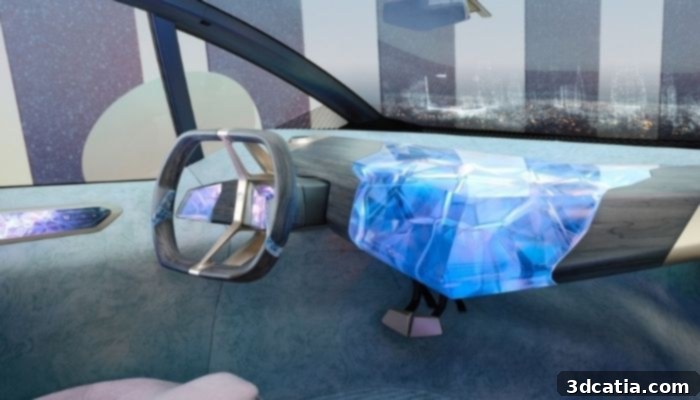
Photo Credits: BMW
BushBot Chair by Stephan Heinrich: Kinetic Furniture Design
Stephan Heinrich, a distinguished German designer, is known for his pioneering work in Design for Additive Manufacturing (DfAM) and his innovative use of robotic processes to develop intricate architectural structures. His entry, the “BushBot Chair,” is a fascinating exploration into kinetic, passive robotic furniture design, drawing inspiration from a truly unique source: the NASA Bush Robot Study. This hypothetical concept from NASA envisions a device capable of grasping and adapting to any object, regardless of its geometry, making it a universal manipulator.
The BushBot Chair translates this ambitious concept into a piece of furniture that aims to embody adaptability and responsiveness. While the original description doesn’t detail the specific 3D printing technology used, it’s evident that additive manufacturing would be crucial for creating the complex, articulated joints and variable geometries required for such a kinetic structure. The chair’s design suggests a form that can reconfigure itself, perhaps to adapt to different postures or even to the user’s specific body shape, offering an unparalleled level of personalization and comfort that static furniture cannot. This innovative approach to furniture design pushes the boundaries of what chairs can be, moving them from passive objects to active, interactive elements within our living spaces. The question of its comfort, while intriguing, ultimately invites visitors to Formnext to experience this marvel of design and engineering firsthand.
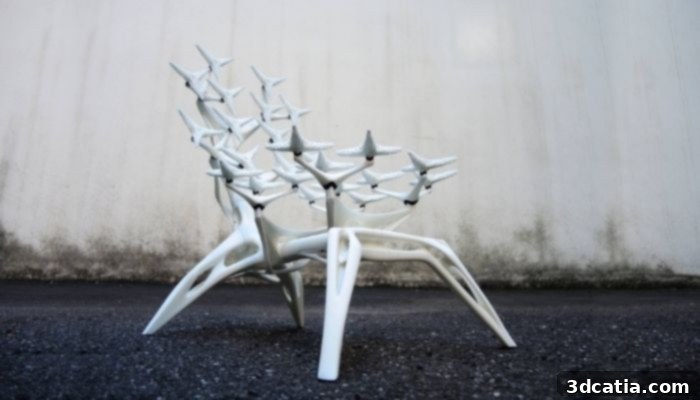
Photo Credits: BushBot Chair / Stephan Heinrich
HEXR Bike Helmet: Personalized Safety Through 3D Printing
Safety gear, particularly for sports like cycling, has traditionally relied on standardized sizing, which often results in suboptimal fit and compromised protection. British company HEXR has emerged as a leader in challenging this norm, having garnered significant attention for its innovative approach to bicycle helmet design. HEXR leverages a powerful combination of 3D scanning and 3D printing technologies to offer truly custom-made helmets, revolutionizing personal protective equipment.
The process is remarkably user-friendly and highly precise. Upon purchase, customers receive a specialized cap equipped with advanced sensors. This cap is used to perform a comprehensive 3D scan of the individual’s head shape, capturing approximately 250,000 data points. An intuitive mobile application guides the user through each step, ensuring an accurate and efficient scanning process. Once the detailed 3D model of the head is generated, HEXR utilizes Selective Laser Sintering (SLS) 3D printing technology with high-performance PA 11 material to produce the helmet. This material choice offers an excellent balance of strength, flexibility, and impact absorption, crucial for safety applications. The result is a helmet that perfectly contours to the wearer’s head, providing superior fit, comfort, and, most importantly, enhanced protection. The internal lattice structures, only possible with additive manufacturing, also contribute to improved ventilation and reduced weight, making HEXR helmets a prime example of how 3D printing is elevating both safety and user experience in sports equipment. This personalized approach signifies a major leap forward from mass-produced, one-size-fits-all solutions.
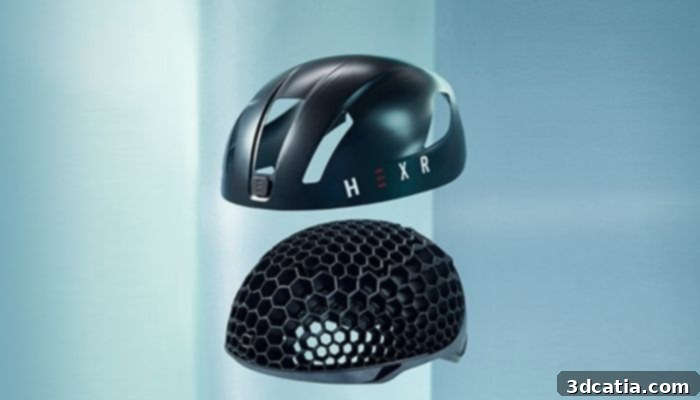
Photo Credits: HEXR
MTC: A New Generation of Electric Motors through Additive Manufacturing
The Manufacturing Technology Centre (MTC) from the United Kingdom is a key player in advancing manufacturing processes, and their innovative idea, “Future of electric motors with AM,” rightfully earned them a spot among the 35 finalists. Electric motors are fundamental to the growing e-mobility sector and various industrial applications, yet traditional manufacturing methods often impose limitations on their design, efficiency, and size. MTC’s design team embarked on a mission to redefine these crucial components by thoroughly evaluating existing manufacturing constraints and, subsequently, leveraging additive manufacturing for product improvement.
The result is a groundbreaking redesign that addresses several critical challenges. A significant innovation lies in the new housing design, which ingeniously integrates liquid cooling channels. This proactive measure effectively prevents the motor from overheating, thereby enhancing its performance, reliability, and lifespan. Furthermore, the intelligent use of additive manufacturing has led to a remarkable 10% reduction in weight and an impressive 30% reduction in overall size. These improvements are critical for applications where space and weight are at a premium, such as electric vehicles, drones, and portable machinery. By optimizing the motor’s internal geometry and integrating complex features directly into its structure, MTC demonstrates the transformative potential of AM in creating more efficient, compact, and powerful electric motors. This project exemplifies how additive manufacturing is driving innovation in renewable energy and advanced drive technology, paving the way for a new generation of high-performance electric propulsion systems.
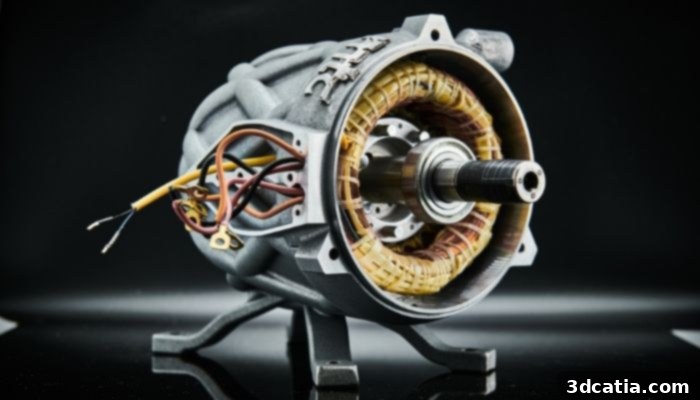
Bild: MTC
Urwahn’s Waldwiesel.E: The Evolution of 3D Printed Bike Frames
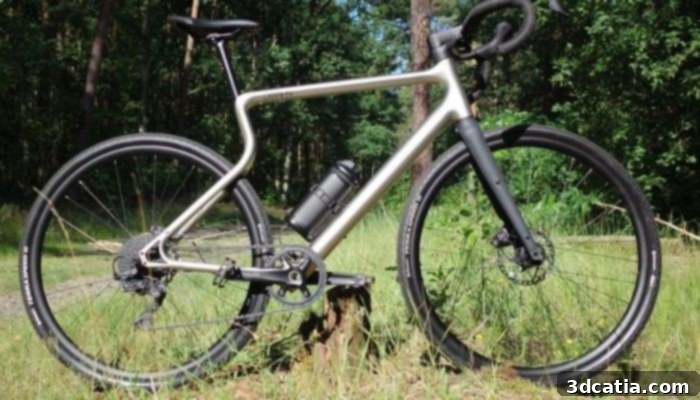
Following in the footsteps of last year’s winner, HUHN cycles, the 2021 Purmundus Challenge once again features an outstanding 3D-printed bike frame among its finalists, underscoring the continuous innovation within the cycling industry thanks to additive manufacturing. This year, the spotlight is on the “Waldwiesel.E” model from Urwahn, a brand renowned for its avant-garde bicycle designs. The design for this e-gravel bike was masterfully created by Sebastian Meinecke, resulting in a machine that is as visually striking as it is functionally superior.
The Waldwiesel.E impresses with an incredibly lightweight frame, where key components are precisely produced using 3D printing. These include the head tube, the seatpost mount, the bottom bracket area, the two rear dropouts, and the distinctive bend on the rear triangle. The strategic application of additive manufacturing in these critical stress points allows for optimized material distribution, leading to enhanced strength and reduced weight. A particularly noticeable and aesthetically pleasing feature of the design is the deliberate absence of a seat tube. This bold design choice, virtually impossible with conventional manufacturing methods, showcases the unparalleled design freedom offered by additive manufacturing. The removal of the seat tube contributes to the bike’s sleek, clean, and minimalist aesthetic, giving it a distinctive silhouette that sets it apart from traditional e-bikes. Weighing in at just 14.8 kilograms, the Waldwiesel.E stands out as one of the lightest e-bikes on the market, combining cutting-edge technology, innovative design, and superior performance. Urwahn’s entry solidifies the role of 3D printing in pushing the boundaries of bicycle engineering, delivering both aesthetic elegance and athletic prowess.
The Broader Landscape of 3D Printing Innovation
Formnext is set to be a vibrant hub of innovation, where all 35 finalists will proudly present their visionary projects. Beyond the remarkable entries highlighted above, the exhibition will feature an array of equally compelling concepts that promise to shape the future across diverse industries. Among these are the advanced 3D-printed climbing shoes by ATHOS, which offer enhanced performance and customization for athletes, revolutionizing athletic gear. DiveDesign will showcase incredible animal prostheses, demonstrating how additive manufacturing can provide tailored solutions that dramatically improve the quality of life for animals. The collaborative project between MX3D and Schindler will unveil a groundbreaking 3D-printed elevator, pushing the boundaries of architectural and structural engineering.
These projects collectively illustrate the immense potential of additive manufacturing to move beyond niche applications and fundamentally redefine design, functionality, and sustainability across countless sectors. From consumer products to industrial machinery, medical devices to aerospace components, 3D printing is enabling solutions that were previously unimaginable. The Purmundus Challenge not only recognizes these individual achievements but also serves as a crucial barometer for the evolving landscape of 3D printing technology and its future trajectory. The full rundown of all inspiring finalists can be explored HERE. The excitement is palpable as we eagerly await the announcement of the Purmundus Challenge winners next week at Formnext. Your voice matters too! You also have the unique opportunity to vote for your favorite innovation in the Public Choice Award HERE, contributing to the recognition of these pioneering efforts.
Which of these incredible projects do you believe truly deserves to win the Purmundus Challenge in 2021? We’d love to hear your thoughts! Share your opinions and engage in the conversation by leaving a comment below or by connecting with us on our LinkedIn, Facebook, and Twitter pages! For those who want to stay at the forefront of the additive manufacturing world, don’t forget to sign up for our free weekly Newsletter here, delivering the latest 3D printing news directly to your inbox. Additionally, for dedicated updates and insights from the Formnext event, you can sign up for our specialized, free Formnext newsletter here. Join us in celebrating the future of innovation!