
Biomimicry & 3D Printing: How Nature Inspires Additive Manufacturing Excellence
Biomimicry, as defined by Cambridge, is “the practice of making technological and industrial design copy natural processes.” At first glance, it might seem counterintuitive to look to the natural world for technological breakthroughs. However, a growing number of engineers and scientists are discovering that nature’s designs, refined over millions of years of evolution, often represent the most optimized and efficient solutions. This profound realization is driving a paradigm shift, especially with the advent of advanced manufacturing techniques like 3D printing. Additive manufacturing excels at producing highly complex geometries and intricate structures that were previously impossible or prohibitively expensive with traditional subtractive methods. This synergy between nature-inspired design and advanced fabrication has opened up unprecedented possibilities for innovation. In this article, we explore some of the most exciting and impactful projects that brilliantly combine the wisdom of biomimicry with the transformative capabilities of 3D printing, showcasing how additive manufacturing is helping us bring these optimized, natural patterns to life.
Earth Moc: Revolutionary Footwear Inspired by Nature
3D printed footwear has rapidly moved beyond being a mere novelty, becoming a mainstream design and manufacturing approach embraced by industry giants like Adidas, New Balance, and Nike. Yet, the journey of innovation in this sector is far from over. Beyond leveraging the customizable and complex design capabilities of 3D printing, some creators are turning to biomimicry to achieve even greater levels of optimization and performance. A prime example is the Earth Moc, an ingenious shoe designed by Daniel Shirley. Created as an entry for Sintratec’s 3D Printing Shoe Design Contest in 2022, the Earth Moc’s aesthetic and functional design draws inspiration from the organic patterns of intertwining roots and vines. This natural motif is not just for visual appeal; it is engineered to maximize comfort and flexibility, conforming to the foot in an adaptive manner. Constructed from TPE (thermoplastic elastomer), the lightweight shoe is specifically envisioned for recovery after strenuous activities like hiking or light exercise, offering a unique blend of support and gentle cushioning. This project beautifully illustrates how biomimicry can enhance the functional attributes of 3D printed products, creating solutions that are both technologically advanced and inherently natural in their effectiveness.
Aguahoja Pavilion: Architecture Inspired by Life Cycles
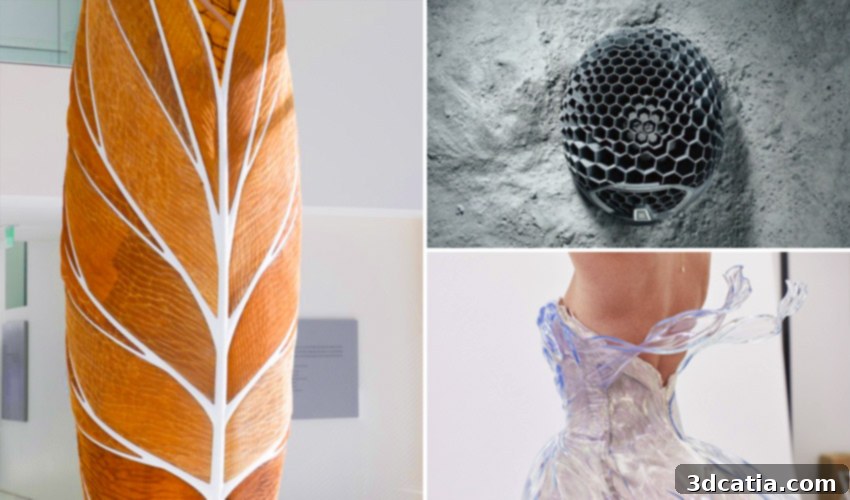
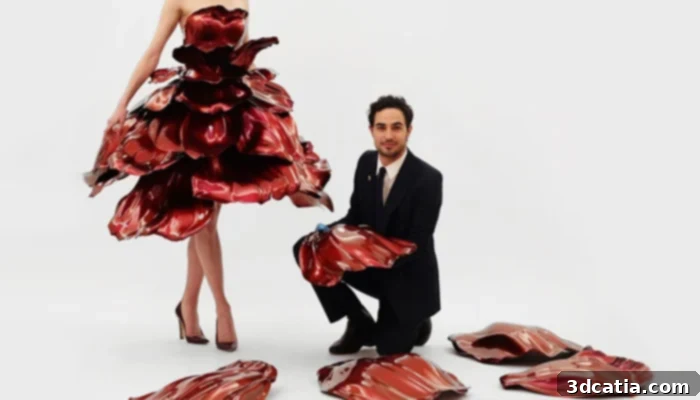
In San Francisco, the Aguahoja Pavilion stands as a towering testament to biomimetic architecture, reaching a height of 5 meters with its mesmerizing, intricate “Totem” structure. This impressive architectural achievement is the result of a pioneering collaboration between Neri Oxman, The Mediated Matter Group at MIT Media Lab, and Stratasys. The pavilion’s core inspiration is drawn from nature’s cyclical processes and the way organic materials are shaped by water, embodying a series of artifacts predominantly crafted from natural, biodegradable materials. The structural integrity of this innovative pavilion is maintained by a robust framework, precisely additively manufactured using the Stratasys F900 3D printer. This advanced manufacturing technique ensures that each individual component integrates seamlessly, contributing to the overall cohesion and stability of the complex design. Beyond its physical form, the Aguahoja project also includes an architectural proposal for an environmentally compliant melamine glass structure, pushing the boundaries of sustainable design and material science. The pavilion serves as a powerful demonstration of how cutting-edge 3D printing technology can be harnessed to create large-scale structures that are not only aesthetically striking but also deeply rooted in ecological principles, exploring the potential of construction with biologically informed design.
Fashion, Technology, and Nature Converge at the Met Gala
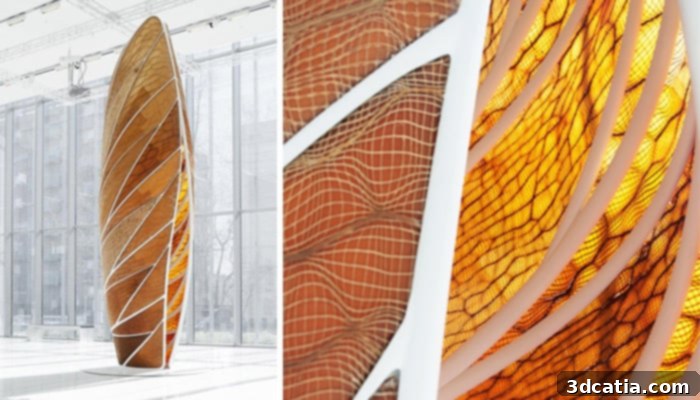
The 2016 Met Gala was a landmark event for the integration of technology and fashion, largely due to the stunning 3D printed designs by renowned U.S. designer Zac Posen. Posen embarked on an ambitious collaboration with industrial giants GE Additive and Protolabs to create a collection of intricate dresses, bodices, and accessories for some of the gala’s most prominent stars, all crafted using advanced additive manufacturing techniques. For model Jourdan Dunn’s ensemble, Posen drew inspiration from the elegant and complex form of a blooming rose. He designed a structure composed of 21 individual petals, each intricately printed in resin. These petals, measuring approximately 50 cm and weighing about half a kilo each, were assembled to create a breathtaking gown that mimicked the organic grace of a flower. Actress Nina Dobrev graced the event in a translucent 3D printed bodice, which utilized an SLA (Stereolithography) solution to evoke the mesmerizing, glassy effect of liquid water in motion. This bespoke piece required over 200 hours of meticulous manufacturing at Protolabs’ facility in Germany, underscoring the labor-intensive precision involved in high-fashion 3D printing. These creations highlight how biomimicry, combined with 3D printing, allows designers to transcend traditional material limitations, bringing fluid, organic forms and natural phenomena to life in wearable art that is both innovative and deeply connected to nature’s beauty.
The Tower of Life: Sustainable Urbanism in Dakar
The Tower of Life, a visionary architectural project proposed by Built by Associative Data for Dakar, Senegal, represents a groundbreaking fusion of ecological efficiency with traditional African design principles. This ambitious structure is designed to leverage cutting-edge 3D printing technology to construct a biodegradable membrane using locally sourced clay. This approach significantly reduces the environmental impact and construction costs by minimizing the need for imported and transported materials, fostering a sustainable local economy. Deeply inspired by biomimicry, the Tower of Life is conceived as an energy-positive system. It is meticulously engineered to efficiently manage resources, water, and air, creating a stable microclimate within and around the building with minimal emissions. Its design extends beyond mere aesthetics, integrating additional sustainable practices such as mimicking natural forms and operating as a closed-loop system that respects and enhances local ecological conditions. By harmonizing innovative design and technology with rich cultural heritage, the Tower of Life aims to become an architectural icon in Africa, demonstrating a path toward a self-sustaining, ecologically responsible future. This project underscores the transformative potential of biomimicry and 3D printing in addressing global challenges like urbanization and climate change, offering a blueprint for intelligent, context-sensitive development.
Helical Tubes: Unlocking Secrets of Fluid Dynamics from Shark Intestines
Drawing inspiration from one of nature’s most efficient biological designs—the spiral-shaped intestines of sharks—researchers at the University of Washington have embarked on an innovative project to create simplified biomimetic models using advanced 3D printing technology. Shark intestines are uniquely adapted to slow down food movement and efficiently direct it downward through a combination of gravity and peristalsis, a feat of fluid control. By developing soft, flexible structures that accurately mimic these intricate intestinal designs, the research team aims to gain a deeper understanding of how their unique form facilitates one-directional fluid flow. This biomimicry approach focuses on the crucial role that the radius and thickness of these 3D printed helical tubes play in influencing fluid dynamics. The project seeks to provide unprecedented insights into the complex interaction between membranes and fluid flow, potentially leading to the development of novel fluid control systems with significantly faster flow rates. As this cutting-edge research progresses, the team anticipates that their findings will have substantial applications across various fields, including the development of next-generation soft robotics, more efficient medical and microfluidic devices, and optimized industrial piping systems. This work exemplifies how studying nature’s long-proven solutions can lead to groundbreaking engineering advancements.
Helmets with Lattice Structures for Enhanced Safety and Comfort
The unique capabilities of 3D printing have revolutionized the design and manufacturing of protective equipment, particularly by enabling the creation of intricate lattice structures directly inspired by nature’s most robust and efficient forms, such as honeycombs. These biomimetic designs are inherently efficient, strategically placing material only where it is functionally required, thereby optimizing the weight of the final part without compromising strength. This innovation holds immense value, especially in the sports industry, where protection and performance are paramount. Through the powerful combination of 3D printing and biomimicry, several pioneering companies have developed bike helmets that are not only lighter and stronger but also significantly more comfortable and personalized for the wearer. For instance, KAV Sports and HEXR have successfully utilized additive manufacturing to engineer helmets designed to absorb shocks with superior effectiveness. Reports indicate that these biomimetic helmets are up to 26% safer than their traditional counterparts. Similarly, in the demanding sport of American football, Vicis Enhanced has integrated 3D printed, honeycomb-inspired pads into its helmets. These advanced pads are specifically designed to reduce the force of impact by an impressive 7% when a player’s head makes contact with the ground, offering an enhanced layer of protection. These examples vividly demonstrate how nature’s structural genius, translated through 3D printing, can lead to groundbreaking improvements in safety, comfort, and performance across various high-impact applications.
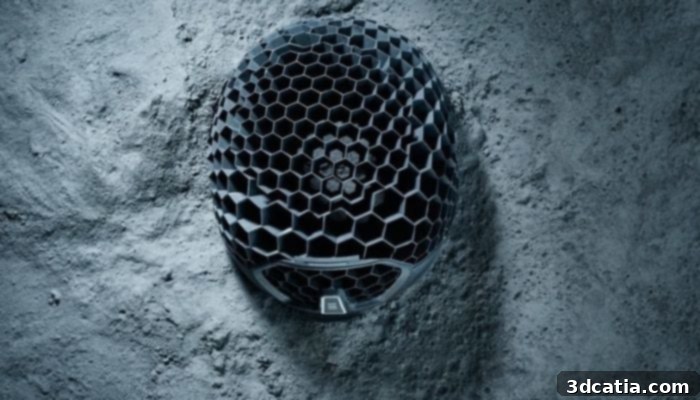
The HEXR lattice structure helmet (Photo Credits: HEXR)
3D Printed Tiles from Volvo: Revitalizing Marine Habitats
Our next inspiring example of biomimicry takes us to the vibrant coastline of Sydney Harbour in Australia. A significant portion—over 50%—of this coastline is fortified with seawalls, essential structures built to protect against the relentless forces of waves and tides. However, these man-made barriers inadvertently disrupt vital marine habitats, forcing indigenous species to seek alternative environments and diminishing biodiversity. To counteract this ecological imbalance and actively restore marine life along the coast, the renowned Swedish car manufacturer Volvo launched an innovative conservation project. This ambitious initiative was undertaken in a collaborative partnership with the Reef Design Lab, the Sydney Institute of Marine Science (SIMS), and the North Sydney City Council. Together, these organizations developed and subsequently 3D printed specialized tiles that precisely emulate the complex root structures of local mangrove trees, which are natural nurseries for marine life. These biologically inspired tiles, constructed from durable concrete, were then meticulously affixed onto the existing seawalls. The ingeniously designed hollow spaces within the 3D printed structures provide immediate refuge and optimal breeding grounds for a variety of marine species, including oysters, fish, and algae. This strategic intervention has successfully rejuvenated marine life along the shores, transforming inert seawalls into thriving ecological micro-habitats. The Volvo Living Seawall project beautifully illustrates how biomimicry and 3D printing can be applied to large-scale environmental challenges, offering a sustainable and aesthetically integrated solution to restore precious ecosystems.
3D Printed Seed-Dispersing Slippers: Rewilding Urban Landscapes
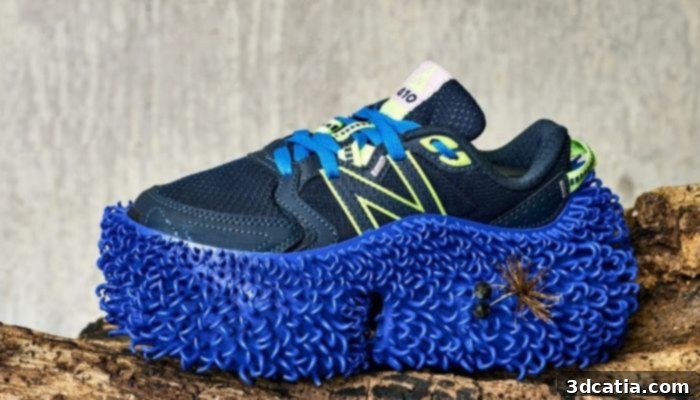
The innovative “Rewild the Run” project, masterminded by British designer Kiki Grammatopoulos, introduces a revolutionary concept in footwear: running shoes specifically engineered to facilitate the transport and dispersal of seeds during routine running activities. Capitalizing on the unparalleled design flexibility inherent in 3D printing, the creator meticulously crafted shoe soles equipped with an array of small, strategically placed hooks. As individuals engage in their runs, these unique shoes are designed to gather plant matter and seeds from various terrains, which are then naturally scattered along their running path, effectively rewilding the environment. The profound inspiration for these shoes stems directly from the natural behavior of the bison, a keystone species in many ecosystems known for its role in spreading seeds and creating pathways through its migratory activities. The overarching goal of these shoes is to actively foster greener environments, directly addressing the increasing urbanization that has led to the widespread destruction and reduction of natural habitats for countless species. Consequently, the “Rewild the Run” slippers are positioned as a profoundly positive and proactive initiative aimed at restoring ecological balance and promoting biodiversity in an increasingly urbanized world. This project brilliantly merges sustainable design with everyday human activity, showcasing how biomimicry and additive manufacturing can contribute to a healthier planet.
(Photo Credits: Ecolosport)
Pinarello Imitates Humpback Whales for Improved Aerodynamics of Racing Bikes
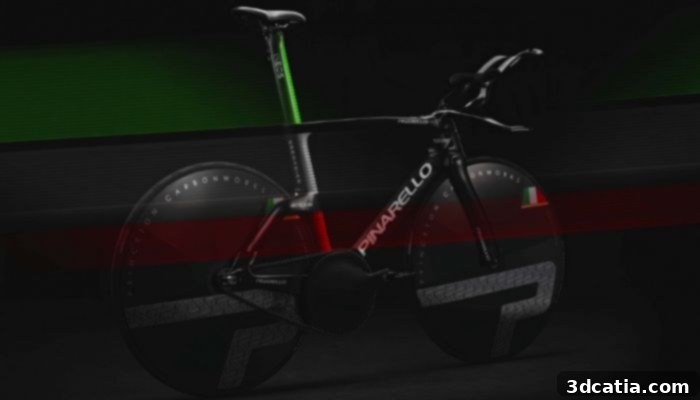
Italian bicycle manufacturer Pinarello holds an esteemed position as a benchmark in the competitive world of cycling, boasting accolades such as setting the world hour record and supplying bikes to the Italian track cycling team, which will defend its team title at the upcoming Olympic Games. This legacy of excellence is fueled by Pinarello’s relentless pursuit of speed and efficiency, continually leveraging cutting-edge technologies and drawing profound inspiration from nature’s most optimized designs. The frames of their high-performance racing bikes are meticulously crafted through advanced 3D printing processes, allowing for intricate geometries previously unattainable. Further enhancing their aerodynamic prowess are integrated AirFoil sections and the groundbreaking AirStream technology. Developed in a collaborative effort with the University of Adelaide and NablaFlow, AirStream technology takes a direct cue from the natural world, specifically from humpback whales. These magnificent creatures possess unique tubercles on their fins, which are known to aid in effortless turning and maneuvering through water by reducing drag. On Pinarello bikes, these biomimetic inspirations manifest as strategically placed AeroNodes on the seat tube and seat post. These innovative features are engineered to effectively reduce turbulence around critical areas, significantly enhancing overall aerodynamic performance and allowing cyclists to cut through the air with greater efficiency. This remarkable application of biomimicry demonstrates Pinarello’s commitment to pushing the boundaries of cycling technology by learning from nature’s masters of fluid dynamics.
(Photo Credits: Pinarello)
Mussels as a Model for Advanced Medical Adhesives
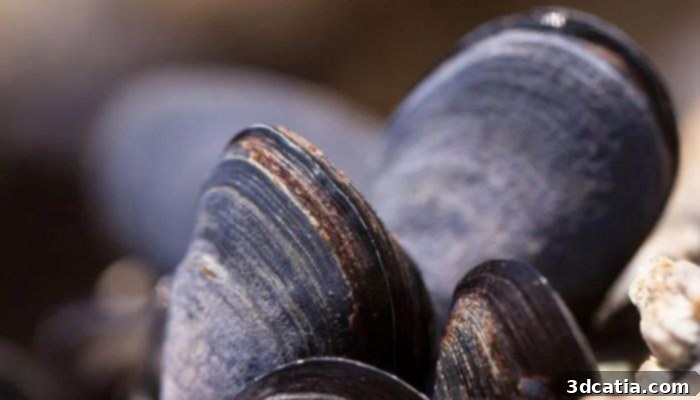
The humble blue mussel, often a nuisance to sailors due to its tenacious adherence to boat hulls, holds a powerful secret in its biological makeup. Its remarkable adhesive properties are attributed to a unique protein containing the amino acid dihydroxyphenylalanine (DOPA). Recognizing the extraordinary potential of this natural super-glue, researchers at Fraunhofer IAP and IGB have successfully replicated this substance. Their groundbreaking work has led to the development of an antimicrobial adhesive that is not only highly effective but also suitable for a wide range of medical applications. This innovative, mussel-inspired adhesive can be precisely applied via 3D printing, enabling targeted bonding with bones, which greatly facilitates the repair of joint damage and promotes faster recovery. Furthermore, its versatility extends to existing implants; the adhesive can be applied to them to significantly prolong their lifespan, thereby eliminating the need for complex and invasive surgical replacement interventions. This biomimetic breakthrough offers a less invasive and potentially more effective solution for orthopedic and other medical procedures. By drawing lessons from the seemingly simple blue mussel, scientists are paving the way for advanced biomaterials that promise to revolutionize medical treatments, showcasing how nature’s design principles can lead to transformative solutions in human health.
(Photo Credits: Pixabay)
The Biomic Wall: Interweaving Ecology and Architecture
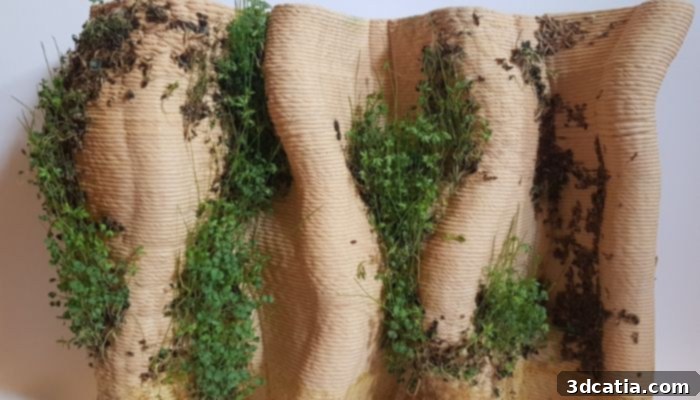
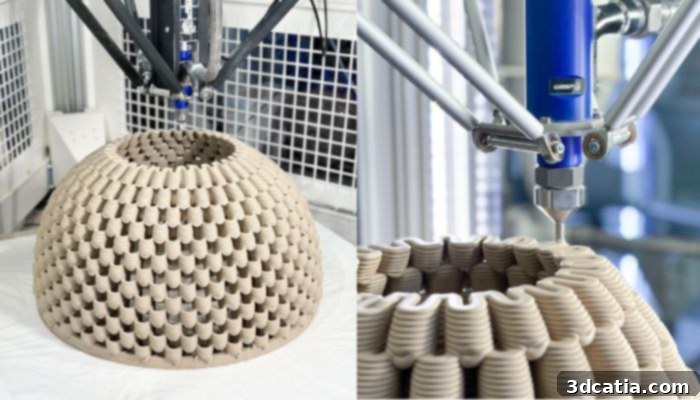
The Biomic Wall project is an ambitious initiative that aims to critically raise awareness about the pressing environmental situation and emphatically underscore the indispensable relationship between ecology and architectural design. This innovative project features a hydroculture wall meticulously crafted from ceramic using state-of-the-art 3D printing technology. The initial prototype was developed as a part of a master’s course at the University of Innsbruck, in close collaboration with Studio cera.LAB and exparch.hochbau. The facade of the Biomic Wall comprises a complex, organic ceramic structure securely fixed onto a robust metal frame. To achieve this intricate and free-form design, 3D extrusion printing was employed with a precise 4mm nozzle, as conventional manufacturing methods simply would not have sufficed for such complexity. The individual ceramic bricks were printed with an impressive resolution of 2mm, allowing for fine detail and structural integrity. The fundamental goal of the Biomic Wall is to seamlessly integrate modern technology, innovative architecture, and a profound environmental consciousness. Its uniquely porous surface is deliberately designed to actively promote plant growth, thereby significantly improving the urban climate by enhancing air quality and reducing ambient temperatures. Furthermore, the wall is engineered to interact dynamically with its environment, contributing effectively to the greening of dense urban spaces and substantially reducing noise pollution. The Biomic Wall exemplifies how biomimicry and 3D printing can create living architectural elements that actively address ecological challenges and foster more livable, sustainable cities.
(Photo Credits: cera.LAB)
The Lamp Series by Paolo Castelli: Organic Lighting from Beehives
In April, the esteemed Italian furniture company Paolo Castelli unveiled a stunning 3D printed hanging lamp series, a design marvel deeply inspired by the organic structure of a beehive and its intricate, interwoven patterns. This unique structure is not merely an aesthetic choice; it is specifically intended to cast a calm, diffused light, creating a serene ambiance. The lamp series was produced using advanced 3D ceramic printing techniques “in the air,” a groundbreaking method developed in close collaboration with WASP, an Italian 3D printing company renowned for its expertise in large-format and ceramic extrusion technology. Paolo Castelli’s commitment to sustainability was a driving force behind the production of these lamps. Natural ceramic materials were meticulously chosen, and a manufacturing process that inherently minimizes material waste—3D printing—was expertly applied. During the developmental phase, computer-aided design (CAD) was first employed to create a detailed 3D model based on Castelli’s initial vision. Subsequently, Liquid Deposition Modeling (LDM) technology was utilized to bring the design to fruition. A truly unique aspect of this project is that the lamp was printed directly in the air, allowing for the creation of its distinctive sloping, gravity-defying shape. This innovative approach to lighting design beautifully marries biomimicry with cutting-edge additive manufacturing, demonstrating how nature’s functional forms can be reinterpreted to create sustainable and captivating interior elements.
(Photo Credits: WASP)
These projects collectively showcase the incredible potential unleashed when the timeless wisdom of biomimicry converges with the transformative power of 3D printing. From enhancing sports safety and revolutionizing fashion to restoring marine ecosystems and advancing medical treatments, nature continues to offer an endless blueprint for innovation. Additive manufacturing acts as the perfect tool, allowing engineers, designers, and scientists to replicate and scale these complex, optimized natural designs with unprecedented precision and efficiency. The ongoing exploration of biomimicry through 3D printing promises a future where technology is not just advanced but also inherently sustainable, harmonious, and deeply rooted in the proven genius of the natural world.
What are your thoughts on these groundbreaking biomimetic projects using 3D printing? We invite you to share your insights in a comment below or join the conversation on our LinkedIn, Facebook, and Twitter pages! Don’t miss out on the latest advancements and news—be sure to sign up for our free weekly newsletter here to get the freshest 3D printing updates delivered straight to your inbox! You can also explore all our insightful videos and project showcases on our YouTube channel.