

3D Printed CBD Suppositories: A Groundbreaking Advancement in Epilepsy Treatment and Drug Delivery
Epilepsy is a prevalent and challenging chronic neurological disorder, characterized by recurrent, unprovoked seizures that significantly diminish the quality of life for millions worldwide. Its complex nature often necessitates long-term treatment strategies focused on managing symptoms and preventing seizures. Among the various therapeutic avenues explored, Cannabidiol (CBD)-based medicines have emerged as a promising option, particularly in European nations, for their efficacy in alleviating convulsive symptoms associated with epilepsy. CBD, a non-addictive and non-psychotropic compound derived from the cannabis plant, has gained considerable attention not only for its anti-seizure properties but also for its potential to soothe pain, reduce anxiety and stress, and improve sleep disorders. Its increasing recognition in modern medicine is largely due to its effectiveness in mitigating the severe convulsions that are hallmarks of epileptic conditions.
Understanding Cannabidiol (CBD) and Its Therapeutic Promise
To truly appreciate the innovation in CBD drug delivery, it’s essential to understand the substance itself. Unlike Tetrahydrocannabinol (THC), the psychoactive component of cannabis, CBD does not induce a “high.” This fundamental difference makes it an attractive therapeutic agent, allowing patients to benefit from its medicinal properties without experiencing intoxicating effects. Research suggests CBD interacts with the body’s endocannabinoid system, a complex network of receptors and neurotransmitters that plays a crucial role in regulating various physiological processes, including mood, pain sensation, appetite, and memory. Beyond epilepsy, CBD’s anti-inflammatory, neuroprotective, and anxiolytic properties are being investigated for a wide array of conditions, from chronic pain and multiple sclerosis to anxiety disorders and sleep disturbances. For epilepsy specifically, CBD’s mechanism of action is thought to involve multiple pathways, including modulation of calcium channels, interaction with serotonin receptors, and reduction of neuronal excitability, all contributing to its anticonvulsant effects.
The Challenge of Oral Drug Delivery: The First-Pass Effect
Despite CBD’s therapeutic potential, conventional oral formulations present significant pharmacokinetic challenges that limit its effectiveness. One of the primary obstacles is the “first-pass effect” (also known as presystemic metabolism). When a drug is taken orally, it is absorbed from the gastrointestinal tract and then transported via the portal vein directly to the liver before reaching the systemic circulation. During this initial pass through the digestive tract and particularly the liver, a substantial portion of the active pharmaceutical ingredient (API) can be metabolized and degraded by enzymes. This metabolic process drastically reduces the bioavailability of the drug – the amount that actually reaches the bloodstream in an active form to exert its therapeutic effect. For CBD, this first-pass metabolism means that patients often require higher oral doses to achieve desired therapeutic concentrations, which can lead to increased side effects, higher treatment costs, and inconsistent drug levels. This inefficiency underscores the critical need for alternative drug delivery methods that can bypass or minimize the first-pass effect, ensuring more consistent and effective therapeutic outcomes for conditions like epilepsy.
Innovating Drug Delivery: The Rise of 3D Printing in Pharmaceuticals
The pharmaceutical industry is constantly seeking innovative methods to improve drug efficacy, patient compliance, and personalized medicine. Additive manufacturing, commonly known as 3D printing, has emerged as a revolutionary technology with the potential to transform drug development and delivery. This technology allows for the precise creation of complex geometries and customized dosage forms layer by layer, offering unprecedented control over drug release profiles and active ingredient distribution. Unlike traditional manufacturing methods that produce standardized pills, 3D printing enables the production of medications tailored to individual patient needs, potentially varying in dose, shape, size, and even combination of active ingredients. Its ability to create intricate internal structures also opens doors for novel drug delivery systems that can overcome existing pharmacokinetic limitations, such as enhancing bioavailability or providing controlled, sustained release. This shift towards personalized medicine, facilitated by 3D printing, promises to optimize therapeutic outcomes and improve patient care across various medical conditions.
Introducing 3D-Printed CBD Suppositories: A Novel Approach
Recognizing the limitations of oral CBD formulations, particularly the significant first-pass effect that reduces its therapeutic efficacy, a team of dedicated researchers has pioneered a groundbreaking solution: 3D-printed CBD suppositories. This innovative drug delivery system is specifically designed to circumvent the metabolic hurdles faced by orally administered CBD. By combining advanced additive manufacturing techniques with precise molding processes, these suppositories feature a unique hollow structure. This intelligent design is not merely for aesthetics; it is fundamentally engineered to be both safe and highly functional, ensuring that the cannabidiol is delivered directly into the systemic circulation, bypassing the liver’s extensive metabolic activity. The development of these suppositories represents a significant leap forward in the quest for more efficient and patient-friendly epilepsy treatments, offering a promising alternative for individuals who struggle with conventional oral medications.
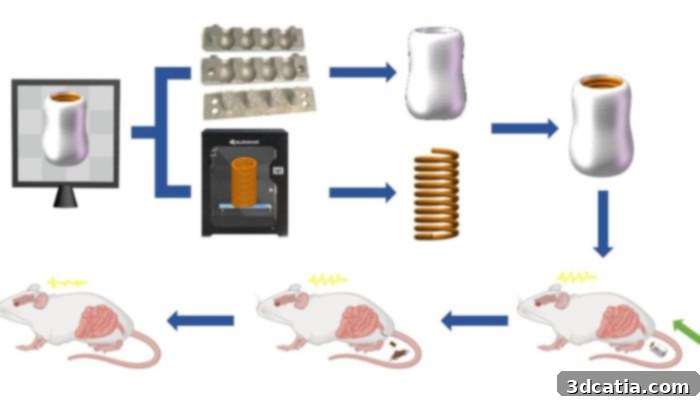
The main goal of 3D printed CBD suppositories is to avoid the disadvantages of traditional oral CBD drugs, particularly the first-pass effect (photo credits: Meng Wei, Dongdong Liu, Hua Xie, Yingbao Sun, Yubao Fang, Lina Du, Yiguang Jin, 3D printed hollow cannabidiol suppositories for the treatment of epilepsy, International Journal of Pharmaceutics)
Engineering the Suppository: Design and Manufacturing
The innovative design of these CBD suppositories is a testament to the versatility of 3D printing technology. Each suppository comprises two key components: an outer shell that encapsulates the cannabidiol and an intricate internal spring-like structure engineered to provide robust mechanical support and maintain the suppository’s optimal shape. The production process leverages sophisticated manufacturing techniques. For the internal spring structure, Fused Deposition Modeling (FDM) 3D printing technology was employed, utilizing thermoplastic polyurethane (TPU) filaments. FDM is an ideal method for creating such complex internal geometries due to its ability to build objects layer by layer from a melted thermoplastic material, offering precision and control. TPU was chosen for its flexibility, biocompatibility, and mechanical strength, ensuring the internal structure could withstand various conditions while remaining inert. The outer casing, critical for drug containment and release, was produced using a specialized 3D-printed metal mold. This mold was filled with a carefully formulated mixture containing the active ingredient, CBD, combined with polyvinyl alcohol (PVA) and polyethylene glycol (PEG). PVA acts as a binder and helps with solubility, while PEG is commonly used in suppositories as a water-soluble base, facilitating the gradual release of the active ingredient once administered. This hybrid manufacturing approach — combining FDM for the internal scaffold and molding with a 3D-printed tool for the outer shell — allows for the creation of a sophisticated drug delivery system that precisely controls both the structural integrity and the release characteristics of the CBD, ultimately enhancing its therapeutic efficacy.
Transformative Benefits for Patients and Promising Research Findings
The introduction of 3D-printed CBD suppositories with their unique hollow structure promises a paradigm shift in how epilepsy is treated, especially for vulnerable patient populations. The direct delivery of the drug at the necessary site bypasses the gastrointestinal tract and liver, significantly reducing the first-pass effect and enhancing bioavailability. This method is particularly beneficial for children, who may struggle with swallowing pills, and for individuals suffering from digestive problems or dysphagia (difficulty swallowing), ensuring more consistent and effective medication administration. Beyond ease of use, these suppositories are designed for a controlled, prolonged release of CBD over an extended period, typically around five hours. This sustained release mechanism is crucial for managing chronic conditions like epilepsy, as it helps maintain stable therapeutic drug concentrations in the bloodstream, minimizing fluctuations that can trigger seizures and reducing the frequency of dosing. This translates to improved patient compliance and better symptom management throughout the day.
Furthermore, rigorous in vitro and in vivo studies have provided compelling evidence supporting the safety and efficacy of this novel drug delivery system. Experiments conducted with epileptic rats demonstrated not only the overall safety of the suppositories but also their ability to significantly reduce brain damage and inflammation, key indicators of epileptic activity and its detrimental effects. These findings are highly encouraging, suggesting a neuroprotective role for CBD delivered via this method. Perhaps even more fascinating are the results pertaining to the gut microbiota. The studies indicated that CBD delivered through these suppositories positively influenced the quantity and composition of beneficial gut bacteria, including strains like Lachnoclostridium and Akkermansia. This discovery highlights a potential connection between CBD, gut health, and neurological conditions, underscoring the importance of the gut-brain axis. An improved gut microbiome may contribute to overall health and potentially modulate neurological pathways involved in epilepsy, opening new avenues for therapeutic understanding and intervention. These comprehensive results affirm the potential of 3D printed CBD suppositories to offer a safer, more effective, and holistic approach to epilepsy management.
The Future of Epilepsy Treatment: Towards Clinical Adoption
The development of 3D-printed CBD suppositories represents a truly promising and innovative advance in the ongoing battle against epilepsy. The positive and robust results gleaned from rigorous laboratory tests, encompassing both in vitro and in vivo studies, provide a strong foundation of hope that this groundbreaking technology may transition into mainstream clinical practice in the not-too-distant future. The ability to overcome the limitations of oral CBD administration, coupled with the proven safety profile and therapeutic benefits, positions these suppositories as a potential game-changer. As research progresses, the next critical steps will involve moving towards human clinical trials to further validate efficacy, optimal dosing, and long-term safety in diverse patient populations. This personalized approach to drug delivery, enabled by additive manufacturing, could pave the way for a new era of epilepsy management, offering a more effective, patient-centric, and convenient treatment option for those living with this challenging neurological condition. The journey from laboratory innovation to widespread clinical application is often lengthy and complex, but the potential impact of 3D printed CBD suppositories on improving the quality of life for epileptic patients worldwide is undeniable.
For those interested in delving deeper into the scientific specifics and comprehensive research methodology behind this pioneering innovation, additional detailed information regarding 3D printed hollow cannabidiol suppositories for the treatment of epilepsy can be found by consulting the original research publication HERE.
What are your thoughts on these revolutionary 3D-printed CBD suppositories and their potential impact on epilepsy treatment? We invite you to share your insights and comments below, or engage with our community on our LinkedIn, Facebook, and Twitter pages! Don’t forget to sign up for our free weekly Newsletter here, to receive the very latest 3D printing news straight to your inbox! You can also find all our compelling videos and industry insights on our YouTube channel.