
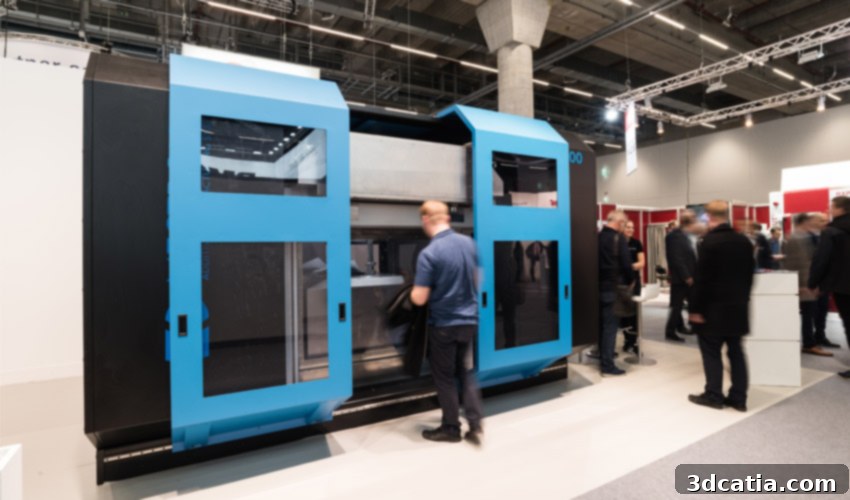
Formnext 2021: Unveiling the Future of 3D Printing with Top Machine Innovations
Formnext, the premier global exhibition for additive manufacturing and industrial 3D printing, recently concluded, transforming Frankfurt into a vibrant hub of innovation. With an impressive gathering of over 600 exhibitors from 35 different countries, spread across three expansive halls, the event showcased a breathtaking array of groundbreaking advancements that are set to redefine the future of manufacturing. Navigating the sheer volume of new technologies and solutions can be overwhelming, which is why we’ve curated a series highlighting the absolute must-see innovations from Formnext 2021. From revolutionary new machines to advanced materials and transformative applications, this guide is designed to ensure you don’t miss the pivotal developments. Today, our focus is squarely on the machines – the cutting-edge 3D printers, efficient post-processing solutions, and sophisticated 3D scanners that are driving the additive manufacturing industry forward. Join us as we explore which machines made the biggest impact at Formnext 2021 and why they are essential viewing for anyone invested in the rapidly evolving landscape of 3D printing.
Metalizz: Elevating Surface Finish with the Smoothit Post-Processing Machine
French manufacturer Metalizz introduced its groundbreaking Smoothit solution at Formnext, prominently displayed at stand 12.0 A59. The Smoothit machine is a pivotal component of Metalizz’s proprietary MiM process, which stands for Measured Incremental Multilayering. This innovative cold post-processing technology leverages precisely controlled UV radiation to meticulously smooth and protect 3D printed plastic parts. The process involves the addition of a translucent leveling varnish, applied in multiple ultra-thin layers, dramatically enhancing the surface quality of additive manufactured components. The Smoothit system boasts broad compatibility, working effectively with a wide spectrum of materials and various additive manufacturing technologies, making it a versatile solution for numerous industrial applications. A key advantage of this cold, UV-based process is its ability to eliminate the risk of thermal distortion, which can be critical for delicate or dimensionally sensitive parts. Furthermore, its rapid operational cycles, with an average processing time of just 5 minutes per batch, make it exceptionally efficient for integrating into high-volume production workflows where both speed and superior surface quality are paramount.
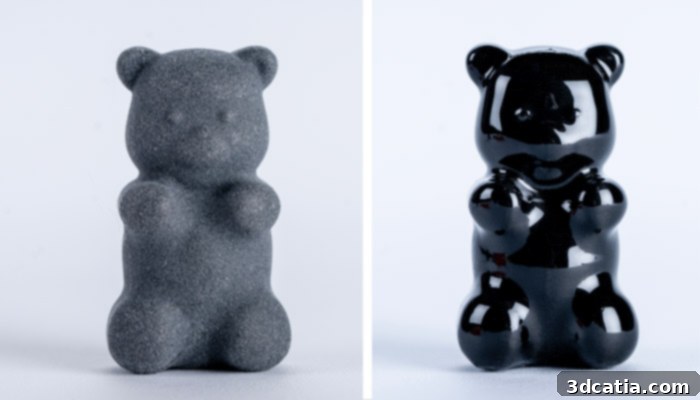
On the left, an unfinished 3D printed part; on the right, the same part post-processed with the Smoothit machine, showcasing a smoother finish (photo credits: Metalizz)
The operational simplicity of the Smoothit machine contributes significantly to its appeal. Users merely place their 3D printed parts into the machine, which is equipped with four precisely controlled rotating axes. The leveling varnish is then uniformly sprayed onto the parts, building up several layers each only a few microns thick. This meticulous application results in several significant functional and aesthetic improvements: greatly enhanced sealing properties for improved durability, increased surface hardness for wear resistance, a remarkably smooth tactile feel, and the flexibility to achieve either a glossy or matte finish according to specific application requirements. The entire post-processing operation can be easily monitored and customized through Smoothit’s intuitive touch interface, providing users with complete control over their production outcomes. This level of customization and user-friendliness ensures consistent, high-quality finishes, ultimately elevating both the aesthetic appeal and functional performance of 3D printed plastic components. For further technical specifications, detailed application examples, and to understand how Smoothit can be integrated into existing additive manufacturing processes, Metalizz offers comprehensive information on their solutions page.
PostProcess Technologies: Automating Post-Processing with the DEMI 800
American pioneer PostProcess Technologies continues to lead the charge in automating the crucial post-printing phase of additive manufacturing. At Formnext, the company showcased its extensive line of post-processing machines, specifically designed to streamline and automate the often labor-intensive and inconsistent removal of 3D printing support structures and excess resins. The DEMI series, a key offering from PostProcess, is engineered to efficiently and consistently remove uncured or excess resin from parts produced using various resin-based additive manufacturing technologies, including Stereolithography (SLA), Digital Light Processing (DLP), and Continuous Liquid Interface Production (CLIP). This automation is vital for improving consistency, significantly reducing manual labor costs, minimizing human error, and accelerating throughput in industrial 3D printing operations. By effectively addressing these common post-processing bottlenecks, PostProcess enables manufacturers to scale their additive production capabilities more efficiently and reliably, moving closer to true industrialization of 3D printing.
Among their impressive lineup, the DEMI 800 was a focal point at the PostProcess booth (12.1 F81) during Formnext 2021. This machine embodies a true Plug&Play philosophy, ensuring that its integration into existing production environments is straightforward and hassle-free, requiring minimal setup. The entire post-processing workflow is intelligently managed by PostProcess’s proprietary AUTOMAT3D software platform, which orchestrates every step for optimal and repeatable results. At the core of the DEMI 800’s efficiency is its patented Submersed Vortex Cavitation (SVC) technology. This advanced system generates a dynamic, precisely controlled flow within the processing chamber. When combined with an optimized distribution of energy and specially formulated detergents, the SVC technology rapidly and thoroughly removes excess resins without causing any damage to the intricate details, delicate features, or structural integrity of the final part. This meticulous, automated process minimizes the risk of errors commonly associated with manual post-processing and is reported to reduce overall working time by a remarkable 80%. Such significant time savings, coupled with consistent, high-quality finishes and reduced labor dependency, represent a massive leap forward in optimizing post-processing workflows for high-volume additive manufacturing. Further details on the DEMI range and its specific capabilities, including case studies and technical specifications, are readily available on the PostProcess Technologies website, offering comprehensive insights into how their solutions can transform and optimize additive manufacturing post-processing.
Tumaker: The Versatility of BIGFoot PRO DUAL Bowden-Pellets Printer
The Spanish brand Tumaker, a dynamic joint venture between IT3D and Indart3D, captivated audiences at Formnext with its innovative BIGFoot Pro Dual 3D printer. This machine is distinguished by its unique and powerful configuration: two independent extrusion heads, one optimized for traditional filaments (Bowden system) and another specifically designed for granular pellets. This groundbreaking dual-head system grants users unparalleled flexibility, allowing for simultaneous printing with both established filament materials and more cost-effective granular pellets. The integration of both material forms within a single machine signifies a major advancement in Fused Filament Fabrication (FFF) technology, expanding material compatibility and opening doors to a wider range of applications previously constrained by material format. The BIGFoot Pro Dual is engineered for high performance and directly addresses critical manufacturing challenges such as significantly reducing material costs and shortening production times, thanks to its ability to utilize cheaper pelletized materials and potentially achieve faster deposition rates for larger parts.
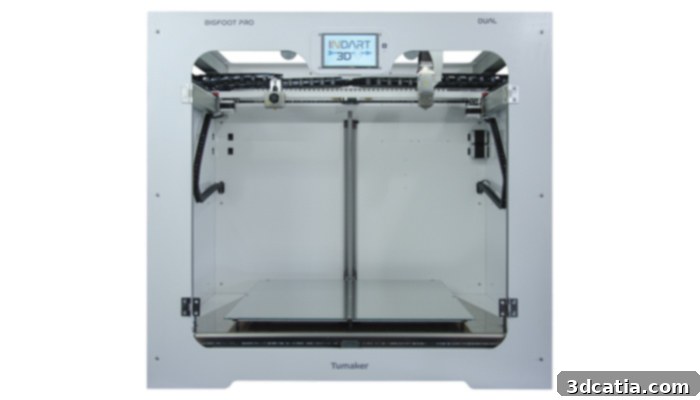
The BIGFoot Pro Dual Printer in operation, demonstrating its advanced capabilities.
The granular head of the BIGFoot Pro Dual is a true game-changer for material scientists and industrial users alike. It effectively removes many of the limitations associated with filament-based printing by allowing for the direct use of raw plastic pellets, including clean plastics, recycled materials, or even specialty compounds that are not typically available in filament form. This not only dramatically broadens the material palette but also contributes to greater sustainability and cost-efficiency in additive manufacturing. The pellet extruder supports a wide range of nozzle sizes, from 0.4 mm up to a substantial 5 mm, enabling both fine detail work and the rapid printing of large-scale parts with high material flow. Concurrently, the Bowden traction head is optimized for precision and quality, accommodating large spools of up to 10 kg, which is crucial for continuous, high-quality printing of rigid materials. This head supports finer nozzle diameters ranging from 0.2 mm to 1.2 mm, ensuring exceptional detail. This unique combination ensures that users can tackle both robust, industrial applications requiring bulk material deposition and intricate, high-resolution projects with equal proficiency. The BIGFoot Pro Dual is available in three distinct versions – BF Pro 200, BF Pro 350, and BF Pro 500 – each offering different maximum print volumes: 490x470x200 mm, 490x470x350 mm, and 490x470x500 mm respectively. This tiered offering allows customers to select a machine perfectly suited to their specific production needs, part size requirements, and spatial constraints. Formnext attendees could experience this versatility firsthand at the booth of its German distributor, Picco Die Service, located in Hall 11.0, Stand D68, or by exploring more information on Tumaker’s official website.
9T Labs: Revolutionizing Composite Part Manufacturing with Red Series Additive Fusion
Zurich-based manufacturer 9T Labs AG made a significant impact at Formnext by unveiling its groundbreaking Red Series Additive Fusion technology. This innovative approach to producing high-performance, lightweight composite parts integrates a sophisticated cloud-based design and simulation tool with two distinct pieces of hardware. The complete system offers a streamlined and highly efficient workflow for manufacturing strong, durable, and structurally optimized composite components, directly addressing critical needs in demanding industries such as aerospace, automotive, and medical devices. The Red Series is designed to overcome traditional limitations of composite manufacturing, offering unparalleled design flexibility, precise fiber placement, and efficient production for applications where structural integrity and weight reduction are paramount. This holistic solution represents a paradigm shift, enabling the mass production of complex composite parts with enhanced performance characteristics that were previously unattainable.
The first core component of the Red Series is the Build Module, a specialized 3D printer focused on the precise production of preforms. This module utilizes advanced thermoplastic filaments, including high-performance engineering polymers like PA12, PPS, PEEK, and PEKK. Crucially, it also processes qualified and standardized continuous carbon fiber filaments, where the carbon fibers are accurately embedded within matrices of PA12, PPS, PEEK, or PEKK. This allows for meticulous control over fiber orientation and density, which is essential for optimizing the mechanical properties and anisotropic strength of the final part. Once the preform is accurately printed, it is then seamlessly transferred to the second key piece of equipment: the Fusion Module. This post-processing unit is responsible for the consolidation of the final composite parts. Through a controlled heating and compression process, the Fusion Module binds the layers of the printed preform, eliminating voids and achieving a remarkable fiber/material volume ratio of up to 60%. This high fiber content directly translates into superior strength-to-weight ratios, making the parts ideally suited for critical structural applications. The Fusion Module can process parts up to a maximum size of 350 mm x 270 mm x 250 mm, accommodating a wide range of component sizes for various industrial needs and enabling significant scaling of production.
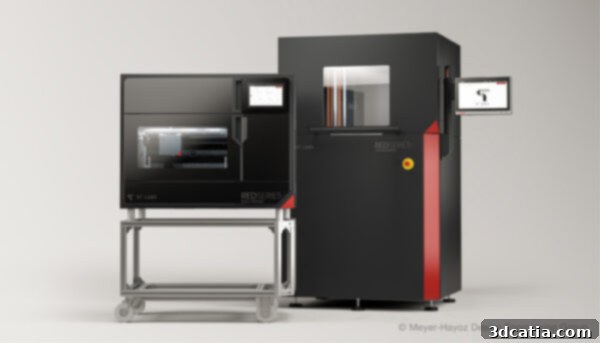
A visual representation of 9T Labs’ complete Red Series Additive Fusion solution for composite parts.
Lithoz: Pioneering Ceramic Additive Manufacturing with the CeraFab Lab L30
Austrian manufacturer Lithoz, a renowned specialist in the demanding field of ceramic 3D printing solutions, continues to push the boundaries of advanced materials processing. At Formnext 2021, the company proudly introduced its new entry-level DLP (Digital Light Processing) machine, the CeraFab Lab L30. This machine is specifically designed to democratize access to high-performance ceramic additive manufacturing, targeting research laboratories, educational institutions, and new entrants (“beginners”) into the intricate world of 3D printing with ceramics. The CeraFab Lab L30 offers a respectable printing volume of 76 x 43 x 170 mm, making it perfectly suited for developing small series of highly specialized components and producing intricate custom parts with high precision. Its compact size, combined with a user-friendly interface, ensures that it integrates seamlessly into various working environments, from advanced R&D labs to small-scale production facilities. This strategic move by Lithoz aims to foster wider adoption and accelerate innovation in ceramic additive manufacturing by providing an accessible yet powerful tool for exploring new applications and complex material combinations, particularly in fields like biomedical and micro-mechanics.
The CeraFab Lab L30 leverages Lithoz’s established expertise in resin-based ceramic printing, offering the precision and reliability that are crucial for demanding ceramic applications. The DLP technology allows for exceptionally high-resolution printing, enabling the creation of complex geometries and fine details that are difficult or impossible to achieve with conventional ceramic manufacturing methods. Beyond the introduction of the Lab L30, Lithoz also highlighted its advanced capabilities by exhibiting impressive multi-material parts. These innovative components, created on their more sophisticated CeraFab Multi 2M30 machine, showcase the immense potential of combining disparate materials such as ceramic/metal and ceramic/polymer within a single print. This multi-material capability is a significant development, opening entirely new avenues for designing components with tailored properties – for example, a ceramic part with integrated metallic electrical pathways for sensor applications, or a ceramic-polymer composite for enhanced impact resistance and flexibility where pure ceramic might be too brittle. Such groundbreaking innovations are particularly relevant for industries like medical (e.g., implants), aerospace, and industrial tooling, where specific functional requirements necessitate combining the unique properties of different materials to achieve superior performance. Formnext visitors had the invaluable opportunity to discover these advancements firsthand at Lithoz’s dedicated stand 12.1 C21, gaining direct insight into the exciting future of ceramic additive manufacturing.
AIM3D: Advancing Multi-Material Pellet Extrusion with the ExAM510 Printer
AIM3D, a dynamic German manufacturer that originated as a spin-off from the prestigious University of Rostock, showcased its latest innovation in multi-material additive manufacturing at Formnext: the ExAM 510 machine. This new printer represents a significant enhancement of its predecessor, the ExAM 255, building upon proven technology to deliver even greater capabilities and flexibility. The ExAM 510 is a cutting-edge 3D printer based on an advanced pellet extrusion process, a method that offers numerous advantages over traditional filament-based systems, including significantly lower material costs due to direct use of industrial granules and a broader selection of available compounds. One of its most impressive features is a substantially larger print volume, measuring 510 x 510 x 400 mm, enabling the production of much larger components or larger batches of smaller parts in a single run. Furthermore, the ExAM 510 stands out with its unique ability to combine up to three different materials within a single print – typically two distinct materials for the main part fabrication and one dedicated material for soluble or breakaway support structures. This multi-material capability is crucial for creating complex functional prototypes and end-use parts with varying properties, such as integrated soft and hard components, or parts requiring specific thermal, electrical, or structural characteristics across different sections.
The versatility of the ExAM 510 is truly remarkable, allowing users to process a wide array of industrial-grade materials: metals, ceramics, and polymers, all in granular (pellet) form. This unprecedented material flexibility empowers engineers and designers to innovate without being constrained by limited material options or high filament costs. Utilizing granular materials not only reduces overall production costs but also provides access to specialized industrial compounds that are not typically available in filament form, including high-performance engineering plastics and metal powders. This opens up entirely new possibilities for advanced material research and the development of specialized applications across various sectors, from automotive and aerospace to medical devices and consumer goods. While the ExAM 510 was displayed as a fully functional prototype at booth 12.1 A66 during Formnext 2021, indicating its advanced stage of development and near-readiness, AIM3D confirmed that full-scale production and commercial availability are slated for Formnext 2022. This anticipation highlights the company’s commitment to rigorous testing and refinement to ensure the machine meets the highest standards of industrial performance, reliability, and repeatability before its official market launch. The ExAM 510 promises to be a pivotal machine for those looking to explore the frontiers of multi-material additive manufacturing with cost-effective and diverse pelletized resources, enabling truly functional and complex part creation.
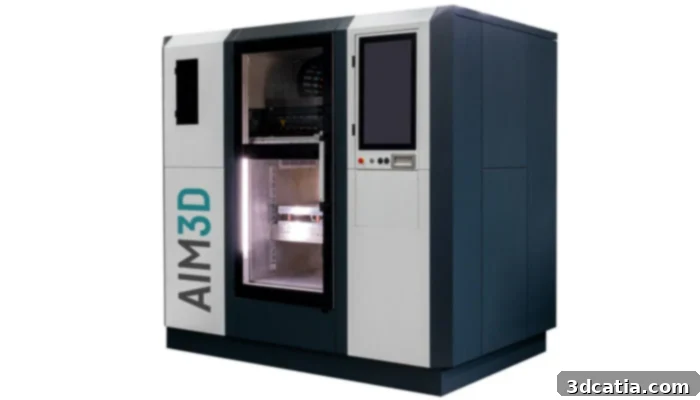
The new AIM3D ExAM510 machine, showcased as a functional prototype at Formnext.
Markforged: Introducing the Industrial-Scale FX20 Composite 3D Printer
Markforged, the American pioneer renowned for its industrial composite 3D printing solutions, unveiled its most ambitious and powerful machine to date at Formnext 2021: the FX20. This flagship printer represents a significant leap forward for the company, pushing the boundaries of what is achievable with continuous fiber fabrication at an industrial scale. The FX20 is not only the largest 3D printer developed by Markforged but also boasts unparalleled accuracy and precision within its class. With an impressive print volume of 525 x 400 x 400 mm, it enables the production of substantial, high-strength parts suitable for demanding industrial applications across various sectors. Its resolution capabilities, ranging between 50 and 250 microns, ensure that even intricate geometries are rendered with exceptional detail, precise feature accuracy, and superior surface quality. This powerful combination of large build volume and high precision makes the FX20 an ideal solution for manufacturing robust end-use parts, durable tooling, and complex functional prototypes that require both strong mechanical properties and tight dimensional tolerances.
A key strength of the FX20 lies in its broad and advanced material compatibility, designed to work seamlessly with Markforged’s proven composite materials, which include carbon fiber, fiberglass, and Kevlar, reinforced within various thermoplastic matrices. Crucially, the FX20 also supports high-performance engineering plastics like Ultem and nylon. This expands its utility across a wider range of industrial scenarios where specialized material properties are required. Ultem, for instance, is highly valued for its exceptional strength-to-weight ratio, excellent thermal resistance, and chemical inertness, making it particularly valuable in aerospace, automotive, and defense applications. The ability to print such advanced materials with continuous fiber reinforcement elevates the FX20 to a new level of industrial capability, allowing manufacturers to produce parts that can withstand extreme environments, heavy loads, and rigorous operational conditions. User interaction with the FX20 is streamlined through a large, intuitive 7-inch touch screen, ensuring easy control and comprehensive monitoring of print jobs, enhancing operator efficiency. This focus on user-friendliness, combined with its robust performance and material versatility, firmly positions the FX20 as a leading solution for industrial additive manufacturing in the most demanding settings. Formnext attendees had the unique opportunity to witness this groundbreaking machine in live operation at Markforged’s booth 12.0 D01, experiencing firsthand its capacity to deliver strong, lightweight, and precise parts at an unprecedented industrial scale.
BOFA International: Enhancing Workplace Safety with the 3D PrintPRO HT Particle Filtration Solution
UK-based BOFA International, a global leader in fume and dust extraction technology, highlighted a critical aspect of additive manufacturing that is often overlooked: workplace safety and environmental control. At Formnext, BOFA showcased its comprehensive range of solutions engineered to effectively filter harmful particles and noxious emissions generated by various types of 3D printers. These advanced filtration systems are meticulously designed not only to significantly improve air quality within the working environment but also to optimize temperature and airflow management around the 3D printing equipment, thereby ensuring a safe, healthy, and compliant workspace for operators. The increasing adoption of high-performance materials in additive manufacturing brings with it new challenges, particularly the emission of ultrafine particles and potentially hazardous gases during the printing process. BOFA’s unwavering commitment to addressing these challenges is evident in their latest innovation, the 3D PrintPRO HT.
The 3D PrintPRO HT is a state-of-the-art filtration unit specifically engineered for seamless compatibility with high-temperature 3D printers. These industrial-grade printers often utilize advanced engineering polymers such as PEI (Polyetherimide), PEKK (Polyetherketoneketone), and PEEK (Polyether ether ketone), which necessitate high extrusion and heated chamber temperatures, sometimes exceeding 500°C. While these high-performance materials offer exceptional mechanical strength, thermal resistance, and chemical inertness, their processing can unfortunately release significant amounts of fumes, gases, and potentially hazardous nanoparticles into the surrounding air. The 3D PrintPRO HT is meticulously designed with multi-stage filtration to capture and eliminate these emissions efficiently, safeguarding the health of personnel and preventing the buildup of contaminants that could negatively affect machine performance, part quality, or lead to equipment downtime. By providing a consistently clean and controlled atmosphere, BOFA’s sophisticated filtration solution enables manufacturers to safely and responsibly harness the full potential of high-temperature polymer printing without compromising on operator safety or environmental regulatory standards. Visitors interested in witnessing this crucial safety innovation, or exploring its seamless integration with cutting-edge 3D printing technologies, could find BOFA International at booth 12.0 E22 at Formnext, where they demonstrated their unwavering dedication to fostering a safer, cleaner, and more productive additive manufacturing future.
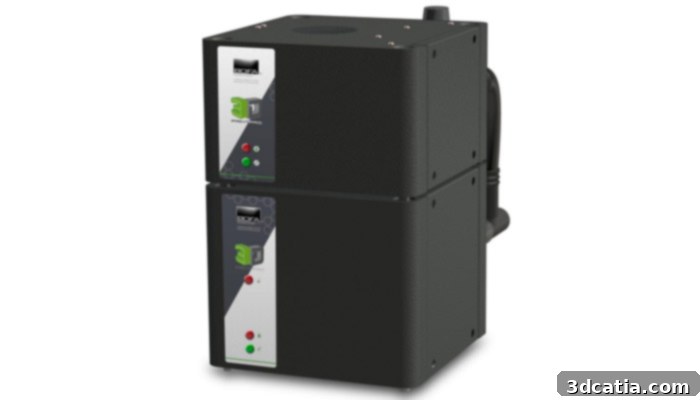
The innovative 3D PrintPRO HT filtration solution from BOFA International.
Formnext 2021 proved to be a vibrant and insightful showcase of the accelerating pace of innovation in additive manufacturing. From sophisticated post-processing automation designed to streamline production to groundbreaking multi-material printers expanding design possibilities, and essential workplace safety solutions ensuring healthier environments, the machines highlighted here represent just a fraction of the incredible advancements on display. These technologies are not merely incremental improvements; they are foundational elements that are enabling broader industrial adoption, significantly enhancing efficiency, and dramatically expanding the capabilities of 3D printing across diverse industrial sectors. The clear shift towards greater automation, the exploration of complex multi-material composites, and the crucial emphasis on operator safety collectively underscore a maturing industry, poised for unprecedented growth and transformative impact on global manufacturing practices. As these innovations continue to evolve, the promise of more efficient, versatile, and sustainable production processes becomes an increasingly tangible reality.
*Cover photo credits: Mesago / Mathias Kutt
Were you among the fortunate attendees at Formnext 2021? We’d love to hear your thoughts and insights! Which of these innovative Formnext machines stood out as your favorites, or did you discover other compelling technologies that left a lasting impression on you? Share your experiences, opinions, and predictions for the future of 3D printing by leaving a comment below, or join the dynamic conversation on our LinkedIn, Facebook, and Twitter pages! For the latest breaking news, in-depth analysis, and exclusive interviews in the world of 3D printing, don’t forget to sign up for our free weekly Newsletter here, delivered straight to your inbox. You can also explore all our insightful video content, including machine demonstrations and expert discussions, on our dedicated YouTube channel. Stay connected with the advancements shaping the transformative future of manufacturing!