
Strategic Integration of 3D Printing: Expert Insights for Business Transformation
The manufacturing landscape is undergoing a profound transformation, largely driven by the rapid advancements in 3D printing technologies, also known as additive manufacturing (AM). Once primarily confined to rapid prototyping, AM has evolved into a powerful tool that enables companies to rethink and optimize their entire production processes, from initial concept development to the creation of highly specialized end-use components. This shift empowers businesses to achieve unprecedented levels of design freedom, accelerate product development cycles, and unlock significant cost efficiencies, thereby reshaping traditional manufacturing paradigms.
The tangible benefits of integrating additive manufacturing are increasingly evident across various industries. A compelling report, Sculpteo’s State of 3D Printing 2020, highlighted that an overwhelming 80% of surveyed participants had been leveraging 3D printing for at least two years. Their primary motivations included the creation of intricate and complex parts, the ability to rapidly multiply design iterations, a significant reduction in time to market, and substantial lowering of overall production costs. Further emphasizing this economic impact, another study by Dimensional Research revealed that 88% of stakeholders believed the industry could realize billions of dollars in production cost savings through widespread adoption of AM technology. These statistics underscore the immense potential for innovation and efficiency that 3D printing brings to the modern enterprise.
Despite the well-documented advantages and the clear trajectory of additive manufacturing, a considerable number of companies still approach this investment with hesitation. Sculpteo’s survey further revealed a key barrier: 59% of participants cited high entry costs and a perceived lack of adequate knowledge within the sector as significant deterrents to making an informed investment. This highlights a critical need for clearer guidance and a deeper understanding of when and how businesses should strategically integrate 3D printing into their operations. To shed light on these crucial considerations, we sought the expertise of three industry leaders who shared their invaluable perspectives on navigating the complexities of AM adoption.
Our esteemed panel included Dr. Heiner Lang, a distinguished member of the Board of Directors at BOSCH Rexroth AG, who oversees factory development and automation initiatives. We also consulted with Christophe Eschenbrenner, Enterprise Senior Sales Manager for the 3DEXPERIENCE Marketplace at Dassault Systèmes, a key player in design and simulation software. Finally, we engaged with André Venzal, Co-Founder of Rupture Tech Consulting, a firm that specializes in distributing additive manufacturing solutions, notably through its partnership with OKM3D. Their collective insights offer a holistic view on the strategic implementation of 3D printing for sustainable business growth.
- Christophe Eschenbrenner
- Dr. Heiner Lang
- André Venzal
When Does It Make Sense to Integrate 3D Printing into Your Company?
Additive manufacturing, which first emerged in the 1980s, was initially synonymous with “Rapid Prototyping.” Its primary application then was the swift and cost-effective development of prototypes, enabling designers to quickly visualize and test concepts. However, the last decade has witnessed an astounding acceleration in the technology’s capabilities. Significant advancements in the AM workflow, coupled with the introduction and qualification of a broader spectrum of materials, have paved the way for more repeatable, precise, and robust processes. This evolution has expanded 3D printing’s utility far beyond mere prototyping, allowing companies to design and manufacture not only functional prototypes but also a wide array of high-performance end-use parts across various sectors.
While the scope of AM has broadened, its foundational strength in prototyping remains a cornerstone for many businesses. Dr. Heiner Lang aptly clarifies that “3D printing is a useful addition when it comes to the production of prototypes, small series and innovative components with new types of geometries.” This highlights its value in niche production runs where traditional methods are inefficient. André Venzal further emphasizes the strategic timing for adoption: “It makes sense to invest in 3D printing at a very early stage of product development, as well as to print a large panel of applications such as office supplies, tools, accessories, jigs & fixtures, etc.” This broad application spectrum, from initial design validation to manufacturing aids, demonstrates AM’s versatility and its ability to contribute across multiple stages of the product lifecycle.
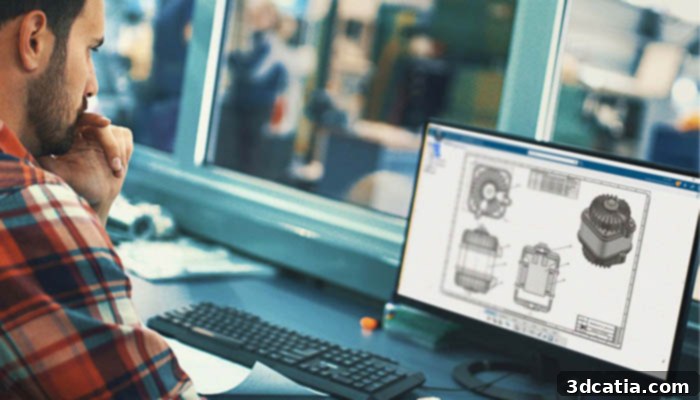
It is crucial to recognize that 3D printing technologies seldom serve as the *sole* manufacturing process within an enterprise. Instead, their true value often lies in their ability to complement and optimize existing manufacturing methods. In the majority of applications, additive manufacturing will not entirely displace conventional techniques like injection molding or CNC machining. Rather, it excels at streamlining specific steps in the product development and production process, offering agility and capabilities that traditional methods cannot match. Christophe Eschenbrenner advises, “I advise companies to name someone in their organisations that is able to assess the situation for its market and investigate potential applications. WHAT and WHY are key points to start. HOW and WHEN will come later.” This emphasizes the need for a strategic, application-driven approach rather than a technology-first mindset.
The industry in which a company operates is often a strong indicator of potential 3D printing applications. For instance, in the medical sector, AM has revolutionized the production of custom-made devices. Personalized orthotics, prosthetics, and dental implants can now be manufactured precisely to a patient’s unique anatomy, a feat that was prohibitively costly and time-consuming with traditional techniques. Similarly, in the jewelry industry, 3D printing not only facilitates high-value customization but also enables the creation of intricate, innovative geometries that are virtually impossible to achieve through conventional means. This design freedom is a significant driver for adoption. Therefore, a deep and continuous understanding of trends and specific needs within a company’s core sector is absolutely essential for identifying the most impactful and profitable applications for additive manufacturing.
In-House Investment vs. Outsourcing: When to Choose a 3D Printing Service Provider?
When considering the adoption of additive manufacturing, companies face a fundamental strategic decision: whether to acquire an in-house AM solution or to outsource their 3D printing needs to a specialized service provider. Each approach presents distinct advantages and disadvantages, heavily dependent on a company’s specific requirements, budget, and long-term vision. For in-house adoption, a significant initial hurdle often lies in ensuring staff possesses adequate training and expertise, which currently represents a notable barrier to entry for many organizations. However, the benefits of owning the technology can be substantial. André Venzal clarifies this duality, stating, “Both approaches are very interesting and have their benefits. With a short-term vision and small periodic needs, it makes more sense to outsource 3D printing, as it offers a wide range of technologies and materials that can be adapted to specific needs. For a longer term vision with more use, the ROI is higher when you invest in an adapted in-house additive manufacturing solution.”
Outsourcing offers immediate access to diverse technologies and materials without the capital expenditure, maintenance costs, or staffing requirements associated with purchasing equipment. It’s ideal for companies with intermittent needs, those exploring AM capabilities, or those requiring highly specialized processes not yet justified for in-house investment. Conversely, an in-house investment is a strategic move that can foster significant long-term competitive advantages. Dr. Lang emphasizes this, stating, “3D printing can play an important role in a company’s long-term differentiation from competition.” By investing in its own machines, a company cultivates proprietary knowledge, accumulates invaluable experience, and can more effectively evaluate the full potential of the technology within its unique operational context. This organic growth of expertise can lead to breakthroughs in product design, process optimization, and market positioning that outsourcing alone cannot provide. Crucially, the decision hinges on understanding that in-house AM is a long-term strategic investment, distinct from the more transactional nature of outsourcing.
Christophe Eschenbrenner provides clear criteria for when the leap to in-house investment becomes pragmatic: “Only once value has been identified and the next year’s volumes secured.” He further elaborates, “Investing in a piece of in-house equipment makes sense for those who have identified a key application and the technical and business case.” This underscores the importance of a clear use case and a quantifiable return on investment. Before making such a substantial commitment, a thorough assessment of technical feasibility, market demand, and financial viability is paramount. This ensures that the investment is not speculative but grounded in a solid business strategy that aligns with the company’s growth objectives.
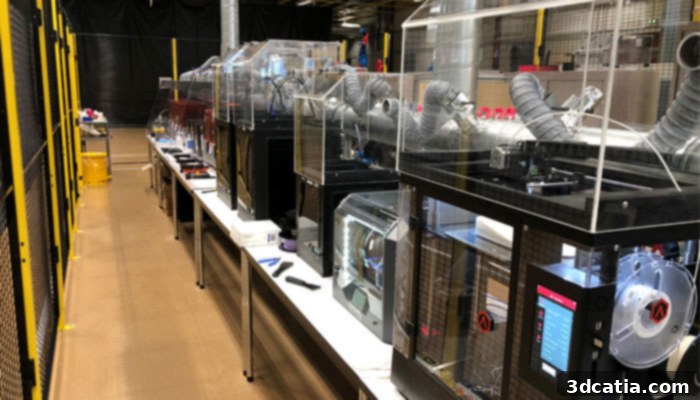
3D printing factory | Photo Credits: BOSCH
Before embarking on an in-house 3D printing investment, having qualified personnel is non-negotiable. This involves more than just operational knowledge of the machines; it requires expertise in mechanical design software, a deep understanding of material properties, the ability to identify suitable applications for AM, and comprehensive knowledge of how the equipment functions and integrates into existing workflows. Unfortunately, appropriate training and a profound grasp of additive manufacturing technology remain relatively scarce across many industries. This highlights a critical skills gap. Implementing AM is a complex, multi-step process that extends far beyond merely purchasing a new machine. It often necessitates a paradigm shift in the design stage, embracing “design for additive manufacturing” principles, and a thorough understanding of crucial post-processing steps (such as curing, cleaning, support removal, and surface finishing) which are essential for producing functional and high-quality parts.
Navigating the Landscape: Benefits and Challenges of Additive Manufacturing Integration
Over the years, the benefits of additive manufacturing have been extensively documented and widely acknowledged. Beyond the obvious advantages of rapid prototyping and manufacturing complex geometries, strategic integration of AM typically leads to a cascade of positive outcomes. As André Venzal succinctly explains, these include “an increase in autonomy, a fast and large ROI, flexibility, low carbon footprint and, of course, more freedom.” This design freedom allows engineers to create intricate internal structures, lattice designs, and organic shapes that were previously impossible with traditional methods, leading to lighter, stronger, and more efficient parts.
For large, established enterprises like BOSCH, which has been utilizing additive manufacturing technologies for over a decade to produce critical components like sand cores for hydraulic control blocks, the list of benefits is indeed extensive. Dr. Lang provides a concrete example: “With the use of powder bed fusion processes, for example, we improve the energy efficiency of servo-hydraulic valves. The printed components are much lighter and more compact than conventional manufacturing variants.” This demonstrates AM’s capacity to drive not only performance improvements but also sustainable manufacturing practices through material optimization and reduced energy consumption.
However, integrating additive manufacturing also introduces a unique set of challenges that companies must proactively address. Dr. Lang points to a significant hurdle: “A major challenge is the automation of the process. Automation makes processes traceable, reproducible and more productive.” For AM to scale to industrial production levels and consistently meet stringent quality and safety standards, particularly for end-use parts, robust automation across the entire workflow – from design and preparation to printing and post-processing – is essential. This is a key factor in ensuring components are certifiable and adhere to the rigorous requirements demanded by industrial applications.
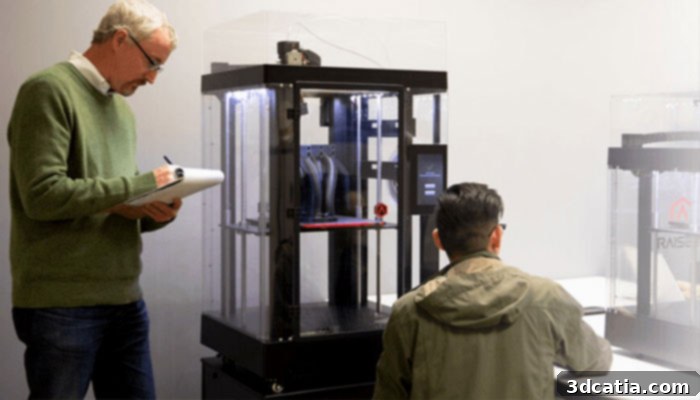
Photo Credits: OKM3D
Furthermore, additive manufacturing currently faces limitations when attempting to compete with subtractive methods such as injection molding or CNC machining in scenarios involving very large volume production or the creation of exceptionally large parts. While AM is rapidly advancing, aspects like repeatability, material throughput, and per-part cost are not yet universally competitive for all applications at mass production scales. Though increasing automation will undoubtedly enhance these parameters, significant investment in research and development is still needed. Finally, André Venzal highlights a pervasive, often underestimated challenge: “In many cases, the main limitation is the lack of knowledge and acceptance of the technology itself, as it is difficult to change habits.” This human element – resistance to adopting new processes and the need for comprehensive education and training – often proves to be as significant a barrier as any technical or financial constraint.
As additive manufacturing technology continues its maturation, innovative solutions are continually being developed to overcome existing limitations and further industrialize the entire process. Experts universally agree that 3D printing is not poised to entirely replace traditional manufacturing techniques. Instead, its future lies in its continued perfection as a complementary technology, one that synergizes with conventional methods to create more efficient, flexible, and innovative production ecosystems. To effectively participate in and benefit from this ongoing AM transformation, Christophe Eschenbrenner concludes that active engagement with the wider community is indispensable: “Don’t move forward alone, go on digital communities, share within AM associations like AMUG in the US, collaborate with partners identified through trade shows or marketplaces!” This collaborative spirit, fostering knowledge sharing and partnerships, is vital for any company looking to successfully integrate and maximize the potential of additive manufacturing.
Do you have other questions for our experts about strategic 3D printing integration? What other topics would you like us to cover with the advice of leading experts in the field? Let us know in a comment below or connect with us on our Facebook and Twitter page! Don’t forget to sign up for our free weekly Newsletter, with all the latest news in 3D printing delivered straight to your inbox, keeping you at the forefront of this evolving industry!