
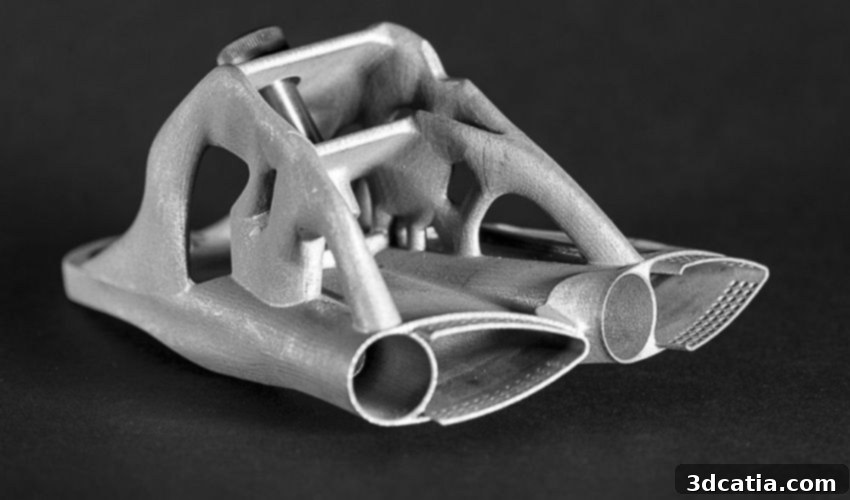
The Metal 3D Printing Market: Poised for Explosive $4.46 Billion Growth by 2028
The landscape of advanced manufacturing is rapidly evolving, with metal 3D printing emerging as a transformative force across a multitude of high-stakes industries. Sectors such as medical, defense, and aerospace are increasingly leveraging additive manufacturing for its unparalleled ability to produce complex, high-performance parts with significant design freedom. This accelerating adoption is directly reflected in the global market valuation, which continues to climb at an impressive rate, signaling a new era of innovation and industrial capability.
According to new, compelling data from the recently published “Metal 3D Printing Market” report by Verified Market Research, the global metal 3D printing market size is forecast to achieve a remarkable valuation of USD $4.46 Billion by the year 2028. This projection represents an extraordinary leap from its market value of USD 534.18 Million recorded in 2020. Such a substantial increase underscores the technology’s growing importance and market penetration. The report further highlights an impressive compound annual growth rate (CAGR) of 30.38% from 2021 to 2028, solidifying metal additive manufacturing as one of the fastest-growing segments within the broader manufacturing sector.
Key Market Drivers Fueling Unprecedented Growth
Several critical factors are converging to propel the metal 3D printing market towards this projected exponential growth. One of the most significant catalysts identified in the report is the expiry of key patents, particularly those related to selective laser melting (SLM) and other foundational metal additive manufacturing processes. The expiration of these intellectual property barriers has democratized access to once proprietary technologies, fostering intense competition, stimulating innovation, and ultimately leading to more affordable and accessible printing solutions. This has allowed a wider array of companies, from established industrial giants to agile startups, to enter the market and contribute to technological advancements.
Furthermore, the increasing demand for customization and the widespread adoption of 3D printing in new, diverse markets are major driving forces. Industries are recognizing the immense value of producing bespoke components, rapid prototypes, and on-demand parts that can be tailored precisely to specific applications. This shift away from traditional mass production towards customized, low-volume manufacturing is a perfect fit for the capabilities of metal 3D printing. New applications are continually emerging, ranging from intricate medical implants and dental prosthetics to lightweight components for electric vehicles and highly optimized parts for renewable energy systems, significantly expanding the market’s reach.
Another powerful growth engine stems from the escalating demand for high-performance metal components in high-temperature engineering applications. The aerospace and automotive sectors, in particular, are at the forefront of this trend. Metal additive manufacturing allows for the creation of components with complex internal geometries, improved strength-to-weight ratios, and enhanced thermal properties, which are crucial for engines, turbines, and structural parts exposed to extreme conditions. This capability not only drives performance improvements but also contributes to fuel efficiency and overall system reliability, making it an indispensable technology for future-forward engineering.
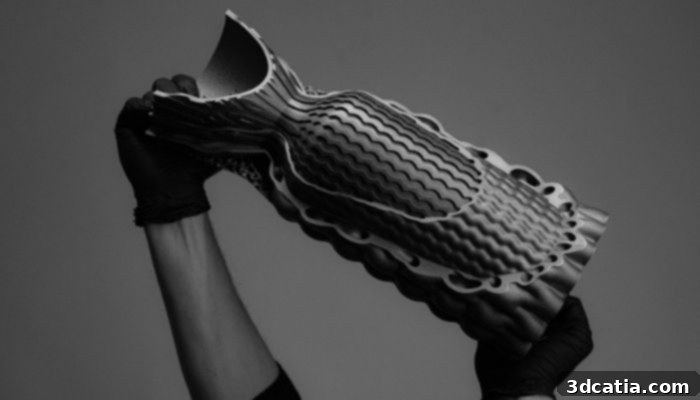
The entirely 3D-printed rocket engine exemplifies the advanced capabilities of metal additive manufacturing. (Photo Credit: Hyperganic)
Market Dynamics: Key Players and Strategic Moves
The report meticulously profiles some of the leading innovators and familiar names shaping the metal 3D printing landscape. Prominent players such as 3D Systems, EOS, Exone, Stratasys, and Voxeljet are at the forefront, continually pushing the boundaries of what is possible with metal additive manufacturing technologies. These companies are not only developing advanced printers and materials but are also strategically expanding their capabilities through mergers, acquisitions, and product innovations.
Recent major market movements underscore the dynamic nature of this sector. A significant example is 3D Systems’ strategic acquisition of Additive Works, a German simulation software firm. This move enhances 3D Systems’ offerings by integrating advanced simulation tools, which are crucial for optimizing print parameters, predicting part performance, and reducing trial-and-error in metal additive manufacturing processes. Such integrations streamline workflows, improve part quality, and ultimately lower production costs, making metal 3D printing more viable for mainstream manufacturing applications.
Another notable development is ExOne’s X1 Tooling launch, which aims to provide fast and affordable solutions for final production. ExOne, a pioneer in binder jetting technology, continues to innovate by developing systems that can rapidly produce complex metal parts without the need for traditional tooling, thereby significantly reducing lead times and manufacturing costs. These types of innovations are vital for accelerating the adoption of metal 3D printing, especially for applications requiring high throughput and cost-effectiveness.
Overcoming Challenges: The Road Ahead
Despite the immense potential and rapid growth, the metal 3D printing market faces certain constraints that limit its even broader adoption. The report highlights several key challenges, including the high upfront costs associated with industrial-grade metal 3D printers and the specialized metal powders they require. These substantial capital expenditures can be a barrier for smaller enterprises or companies transitioning from traditional manufacturing methods.
Furthermore, the processing complexities for metal powder producers and users present another hurdle. Working with fine metal powders often involves stringent safety protocols due to their reactive nature, as well as complex post-processing steps such as sintering, heat treatment, and surface finishing. Ensuring consistent part quality, managing material properties, and optimizing build parameters demand significant expertise and specialized infrastructure. The need for highly skilled operators and technicians who understand these intricate processes is also a critical factor.
In-Depth Market Segmentation and Applications
The Verified Market Research report provides essential market insights by segmenting the metal 3D printing industry across several crucial dimensions: Material, Type, End-user, and Geography. This granular analysis offers a comprehensive understanding of where growth is occurring and the specific needs of various sectors.
Materials and Their Significance
The materials segment primarily includes metal powders and filaments, each with distinct applications and processing requirements. Metal powders, typically used in powder bed fusion (SLM, EBM) and binder jetting technologies, offer a wide range of properties. Titanium alloys are highly valued for their exceptional strength-to-weight ratio and biocompatibility, making them indispensable in aerospace for lightweight structural components and in medical for surgical implants and prosthetics. Steel alloys, including stainless steel and tool steel, are widely used for tooling, functional prototypes, and industrial components due to their strength, durability, and cost-effectiveness. Nickel-based superalloys are critical for high-temperature applications in aerospace and energy sectors, such as turbine blades and exhaust components, owing to their excellent heat resistance and corrosion properties. Aluminum alloys are sought after for their lightweight characteristics and good thermal conductivity, suitable for automotive parts, heat exchangers, and consumer electronics.
End-User Industries Driving Adoption
The end-user segmentation reveals the diverse industries capitalizing on metal 3D printing. The Medical & Dental sector utilizes the technology for highly customized implants, prosthetics, surgical guides, and dental crowns, leveraging the biocompatibility of materials like titanium and the ability to produce patient-specific anatomies. The Automotive industry employs metal AM for prototyping complex engine parts, creating lightweight components to improve fuel efficiency or battery range in EVs, and for producing specialized tooling and jigs. Aerospace and Defense remain paramount drivers, utilizing metal 3D printing for critical, flight-ready components such as intricate rocket engine parts, turbine blades, structural brackets, and MRO (Maintenance, Repair, and Overhaul) applications. The ability to produce lightweight, topologically optimized parts with superior performance is a game-changer for these sectors, enhancing efficiency and reducing lead times significantly. Notably, the global metal 3D printing market is primarily driven by the growing use of substances in a variety of high-temperature engineering applications, explicitly those related to aerospace and automotive, where performance at extreme conditions is non-negotiable.
Geographical Landscape
Geographically, the market is segmented into key regions such as North America, Europe, Asia-Pacific, Latin America, and the Middle East & Africa. North America and Europe are currently leading in market share due to strong R&D infrastructure, significant industrial base, and early adoption of advanced manufacturing technologies. However, the Asia-Pacific region, driven by countries like China, Japan, and South Korea, is expected to exhibit the highest growth rate, fueled by rapid industrialization, government initiatives supporting additive manufacturing, and increasing investments in automation and smart factories.
The report also highlights that within the aerospace and defense segment, companies are achieving new innovations and market growth via strategic joint ventures and alliances. This collaborative approach allows for shared risks, combined expertise, and accelerated development of specialized solutions. With the number of key players undergoing consolidation, exemplified by recent high-profile acquisitions such as Desktop Metal’s acquisition of ExOne, it will be fascinating to follow this forecast closely. Such acquisitions often lead to broader technological portfolios, enhanced market reach, and greater efficiencies, positioning consolidated entities for stronger growth. The industry is eagerly watching to see if the market meets these ambitious expectations or even exceeds them, driven by continuous innovation and expanding application areas. For those interested in delving deeper into the specifics, more information about the report can be found HERE.
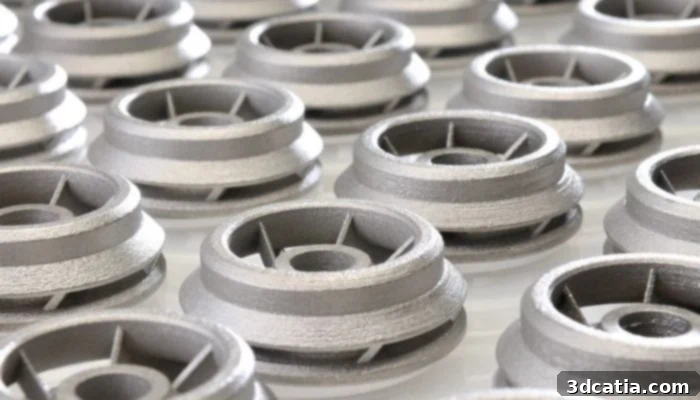
Desktop Metal and ExOne, both now under one umbrella, are renowned for their advancements in metal manufacturing, particularly in binder jetting technology. (Photo Credit: ExOne)
The Future Outlook for Metal Additive Manufacturing
The projected growth of the metal 3D printing market to $4.46 billion by 2028 signifies a pivotal shift in global manufacturing. This expansion is not merely about increasing revenues; it represents a fundamental change in how products are designed, produced, and supplied. The ability to create parts with unprecedented complexity, superior performance, and reduced material waste offers substantial environmental benefits and opens new avenues for product innovation.
Looking ahead, we can anticipate further advancements in machine capabilities, including faster build speeds, larger build volumes, and multi-material printing. Alongside these hardware developments, innovations in metal powder metallurgy will unlock new material properties, expanding the range of applications even further. The integration of artificial intelligence and machine learning into the design and printing process will optimize part performance and enhance process reliability, making metal 3D printing more efficient and cost-effective.
Moreover, the increasing focus on supply chain resilience and localized manufacturing, spurred by recent global events, positions metal 3D printing as a key technology for future industrial strategies. Its ability to produce complex parts on demand, reduce reliance on distant supply chains, and enable rapid iteration will be invaluable for businesses seeking agility and sustainability. The potential for mass customization, where every product can be uniquely tailored to individual customer needs without significant cost penalties, is also a powerful driver that will continue to shape consumer and industrial markets.
What are your thoughts on the future of metal 3D printing and its projected forecast? We invite you to share your insights and predictions in a comment below or connect with us on our LinkedIn, Facebook, and Twitter pages! Don’t forget to sign up for our free weekly Newsletter here to receive the latest 3D printing news directly to your inbox. You can also find all our engaging videos and in-depth analyses on our YouTube channel.
Cover Photo Credit: Materialise