
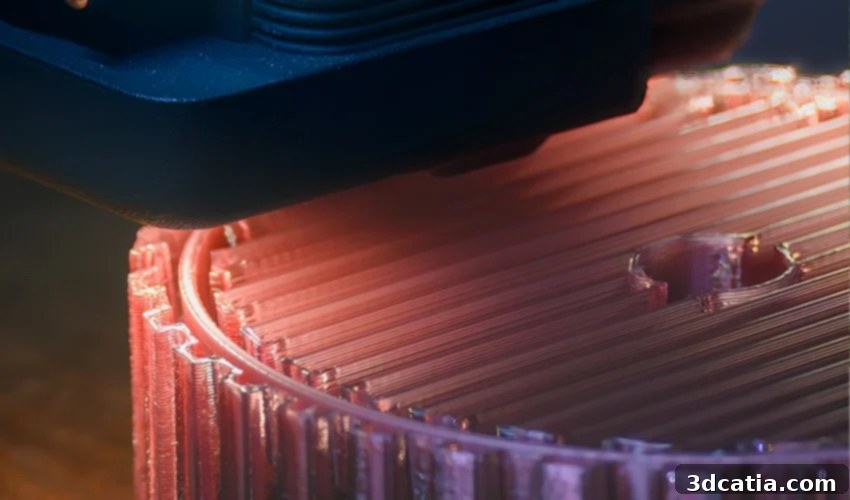
Unlocking Growth: 10 Essential Reasons Why Your Business Needs to Embrace 3D Printing
In today’s rapidly evolving industrial landscape, many manufacturing companies still rely on traditional production methods. However, the paradigm is undeniably shifting with the advent of the Fourth Industrial Revolution, or Industry 4.0. This new era is bringing about transformative changes, compelling businesses to adopt innovative creation and manufacturing processes. Key technological advancements driving this revolution include artificial intelligence, virtual and augmented reality, big data analytics, and crucially, 3D printing. Also known as additive manufacturing, this technology has already made a significant impact across numerous industries and is poised for even greater expansion in the coming years. To ensure organizations remain competitive and can seamlessly transition into these cutting-edge technologies, particularly additive manufacturing, we’ve compiled a comprehensive list. This article explores no fewer than 10 compelling reasons why any user or company should seriously consider integrating 3D printing into their operations.
#1: Significant Waste Reduction and Environmental Benefits
Additive manufacturing, by its very definition, constructs a part by progressively adding material layer by layer. This fundamental principle means that only the precise amount of material required for the final product is used, minimizing excess. This stands in stark contrast to traditional subtractive manufacturing methods, such as machining or carving, which remove large quantities of material from a larger block, often resulting in substantial waste. The adoption of 3D printing therefore leads to a dramatic reduction in raw material waste, which is beneficial not only for the environment but also for a company’s bottom line due to lower material purchasing and disposal costs. Furthermore, in advanced powder-bed fusion processes, unfused or unsintered powders can often be collected and reused in subsequent prints. The recycling rate varies depending on the specific technology and material, but this capability significantly extends material lifespan. Beyond industrial powders, many plastic objects can also be processed and recycled into new 3D-printable filaments or granules, fostering a more circular economy and creating new parts from what would otherwise be discarded. This dual advantage of environmental responsibility and economic efficiency makes waste reduction a primary driver for many industries to integrate 3D printing into their activities.
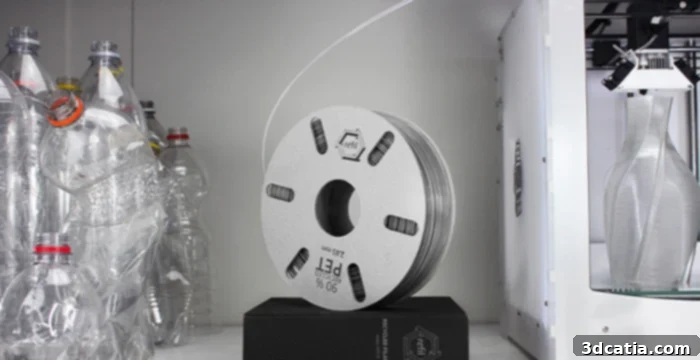
3D printing is characterized by the fact that only the material required to create the parts is used
#2: A Diverse Range of Technologies and Compatible Materials
The world of additive manufacturing is remarkably broad, offering an expansive array of technologies and an ever-growing list of compatible materials. The industry generally categorizes 3D printing into seven main families of technologies, each encompassing numerous distinct methods. These range from widely accessible extrusion processes (like FDM) to highly precise vat photopolymerization (SLA, DLP), powder bed fusion (SLS, DMLS), material jetting, binder jetting, directed energy deposition, and sheet lamination systems. This technological diversity ensures that there’s a suitable method for almost any application, from rapid prototyping to high-performance end-use part production. Complementing this, there’s an equally vast selection of materials compatible with these technologies. While polymers, metals, and ceramics remain the most common, the versatility of 3D printing extends to creating structures using truly astonishing substances. This includes concrete for construction, various foodstuffs, wood-filled composites, and even advanced biomaterials and stem cells for medical and research applications. This extensive choice allows businesses to select the optimal technology and material combination that precisely matches their product requirements, performance criteria, and budget, opening up new possibilities for innovation across countless sectors.
#3: Unparalleled Freedom of Design and Geometric Complexity
One of the most transformative advantages of adopting 3D printing is the unprecedented freedom it offers in design. This process empowers engineers and designers to create parts with highly complex geometries, intricate internal structures, and organic forms that would be impossible, or prohibitively expensive and time-consuming, to produce with conventional manufacturing systems. Additive manufacturing overcomes the limitations of traditional methods like molding or machining, which often struggle with undercuts, internal channels, or highly detailed features. With some 3D printing technologies, complex shapes are facilitated by the use of temporary support structures that are later removed. Other systems, particularly those based on powder beds, cleverly utilize the unfused powder itself as a self-supporting medium, simplifying post-processing. The concept of DfAM (Design for Additive Manufacturing) encompasses a suite of tools and methodologies specifically developed to leverage these capabilities, enabling the creation of models of virtually any complexity. All these factors make it possible to produce unique parts with precise details, astonishing geometries, and even internal cavities or lattice structures, often consolidated into a single component without the need for multiple parts and subsequent assembly. This leads to more functional, lighter, and often higher-performing products.
#4: Extensive Customization and Mass Personalization Capabilities
Closely related to design freedom, additive manufacturing excels in offering a multitude of customization options, extending to what is known as mass customization. This highly versatile technology enables users and businesses to adapt standard designs or models to specific tastes, individual requirements, or unique applications. The ability to produce “a batch of one” economically is a game-changer. One sector that profoundly benefits from this aspect is consumer goods, where consumers can actively participate in the design of their final object, leading to highly personalized products like custom footwear, eyewear, or jewelry. This aspect is even more critical and impactful in the medical field, where 3D printing is increasingly utilized for everything from the manufacture of patient-specific pharmaceutical products to medical devices. These devices, which include highly accurate prosthetics, orthotics, dental aligners, and surgical guides, are made to perfectly fit a patient’s unique anatomy, significantly improving comfort, functionality, and treatment outcomes. This level of personalization was previously unattainable or prohibitively expensive, making 3D printing an indispensable tool for tailored solutions.
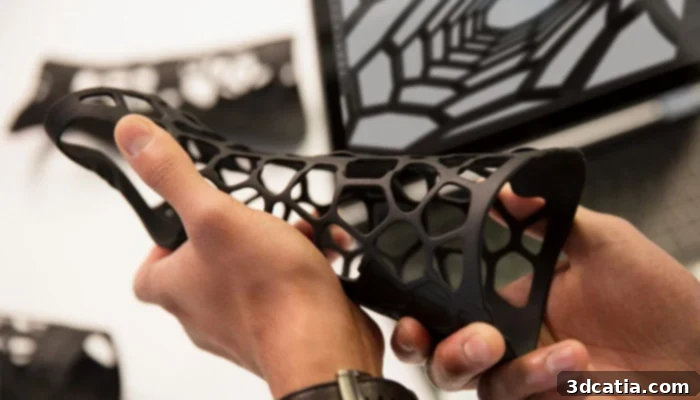
Customization is another reason to use 3D printing (photo credits: Invent Medical)
#5: Enhanced Cost-Effectiveness and Return on Investment (ROI)
When companies consider investing in new technology like a 3D printer, primary concerns naturally revolve around costs, profitability, and return on investment (ROI). 3D printing offers significant cost benefits across various stages of product development and production. It involves a series of calculations to determine potential savings by investing in additive manufacturing equipment or services. For instance, businesses can calculate the number of parts needed to amortize the initial investment, demonstrating clear long-term savings. A major area of cost reduction is the elimination or drastic reduction of expensive tooling, molds, and jigs often required for traditional manufacturing, especially for low-volume or customized production. Furthermore, when there’s a need to create a unique model, such as a specialized spare part or a custom prototype, utilizing 3D printing through a dedicated manufacturing service often proves to be a highly cost-effective option. By outsourcing this service, businesses can pay a single, often modest, price for the finished part, avoiding capital expenditure. This makes 3D printing an exceptionally attractive technology for rapid prototyping, developing intricate jigs and fixtures, and producing small to medium series of specialized parts, leading to reduced inventory costs and increased flexibility.
#6: Accelerated Production Cycles and Shorter Lead Times
While 3D printing itself may not always be the absolute fastest manufacturing method for every single part when compared to high-volume injection molding, it can undeniably and considerably shorten overall production times and lead times from concept to finished product. This speed advantage is a significant reason for users and companies to adopt one or more additive manufacturing technologies. The actual printing speed depends on multiple factors, including the specific technology employed, the required post-processing steps, the parameters set for the print job, and the inherent complexity of the design. Nevertheless, 3D printing inherently favors local, centralized, or even distributed manufacturing models. This means there’s no need to produce parts in one location and then ship them across the globe, eliminating lengthy logistical delays. This localized production capability directly translates into significantly shorter lead times from the moment a part is digitally designed to the moment it is manufactured and delivered to the end-user. This agility is crucial for responding quickly to market demands, accelerating product launches, and enhancing supply chain resilience, proving vital in today’s fast-paced global economy.
#7: Creation of Strong, Lightweight, and Optimized Parts
Additive manufacturing enables the use of specific high-performance materials to create incredibly robust and durable parts suitable for the most demanding industries. Materials such as advanced polymers, high-strength metals (e.g., titanium, inconel), and ceramics, particularly when reinforced with fibers like carbon or glass, can achieve exceptional strength and robustness. The true power emerges when these advanced materials are combined with sophisticated design tools such as topological optimization and generative design software. These computational methods allow engineers to create parts that are not only strong but also incredibly lightweight, without compromising the essential characteristics or performance of the model. Such software intelligently identifies the most critical load-bearing areas of a design and strategically removes material from regions that do not significantly contribute to the part’s structural integrity. This process often results in organic, bionic-looking geometries that maximize mechanical properties while drastically reducing material usage and weight. The strength-to-weight ratio achieved through this combination is paramount in industries like aerospace, automotive, and medical, leading to improved fuel efficiency, better performance, and enhanced patient comfort.
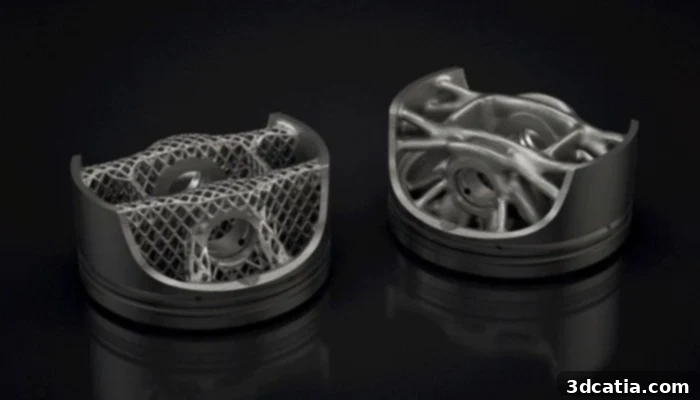
Many 3D printing materials offer a high strength-to-weight ratio. The use of design tools can also enhance this aspect
#8: Wide Range of Entry Prices and High Accessibility
The extensive range of 3D printing technologies available directly translates into a broad spectrum of entry prices, making the technology accessible to diverse users and budgets. While the most advanced professional manufacturing systems, particularly those utilizing exotic metals or high-performance engineering polymers, can indeed represent significant investments, price need not be a constraint for those looking to explore or integrate the technology. Today, many entry-level FDM (Fused Deposition Modeling) and resin 3D printers are readily available for less than $200, and this price can be even lower for DIY kits. This affordability has democratized access to additive manufacturing, allowing individuals, small businesses, and educational institutions to experiment and innovate without substantial upfront capital. Moreover, as previously mentioned, for companies not yet ready to invest in their own equipment, a vibrant ecosystem of 3D printing services exists. These services allow businesses to leverage the benefits of industrial additive manufacturing capabilities on an as-needed basis, effectively making high-end technology accessible without the capital expenditure, fostering innovation and adoption across all scales of enterprise.
#9: Rapid Prototyping and Accelerated Iterations
Historically, additive manufacturing gained initial prominence primarily for its ability to facilitate rapid prototyping, and this remains one of its most valuable applications today, even as its use for end-use parts grows. 3D printing dramatically cuts lead times in the product development cycle by enabling businesses to produce functional prototypes in-house quickly and efficiently. What’s more, it empowers designers and engineers to create multiple iterations of the same part with unprecedented speed, allowing for rapid testing and validation of design, functionality, ergonomics, and material properties. This iterative process, often described as “fail fast, fail cheap,” is invaluable during a product development phase. The ability to quickly print a design, test it, identify flaws or areas for improvement, and then rapidly produce a revised version significantly accelerates time-to-market. This not only speeds up the innovation process but also reduces overall development costs and minimizes risks associated with committing to a final design too early, leading to superior products and more successful launches.
#10: On-Demand 3D Printing and Distributed Manufacturing
As highlighted earlier, access to 3D printing technology can be achieved either through purchasing dedicated equipment or by utilizing a specialized 3D printing service. In both scenarios, the concept of on-demand manufacturing emerges as a critical advantage. This model allows businesses to produce only the parts or models they require, precisely when they need them, thereby eliminating the complex and costly challenges associated with traditional inventory management and warehousing. Instead of storing physical stock, companies can maintain a “virtual inventory” of digital 3D models, sending them to a printer only when demand arises. This flexibility significantly reduces storage costs, minimizes the risk of obsolete inventory, and ensures that parts are always available without excessive stock. Furthermore, on-demand production inherently encourages localized manufacturing, bringing production closer to the point of consumption. This not only reduces transportation distances and associated carbon emissions but also shortens lead times, enhances supply chain resilience, and promotes a more sustainable and responsive production model for spare parts, custom components, and specialized tools.
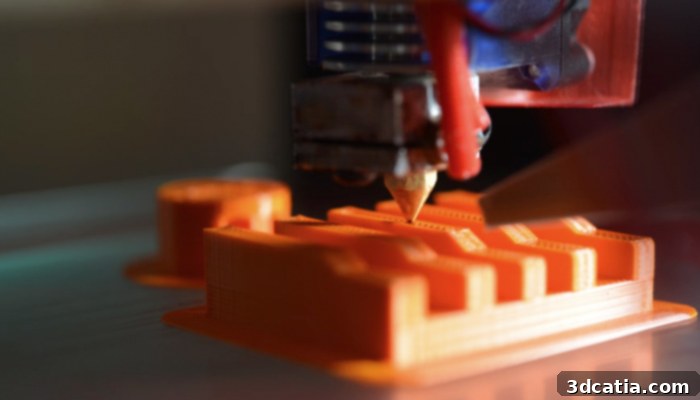
Photo Credits: Fiverr
What are your thoughts on these powerful reasons to adopt 3D printing? Would you consider integrating additive manufacturing into your business operations? Let us know your perspective in a comment below or join the conversation on our LinkedIn, Facebook, and Twitter pages! Don’t forget to sign up for our free weekly newsletter here to get the latest 3D printing news delivered straight to your inbox! You can also find all our informative videos on our YouTube channel for more insights into the world of additive manufacturing.