
Weekly Additive Manufacturing Insights: Naval Innovations, Design Hubs, Strategic Software Moves, Sustainable Materials, and Industry Legacies
This week’s roundup in additive manufacturing highlights groundbreaking advancements and strategic shifts across various sectors. From critical defense applications to consumer product innovation and sustainable material development, the industry continues its dynamic evolution. We delve into Meltio’s significant achievement of validating its metal 3D printing technology for use on a US Navy ship, enhancing maritime readiness. PUMA’s new Studio48 creative center showcases how leading brands are integrating advanced manufacturing for design and sustainability. In a major business move, 3D Systems has announced the sale of its Geomagic Software Portfolio, signaling a sharpened focus on core 3D printing platforms. Furthermore, a collaborative effort between Asahi Kasei and Aquafil introduces a novel textile fiber poised to impact high-performance industries. Finally, the additive manufacturing community mourns the passing of Sir David McMurty, co-founder of Renishaw, whose pioneering spirit left an indelible mark on engineering and metrology. Join us as we explore these pivotal stories shaping the future of 3D printing.
Meltio’s Metal 3D Printing Technology Deployed Aboard US Navy Ships
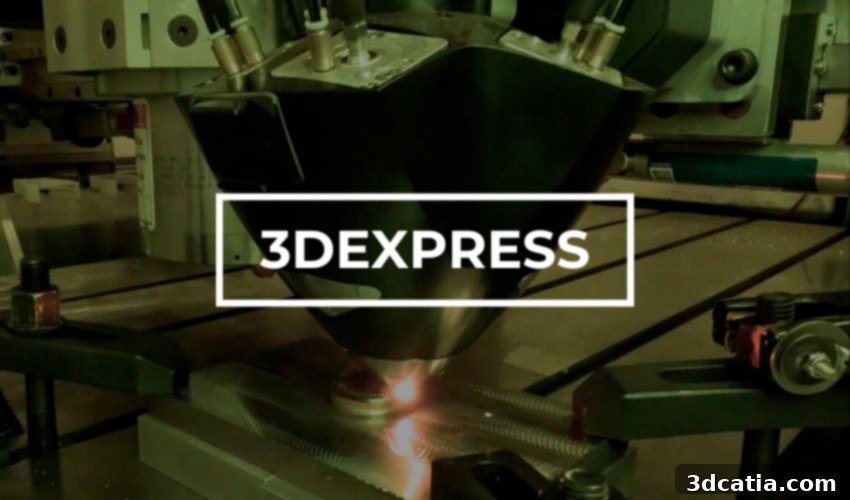
Spanish metal additive manufacturing specialist, Meltio, has achieved a monumental milestone by successfully implementing its advanced hybrid metal 3D printing technology aboard the USS Somerset, a distinguished US Navy vessel. This deployment signifies a critical step forward for defense logistics and follows the earlier successful installation of a similar system on the USS Bataan in late 2022. Meltio’s innovative technology integrates both additive and subtractive manufacturing processes within a single, cohesive system, empowering military vessels to fabricate high-quality metal parts directly at sea. This capability dramatically reduces reliance on traditional supply chains, offering unprecedented on-demand repair and manufacturing options in remote or operational environments.
The efficacy of Meltio’s system was rigorously validated during Exercise Rimpac 2024, a premier international maritime warfare exercise. A Meltio print head, meticulously integrated into a robotic arm, was utilized to produce essential metal components on the USS Somerset, proving its robustness and reliability under real-world naval conditions. This successful validation underscores the immense potential of additive manufacturing to revolutionize naval logistics, significantly enhancing readiness and operational flexibility for the US Navy. The ability to rapidly produce or repair critical parts on board means ships can spend more time deployed, reducing downtime and the need for extensive spare parts inventories.
This pivotal implementation was made possible through a strategic collaboration with Snowbird Technologies, Meltio’s dedicated U.S. business partner. Their combined efforts demonstrate a powerful synergy between innovative technology providers and defense sector integrators, showcasing how cutting-edge additive manufacturing solutions are increasingly improving operational capabilities and efficiency within the demanding defense landscape. The long-term implications for global navies are profound, promising more self-sufficient operations, reduced logistical burdens, and the capacity for rapid innovation in component design and deployment.
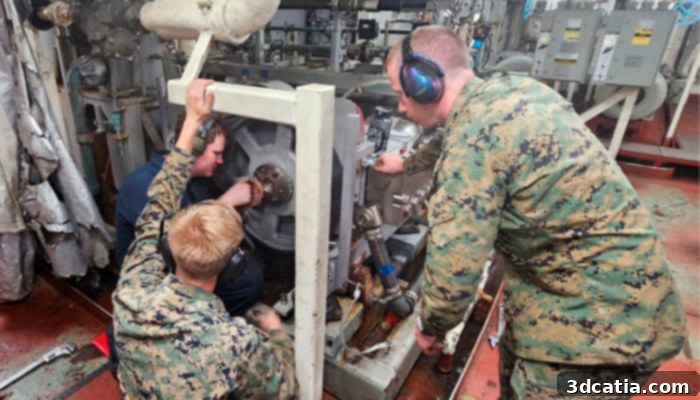
Photo Credits: Meltio
PUMA Unveils Studio48: A New Creative Hub with Advanced 3D Printing Facilities
Global sports brand PUMA has announced the grand opening of its pioneering Studio48 in Herzogenaurach, Germany. Spanning an expansive area of over 500 square meters, this state-of-the-art creative center is designed to serve as a dynamic nexus where designers, creative professionals, and engineers can converge to ideate, develop, and rigorously test innovative concepts and products. The facility is equipped with an impressive array of tools and machinery, including sophisticated sewing machines for textile and leather processing, advanced 3D printers, and specialized rooms dedicated to product testing and collaborative exchange. This integration of traditional craftsmanship with cutting-edge additive manufacturing techniques is central to PUMA’s vision.
The primary objective behind Studio48 is to foster sustainable growth for the PUMA brand by accelerating the development of products engineered for top-tier performance, while simultaneously strengthening the brand’s identity and market position. By providing an environment where creativity can flourish unhindered, PUMA aims to push the boundaries of sports product design, offering athletes and consumers unparalleled innovation. Heiko Desens, Vice President Creative Direction & Innovation at PUMA, articulated the strategic importance of this new venture: “With the new Studio48, we are creating an important tool to improve the quality of our designs and enhance the brand. While many of our products are created digitally, Studio48 will be a space for a different kind of creativity, where our designers from different departments can develop ideas together, share best practices, try out new materials and touch and feel the products they want to make.”
This statement highlights a crucial aspect of modern product development: the blend of digital design with tangible prototyping. 3D printing plays a vital role here, enabling rapid iteration of designs, material experimentation, and the creation of functional prototypes that designers can physically interact with. This hands-on approach allows for immediate feedback and refinement, significantly shortening development cycles and ensuring that final products are optimized for both aesthetics and performance. Furthermore, by embracing additive manufacturing, PUMA is also exploring avenues for customisation and potentially more sustainable production methods, aligning with global trends towards eco-conscious manufacturing. Studio48 represents PUMA’s commitment to staying at the forefront of sports innovation, leveraging advanced technologies to create the next generation of athletic footwear and apparel.
3D Systems Sells Geomagic Software Portfolio to Hexagon in Strategic Move
In a significant strategic realignment, 3D Systems has announced its decision to sell its acclaimed Geomagic® reverse engineering, design, and inspection software portfolio to Hexagon, a global leader in digital reality solutions. The transaction, valued at $123 million, is anticipated to close in the first half of 2025. This divestiture allows Hexagon to substantially enhance its integrated software toolkit, leveraging Geomagic’s strong user base and renowned capabilities, particularly in critical areas such as reverse engineering, quality inspection, and 3D design from scanned data. For Hexagon, acquiring Geomagic means strengthening its position in the rapidly expanding market for digital twin solutions and reality capture, providing its customers with more comprehensive and advanced tools for product development and manufacturing optimization.
Conversely, this sale marks a clear strategic pivot for 3D Systems, enabling the company to concentrate its software development efforts and resources on platforms that are integral to the wider adoption and application of its core 3D printing technologies. The company will now sharpen its focus on key proprietary software solutions such as 3D Sprint, 3DXpert, and Oqton Industrial Manufacturing OS. These platforms are designed to support a diverse range of 3D printing technologies and materials, catering specifically to large-scale production applications across various industries. This focused approach is expected to streamline 3D Systems’ offerings, providing a more integrated and powerful ecosystem for their additive manufacturing hardware.
Furthermore, 3D Systems has indicated its strong commitment to unlocking the full potential of these core software platforms by actively working to leverage the transformative capabilities of Artificial Intelligence (AI) and machine learning (ML). This investment in AI/ML is aimed at enhancing automation, optimizing print parameters, improving design efficiency, and enabling more sophisticated process control for additive manufacturing workflows. By doing so, 3D Systems intends to deliver more intelligent, efficient, and reliable solutions, solidifying its leadership in the evolving landscape of industrial 3D printing and pushing the boundaries of what is possible in digital manufacturing.
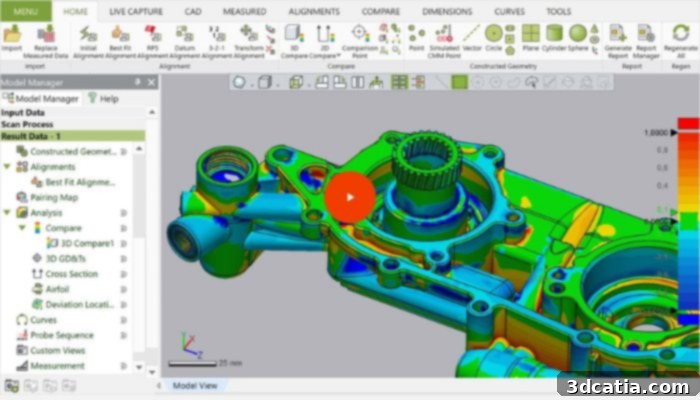
Photo Credits: Artec3D
Innovative Sustainable Textile Fiber Developed for High-Performance Additive Manufacturing
A groundbreaking collaboration between two industry giants, Asahi Kasei and Aquafil, has culminated in the development of a pioneering new textile material specifically engineered for 3D printing applications. This innovative composite material is meticulously designed to meet the rigorous demands of high-performance sectors, including the automotive and aeronautics industries, where material strength, lightweight properties, and sustainability are paramount. The material promises to unlock new possibilities for manufacturing complex, durable, and eco-friendly components.
At the heart of this innovative composite are two key materials: Econyl® polymer, a high-quality, chemically recycled PA6, and Asahi Kasei’s advanced cellulose nanofiber (CNF). The Econyl® polymer stands out for its strong sustainable credentials, being derived entirely from pre- and post-consumer polyamide waste, such as discarded fishing nets, fabric scraps, and old carpets. This not only reduces waste but also lessens the demand for virgin fossil-based resources, aligning with circular economy principles. Complementing this, CNF, which is sourced from cotton lint – a renewable natural resource – offers exceptional heat resistance and significantly improved recyclability compared to traditional reinforcing agents like glass fiber. Its nano-scale structure also contributes to enhanced material properties without adding excessive weight.
The synergistic combination of Econyl® and CNF results in a filament that boasts remarkable characteristics, including superior ease of molding during the 3D printing process and impressive mechanical strength in the final printed part. These attributes make it an ideal candidate for the manufacture of lightweight, durable, and complex 3D printed components, crucial for applications where performance cannot be compromised. The automotive industry can benefit from lighter parts that improve fuel efficiency and reduce emissions, while aerospace can leverage its strength-to-weight ratio for critical structural and interior components. The introduction of this sustainable, high-performance material is set to be a significant game-changer, with the first commercial sales strategically planned for 2025 across key global markets, including the United States, Europe, and Japan. This marks a pivotal step towards integrating advanced sustainable materials into mainstream additive manufacturing for demanding applications.
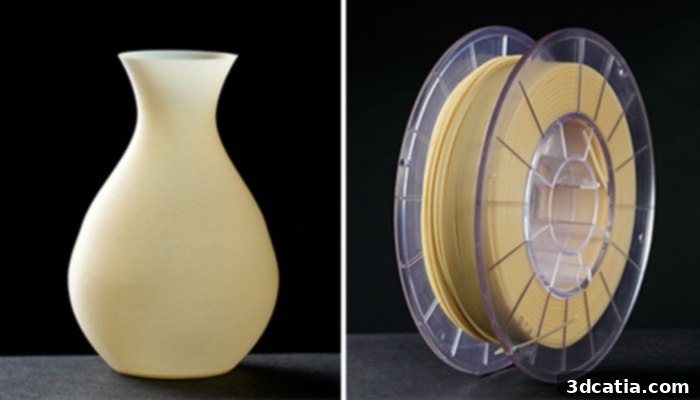
Photo Credits: Asahi Kasei/Aquafil
Remembering Sir David McMurty: Renishaw Co-Founder and Metrology Pioneer
The additive manufacturing and wider engineering communities are mourning the loss of a true visionary, Sir David McMurty, who passed away this week at the age of 84. As the esteemed co-founder of Renishaw, Sir David’s indelible contributions revolutionized the landscape of precision measurement and manufacturing. He is most widely celebrated for his groundbreaking work in commercializing the 3D touch-trigger probe, an invention that fundamentally transformed coordinate measuring machines (CMMs) and made precise measurement accessible and practical for countless industrial applications. This innovation alone propelled manufacturing quality control into a new era of accuracy and efficiency, significantly impacting sectors from aerospace to automotive.
Under Sir David’s astute leadership, Renishaw blossomed from a nascent engineering firm into a global leader in metrology, healthcare, and additive manufacturing. His strategic foresight extended beyond CMMs, revolutionizing shopfloor metrology and advanced process control. He championed continuous innovation, leading the company’s crucial diversification into emerging fields, including additive manufacturing. Renishaw’s significant presence and contributions to the AM sector today, particularly in metal 3D printing systems, can be directly traced back to his forward-thinking vision and willingness to explore new technological frontiers.
Sir David McMurty leaves behind an extraordinary legacy: a thriving, globally recognized company that he co-founded over 50 years ago, a testament to his entrepreneurial spirit, engineering brilliance, and unwavering commitment to innovation. Beyond the commercial success of Renishaw, his life was marked by numerous honors and accolades, acknowledging his profound impact on science, engineering, and industry. His pioneering spirit, dedication to precision, and leadership in fostering technological advancements will continue to inspire generations of engineers and innovators in additive manufacturing and beyond. He truly shaped the way industries measure, control, and create, cementing his place as one of the most influential figures in modern manufacturing.

Photo Credits: Renishaw
What are your thoughts on Meltio’s metal 3D printing implementation on US Navy ships or PUMA’s new creative hub? We’d love to hear your insights! Let us know in a comment below or engage with us on ourLinkedIn,Facebook, andTwitter pages! Don’t miss out on the latest 3D printing news and innovations – remember to sign up for our free weeklyNewsletter here, delivered straight to your inbox! You can also find all our compelling videos and interviews on our officialYouTube channel.