
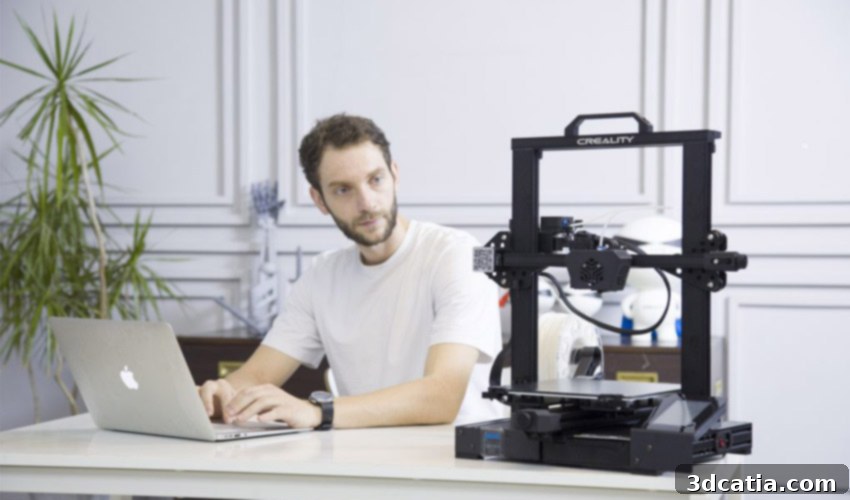
Global 3D Printing Market Sees Robust Recovery: China and Desktop Printers Lead the U-Shaped Rebound According to CONTEXT Study
The global 3D printing market is experiencing a significant resurgence, defying earlier pessimistic predictions, primarily driven by strong growth in China and an unprecedented surge in desktop 3D printer shipments worldwide. A recent market study published by the renowned analysis firm, CONTEXT, reveals compelling insights into the sector’s performance in the second quarter of the year, painting a picture of a longer U-shaped recovery taking firm hold. This positive shift is particularly noteworthy given the challenging economic climate and the dramatic downturn experienced across many industries.
According to CONTEXT’s comprehensive analysis, the second quarter witnessed a remarkable 24% increase in industrial machinery delivered to China, signaling a robust return to manufacturing and investment in the region. Simultaneously, the global market for desktop 3D printers recorded an astonishing 68% increase in shipments. These figures represent a beacon of hope and resilience, especially when juxtaposed against the backdrop of a 27% decline in hardware revenues observed just a year prior. The recovery trajectory suggests a fundamental shift in market dynamics and a growing reliance on agile manufacturing solutions.
It’s important to recall that CONTEXT had previously issued a more conservative report following the initial impact of the COVID-19 crisis. That earlier study indicated an overall 4% drop in global 3D printer shipments for 2020. However, the latest data unequivocally demonstrates that this decline did not uniformly affect all segments, with China and the desktop machine categories proving to be notable exceptions. The recovery is multifaceted, influenced by a combination of regional economic recovery and evolving workplace habits, pushing many individuals and businesses to invest in accessible, in-house additive manufacturing solutions.
To better understand these market shifts, CONTEXT categorizes 3D printers into four distinct segments: Industrial (machines priced at $100K and above), Design (ranging between $20K and $100K), Professional (falling between $2.5K and $20K), and Personal (those costing less than $2.5K, excluding 3D printer kits). This detailed segmentation allows for a granular analysis of where growth is occurring and why. The current good news can largely be attributed to China’s proactive economic recovery efforts and the widespread adoption of remote working, which has spurred demand for more accessible and personal manufacturing tools.
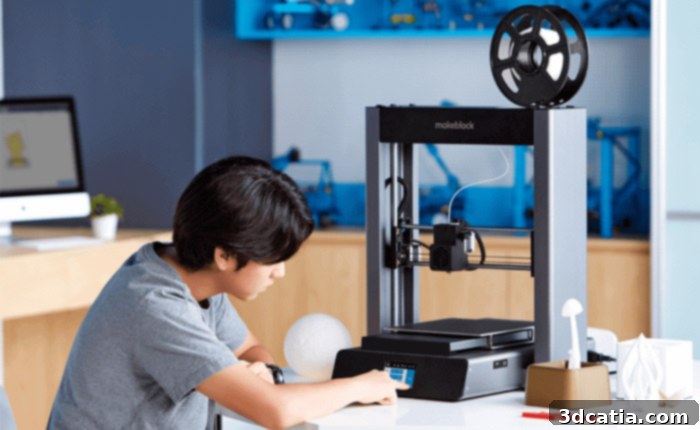
China’s Economic Rebound Fuels Industrial 3D Printer Demand
While the global picture shows a promising rebound, a closer look at regional performances reveals divergent trends. CONTEXT highlights a significant slowdown in shipments of industrial and design machinery within Western markets. Many industries in these regions experienced extensive shutdowns and disruptions, leading to a pause in capital investments. Consequently, the sale of higher-end 3D printers faced considerable headwinds as companies prioritized immediate operational needs over long-term equipment acquisition.
In stark contrast, the situation in China unfolded quite differently. The study indicates that numerous Chinese suppliers reported not only an increase in their shipments compared to the first quarter but also saw even higher shipment rates than those recorded a year ago. This robust recovery underscores China’s crucial role as both a manufacturing powerhouse and a key market for additive manufacturing technology. Chris Connery, Vice President of Global Research at CONTEXT, elaborated on this phenomenon: “As China came back online in Q2 2020, so too did demand for Industrial printers. While overall shipments improved slightly from Q1 to Q2 thanks mostly to a bounce back in China, they remained very low in Western markets resulting in total shipments in the class down -38% from a year ago.” This statement vividly illustrates the geographical disparity in the market’s recovery and the significant impact of China’s economic revitalization.
The rapid recovery in China can be attributed to several factors, including the country’s earlier and more decisive containment of the pandemic, allowing its manufacturing sector to resume operations more swiftly. This enabled Chinese companies to quickly fulfill pent-up demand and capitalize on opportunities, including bolstering their internal production capabilities with advanced manufacturing tools like industrial 3D printers. The investment in these high-value machines signals confidence in future growth and a strategic commitment to technological advancement within the Chinese industrial landscape, positioning it as a key driver for the global 3D printing industry’s overall health.
Professional and Personal 3D Printer Shipments Soar Amidst New Working Paradigms
In a parallel yet equally significant trend, the CONTEXT study clearly shows a substantial increase in the Professional and Personal 3D printer segments. This growth is predominantly explained by the widespread adoption of new homeworking and remote work scenarios. As individuals and businesses adapted to distributed workforces, the demand for accessible, reliable, and efficient in-house manufacturing solutions surged. Professionals, no longer confined to traditional office or factory settings, invested in solutions that could maintain minimal production plans or facilitate prototyping and design iterations from home.
The Professional 3D printer category, in particular, stood out, being the sole segment to record a year-on-year revenue growth of 7% in the second quarter of 2020. This growth was further bolstered by a steady increase in printer prices, up by 15%, directly reflecting the heightened demand for these capable machines. Businesses sought professional-grade tools to empower their remote teams, ensure business continuity, and maintain agility in their design and development cycles. These printers, typically offering a balance of performance, precision, and relative affordability compared to industrial systems, proved ideal for the evolving needs of various industries operating under new constraints.
The Personal 3D printers market experienced an even more dramatic acceleration. The vast majority of these machines are manufactured in China, making this segment highly dependent on the country’s supply chains. When Chinese production facilities successfully came back online in Q2, they were met with an explosion of new demand from hobbyists, educators, and individuals suddenly working from home. This confluence of renewed supply and unprecedented demand led to an astonishing 68% year-on-year surge in Personal 3D printer shipments. Consumers recognized the versatility of these machines for everything from creating household items and educational tools for children to developing prototypes for personal projects and small businesses.
This dual growth in the Professional and Personal segments underscores a broader democratization of additive manufacturing technology. The pandemic, while disruptive, inadvertently accelerated the adoption of 3D printing beyond traditional industrial applications, bringing it into homes and smaller professional setups. This shift not only expanded the user base but also highlighted the inherent flexibility and accessibility of 3D printing as a tool for innovation and practical problem-solving in a rapidly changing world.
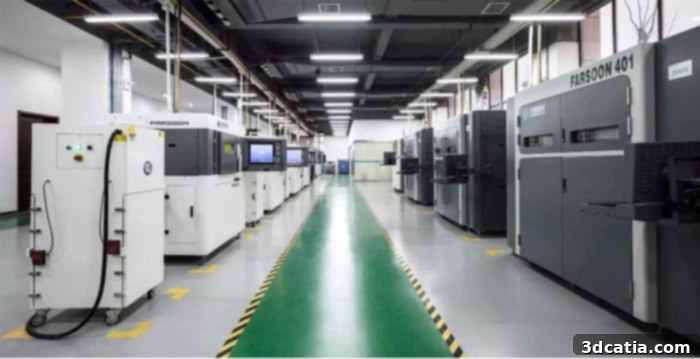
Farsoon saw orders pick up in Q2
3D Printing’s Indispensable Role and Future Potential
Beyond the market statistics, the CONTEXT study also served as a crucial reminder of the critical role that 3D printers played during the peak of the global health crisis. These machines proved indispensable in the rapid production of essential personal protective equipment (PPE) such as face masks and shields, as well as vital medical devices like nasal swabs for patient testing. The ability of 3D printing technologies to offer unparalleled flexibility in manufacturing, enabling rapid design iteration and localized production, became a lifeline for healthcare systems facing acute shortages.
This demonstrated utility has significantly elevated the profile of additive manufacturing. Market players are now optimistic that this heightened awareness and appreciation for 3D printing’s capabilities will translate into more widespread and explicit adoption across various other industries. The hope is for a rapid and massive integration of additive manufacturing solutions into mainstream production workflows, extending beyond emergency response to everyday manufacturing challenges and opportunities. The flexibility, speed, and customization offered by 3D printing present compelling advantages for industries looking to optimize supply chains, reduce lead times, and enhance product innovation.
Looking ahead, the study concludes with a positive forecast, noting that the last quarter of the year typically accounts for more than 29% of annual 3D printer deliveries. This year, however, that figure is expected to reach an impressive 36%, suggesting a strong finish to a challenging year and underscoring the market’s inherent resilience and growth potential. It remains to be seen how key industry events, such as Formnext Connect, which pivoted to a virtual format, have contributed to this broader recovery and sustained interest in the 3D printing market. These platforms serve as vital conduits for showcasing innovations, fostering collaborations, and driving further adoption of additive manufacturing technologies.
The findings from CONTEXT present a compelling narrative of resilience, adaptation, and growth within the global 3D printing market. While the challenges of a global pandemic were significant, the industry’s ability to pivot, innovate, and meet evolving demands, particularly in critical areas like healthcare and remote work, has positioned it for a robust recovery. The strong performances in China and the desktop segment are not merely statistical anomalies but indicators of fundamental shifts that are likely to shape the future landscape of manufacturing. This U-shaped recovery, driven by diverse forces, signals a promising future for additive manufacturing as it continues to prove its strategic importance and versatility in a dynamic global economy. You can find more information and details of the study HERE.
What are your thoughts on these latest trends shaping the global 3D printing market? Do you believe the industry is poised for an even stronger acceleration in the coming years? Share your insights and comments below, or join the conversation on our Facebook and Twitter pages! And don’t forget to sign up for our free weekly Newsletter, to receive all the latest news and developments in 3D printing delivered directly to your inbox!