
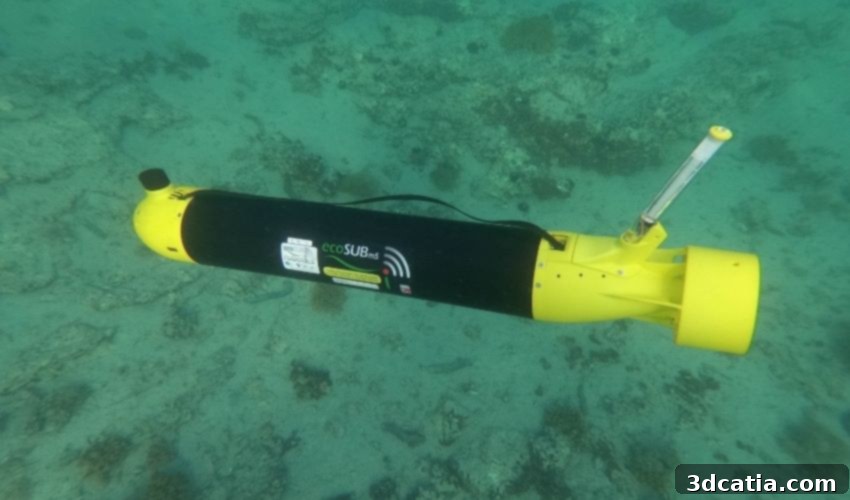
Additive Manufacturing Dives Deep: Powering ecoSUB Robotics’ Underwater Vehicles for Extreme Ocean Exploration
While the incredible applications of additive manufacturing (AM) in the demanding realm of space exploration are widely recognized, its transformative potential extends far beyond the stars, reaching into the equally challenging and mysterious depths of our oceans. Indeed, the cutting-edge technology of 3D printing is now proving indispensable for underwater applications, particularly in the development of robust and highly resilient subsea vehicles. Pioneering this frontier is ecoSUB Robotics, a leading manufacturer of autonomous underwater vehicles (AUVs), which has strategically embraced 3D printing for the creation of critical components. By leveraging advanced polymer powder bed fusion technologies, specifically experimenting with Selective Laser Sintering (SLS) and Multi-Jet Fusion (MJF) through its partnership with 3DPRINTUK, ecoSUB Robotics is engineering unique parts designed to withstand the most extreme requirements of the deep ocean. This innovative approach not only highlights the continued utility and adaptability of additive manufacturing but also demonstrates its crucial role in enabling human exploration and scientific research in some of Earth’s most unforgiving environments.
ecoSUB Robotics operates as a dynamic spin-off from Planet Ocean, a well-established entity renowned for its expertise in delivering high-quality marine scientific instruments tailored for research, survey, naval, and operational support. Planet Ocean stands as a prominent leader in oceanographic and marine meteorological equipment, including a wide range of autonomous underwater and surface vehicles. Within this specialized landscape, ecoSUB Robotics distinguishes itself by focusing exclusively on the design and manufacture of submarine-like autonomous underwater vehicles (AUVs). The company’s core challenge revolved around developing 3D printed components capable of functioning flawlessly under an array of exceptionally harsh conditions: continuous exposure to corrosive saltwater, extremely low temperatures characteristic of deep-sea environments, and immense pressures found at depths up to 2,500 meters below sea level. Furthermore, paramount importance was placed on ensuring these parts were completely watertight and structurally intact to safeguard the invaluable and sensitive electronic systems housed within the vehicles. ecoSUB Robotics opted for 3D printing, not just for its significant cost-effectiveness in both prototyping and final production, but also for the unparalleled freedom of design it offers, enabling the creation of intricate and optimized geometries unachievable through traditional manufacturing methods.
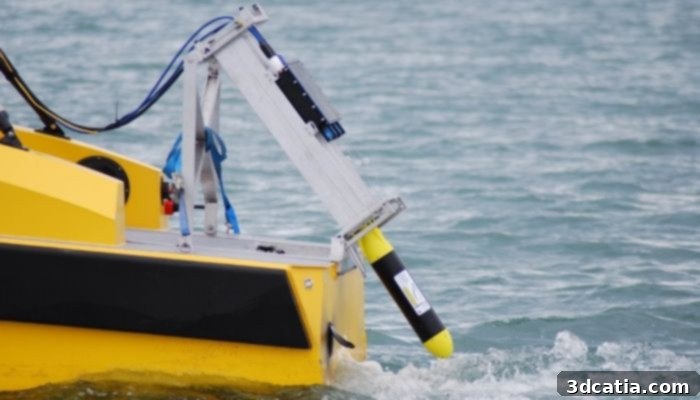
ecoSUB is using additive manufacturing to create key parts in their underwater vehicles
The Unseen Frontier: Challenges of Deep-Sea Environments
The deep ocean represents one of Earth’s last truly unexplored frontiers, holding vast potential for scientific discovery, resource management, and understanding climate change. However, operating in this environment presents formidable engineering challenges that push the boundaries of material science and manufacturing. For ecoSUB Robotics’ autonomous underwater vehicles, every component must be meticulously designed to confront a trifecta of destructive forces: extreme pressure, frigid temperatures, and corrosive salinity. At depths reaching 2,500 meters, the pressure exerted on a vehicle can be immense, equivalent to hundreds of atmospheres. This colossal force can crush conventional materials, leading to catastrophic structural failure and compromising the integrity of sensitive internal electronics. Components must possess exceptional compressive strength and rigidity to resist deformation under such unforgiving conditions, a characteristic where advanced additive manufacturing materials often excel.
Coupled with pressure, the deep-sea environment is characterized by consistently low temperatures, often hovering just above freezing. These extreme cold conditions can significantly impact material properties, leading to brittleness, reduced ductility, and potential thermal stress on electronic systems. Any material used must maintain its mechanical performance across a broad temperature range to ensure reliability throughout extended missions. Furthermore, constant exposure to saltwater presents an ongoing battle against corrosion. Traditional metals can quickly degrade, compromising structural integrity and leading to leaks. Polymer-based 3D printed parts, especially those manufactured with durable engineering plastics, offer inherent resistance to chemical corrosion, providing a longer lifespan and reducing maintenance requirements. The absolute necessity for watertightness cannot be overstated; any breach in the vehicle’s housing would immediately flood and destroy the sophisticated electronic and sensing equipment crucial for data collection. Achieving perfect seals and structural integrity under dynamic conditions is a testament to the precision and quality achievable with modern additive manufacturing techniques.
Why Additive Manufacturing? Design Freedom, Cost-Effectiveness, and Customization
Given the extraordinary demands of deep-sea operations, ecoSUB Robotics’ decision to embrace additive manufacturing was a strategic one, driven by several compelling advantages over conventional manufacturing methods like injection molding. Foremost among these is the unparalleled design freedom offered by 3D printing. This technology liberates engineers from the constraints of traditional tooling, allowing for the creation of highly complex geometries, internal lattices, integrated features, and optimized fluid channels that can significantly enhance a vehicle’s hydrodynamic performance, reduce weight, and efficiently house sensors or electronic components. Such intricate designs are often impossible or prohibitively expensive to produce with injection molding, which requires costly and time-consuming molds for each part. With AM, engineers can iterate rapidly, test new designs, and optimize parts for specific functions without incurring significant tooling overheads.
Cost-effectiveness, particularly for low-volume production, was another critical factor in ecoSUB’s choice. While injection molding might offer lower unit costs at extremely high production volumes, the initial investment in mold creation makes it uneconomical for small batch runs or prototyping. ecoSUB Robotics typically requires relatively low volumes, perhaps around 10 parts per month, a sweet spot where additive manufacturing shines. The absence of expensive tooling allows for a much lower barrier to entry for production, making it economically viable to produce specialized components on demand. This flexibility also extends to customization, a key benefit for clients with unique operational requirements. Additive manufacturing enables ecoSUB to tailor designs for individual clients, whether it’s adjusting sensor mounts for a specific research project or modifying external housing for a particular military application, without incurring the exorbitant costs associated with modifying or creating new molds for each variation.
Jeremy Sitbon, Chief Robotics Engineer – Marine Robotics Systems at ecoSUB Robotics, further clarified their strategic choice, highlighting the indispensable attributes of 3D printing: “For sure, the parts that we use in our underwater vehicles have to be strong and robust, and absolutely conform to design intent. 3D printing is preferred over injection moulding as we find the technology more versatile, and the design freedom allows us to innovate great parts. Also, our volumes are low (maybe 10 parts per month) so injection moulding would not be economical. Add in the fact that with 3D printing we can customize designs for individual clients, and the choice is clear.” His comments underscore the core advantages: superior material properties for demanding applications, unparalleled versatility in design, and a cost structure that perfectly aligns with low-volume, high-customization needs.
Advanced 3D Printing Technologies: SLS vs. Multi-Jet Fusion
To effectively meet their ambitious goals, ecoSUB Robotics has strategically employed two distinct polymer powder bed fusion technologies: Selective Laser Sintering (SLS) and Multi-Jet Fusion (MJF). The selection between these two processes is meticulously determined by the specific requirements of each part, considering factors such as aesthetics, mechanical performance, tolerance, and cost. This nuanced approach ensures that every component, whether external or internal, is produced with the optimal technology for its intended function within the extreme deep-sea environment.
Selective Laser Sintering (SLS) for External Components
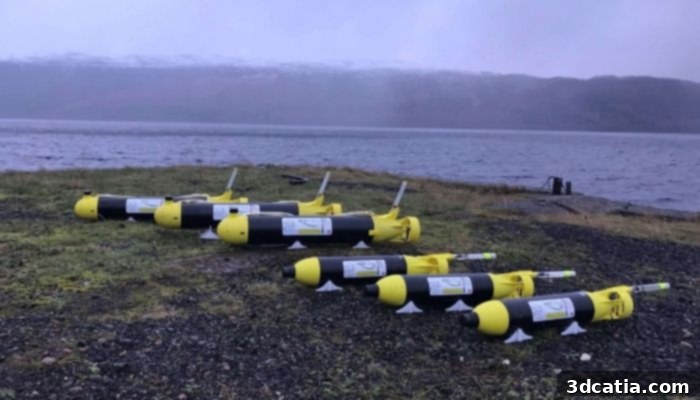
Initially, ecoSUB Robotics favored SLS printing for many of its components, particularly those designated for external use. The primary reason for this preference was the superior quality of parts produced by SLS, which notably resulted in a whiter finish compared to those created with MJF. This aesthetic characteristic is crucial for ecoSUB, as their external vehicle parts are required to be painted a vibrant yellow for maximum visibility in the dimly lit ocean depths. Applying yellow paint to a whiter base dramatically enhances the color’s striking quality and visibility, which is essential for both retrieval and identification purposes. SLS technology typically utilizes nylon-based powders, such as PA12, which are known for their excellent mechanical properties, including high strength, durability, and resistance to environmental factors like chemicals and UV radiation – properties that are inherently beneficial for marine applications. The ability of SLS to produce strong, functional prototypes and end-use parts with good surface finish made it an ideal choice for the visible and structural elements of ecoSUB’s vehicles.
Multi-Jet Fusion (MJF) for Internal Precision
In contrast to SLS, ecoSUB Robotics has increasingly adopted Multi-Jet Fusion (MJF) for internal components, driven by a combination of factors. MJF parts are generally more gray in color, making them less suitable for external parts requiring vibrant paint, unless additional post-processing for coloring is applied. However, for internal applications, MJF offers compelling advantages. Most notably, MJF typically provides a more cost-effective solution for producing parts, which is a significant consideration for a company focused on efficient production. Beyond cost, ecoSUB has found that MJF technology allows for the creation of parts with more exacting tolerances. This precision is vital for internal components that require tight fits for electronic housings, intricate internal channels, or critical sealing surfaces where even minimal deviation could compromise the vehicle’s watertightness and operational integrity. The results from MJF have been so consistently promising that ecoSUB Robotics is now actively considering a broader transition, potentially moving towards MJF even for external parts. This shift would likely be driven by ongoing advancements in MJF materials, post-processing techniques for enhanced color and finish, and the continuous pursuit of optimized performance-to-cost ratios. The collaborative relationship with 3DPRINTUK is paramount in this ongoing assessment, providing expert guidance on which process is best suited for various internal and external applications.
The Broader Impact: Transforming Ocean Exploration and Industries
The economic viability of ecoSUB Robotics’ approach, particularly with the low-volume requirements, is crucial, especially as the company envisions widespread adoption of its underwater vehicles across various professional sectors. Jeremy Sitbon underscored the critical importance of cost-effectiveness given the immense potential of these vehicles for professionals in military and defense, oil and gas, and the scientific community, particularly climate research. Gathering reliable data from the ocean’s depths has historically been an arduous and expensive endeavor, largely due to the inability of conventional equipment to withstand the aforementioned extreme pressures, corrosive saltwater, and freezing temperatures. In fact, these formidable challenges are precisely why a significant portion of the ocean floor remains unmapped and unexplored.
The integration of 3D printing in the creation of these advanced autonomous underwater vehicles represents a genuine game-changer for a multitude of ocean-based industries and scientific pursuits. For the military, rugged and customizable AUVs can revolutionize intelligence gathering, reconnaissance, mine countermeasures, and maritime security operations in hostile environments. The oil and gas sector can deploy these vehicles for crucial infrastructure inspection, environmental monitoring, and mapping new exploration sites, enhancing safety and operational efficiency while reducing human risk. Climate research scientists, armed with these durable and precise vehicles, can collect unprecedented data on ocean currents, temperature gradients, marine ecosystems, and the effects of climate change at depths previously inaccessible. This wealth of new information promises to unlock a deeper understanding of our planet’s largest habitat, enabling more informed decision-making and fostering greater environmental stewardship. By pushing the boundaries of what is possible in underwater robotics through additive manufacturing, ecoSUB Robotics is not just building vehicles; it is enabling a new era of ocean exploration and data collection that could profoundly impact our world.
In conclusion, ecoSUB Robotics continues its rigorous assessment of both SLS and MJF technologies, confident in their effectiveness for their unique requirements. Sitbon aptly summarized their satisfaction: “The assessment of SLS and MJF will continue, and we are happy to be guided as to which process to use for internal and external applications by the 3DPRINTUK team. Because of the harsh environments that some of our vehicles are used in, integrity of material chosen is everything, and we are amazed by both processes which can withstand intense cold, high pressure, and the corrosive nature of salt water, and still pass rigorous water-tightness tests.” This statement powerfully underscores the non-negotiable importance of material integrity when operating in such hostile conditions, and the impressive performance of these 3D printing processes in consistently meeting and exceeding these stringent demands. You can find out more about ecoSUB Robotics’ pioneering projects by visiting their official website HERE.
What do you think about the transformative use of additive manufacturing for underwater applications and deep-sea exploration? Let us know your thoughts in a comment below or join the conversation on our Linkedin, Facebook, and Twitter pages! Don’t forget to sign up for our free weekly Newsletter here to get the latest 3D printing news delivered straight to your inbox! You can also find all our engaging videos and exclusive content on our YouTube channel.
*All Photo Credits: ecoSUB