
Aether Concept Car: Driving Sustainable Automotive Innovation with Advanced 3D Printing
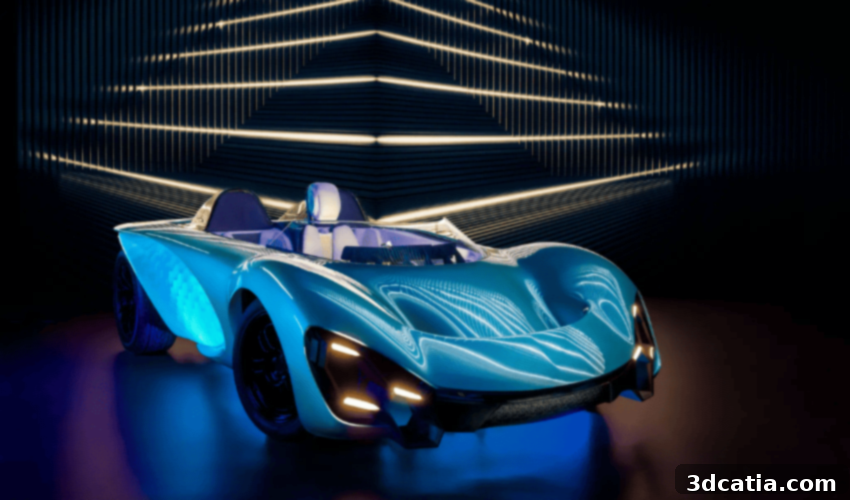
The automotive industry is undergoing a profound transformation, steering decisively towards more sustainable and technologically advanced solutions. At the forefront of this revolution, additive manufacturing, commonly known as 3D printing, is playing an increasingly pivotal role. It enables unprecedented design freedom, rapid prototyping, and the creation of highly complex, lightweight components, making it indispensable for the next generation of vehicles. One striking embodiment of this forward-thinking approach is the Aether concept car, a visionary project designed with the future of mobility in mind. This next-generation electric vehicle seamlessly integrates cutting-edge digital modeling and 3D printing technologies to entirely reimagine conventional automotive design and manufacturing.
Conceived and brought to life by a talented team of students at the Savannah College of Art and Design (SCAD), the Aether concept car is specifically tailored for the discerning drivers of Gen Z. This demographic is characterized by a strong emphasis on environmental responsibility, a deep integration with technology, and a desire for highly personalized experiences. Under the expert guidance of lead designer Rafael Corazza, the Aether project stands out with its innovative modular interiors and captivating, intelligently designed exterior surfaces. The vehicle masterfully weaves together core principles of ecology, state-of-the-art technology, and a truly unique aesthetic appeal, setting a new benchmark for concept car development.
Revolutionizing Design and Manufacturing with 3D Printing
The development of the Aether concept car represents a triumph of modern engineering and design, heavily leveraging the power of parametric design and advanced 3D printing technologies. This innovative approach allowed the SCAD team to push the boundaries of what’s possible in automotive creation. A cornerstone of their manufacturing process was the utilization of HP’s sophisticated Multi Jet Fusion (MJF) 3D printing process. MJF technology is renowned for its ability to produce highly functional, durable parts with exceptional detail and surface finish, making it ideal for both aesthetic and practical components within the Aether.
Precision and Customization with Multi Jet Fusion
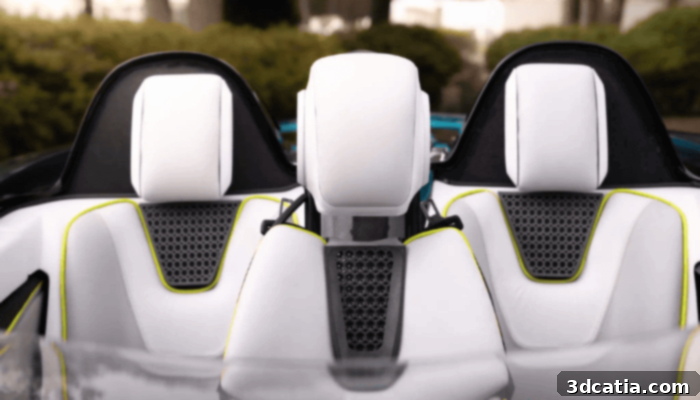
Specifically, Multi Jet Fusion was instrumental in fabricating a range of interior components that required both visual appeal and robust functionality. These included intricately designed speaker grilles, ergonomically contoured headrests, and comfortable yet durable cushions. To achieve the precise, custom structures for these parts, the SCAD team employed Rhino 3D’s powerful Grasshopper tool. Grasshopper, a visual programming language, enabled them to implement parametric design principles, allowing for algorithmic generation of complex geometries and rapid iteration of designs. This ensured that each component was perfectly optimized for its intended purpose and integrated seamlessly into the car’s overall aesthetic.
Advanced Materials for Enhanced Performance: BASF TPU 88A
Once the designs were finalized, these custom structures were then 3D printed using BASF’s TPU 88A. This flexible yet remarkably strong thermoplastic polyurethane (TPU) material was a critical choice. TPU 88A offers an unparalleled combination of high elasticity, excellent abrasion resistance, and superior tensile strength. Its inherent flexibility makes it perfect for interior components that need to conform to body shapes, absorb impacts, and provide comfort, while its strength ensures long-term durability and structural integrity. This material choice exemplifies the Aether’s commitment to both innovative design and practical application, ensuring that even the most complex 3D-printed parts contribute to a high-quality user experience.
Crafting the Interior and Exterior: A Fusion of Ergonomics and Aesthetics
The collaborative spirit and technical expertise of the SCAD students were evident throughout the design and manufacturing phases. Guided by student Lilian Brown, the team dedicated significant effort to the interior elements, striving for a perfect synergy between ergonomics and visual appeal. By ingeniously combining custom latticework – a hallmark of parametric design – with the inherent flexibility of 3D-printed TPU, they successfully engineered practical yet incredibly solid pieces. These components not only offer superior comfort and support but also showcase a unique, futuristic aesthetic that aligns with the Aether’s innovative spirit. The ability to create such intricate and functional parts through additive manufacturing highlights its transformative potential for automotive interiors, allowing for unprecedented levels of customization and optimization.
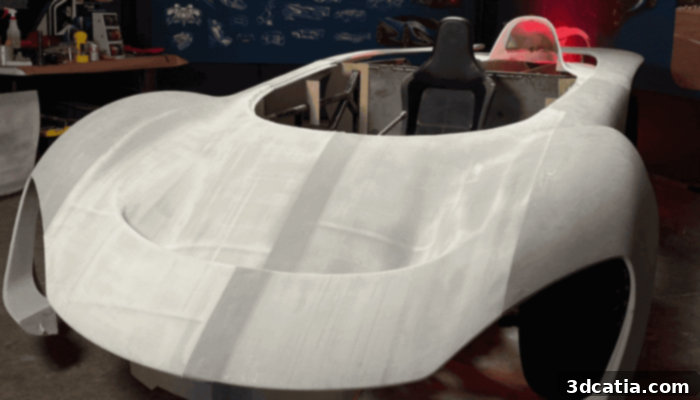
For the Aether’s striking exterior, the students meticulously designed digital models using Rhino 8, leveraging its robust surfacing and modeling capabilities. This digital foundation was critical before proceeding to the fabrication of physical prototypes using sophisticated 3D printing techniques. The iterative nature of this process allowed for constant refinement and optimization, ensuring that the final design was not only visually captivating but also structurally sound and manufacturable.
Iterative Design and Groundbreaking Exterior Manufacturing
The design phase for the Aether’s exterior appearance was an intensive process, involving between 15 and 20 significant iterations. This rigorous cycle of design, prototyping, and review was crucial for perfecting every curve and contour of the vehicle. Despite facing considerable challenges, particularly in precisely aligning the hexagonal elements that define much of the Aether’s innovative surface architecture and optimizing these complex geometries for efficient 3D printing, the dedicated team persevered. Their solution involved choosing a simplified extrusion method, which effectively accelerated the prototyping process without compromising on the design’s integrity.
A groundbreaking aspect of the Aether’s construction lies in its main outer panels. These were revolutionary 3D printed using a unique UV-treated acrylic gel. This cutting-edge technology involves a photocuring process where liquid acrylic gel is solidified layer by layer using UV light, creating incredibly strong and smooth surfaces. The panels were fabricated with carefully optimized wall thicknesses ranging from 4 to 6 mm, a strategic choice that ensured both exceptional structural strength and remarkable material efficiency. This innovative approach to exterior manufacturing marks a significant milestone in automotive history.
Aether’s Vision: Blending Legacy with Future-Forward Technology for Gen Z
According to SCAD, the Aether electric vehicle, meticulously developed in Savannah, proposes an entirely new design language. This language is not only deeply appealing to the tech-savvy and environmentally conscious Gen Z demographic but also respectfully pays homage to influential and iconic cars of the past. These include legendary vehicles such as the Ferrari 312 F1 and the Porsche 917, celebrated for their groundbreaking design and racing prowess. The Aether seamlessly blends this rich automotive heritage with futuristic elements, creating a vehicle that is both a nod to the past and a clear vision of the future.
The vehicle’s distinctive racing aesthetic is immediately apparent, accentuated by an exhilarating open-top design that invites an immersive driving experience. Further enhancing its appeal to a digitally native generation, the Aether incorporates an advanced AI companion. This intelligent system doesn’t just manage vehicle functions; it curates personalized music playlists based on the driver’s unique driving style and preferences, offering a truly bespoke and engaging journey. This integration of AI elevates the driving experience from mere transportation to a dynamic, interactive adventure tailored to the individual.
What truly sets the Aether apart is its unprecedented manufacturing method. As SCAD proudly states, the car “was entirely printed with innovative 3D technology that incorporates acrylic gel photocured with UV lights.” This particular technology was a pivotal element contributing to the project’s success, enabling the development and construction of the car in record time. This groundbreaking achievement positions the Aether as the first car ever built using this revolutionary UV-treated acrylic gel photocuring technology for its primary structural and aesthetic panels. This incredible feat not only demonstrates the immense potential of additive manufacturing in the automotive sector but also cements the Aether’s legacy as a true pioneer in the field of sustainable and rapid vehicle development.
The Future of Automotive Manufacturing: Key Takeaways from Aether
The Aether concept car serves as a powerful testament to the transformative capabilities of advanced 3D printing and digital design in the automotive industry. It showcases how these technologies can enable rapid iteration, unparalleled customization, and the use of novel materials that lead to more sustainable and efficient manufacturing processes. By breaking free from traditional constraints, SCAD students have not only created a visually stunning vehicle but also laid down a blueprint for future car development, emphasizing agility, personalization, and environmental consciousness. The pioneering use of UV-treated acrylic gel photocuring for major exterior components highlights a significant leap forward in production methodologies, promising faster development cycles and new aesthetic possibilities for the entire industry.
The success of the Aether project underscores several critical trends. Firstly, it emphasizes the growing importance of sustainable materials and manufacturing techniques to reduce environmental impact. Secondly, it highlights the demand for personalized and technologically integrated vehicles, especially among younger generations. Finally, it demonstrates the extraordinary potential of academic institutions and student talent to drive genuine innovation, pushing the boundaries of what is conventionally thought possible in complex engineering and design fields. The Aether is more than just a concept car; it’s a statement about the future of mobility – a future that is sustainable, technologically rich, and deeply personal.
What are your thoughts on the groundbreaking Aether concept car and its innovative use of 3D printing? We invite you to share your perspectives in a comment below or connect with us on our LinkedIn, Facebook, and Twitter pages! Don’t miss out on the latest advancements in additive manufacturing – sign up for our free weekly Newsletter here to get all the essential 3D printing news delivered straight to your inbox. You can also explore our extensive library of videos and insights on our dedicated YouTube channel.
*All Photo Credits: Rhino 3D