
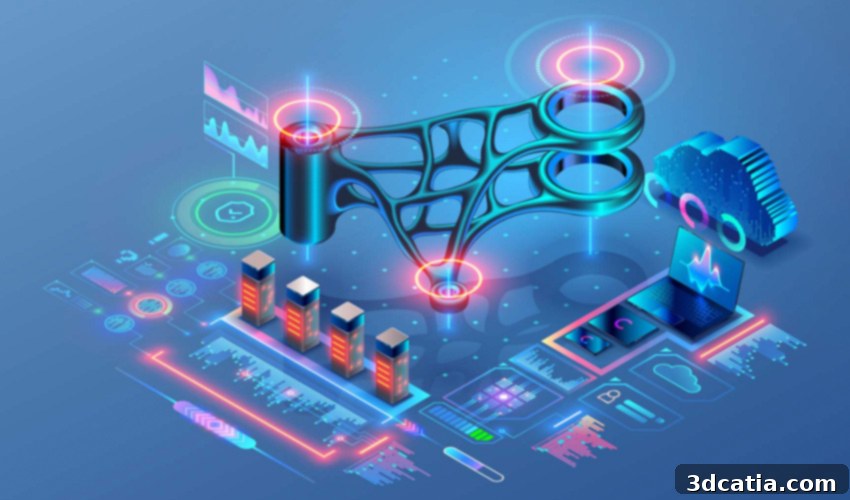
Revolutionizing Additive Manufacturing: 10 Ways AI is Transforming 3D Printing from Concept to Production
Artificial intelligence is rapidly reshaping countless industrial sectors, and the realm of additive manufacturing stands out as a prime example of its transformative power. In the context of 3D printing, AI serves as a powerful catalyst, enabling unprecedented levels of automation, precision, and efficiency. From the initial conceptualization and design stages to the intricate processes of printing, real-time monitoring, and post-production refinement, AI applications are becoming increasingly broad, sophisticated, and indispensable. This advanced technology not only significantly enhances workflow efficiency but also drastically reduces the incidence of errors, lowers production costs, and accelerates time-to-market for innovative products. The integration of artificial intelligence into the 3D printing workflow is no longer a futuristic concept but a present reality, bringing immense value and unlocking new possibilities for manufacturers worldwide. Let’s delve into the myriad ways AI is actively shaping the future of 3D printing.
1. Seamless Conversion of Sketches to 3D Models
Artificial intelligence is fundamentally revolutionizing the initial design phase of 3D printing, making the jump from abstract ideas to tangible models quicker and more intuitive than ever before. This cutting-edge technology facilitates the automatic conversion of simple 2D sketches or detailed technical drawings into complex 3D models that are immediately ready for manufacturing. Utilizing sophisticated computer vision algorithms and deep learning networks, AI systems can interpret freehand doodles, precise engineering schematics, or imaginative concept sketches, generating accurate 3D geometries that faithfully capture the designer’s original intent. This capability dramatically streamlines the creative process, particularly during the critical early stages of product development, allowing innovators to swiftly transition from a mere idea to a functional physical prototype. Moreover, by reducing the reliance on extensive knowledge of advanced CAD software, AI makes sophisticated 3D design more accessible to a wider range of users, empowering individuals and small businesses to bring their concepts to life with ease.
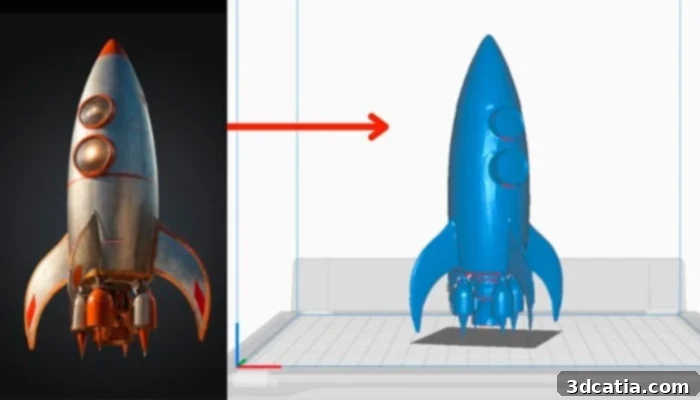
A 3D model and STL file based on a “vintage space rocket” prompt, generated in Meshy AI.
2. Advanced Design Optimization and Modification Through Generative AI
Beyond mere conversion, artificial intelligence plays a pivotal role in generating and rigorously optimizing 3D models to achieve unparalleled efficiency and functionality through powerful techniques like generative design. By setting specific objectives—such as maximizing structural strength, achieving minimum weight, optimizing thermal performance, or ensuring precise force distribution—AI algorithms can explore vast design spaces and create intricate geometries that would be virtually impossible or incredibly time-consuming for human designers to conceive manually. This not only leads to a significant improvement in the performance and durability of the final product but also optimizes material usage, contributing to more sustainable manufacturing practices, and drastically reduces overall development time. AI systems can rapidly analyze and iterate through thousands of design variations within minutes, radically shortening design cycles and fostering greater customization and innovation in product development. This capacity allows engineers to push the boundaries of design, yielding parts that are lighter, stronger, and more efficient than ever before.
3. Proactive Recognition and Correction of Errors in STL Models
A significant number of 3D printing errors can be traced back to imperfections within poorly designed, malformed, or incorrectly exported digital models, particularly in common formats like STL. These underlying errors—such as non-manifold edges, flipped normals, self-intersections, or gaping holes—may not always be immediately visible to the human eye but invariably lead to severe failures, defects, or even complete print abandonment during the manufacturing process. AI algorithms are exceptionally adept at scanning STL and similar file types, employing sophisticated geometric analysis and pattern recognition to identify these elusive problems automatically. More impressively, they can often repair these issues without requiring any human intervention, performing tasks like mesh healing, normal correction, and gap filling. Furthermore, some advanced AI systems can even suggest context-aware corrections based on a vast database of previous experience with similar models and common print failure scenarios. This powerful tool is absolutely essential for manufacturers who frequently receive files from third parties, work with highly complex geometries, or operate in high-volume production environments, guaranteeing printability and reducing material waste and time loss.
4. Intelligent Generation of Supports and Infill Structures
Artificial intelligence profoundly optimizes both the design and placement of support structures and the internal infill patterns, which are crucial for successful 3D printing. By meticulously analyzing the geometry, intended function, and material properties of a part, AI can determine precisely where supports are strictly necessary, minimizing their footprint and maximizing efficiency. This targeted approach significantly reduces the amount of support material required, cuts down on print time, and dramatically simplifies post-processing efforts, as supports are designed for easy, damage-free removal while maintaining optimal surface quality. Beyond supports, AI can also intelligently select the most suitable infill pattern and density, customizing it according to the part’s intended use—whether it requires maximum strength, enhanced flexibility, superior shock absorption, or optimized thermal insulation. Advanced AI can even apply variable infill configurations in different areas of the same model, creating functionally graded parts. This intelligent generation of both internal and external structures not only improves the mechanical performance and aesthetic finish of the final product but also contributes to more precise, material-efficient, and structurally sound manufacturing, especially for highly complex geometries.
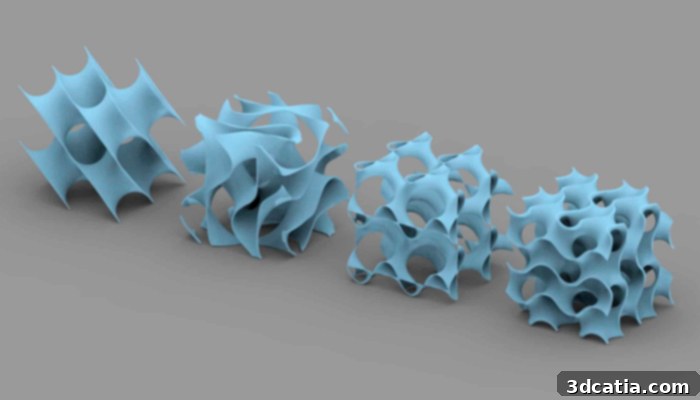
The filling of the 3D models will affect the final strength.
5. Enhanced Predictive Simulation Before Printing
One of the most significant advantages of integrating AI into 3D printing is its capacity for sophisticated predictive simulation. Through advanced simulations conducted even before the physical printing process commences, AI can meticulously analyze a multitude of critical factors. These include potential thermal deformations, material shrinkage, residual internal stresses, and even potential print head collisions or extrusion issues. By doing so, AI is able to anticipate potential failures or quality issues long before they actually occur on the print bed. This predictive capability allows the system to propose proactive corrections to manufacturing parameters—such as adjusting print speed, temperature settings, cooling fan speeds, or layer heights—optimizing the print for success. This is particularly invaluable for long-duration prints, with expensive technical materials, or for critical, high-performance components where failure is not an option. Moreover, by continuously identifying and learning from common failure patterns observed in vast datasets of past prints and simulations, AI algorithms can iteratively refine their predictions, making each subsequent print more reliable, efficient, and successful than the last, drastically reducing trial-and-error.
6. Real-Time Monitoring and Error Detection During Printing
Once the 3D printing process begins, various issues such as warping, filament jamming, poor bed adhesion, layer shifting, or stringing can emerge at any moment, jeopardizing the print. By integrating high-resolution cameras, thermal sensors, and sophisticated computer vision systems trained with AI, it becomes possible to visually detect these faults in real time as they develop. These intelligent monitoring systems use machine learning models to continuously compare the ongoing print against the ideal digital model and established quality benchmarks. When the AI system identifies a problem—be it an anomaly in layer deposition, a critical temperature deviation, or an unexpected structural deformation—it can immediately trigger alerts to operators, automatically pause the printing process to prevent further waste, or even attempt to apply self-correction protocols if the printer’s firmware allows. This proactive approach significantly reduces material waste and the valuable time lost on failed prints, while simultaneously enabling more efficient remote control and management of multiple printers across a production floor, ensuring higher success rates and consistent quality.
7. Proactive Predictive Printer Maintenance
Just like any complex machinery, 3D printers require regular and timely maintenance to ensure optimal performance and longevity. Components like belts, motors, bearings, and nozzles are subject to wear and tear, and issues such as debris buildup in extruders or subtle motor failures can lead to elusive printing errors that are difficult to diagnose manually. Leveraging an array of sensors—monitoring vibrations, print speed consistency, temperature fluctuations, motor currents, and recurring fault codes—AI algorithms can analyze this behavioral data over time. By applying sophisticated time-series analysis and machine learning models, AI can identify subtle anomalies and predict potential component failures before they escalate into critical breakdowns. This capability for predictive maintenance allows manufacturers to schedule maintenance proactively, precisely when it is needed, rather than reactively after a failure has occurred. This foresight avoids unplanned downtime, maximizes machine uptime, extends the operational lifespan of expensive equipment, and dramatically improves overall productivity, particularly in industrial environments where continuous manufacturing is paramount.
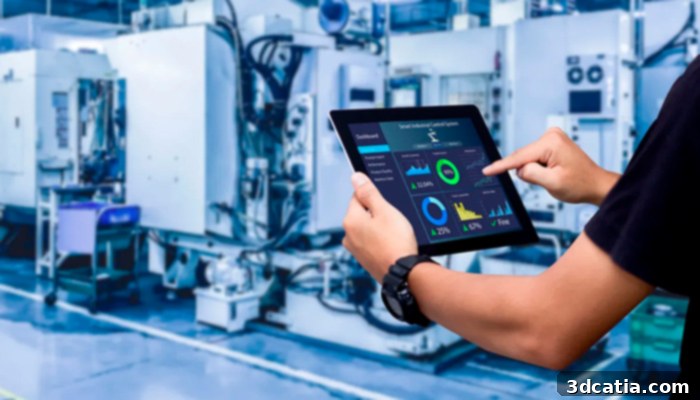
Photo Credits: Dassault Systèmes
8. Automated Classification and Quality Control of Defective Parts
Ensuring that every manufactured part adheres to established quality standards is one of the most persistent and challenging aspects of 3D printing, especially when dealing with high-volume production. Traditionally, this often involved laborious and subjective manual inspection. However, thanks to advanced vision systems and AI algorithms rigorously trained to detect a wide array of imperfections—such as microscopic cracks, surface deformations, layer adhesion errors, voids, or dimensional inaccuracies—it is now possible to inspect parts quickly, consistently, and with objective precision. This automation significantly reduces the time and labor cost associated with manual inspection while vastly improving the consistency and reliability of quality controls. By seamlessly integrating these AI-powered inspection systems into the production line, AI can automatically classify and separate valid, compliant parts from defective ones, ensuring that only components meeting the highest quality benchmarks reach the end user. This proactive quality assurance minimizes recalls, enhances brand reputation, and prevents faulty products from entering the supply chain.
9. Optimizing Post-Processing Workflows
Post-processing in 3D printing encompasses a wide variety of essential tasks, ranging from support removal and surface finishing (sanding, polishing, vapor smoothing) to curing, dyeing, and assembly. These steps can account for a substantial portion of the total process time, labor, and cost, often presenting a bottleneck in production. With the astute assistance of artificial intelligence, it is now possible to analyze the complex geometry of each printed part, its material properties, and its final application to automatically plan and even execute the most appropriate post-processing actions. AI can determine the optimal sequence of steps, recommend the necessary tools, and even control robotic systems for automated support removal or surface finishing. Furthermore, AI can dynamically adjust these post-processing parameters based on the specific material used, the desired final application, or aesthetic requirements. In industrial manufacturing environments, this capability enables a more seamless and efficient integration between the printing stage and all downstream steps, greatly facilitating the complete automation of the entire production flow, saving time and improving consistency.
10. Intelligent Traceability and Authentication of Parts
Artificial intelligence is poised to play an absolutely critical role in establishing robust traceability for 3D printed parts, enabling the precise identification of the exact origin and manufacturing journey of each component, often from a simple photograph. By employing advanced image analysis techniques, AI can analyze microscopic patterns inherent in 3D printed objects—such as unique surface textures, subtle layer marks, or minute variations in finish—to detect characteristics that act as a distinctive “fingerprint” for each specific 3D printer and even individual print batch. This goes beyond knowing just the manufacturing process; it can reveal which machine, within a specific brand or factory, produced the part, and under what conditions. This groundbreaking capability offers immense advantages across various domains, including enhanced quality control by pinpointing issues to their source, ironclad intellectual property protection, rigorous component authentication to prevent the use of substandard parts, streamlined supplier auditing, and formidable anti-counterfeiting measures, ensuring trust and integrity throughout the supply chain.
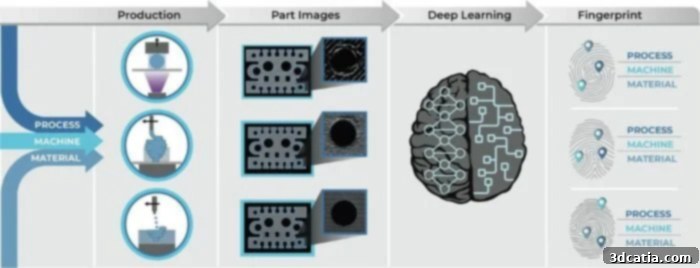
Credits: University of Illinois
The synergistic combination of artificial intelligence and 3D printing represents a paradigm shift in manufacturing, promising unprecedented levels of efficiency, innovation, and quality. As AI continues to evolve, its integration into additive manufacturing will only deepen, unlocking capabilities we are only just beginning to imagine. What are your thoughts on combining artificial intelligence and 3D printing? We’d love to hear your perspective in a comment below or join the conversation on our LinkedIn or Facebook pages! Additionally, don’t forget to sign up for our free weekly Newsletter to receive the latest 3D printing news directly in your inbox. You can also explore all our insightful videos on our YouTube channel.