
Prothesia: Revolutionizing Orthoses and Prostheses with Advanced 3D Printing Technology
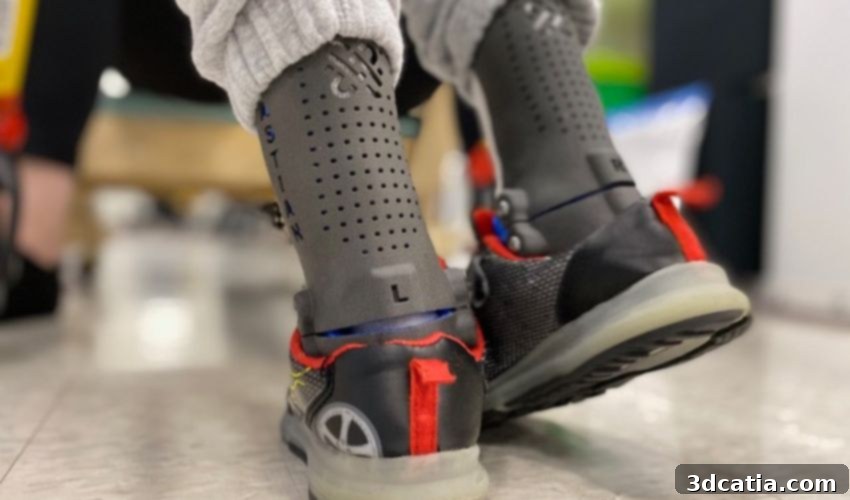
The landscape of medical device manufacturing, particularly for orthoses and prostheses, has undergone a profound transformation. Traditional fabrication methods are swiftly being replaced by innovative techniques, with 3D printing emerging as a cornerstone technology. This additive manufacturing approach has revolutionized the creation of these vital medical aids, making them significantly lighter, remarkably stronger, and, critically, precisely adjustable to the unique anatomical and functional requirements of each individual patient. Leading this charge in Latin America is Prothesia, a pioneering Mexican company that leverages cutting-edge 3D printing to deliver superior solutions to individuals facing amputations or mobility challenges. Beyond its role as a manufacturer, Prothesia has meticulously built a robust network, connecting patients with the most skilled prosthetists and dedicated medical professionals across Mexico, Colombia, and Argentina. We recently had the privilege of speaking with Francisco Valencia, Prothesia’s visionary CEO, who graciously shared insights into the company’s impactful work and its ambitious future.
3DN: Could you introduce yourself and elaborate on your personal journey and relationship with 3D printing?
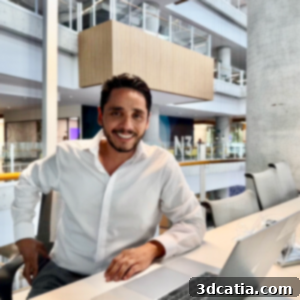
Hello! I’m Francisco Javier Valencia Valdespino, and my initial foray into the fascinating world of 3D printing began thanks to a good friend and fellow mechatronics engineer, Gustavo. Gus was preparing to embark on a year-long missionary journey to Asia, and among the many things he left behind was his 3D printer, which he generously donated to me. I eagerly accepted his offer and immediately put the machine to work, initially aiming to generate some income to support his missionary project. This spark ignited a deeper passion, leading me to establish a small 3D printing agency in 2017. In those early days, we printed an eclectic array of items, ranging from intricate art pieces and detailed anatomical models to specialized ankle-foot orthoses. My connection with 3D printing grew progressively stronger and more captivating, demanding an increasing amount of my time and resources. Yet, the investment felt entirely worthwhile as long as the machine successfully completed its tasks.
The unparalleled sensation of waking up each morning to discover an intricate 8-hour print successfully finished was akin to the joyous anticipation of Christmas Eve, a constant source of excitement. However, the journey wasn’t without its challenges; sometimes, that eagerly awaited piece would unfortunately resemble a tangled mess of plastic spaghetti. These moments, while initially frustrating, proved to be invaluable learning experiences. They instilled in me the profound importance of iterative design, the resilience required to overcome setbacks, and the critical need for meticulous version control, not just for prototypes but for every project that lay ahead. This quest for impactful applications led me to explore open-source initiatives like the Enable network, which ignited a powerful curiosity within me to apply 3D printing to medical devices. The idea of creating something with a tangible, life-changing impact, far beyond a simple Pikachu keychain or a decorative vase, resonated deeply with me, especially given my family’s extensive background in the healthcare system. The prospect of channeling my engineering knowledge and skills into improving healthcare outcomes was, and remains, incredibly exciting.
3DN: How did Prothesia come into existence, and what is its overarching vision?
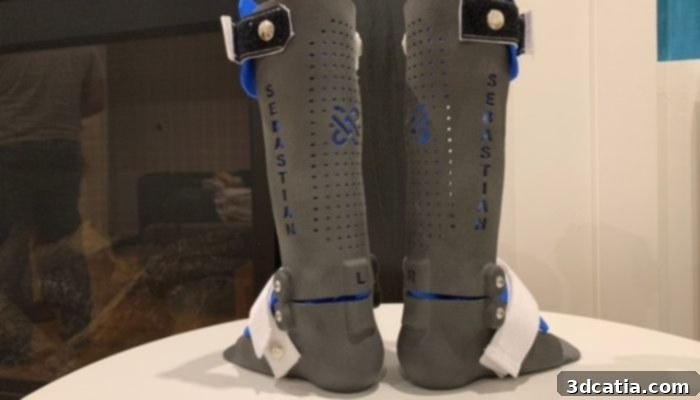
Prothesia truly began to take shape in 2017, born from a synergistic blend of this evolving knowledge in medical device design and a pivotal encounter with a patient who perfectly exemplified the need for what my university colleague and I had been diligently working on for months. This patient was a pediatric individual suffering from spastic cerebral palsy, requiring a static ankle-foot orthosis (AFO). The fundamental objective of this device is elegantly simple yet profoundly impactful: to effectively correct and mitigate spasticity, a severe form of muscle stiffness that significantly impairs the patient’s limb mobility. This initial success solidified our conviction that 3D printing held the key to transforming lives.
Our vision at Prothesia is ambitious yet deeply human-centered: to empower individuals and restore their freedom to walk again. Today, we stand incredibly proud to witness Prothesia’s services reaching diverse communities across 10 cities spanning Mexico, Colombia, and Argentina. While advanced technology, specifically 3D printing, forms a vital core of our business model, we recognize that it’s only one piece of a larger puzzle. The unwavering standardization of exceptional patient care, meticulously optimized logistics, and facilitating accessible financing solutions have proven to be equally critical pillars of our success. The most gratifying aspect of our work, the part that truly fuels our passion, is the moment we observe people confidently walking with their new prosthetic legs, regaining their independence. This allows them to return to their jobs, resume caring for their families, or once again engage in physical activities and sports, experiencing life to its fullest.
3DN: What specific materials and 3D printing technologies do you primarily utilize at Prothesia for your devices?
Our journey in material and technology adoption at Prothesia has been one of continuous evolution and refinement, always driven by the pursuit of optimal patient outcomes. We initially commenced our operations working with a range of readily available thermoplastics using FDM (Fused Deposition Modeling) technology, including PLA, ABS, PETG, PP, and PC. While these materials offered a good starting point for prototyping and initial designs, we soon recognized the need for enhanced precision, surface finish, and mechanical properties for clinical applications. This led us to strategically migrate to SLA (Stereolithography) technology, incorporating medical-grade resins, elastic resins for flexibility, and rigid resins for structural integrity. However, the ultimate leap in our manufacturing capabilities came with the adoption of SLS (Selective Laser Sintering) technology, primarily utilizing Nylon 11 and Nylon 12. SLS offers superior strength-to-weight ratios, excellent durability, biocompatibility, and the ability to produce highly complex geometries without support structures, which is crucial for custom orthoses and prostheses. We were among the pioneers in Latin America to effectively integrate these advanced technologies for the printing of orthoses, establishing new benchmarks for standardized manufacturing processes.
Our expertise in 3D printing also proved invaluable during a critical global health crisis. During the COVID-19 pandemic, we actively participated in a collaborative project with Formlabs, the University of South Florida (USF), and the FDA. Through this partnership, we leveraged our 3D printing capabilities to produce tens of thousands of nasopharyngeal and oropharyngeal swabs, which were essential for diagnostic testing. This urgent and impactful project not only demonstrated the agility and scalability of 3D printing but also earned us a fast-track approval from regulatory bodies, highlighting our commitment to public health and innovation.
3DN: From your extensive experience, what do you consider the most significant benefits of utilizing 3D printing for the creation of orthotics and prosthetics?
3D printing has unequivocally transformed the medical device industry, particularly for orthotics and prosthetics, forever. It is far more than just a manufacturing tool; it’s an accelerator for innovation. We observe continuous advancements every six months, with new materials being developed, manufacturing processes becoming more refined, software capabilities expanding, and machine components evolving rapidly. These improvements include better thermal conductors, more powerful CPUs, and smarter PID (Proportional-Integral-Derivative) control systems. This rapid evolution is largely due to the millions of dollars invested annually in research and development, fueled by the enormous promise of 3D printing. The technology isn’t just poised to revolutionize the medical device sector but also to significantly impact industries like aerospace, where lightweight, complex, and highly durable components are paramount. We see groundbreaking startups, for instance, exploring the use of lunar dust to manufacture components capable of self-assembly, with the ambitious goal of constructing a lunar base. This reflects the incredible potential of additive manufacturing.
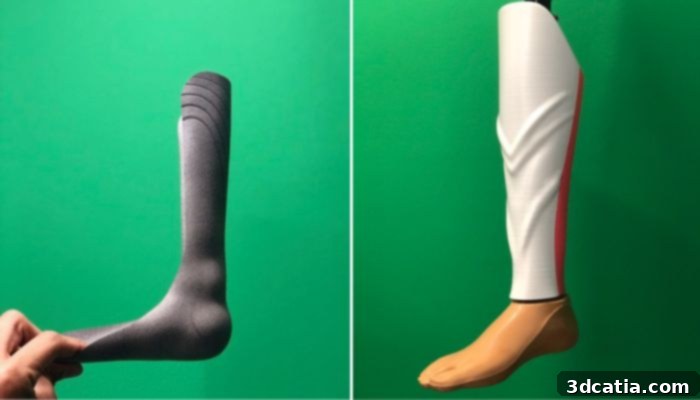
Fortunately, these remarkable inventions and technological leaps ultimately translate into profoundly positive impacts on the lives of patients. For individuals who rely on prostheses to regain their freedom and walk again, these advancements mean devices that are lighter, stronger, more comfortable, and functionally superior. In our daily practice, we frequently work with patients requiring leg or arm prostheses, with transtibial (below-knee) and transfemoral (above-knee) amputations being the most common. A significant benefit of 3D printing lies in its ability to produce highly customized aesthetic covers for prostheses. These covers, precisely designed to mimic the natural limb, offer far more than just visual appeal. They play a crucial role in enhancing the patient’s self-esteem and providing a greater sense of security, allowing them to feel more integrated and confident in their daily lives.
3DN: How do you ensure the meticulous customization and perfect fit of each medical device you produce?
Ensuring the meticulous customization and perfect fit of each medical device is a cornerstone of Prothesia’s philosophy, and it requires a truly multidisciplinary approach. Our dedicated team comprises highly skilled doctors, engineers specializing in biomechanics and design, experienced prosthetists, and compassionate physiotherapists. This collaborative expertise is absolutely essential for understanding the intricate anatomy of the residual limb. It’s imperative to anticipate and account for the volumetric changes that will naturally occur over time, especially in patients with underlying conditions. For instance, in Prothesia, a significant proportion—8 out of 10 patients we serve—are living with diabetes. For these individuals, even minor fluctuations in blood sugar levels or environmental factors can lead to rapid swelling or shrinkage of the residual limb, sometimes within a matter of hours. This necessitates devices that can accommodate these dynamic changes or be easily adjusted.
Our customization process begins with precise 3D scanning of the patient’s residual limb, creating a highly accurate digital model. This digital data is then utilized by our engineers and prosthetists to design a patient-specific device using advanced CAD software. The iterative nature of 3D printing allows us to rapidly prototype and refine designs, ensuring optimal comfort, fit, and functionality. We take into account not only the physical dimensions but also the patient’s lifestyle, activity level, and specific mobility goals. This meticulous attention to detail, combined with continuous communication among our team and with the patient, guarantees that each orthosis or prosthesis is truly tailored, providing unparalleled comfort and restoring maximum independence.
3DN: Do you have any final thoughts or words of encouragement for our readers, especially those involved in the 3D printing industry?
Indeed, this is an incredibly exciting and dynamic period for all enthusiasts and professionals deeply immersed in the 3D printing industry. We are collectively at the forefront, actively shaping and deciding the future trajectory of new materials, advanced components, and sophisticated software platforms that define our daily work. Personally, I am immensely excited about what the next decade holds for this industry. I firmly believe that within this timeframe, 3D printers will become a commonplace sight, integrated into homes, creative workshops, hospitals, and manufacturing factories, transforming how we design and produce goods. I am particularly eager to witness the advancements in 3D bioprinting, the development of novel bioinks for tissue engineering, revolutionary mesh processing algorithms that enhance design capabilities, the integration of generative AI to optimize design and manufacturing, and the continuous improvements in the electronic components embedded within the printers themselves, making them even smarter and more efficient. If you are part of this groundbreaking industry, I extend my heartfelt congratulations. Please, continue to print value for others, tirelessly innovate, and most importantly, share the incredible benefits and transformative potential of this industry with children, youth, and adults alike, inspiring the next generation of innovators.
What are your thoughts on Prothesia’s innovative work? We invite you to share your comments below or engage with us on our LinkedIn or Facebook pages! Furthermore, don’t miss out on the latest 3D printing news by signing up for our free weekly Newsletter, delivered straight to your inbox. You can also explore all our insightful videos on our YouTube channel. Interested in more news and developments in medical and dental 3D printing? Visit our dedicated page HERE.
*All Photo Credits: Prothesia