
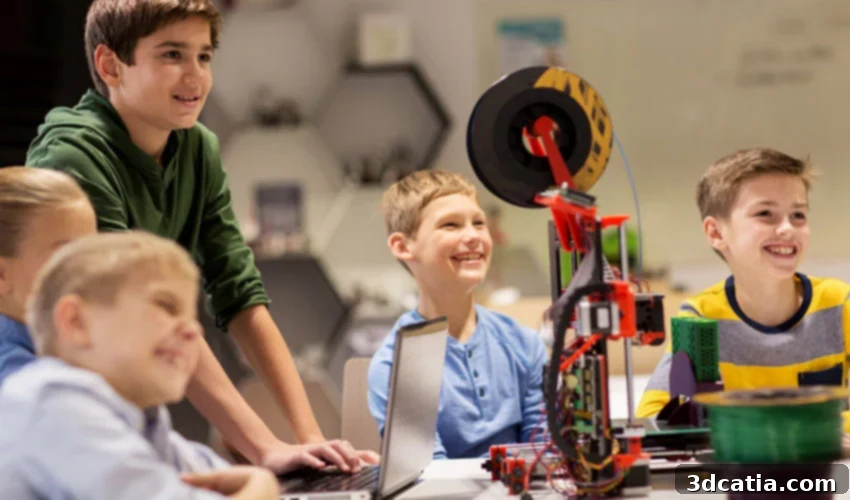
Empowering Future Generations: The Transformative Role of 3D Printing in Modern Education
As a new school year unfolds, the perennial task of educating and preparing our youth for the challenges and opportunities of the future takes center stage. In recent years, a groundbreaking technology has steadily entered the educational landscape: 3D printing. While additive manufacturing has only recently moved into the mainstream market, the accessibility and diversity of 3D printers and their applications are expanding at an unprecedented rate. Leading 3D printing manufacturers are keenly aware of the educational sector’s burgeoning needs, developing specialized machines tailored for children and comprehensive solutions designed for classroom integration.
For instance, desktop 3D printer manufacturer XYZprinting has innovated with products like the Da Vinci Color 3D printer, and further released a MiniMaker version specifically engineered to support STEM (Science, Technology, Engineering, and Mathematics) subjects in schools. Similarly, the Toybox 3D printer was designed with children in mind, making 3D creation intuitive and fun. These developments underscore a growing understanding that 3D technology is not just an industrial tool but a powerful educational instrument capable of fostering creativity, problem-solving, and critical thinking from a young age.
Today, the integral role of 3D printing in professional degrees and K-12 education is increasingly recognized as a fundamental necessity. For industries, comprehensive training in 3D technology is essential for its effective application and implementation, making it a professional imperative. However, when considering the widespread adoption of 3D printing in educational settings, several critical questions arise: Has 3D printing truly become established in education? What are the most effective strategies for integrating 3D technologies into schools? And why should this innovative technology play such a pivotal role in the development and learning of our children?
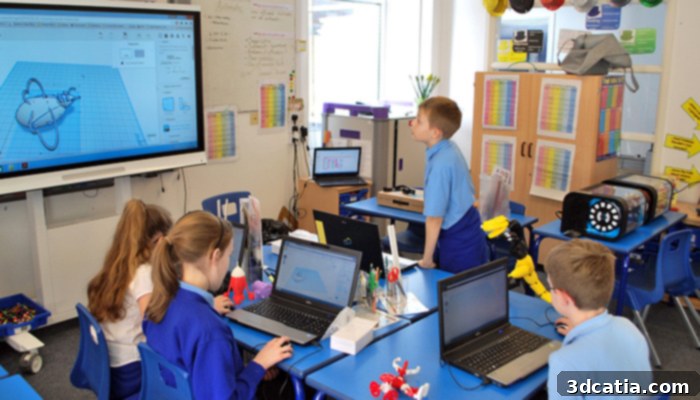
3D printing in education: how to implement it effectively?
To answer these questions, we must consider several important factors, beginning with the diverse possibilities and profound benefits that 3D technology brings to education. A key challenge is determining how 3D printing can be integrated into the classroom to maximize its learning effect, transforming theoretical concepts into tangible experiences. Furthermore, addressing the practical aspects, such as securing concrete financing for 3D printing initiatives in schools, is paramount for sustainable implementation.
The Myriad Benefits of 3D Printing in Education
Across Europe and indeed globally, schools are increasingly acknowledging the advent of Industry 4.0 and the Internet of Things (IoT). Consequently, prioritizing learning experiences and education for digital media has become critical, not only in overall school curricula but also within the daily classroom environment. In this context, 3D printing and related 3D technologies stand out as significant examples of tools that can facilitate this digital transformation. Their practical application can be seamlessly incorporated into a wide variety of school subjects, simplifying often difficult theoretical concepts and making them more accessible and engaging for students.
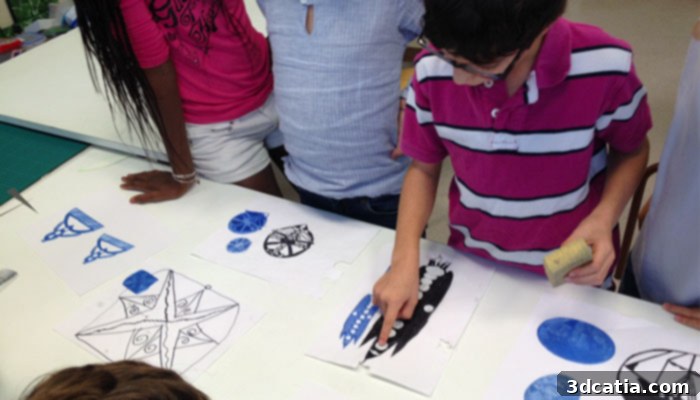
3D printing in the classroom helps students understand abstract concepts
Students stand to benefit from the integration of 3D printing in two distinct yet complementary ways. Firstly, they gain invaluable knowledge and practical experience with new, cutting-edge technologies. This is of paramount importance as 3D printing is poised to exert an ever-increasing influence on our future, driving profound economic and social changes. Without a doubt, proficiency in this technology will open new career paths and expand existing job markets, making early exposure incredibly beneficial for future employability. Secondly, and equally crucially, 3D printing in education allows for the simplification of complex theories. By creating physical models and prototypes, students can visualize and interact with abstract concepts, leading to a deeper and more intuitive understanding.
This hands-on approach is particularly advantageous in STEM subjects, where 3D technology can transform intricate scientific principles and engineering designs into tangible objects for experimentation and analysis. Beyond STEM, 3D printing offers significant advantages in subjects such as art, where it enables students to bring digital designs into physical reality; technology and design classes, fostering innovation and product development skills; and even geography, by allowing the creation of topographical maps or geological formations. The versatility of 3D printing makes it a truly interdisciplinary educational tool.
Elvira Rach, head of education at iGo3D GmbH, eloquently articulated the imperative for change: “Digitalization and technology are changing everything, especially in schools. The growing digitization is a significant issue, and the field of 3D printing demands particular attention. Education must evolve to prepare students effectively for the future, but these changes are so profound that merely placing an iPad in the classroom is insufficient. 3D printing has the power to completely transform the way students learn, offering a unique opportunity for physical tangibility of content and fostering a special kind of immersive learning.” Her insights highlight the need for meaningful technological integration that goes beyond superficial digital tools.
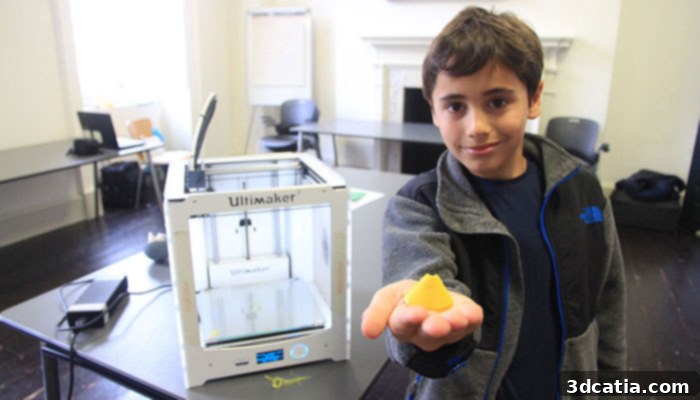
Designing an Effective Study Program with 3D Printing
Given the extensive range of benefits that 3D printing entails, its integration into school curricula is a logical step. However, the practicalities of incorporating 3D printing into schools and classrooms, especially with already crowded student timetables, present a significant challenge. How can educators find the time and space to introduce and effectively utilize such an innovative technology?
While new media utilization has seen interdisciplinary integration across many educational programs, a notable example is the alliance between Samsung and Makerbot. This partnership aims to establish 1,300 intelligent classrooms in European countries, including the UK, where 3D printing is already a priority. Despite these progressive initiatives, the application of innovative 3D technology often remains focused on specific projects or dedicated project days rather than being fully woven into the daily curriculum. This project-based learning model, however, can be an excellent entry point for schools.
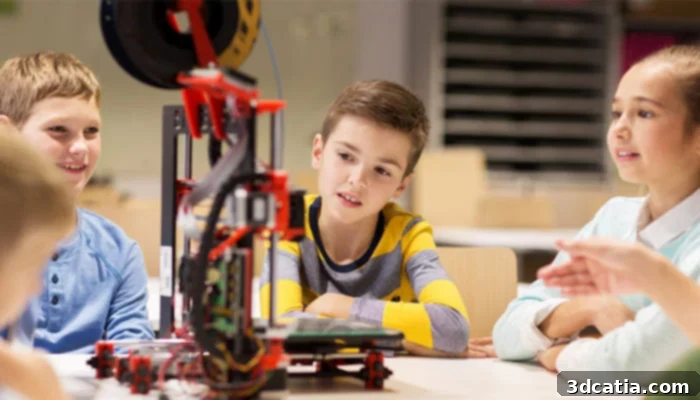
Smart classrooms for children integrating modern technology
Elvira Rach, who has extensively collaborated with schools through Com3Du and iGo3D, further elaborated on the pedagogical approach: “Working with 3D technology inherently focuses on the entire process of product development. Students are encouraged to explore diverse topics, translate their ideas into 3D models using design software, apply innovative additive manufacturing technologies, and then evaluate and refine their results. This comprehensive process nurtures critical thinking, iterative design, and problem-solving skills, mirroring real-world engineering and design workflows.“
Beyond regular school terms, various summer camps in the US and other regions have been established to both educate and entertain children during their breaks. Organizations such as Try Engineering Summer Camp, powered by IEEE, iDtech, and The Digital Media Academy (DMA), have set up specialized programs that allow children to explore additive manufacturing from a young age. Furthermore, initiatives like Ultimaker’s collaboration with DMA have led to the development of printers tailored to the unique needs of such camp or school environments, ensuring robust and user-friendly equipment is available.
The implementation of 3D printing in education is not confined solely to the K-12 level; it has also been adopted by various universities for some time. A notable example is the University of Florida, which launched the iDigFossils program. This National Science Foundation-funded initiative offers curricula on complex scientific subjects, utilizing 3D printed fossil replicas. By providing students with tactile, accurate representations of specimens, the program significantly enhances understanding and secures the integration of 3D printing into future generations’ scientific education.
Equipping Educators: Teachers Learning About 3D Printing for Schools
A fundamental prerequisite for successfully integrating 3D printing into education is robust support for schools and, crucially, for teachers. While a substantial number of schools and educators are eager to embrace 3D printing, implementation often stagnates due to a lack of knowledge and confidence. Operating a 3D printer and incorporating 3D design principles represents not only a completely new territory for many students but also for a significant portion of teachers, who may not have received formal training in these areas during their own education.
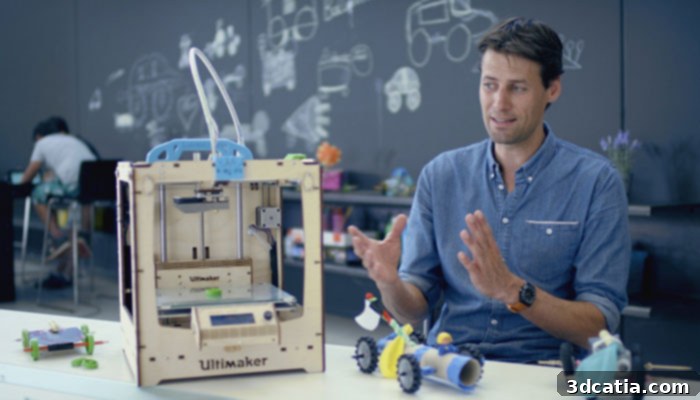
Teachers in schools must also be trained in 3D printing to effectively implement it
To assist interested teachers in integrating 3D printing despite initial knowledge gaps, numerous resources and training programs have emerged. These range from widely recognized guides like the “MakerBot Educator’s Guide,” which provides comprehensive lesson plans and project ideas, to specialized courses offered by entities such as IT3D or the Spanish company BQ. These programs often focus on practical 3D printing and robotics applications, designed to help educators understand and effectively teach this transformative technology. Continuous professional development for teachers is vital for sustainable adoption.
Collaborative platforms are also playing a crucial role. One such initiative is the “Education Project,” which has been instrumental in bringing 3D printing to schools across the United Kingdom. This platform’s strategy is built upon six key aspects: fostering a supportive community, ensuring reliability and robust support, promoting comprehensive education, guaranteeing equitable access to technology, providing effective teaching methodologies, and addressing economic considerations. This holistic approach ensures that schools receive not just hardware, but also the full ecosystem necessary for success.

Further strengthening these efforts, global 3D printer company PrintLab, headquartered in the United Kingdom, partners with organizations like Create Education. Together, these partners pursue a shared vision of actively supporting the integration of 3D printing in schools. This involves companies partnering directly with teachers to provide them with the necessary tools, materials, and ongoing pedagogical support. This collaborative model ensures that the creative and technical aspects of 3D technology are properly refined and disseminated.
For example, their joint efforts offer comprehensive 3D printing packages that include not only the hardware but also a structured curriculum, essential materials, and extensive technical support. This integrated solution minimizes barriers to entry for schools and educators. Moreover, we don’t always need to focus solely on industrial-grade 3D printers. Simpler, more accessible tools also play a vital role. An excellent example is the 3Doodler, which offers a range of learning packages for its popular 3D pens. The 3Doodler pen provides an easy and intuitive way to introduce fundamental 3D printing concepts into schools, facilitating the creation of three-dimensional artworks and giving students a basic, hands-on understanding of spatial dimensions and design.
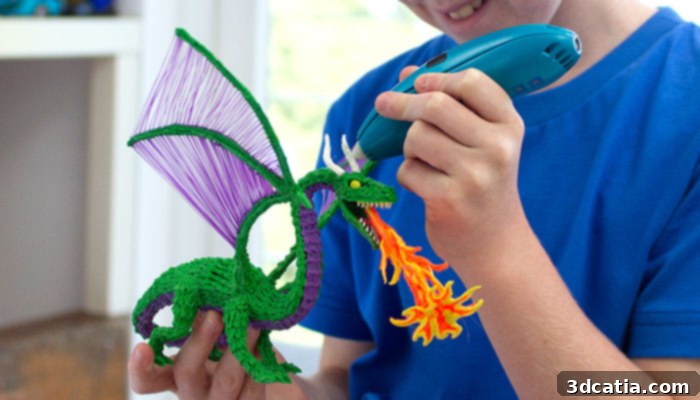
3Doodler has developed an accessible interface for children to learn to use 3D pens
The Critical Issue of Financing 3D Printing in Education
The ambitious step towards comprehensive digitalization in schools inevitably comes with a significant financial cost. In many cases, schools operate with limited budgets, often having little more than their standard allocations available for new technological investments. Despite these constraints, various initiatives have been launched in both the US and the UK to address the funding challenge and catalyze the adoption of 3D printing in education.
In 2017, Great Britain publicly announced its strategic plan to become a global leader in the additive manufacturing sector by 2025. This ambitious vision was detailed in the “Additive Manufacturing UK National Strategy 2018-25,” outlining how this goal would be achieved. Given that the UK is already one of Europe’s largest countries in additive manufacturing (second only to Germany), it is well-established within the industry. With Europe also home to a substantial number of 3D manufacturers like Ultimaker and innovative online services such as Shapeways, such a national initiative to boost educational integration is a logical and forward-thinking move. This strategy aims to ensure a skilled workforce capable of driving future innovation.
Beyond Europe, nations like Singapore are profoundly convinced of the potential of 3D printing and its underlying technology. So much so, that plans have been put in place to introduce at least one 3D printer into every primary school across the country within the next five years. Furthermore, forward-thinking cities such as Tokyo already offer dedicated 3D printing courses to even the youngest students in their schools. These countries demonstrably understand and are acutely aware of the future importance of 3D printing across a multitude of sectors. They have made a decisive commitment to invest heavily in education to proactively address potential future skill shortages by nurturing a technologically proficient generation.
In summary, while Asian nations appear to be at the forefront of this educational revolution, significant steps are being taken in both Europe and North America to accelerate the integration of 3D printing into their school systems. The future of education is clearly heading towards more hands-on, technology-driven learning. We eagerly anticipate how 3D printing in education will continue to evolve and prevail across these regions, fundamentally shaping the learning experiences and future prospects of students worldwide.
What are your thoughts on the implementation and future of 3D printing in education? We invite you to share your insights in a comment below or engage with us on our Facebook and Twitter pages! And don’t forget to sign up for our free weekly Newsletter to receive all the latest news in 3D printing delivered directly to your inbox!