
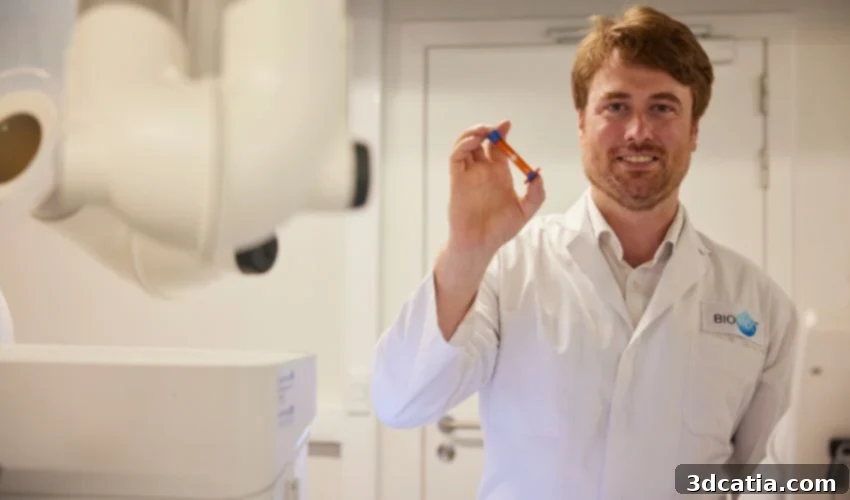
Unlocking the Future of Regenerative Medicine: Inside BIO INX and the Advancements in 3D Bioprinting Bio-Inks
The ambition of printing fully functional, usable human organs remains one of the most profound and frequently asked questions in the realm of 3D bioprinting. This groundbreaking field has consistently shown remarkable progress, moving us closer to that distant yet hopeful goal. We’ve witnessed and reported on significant strides, from exciting projects focused on creating neural networks to the development of bioactive bone structures, and innovative wound-healing bio-inks, among many others. Indeed, bioprinting has captured the immense interest of the global scientific community, but it’s not just a field of academic pursuit; it’s also a burgeoning industry. Market projections from Markets and Markets indicate a robust growth trajectory, with the 3D bioprinting market anticipated to expand from approximately $2 billion in 2022 to an impressive $3.3 billion by 2027. This substantial growth underscores the continuous dedication to research and development into novel processes and advanced bio-inks, all aimed at fostering profitable discoveries and propelling truly revolutionary developments that promise to transform healthcare.
However, the realization of printing complex biological structures like organs, muscles, and various tissues hinges critically on the availability of essential cellular materials: high-performance bio-inks specifically engineered for additive manufacturing processes. Pioneering this crucial segment of the industry is BIO INX, a dynamic Belgian startup. This innovative company is entirely dedicated to the research, development, and production of innovative and high-performance bio-inks, designed to significantly advance biofabrication and broaden its diverse applications across regenerative medicine and beyond. In an exclusive interview, we had the opportunity to speak with CEO Jasper Van Hoorick, who shared invaluable insights into the founding principles of the company and shed light on the cutting-edge projects that BIO INX is actively pursuing to shape the future of bioprinting.
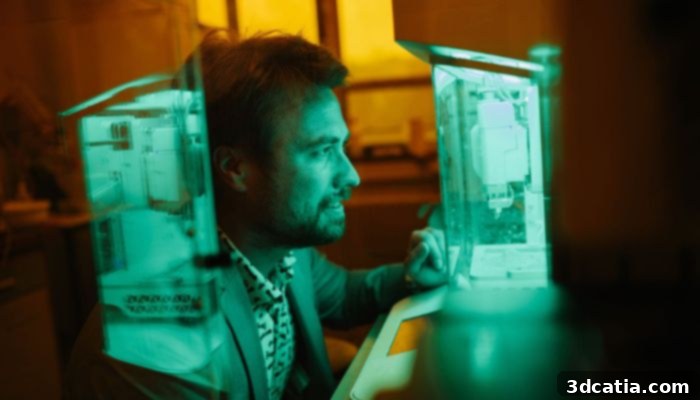
Jasper Van Hoorick, CEO at BIO INX
Introducing Jasper Van Hoorick: A Journey into 3D Bioprinting Innovation
“I am Jasper Van Hoorick, and I proudly serve as the CEO and co-founder of BIO INX,” Jasper began, introducing himself. His journey into the fascinating world of 3D (bio)printing commenced during his rigorous PhD studies, a joint program between Ghent University and Vrije Universiteit Brussel. During both his master’s degree and subsequent doctoral research, which spanned the interdisciplinary fields of chemistry and engineering, Jasper’s primary focus was on the meticulous development of novel biocompatible materials. Specifically, he explored polymers like Gelatin and Polyesters, tailoring them for advanced 3D bioprinting technologies. His expertise particularly gravitated towards two-photon polymerization (2PP), a sophisticated, laser-based 3D printing technique renowned for its exceptionally high resolution and precision. It was during his master’s studies that he first encountered the profound potential of 3D bioprinting, a field that immediately captivated his imagination and solidified his decision to dedicate his PhD research to its advancement. This foundational experience in material science and high-resolution bioprinting would prove instrumental in the eventual creation of BIO INX.
The Genesis of BIO INX: From Academic Discovery to Clinical Promise
The inception of BIO INX is deeply rooted in significant academic breakthroughs. “During our PhDs, my colleague and our current CSO, Aysu Arslan, and I dedicated ourselves to developing novel materials specifically for 3D bioprinting. Our hard work culminated in patented technologies and materials, which ultimately formed the bedrock of BIO INX,” Jasper explained. As material chemists, their academic research naturally fostered numerous collaborations with various research groups keenly focused on applying these innovative materials in regenerative medicine. One such pivotal collaboration was with Aleks Ovsianikov’s research group in Vienna, where Agnes Dobos, now an application specialist at BIO INX, was conducting her PhD. This experience sparked a critical realization: what would happen to the invaluable research conducted by these partners if the specialized materials, often produced in limited quantities within an academic setting, were no longer readily available? More importantly, if groundbreaking research relied on materials not developed under stringent, reproducible conditions, any attempt to translate these findings closer to patient care would necessitate starting from square one, due to inherent reproducibility challenges.
Driven by the strong belief that their PhD research held immense potential far beyond academic papers, Jasper and his team were determined to prevent it from fading into obscurity or remaining merely a concept with “great potential.” To truly bridge the gap between cutting-edge academic discovery and tangible clinical applications, an active initiative was required to propel this research to its next critical stage. This profound motivation led them to pursue external funding specifically to explore the creation of a spin-off company and the commercialization of their patented technology. Their efforts received substantial support from An Van Den Bulcke, a distinguished business developer at UGent, who herself played a crucial role in the original development of Gel-MA, one of the most widely recognized and utilized materials in the global 3D bioprinting community. “This felt like the circle was truly round,” Jasper reflected, “as Gel-MA has served as a fundamental basis for a vast amount of biofabrication research over the last two decades. It felt incredibly fitting that An supported the creation of BIO INX, where we also specialize in supplying high-quality gelatin-based materials.” Following two intensive years of university incubation, BIO INX officially launched in April 2022. With BIO INX, their core mission is to provide reliable, standardized, and high-performance bio-inks, enabling the printing of living cells with unprecedented resolution and paving the way for advanced biofabrication.
The Science of Specificity: Why Different Bio-Inks for Different 3D Bioprinting Technologies?
The complexity of 3D bioprinting lies not only in the technology itself but also in the intricate properties required from the bio-inks. “Every bioprinting technology operates on distinct principles and, consequently, demands a unique set of material characteristics for optimal performance,” Jasper elaborated. This means a single, universal bio-ink suitable for all applications simply isn’t feasible. Understanding these specific requirements is paramount for successful biofabrication:
- Extrusion Printing: This method necessitates a highly controlled flow of material during the printing process, followed by excellent shape retention once deposited. For extrusion, the most critical properties for a high-performing bio-ink are its rheological characteristics—specifically, its viscosity and flow behavior. The material must be fluid enough to be extruded smoothly but viscous enough to maintain its structural integrity immediately after deposition, preventing collapse.
- Light-Based Printing (General): For technologies relying on light to solidify the bio-ink, such as stereolithography (SLA) or digital light processing (DLP), photocuring properties are of paramount importance. Rapid curing reactions are generally preferred to accelerate the printing process. However, these photocrosslinking reactions must occur in a highly biocompatible manner, ensuring that the light and the curing agents do not damage or compromise the viability of the encapsulated living cells.
- Two-Photon Polymerization (2PP): This high-resolution technique has even more stringent demands. 2PP printing requires very specific two-photon photoinitiating systems. These systems must be exceptionally active at the precise wavelengths used by the laser, which are typically in the near-infrared spectrum (e.g., 780 nm). Designing such highly efficient and biocompatible initiators for 2PP is a particularly complex and tricky endeavor due to the localized and precise nature of the polymerization.
- Digital Light Projection (DLP) Printing: For DLP bioprinting, a crucial requirement is that the penetration depth of the light within the material must be carefully limited. This confined penetration ensures that the photocuring reaction is precisely controlled and does not extend beyond the intended voxel, preventing unwanted polymerization and maintaining resolution. This often necessitates different photoactive systems compared to those used in 2PP printing, highlighting the nuanced material design needed for each technique.
“In this respect, while bio-inks for these three distinct technologies might be based on similar foundational polymer materials, their overall compositions will inevitably vary significantly to comply with the unique technical demands of each specific printing method,” Jasper concluded. Furthermore, beyond these technical requirements, bio-inks must also exhibit impeccable biocompatible behavior across a broad range of different cell types and biological environments. This delicate and challenging balance between technical printability and biological compatibility is precisely what makes bio-ink development such a compelling and interesting field for material scientists.
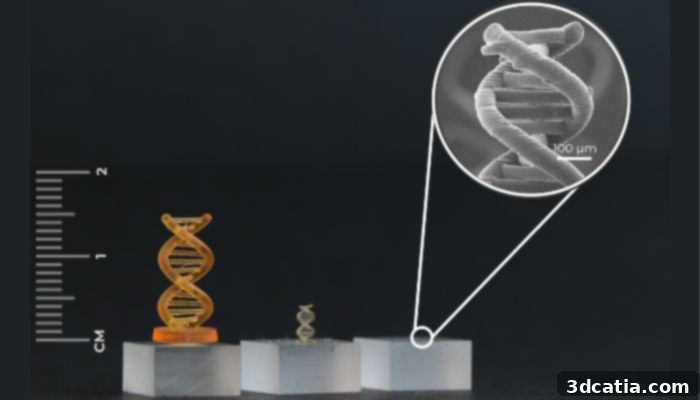
Multiscale hydrogel in the micrometer range.
Pioneering Projects at BIO INX: Innovating for Health and Beyond
At BIO INX, innovation is a continuous endeavor, with several ambitious projects currently underway that promise to significantly impact the field of biofabrication. “We are presently deeply involved in two major, transformative projects,” Jasper shared. These projects represent the cutting edge of biomaterial science and bioprinting applications:
The first is HU3DINKS, an international collaborative project dedicated to the groundbreaking work of generating human placenta-based bio-inks. This initiative aims to provide a sustainable and ethically superior alternative to animal-derived materials, such as gelatin, which are traditionally used in bioprinting. This significant project involves esteemed partners from Austria, including THT biomaterials, Morphomed, Upnano, and the Ludwig Boltzam Institute for Traumatology, and receives crucial financial backing from both VLAIO (Flanders) and FFG (Austria). “With HU3DINKS, our objective extends beyond simply creating new inks,” Jasper emphasized. “We aim to develop materials that not only more accurately mimic the natural tissue environment but also achieve this in a completely animal-free manner. This directly contributes to the widely accepted 3R principle—Refine, Reduce, and Replace—in animal-based studies, pushing the boundaries of ethical and sustainable bioprinting.”
The second major undertaking is Astrocardia, an exceptionally ambitious project focused on 3D printing cardiac tissue inside sophisticated microfluidic chips using the ultra-precise 2PP printing technology. The ultimate goal of this project is extraordinary: these meticulously engineered chips, containing living cardiac tissue, will be launched into space. The purpose of this orbital experiment is to study the profound effect of aging on cardiac cells, leveraging the well-documented phenomenon that aging processes in space accelerate by a factor of 20 compared to those on Earth. “By sending these 3D printed vascularized heart-on-chip models into space, we gain an unparalleled opportunity to meticulously study the effects of accelerated aging on heart cells,” Jasper explained. “Understanding this accelerated aging is critical, as aging is a primary contributor to many prevalent heart issues, and its mechanisms are notoriously difficult to manage and mitigate on Earth.” This pioneering project is a robust collaboration involving multiple Flemish companies, including SCK CEN, Space Application Services, Antleron, and QBD, and is supported by VLAIO, Medvia, and Flanders Space. The launch of these advanced, self-contained chip systems is strategically planned for 2025.
Beyond these large-scale collaborative efforts, BIO INX is also actively engaged in custom research projects tailored to the specific needs of various clients. Furthermore, the company is rigorously advancing its proprietary Curasol technology. “The Curasol technology is one of our patented innovations that enables the highly efficient curing of some of our materials in their solid state, crucially, without the need for any solvent,” Jasper detailed. This innovative approach allows for the extrusion printing of thermoplastic materials directly from their melt phase. Following this, a precisely controlled photocuring process transforms them into thermosets, imbuing them with truly unique properties. These properties include unprecedented elasticity and remarkable shape memory behavior, opening up entirely new possibilities for advanced biomaterial applications.
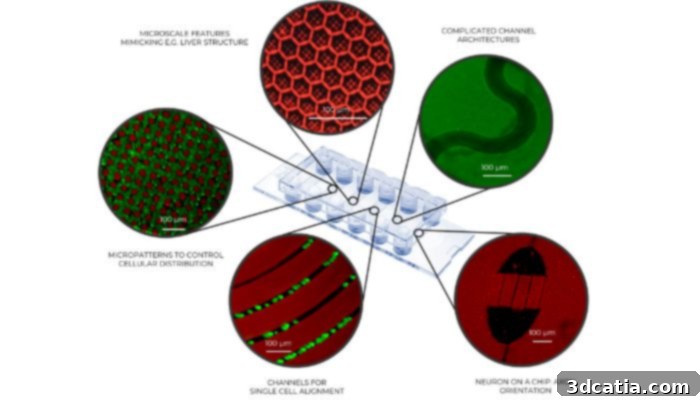
2PP can be used to produce microfluidic chips.
Two-Photon Polymerization: Precision, Potential, and Practical Limits
Jasper had previously highlighted Two-Photon Polymerization (2PP) in the context of bio-ink specificity and the Astrocardia project. Delving deeper, he elaborated on the distinct advantages and current limitations of this remarkable technology. “The primary, and arguably most significant, benefit of 2PP printing technology is its unparalleled ability to print at subcellular dimensions,” Jasper explained. This extreme resolution is a game-changer, making it uniquely possible to accurately recapitulate the extraordinarily complex and intricate architecture of living tissues—a feature that is absolutely crucial for the proper function and viability of engineered tissues. Additionally, 2PP stands out as the only technology that allows for the straightforward and precise printing of complex structures directly within microfluidic chips. This capability is vital for creating sophisticated ‘organ-on-chip’ models, which are invaluable tools for various applications, including accelerated drug screening and cosmetics testing, offering a more ethical and efficient alternative to traditional animal testing methods.
“Over the last decade, 2PP technology has undergone tremendous advancements,” Jasper noted, “making huge leaps forward in terms of both printing speed and the maximum achievable object size.” These improvements have significantly expanded the practical utility of 2PP. However, despite these impressive increases in writing speeds—now reaching meters per second in some cases—printing truly large structures still consumes a considerable amount of time. This is primarily due to the inherent trade-off between the technology’s exceptionally high resolution and the fundamental scanning principle of the laser, where each tiny detail must be individually ‘written.’ While 2PP offers unparalleled precision, scaling up to macro-sized functional organs remains a significant challenge due to these temporal constraints.
The Horizon of 3D Bioprinting: Standardization as the Key to Clinical Reality
Looking ahead, Jasper shared his vision for the future of 3D bioprinting. “We firmly believe that the technology is rapidly approaching its tipping point, transitioning from primarily research-driven exploration to impactful practical applications,” he stated. However, he identified a critical hurdle that currently impedes this transition: “In my opinion, the main bottleneck remains the unclear regulatory pathway, particularly when dealing with the complexities of incorporating living cells during the printing process.” Navigating the regulatory landscape for living, implantable tissues is a monumental task that requires clear guidelines and rigorous standards.
To overcome this, Jasper emphasized, “What is absolutely crucial in this respect is to ensure a guaranteed level of quality and unwavering reproducibility across all facets of the bioprinting process. This includes everything from the raw materials and the intricate printing procedures to subsequent cell culture techniques and post-processing.” Therefore, the path to widespread clinical applications undeniably hinges on stringent standardization and reliable reproducibility. While the ultimate dream is the printing of fully functioning human organs, Jasper offers a pragmatic perspective on the initial steps: “Albeit, we believe that the first tissues to reach clinical translation will not be complex, fully functioning human organs. Instead, we will likely begin with ‘simpler,’ more straightforward tissues, such as cartilage, bone, or cornea tissues.” These are often referred to as avascular tissues—tissues that do not inherently require a complex network of blood vessels, which significantly simplifies the engineering challenge. Establishing successful clinical applications for these less complex tissues will provide invaluable experience and pave the way for more intricate structures.
“However, to genuinely reach even these initial clinical milestones, the standardization of every single step along the developmental and manufacturing pathway is absolutely critical. This includes, crucially, the availability of standardized bio-inks,” Jasper reiterated. “And this commitment to standardization is precisely the fundamental motivation that propelled us towards the incorporation and establishment of BIO INX.” The field of biofabrication is undoubtedly an exciting and dynamic area to work in, characterized by rapid scientific advancements and a constant stream of groundbreaking developments in the market. “Therefore,” Jasper concluded, “we are incredibly happy and proud to contribute our small but significant piece to the grand vision and dream of realizing clinically viable 3D printed tissues and organs, transforming healthcare for generations to come.”
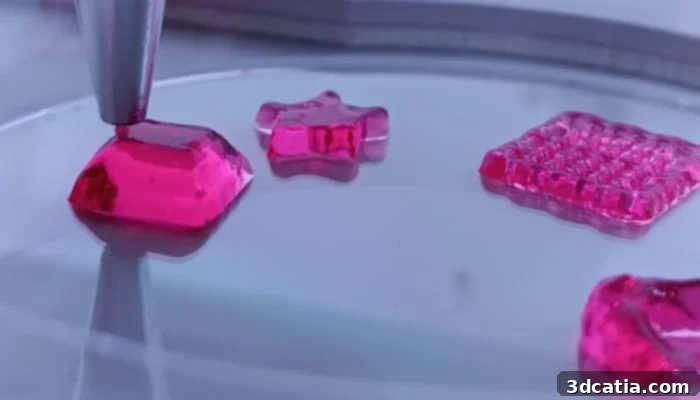
Standardization is needed to drive biofabrication forward.
What are your thoughts on BIO INX, our featured 3D startup of the month, and its potential impact on regenerative medicine? Do you foresee their innovations revolutionizing healthcare? We invite you to share your insights in a comment below or connect with us on our LinkedIn, Facebook, and Twitter pages! Don’t forget to sign up for our free weekly Newsletter here to get the latest 3D printing news delivered straight to your inbox! You can also find all our videos and in-depth content on our YouTube channel.
*All Photo Credits: BIO INX