
The Vital Role of 3D Printing Patent Examiners: Safeguarding Innovation in Additive Manufacturing
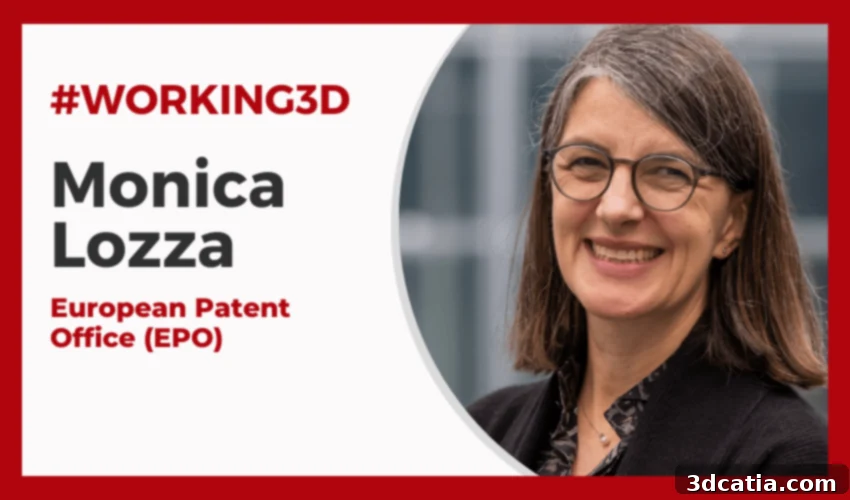
In our ongoing #Working3D series, dedicated to exploring the diverse and dynamic professions within the rapidly evolving additive manufacturing industry, we turn our attention to a crucial yet often overlooked field: the examination of 3D printing patents. This latest edition offers an exclusive glimpse into the world of intellectual property, featuring an insightful interview with Monica Lozza, a distinguished representative of the European Patent Office (EPO). Monica shares a comprehensive overview of her specialized profession as a 3D printing patent examiner, providing invaluable insights into her day-to-day responsibilities, the essential qualifications required for such a specialized role, and pragmatic advice for aspiring professionals looking to embark on this intellectually stimulating career path. As additive manufacturing continues its rapid ascent and industrial adoption, understanding the intricacies of intellectual property protection becomes increasingly paramount, making the role of patent examiners more critical than ever in fostering innovation and ensuring fair competition across the global technological landscape.
An Introduction to Monica Lozza and the European Patent Office (EPO)
 “Hello, my name is Monica Lozza, and I am delighted to introduce myself as a patent examiner at the European Patent Office (EPO), strategically located in The Hague, Netherlands,” Monica begins. She further elaborates on the EPO’s pivotal mission and its significant footprint in the innovation ecosystem: “The EPO stands as the authoritative body entrusted with the responsibility of granting patents across Europe, serving a vast and diverse clientele of inventors, pioneering researchers, and innovative companies from all corners of the globe. Far more than just an administrative entity, the EPO is recognized as one of Europe’s largest public service organizations, boasting an impressive workforce of approximately 6,300 dedicated employees. Among this highly skilled personnel, more than 4,000 are expert scientists and engineers who undertake the meticulous and rigorous work of patent examination, collectively covering virtually every conceivable field of technology, from biotechnology to telecommunications.”
Monica then narrows her focus to her specific area of expertise within this expansive technological spectrum. “My professional efforts are concentrated within a specialized team composed of ten highly skilled colleagues, all passionately dedicated to the intricate and rapidly advancing field of plastic 3D printing. My core expertise lies in the meticulous examination of patent applications directly related to plastic 3D printing solutions and processes. This means I meticulously analyze, process, and evaluate applications filed with our office specifically within this innovative domain, ensuring they meet the stringent legal and technical criteria for patentability. It is crucial to recognize that the EPO’s comprehensive coverage of additive manufacturing is extensive and highly specialized; other dedicated teams of colleagues possess deep expertise and focus on different, equally vital facets of 3D printing. These areas include the complexities of metal 3D printing, the intricate digital aspects that underpin the technology, such as software and control systems, and the development and application of other advanced materials, including biomaterials, ceramics, and composites. This structured, multi-team approach guarantees comprehensive coverage and profound expertise across all emerging and established areas of additive manufacturing, enabling us to effectively handle the breadth of innovation in this sector.”
A Glimpse into the Daily Life of a 3D Printing Patent Examiner
When queried about a typical workday, Monica underscores the inherently dynamic and varied nature of her profession. “The enduring appeal and intellectual challenge of this role stem directly from the unique characteristics of each patent application; consequently, it’s fair to say that no two days are ever truly identical for a patent examiner. Every single application we receive is a meticulously crafted document, comprising detailed textual descriptions and precise technical drawings that comprehensively outline a purported novel invention. Our rigorous examination process commences with an initial formal check, ensuring that all administrative and procedural requirements are meticulously met. Following this, a profoundly critical phase involves conducting an extensive and exhaustive search across our vast global databases. The overarching objective of this ‘prior art’ search is to meticulously ascertain whether the alleged invention is genuinely new and innovative, or if similar technology, concepts, or solutions already exist, have been disclosed, or are known somewhere else in the world. This comprehensive prior art investigation is absolutely fundamental, as patents are exclusively granted for technical inventions that demonstrably satisfy an exacting set of criteria: they must be undeniably novel, non-obvious to an average person skilled in the relevant art, and possess clear industrial applicability.”
Monica further elaborates on the complex and multifaceted skills required for her demanding role. “Our daily work is a sophisticated and intricate amalgamation of profound scientific and engineering expertise, sharp and incisive analytical research capabilities, and a keen, nuanced understanding of the intricate legal aspects governing intellectual property rights. To rigorously uphold the highest possible standards of quality, consistency, and impartiality, each patent application submitted to the EPO undergoes a thorough examination by a dedicated team of three highly experienced and specialized examiners. This collaborative, multi-perspective approach is designed to ensure robust scrutiny and significantly reduces the risk of oversight or misinterpretation. Furthermore, we frequently engage in essential consultations with colleagues who possess deep expertise in other specialized technical areas, a practice that is particularly invaluable given the often interdisciplinary and rapidly converging nature of 3D printing technologies. Crucially, we also maintain ongoing, transparent communication with applicants throughout the examination process. This vital dialogue is essential for guiding them through the complex procedural and substantive requirements, clarifying intricate technical details, and meticulously aligning their application with the precise legal prerequisites necessary for ultimately securing a European patent. This iterative and collaborative process is undeniably vital for the successful protection and registration of groundbreaking 3D printing innovations, ensuring both technological progress and legal certainty.”
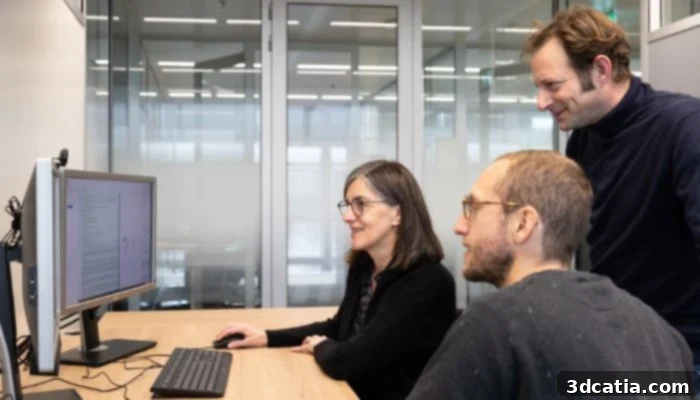
Monica Lozza with her team at the European Patent Office
Qualifications and Experience for a Patent Examiner in Additive Manufacturing
For those aspiring to join the distinguished ranks of patent examiners at the forefront of technological innovation, Monica outlines the fundamental educational and linguistic prerequisites. “To embark on a fulfilling career as a patent examiner, a solid and robust academic foundation is absolutely indispensable. Candidates are required to possess a university degree in a core science or engineering subject, with a master’s degree typically considered the minimum academic benchmark. The specific field of your degree is of paramount importance and must directly align with the technical domain in which you aspire to specialize. For example, my own educational journey led me to graduate from the esteemed Milan Polytechnic University with a degree in chemical engineering. This specialization provides me with a strong and comprehensive foundation for deeply understanding the complex material science, polymer chemistry, and process engineering intricacies inherently involved in plastic 3D printing. Beyond profound technical expertise, exceptional language skills are equally paramount, as the EPO operates seamlessly in three official languages: English, French, and German. A high level of proficiency in these languages is not merely an advantageous skill but an absolute necessity for effective internal communication, rigorous legal analysis of documentation from various countries, and fluid cross-border collaboration within our incredibly international team and with applicants originating from diverse linguistic backgrounds. The EPO actively seeks candidates who can demonstrate not only a strong grasp of theoretical knowledge but also the critical ability to apply that knowledge rigorously and judiciously within a complex legal and technical framework.”
Insights into the Global 3D Printing Patent Market and Innovation Trends
Monica offers a profoundly insightful perspective on the current state and dynamic trajectory of the 3D printing patent market on a global scale. “The EPO recently unveiled a comprehensive and meticulously researched study on global trends in 3D printing innovation, which unequivocally highlights Europe and the United States as the undisputed frontrunners and leading regions in the intense global race for advancements in this transformative technology. We have indeed observed a truly remarkable and rapid acceleration in the volume of patent applications being filed with the EPO within this vital sector. This significant surge in patenting activity is not solely attributable to the contributions of large multinational corporations, although their investments and innovations are certainly substantial. Critically, this growth also emanates from a vibrant and diverse ecosystem of innovation, which includes pioneering academic institutions, influential public research institutes, and agile, disruptive startups, all collectively pushing the boundaries of what is technologically feasible with additive manufacturing. This broad and inclusive engagement underscores the pervasive impact and immense potential of 3D printing across a multitude of industries and fundamental research domains, signaling its transition from niche technology to mainstream industrial solution.”
She continues, sharing a compelling personal reflection that vividly illustrates this exponential growth and paradigm shift. “On a deeply personal level, I can certainly attest to and wholeheartedly confirm this strong and sustained growth in patent applications within the field of additive manufacturing. It’s fascinating to recall that when I first commenced my career at the EPO 15 years ago, after successfully completing my university studies and gaining invaluable practical experience within the industrial sector, I was one of only three patent examiners specializing in what we now universally refer to as 3D printing. Intriguingly, at that particular historical juncture, the technology wasn’t even widely known or referred to as ‘3D printing’ or ‘additive manufacturing’; instead, the prevailing and commonly used term was ‘rapid prototyping.’ This semantic shift alone is incredibly telling and eloquently demonstrates the profound evolution in the focus, scope, and perceived capabilities of the technology – moving from mere rapid prototyping of models to sophisticated industrial-scale production and highly specialized, critical applications across various sectors. Today, my immediate team has expanded significantly to include more than ten dedicated colleagues, and crucially, there are many more highly skilled examiners distributed across different departments, each handling a vast and diverse array of applications within various specialized sub-fields of additive manufacturing. This continuous and robust expansion within the EPO is a clear and undeniable indicator of the technology’s rapid maturity, its extensive diversification, and its ever-increasing strategic importance in the global innovation landscape.”
Navigating the Challenges as a 3D Printing Patent Examiner
The esteemed role of a patent examiner, particularly within a relentlessly fast-evolving field like 3D printing, is inherently coupled with its unique and demanding set of challenges. Monica elaborates on these complexities: “Working as a patent examiner necessitates an unwavering and continuous commitment to staying fully abreast of the absolute latest technological developments. In the dynamic realm of 3D printing, we have borne witness to truly incredible and breathtakingly accelerated progress, which critically means we must constantly account for a robust and ever-growing volume of ‘prior art.’ Prior art is a legal term encompassing all publicly available information that existed anywhere in the world before the filing date of a specific patent application. This vast body of knowledge includes scientific papers, previously granted patents, product disclosures, academic dissertations, and even online content, and it can be published in any language, including highly technical and complex documents in Japanese, Chinese, and Korean. The sheer volume, diverse formats, and linguistic multiplicity of this information present an enormous and persistent challenge that requires sophisticated solutions.”
She explains how the EPO meticulously addresses this profound complexity: “To effectively manage, navigate, and scrutinize this vast ocean of technical and legal information, the EPO has made substantial investments in developing and rigorously maintaining extensive, state-of-the-art databases and deploying highly sophisticated translation tools. These indispensable resources are absolutely critical, enabling our examiners to conduct exceptionally comprehensive, precise, and highly accurate prior art searches, ensuring that no relevant information is overlooked during the examination process. Beyond the immense technical challenge of prior art search, another paramount and continuous challenge is maintaining absolute consistency and uniformity in the application of European patent law across every single application we process. The outcome of our work—the ultimate decision to grant or refuse a patent—must be meticulously predictable, legally sound, and transparent. This crucial predictability is not merely an administrative convenience; it is fundamentally essential for businesses, innovators, and society at large. It provides vital legal certainty for innovators, stimulates and encourages significant investment in research and development, and ultimately ensures that patents effectively serve their intended dual purpose: to legitimately protect groundbreaking inventions while simultaneously making valuable technical knowledge publicly available to fuel future innovation and progress.”

Examining 3D printing patents requires critical thinking, collaboration, and a keen eye for detail.
Valuable Advice for Aspiring 3D Printing Patent Examiners
For individuals contemplating a rewarding career as a patent examiner in the dynamic and exciting field of 3D printing, Monica offers a thoughtful and comprehensive array of advice, carefully building upon the essential academic and linguistic prerequisites. “In addition to the fundamental requirements I previously outlined – principally, a master’s degree in a relevant science or technology discipline and demonstrable proficiency in multiple languages – certain intrinsic personal attributes and profound interests are equally vital for sustained success in this profession. You absolutely must possess a meticulous eye for detail, an almost innate curiosity, and a genuine, deep-seated passion for innovation and cutting-edge technologies. The capability to comfortably navigate, comprehend, and analyze complex information presented in various languages is key, as is the crucial capacity to communicate clearly, precisely, and effectively, both in meticulously drafted written reports and during critical interactions with applicants and colleagues.”
She also thoughtfully touches upon various career entry points and professional trajectories. “While I personally found that my prior work experience within the industrial sector significantly augmented my university background by providing invaluable practical knowledge and real-world context, it is equally important to note that many of my highly capable colleagues joined the EPO directly after successfully completing their university studies. Both paths offer distinct advantages and opportunities for growth, and the EPO warmly welcomes candidates from diverse professional backgrounds. What profoundly unites us all is the uniquely dynamic, intellectually stimulating, and enriching work environment. The EPO is distinctively characterized by its highly international atmosphere, offering consistently challenging assignments that push intellectual boundaries, and fostering an exceptionally inclusive and supportive organizational culture. It is truly a workplace where diversity in thought and background thrives, and where different perspectives are not just tolerated but are actively sought after and highly valued. I particularly wish to emphasize this crucial point for young women: girls with a profound passion for science and technology should unequivocally consider applying to the EPO. It is a prestigious career path that not only offers immense intellectual stimulation and a unique chance to contribute significantly to global innovation, but also provides a nurturing, supportive, and empowering environment in which to truly grow, excel, and make a lasting impact.” This role truly stands at the nexus of advanced technology, intricate law, and global progress, making it an intellectually rewarding and profoundly impactful profession for those with the right blend of skills, dedication, and passion.
What are your thoughts on the pivotal role of a 3D printing patent examiner and the future of intellectual property protection in additive manufacturing? We invite you to share your valuable insights and comments below, or connect with us on our LinkedIn, Facebook, and Twitter pages! Don’t miss out on the very latest 3D printing news and developments – sign up for our free weekly Newsletter here, delivered straight to your inbox! You can also explore all our compelling videos and interviews on our dedicated YouTube channel.
*All Photo Credits: © European Patent Office