

The Future is Now: Exploring Groundbreaking 3D Printed Motorcycles and Their Innovative Components
The automotive industry has long been a pioneer in adopting cutting-edge manufacturing technologies, and additive manufacturing, commonly known as 3D printing, stands out as a transformative force. For years, manufacturers have leveraged 3D printing for a myriad of applications, from rapid prototyping and creating intricate tooling to producing high-performance, end-use components in both polymer and metal. This technology has consistently delivered remarkable benefits, including unparalleled design freedom, accelerated product development cycles, and significant cost reductions. As we narrow our focus to the dynamic world of motorcycles, it becomes evident that 3D printing is increasingly integral to their evolution.
Motorcycle manufacturers are embracing additive manufacturing to address diverse market demands and achieve specific performance goals. Many utilize it for creating highly customized components, allowing riders to personalize their machines to an unprecedented degree. Others harness its potential for critical weight reduction, enhancing speed and fuel efficiency without compromising structural integrity. The ability to produce geometrically complex parts, often impossible with traditional manufacturing methods, opens new avenues for optimizing aerodynamics, improving component integration, and boosting overall rider comfort. This innovative approach allows motorcycles to be lighter, faster, and more ergonomic. But which groundbreaking motorcycles are currently incorporating 3D printed parts, and what exactly are these components? Join us as we explore some of the most exciting examples shaping the modern motorcycle landscape.
DAB Motors and Becane Collaborate on a Futuristic Electric Motorcycle
At the prestigious Paris Fashion Week, a groundbreaking collaboration between DAB Motors and Becane unveiled an electric motorcycle that seamlessly blends advanced technology with a strikingly futuristic design. Building upon the innovative Concept-E model, this motorcycle immediately captivated audiences with its avant-garde aesthetics and extensive customization potential. A key element in achieving its unique visual identity and refined details was the strategic use of 3D printing for several critical components, notably the front mudguard and distinctive logos. This application allowed for intricate geometries and a level of precision that traditional methods would struggle to match, underscoring additive manufacturing’s role in high-end design.
The motorcycle’s glossy black metallic finish was meticulously chosen to interact with light, creating a dynamic and luxurious appearance. Complementing this modern aesthetic, the leather saddle, handcrafted in a haute couture atelier, further accentuated its bespoke and opulent character. The unveiling itself was an immersive experience, set within a dynamic environment inspired by the world of video games, leaving a lasting impression on attendees and highlighting the fusion of design, technology, and entertainment. This collaboration serves as a powerful testament to the transformative potential of 3D printing and personalized manufacturing within the rapidly evolving sector of electric mobility, demonstrating how custom additive solutions can elevate both form and function.

Photo Credits: Becane
Idastria Manufactures High-Performance 3D Printed Parts for a Moto2 Sports Team
Idastria, a renowned 3D services specialist strategically located in Monza, Italy, operates at the heart of one of Europe’s most emblematic automotive regions. The company boasts a strong presence in the sector, offering diverse manufacturing capabilities including SLA and FDM processes. To further enhance its service portfolio and meet the stringent demands of high-performance applications, Idastria made a significant investment in a Formlabs Fuse 1 3D printer, thereby integrating Selective Laser Sintering (SLS) technology. This addition enabled them to produce incredibly high-quality, durable parts using PA12 nylon, a material known for its excellent mechanical properties and suitability for end-use components.
Leveraging this advanced capability, Idastria forged a crucial partnership with the Moto2 SpeedUp-Boscoscuro team, providing their competitive motorcycles with optimized 3D-printed parts. Among these were custom airbox fittings and aerodynamic deflectors – components where precision, lightweight design, and rapid iteration are paramount for gaining a competitive edge. The inherent advantages of the SLS process, such as fast and accurate production of ready-to-use parts without the need for support structures, significantly streamlined the manufacturing of spare parts and allowed for rapid design optimization. This collaboration not only showcases the practical application of industrial 3D printing in professional motorsports but also highlights how additive manufacturing can directly contribute to performance gains and operational efficiency in high-stakes environments.
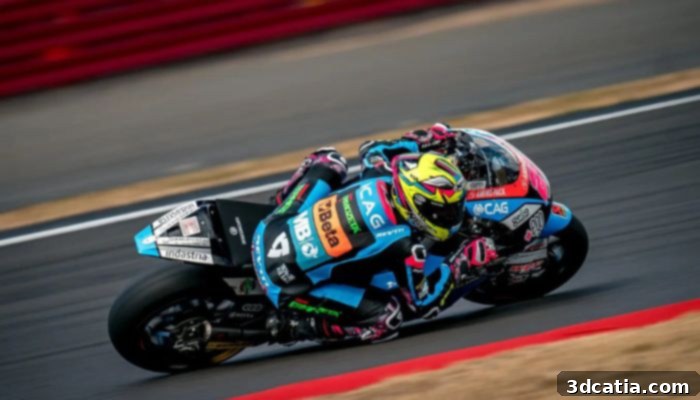
Photo Credits: Formlabs
Cara: The Elegance of VIBA’s Motorcycle Featuring Extensive 3D Printed Parts
VIBA, a distinguished French design studio, has carved a niche in the creation of exquisitely customized motorcycles. The company prides itself on designing each model to achieve a unique level of perfection, blending artistic vision with engineering precision. Among their impressive offerings is “Cara,” an exceptionally elegant black motorcycle named in homage to the renowned model Cara Delevingne. What truly sets Cara apart is its extensive integration of 3D printed components, demonstrating the vast possibilities of additive manufacturing in bespoke vehicle design.
For the development of Cara, VIBA collaborated with the esteemed French ERPRO Group to produce much of the bodywork. Utilizing advanced 3D printing techniques with polyamide material, they were able to craft complex, lightweight, and aesthetically pleasing panels that perfectly matched VIBA’s design intent. The rear fairing and the distinctive front mudguard were also meticulously designed and produced using additive manufacturing, showcasing the technology’s capability for large-format, detailed parts. The handlebars represent another impressive application: 3D printed in aluminum, they ingeniously incorporated the original BMW Nine-T Dashboard, along with a custom housing precisely tailored for optimal ergonomics and a seamless finish. Furthermore, the rear frame, a critical structural element, was also 3D printed, this time in robust steel. Cara stands as a prime example of how additive manufacturing can be strategically employed across various materials and functionalities, creating a harmonious blend of innovative technologies and sophisticated design within a single, extraordinary motorcycle.
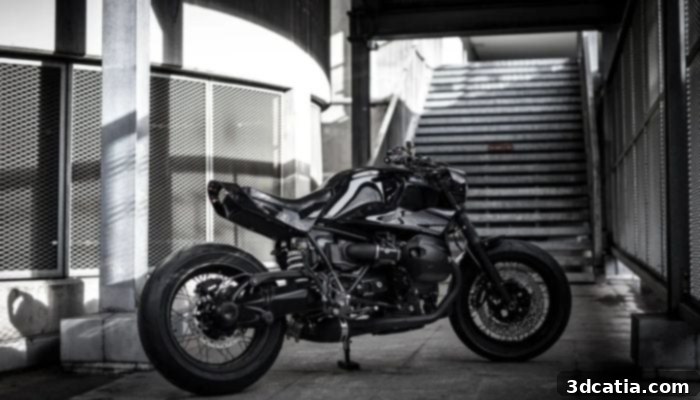
Photo Credits: VIBA
An Innovative 3D Printed Saddle for the Energica Ego Electric Motorcycle
Leveraging its profound expertise in Selective Laser Sintering (SLS) of reinforced composite materials, CRP Technology played a pivotal role in enabling Energica Motor Company to equip its high-performance Ego electric motorcycle with an advanced 3D printed seat. This strategic collaboration culminated in the creation of two functional prototypes, which subsequently underwent Energica’s rigorous certification tests. These prototypes were thoroughly evaluated for their ergonomic design, ease of assembly, and most critically, their performance during extensive on-road testing, ensuring they met the demanding standards of a premium electric motorcycle.
The innovative 3D-printed saddle comprised two distinct sections: a robust rigid frame and a flexible component designed for rider comfort. The frame presented a significant technical challenge, requiring a delicate balance of strength for structural integrity and flexibility to integrate seamlessly with the motorcycle’s chassis and rider’s movements. Furthermore, the design process had to meticulously consider aesthetic appeal, rider comfort, and overall maneuverability, especially given the crucial placement of the charging socket discreetly located beneath the seat. Thanks to its unparalleled expertise and state-of-the-art 3D printing technologies, specifically utilizing its proprietary Windform materials known for their superior mechanical properties, CRP Technology successfully engineered a compelling prototype. This achievement not only provided an optimal solution for the Ego but also considerably reduced the product development timeline, allowing for rapid iteration and functional testing that dramatically accelerated the path to market for this innovative component.
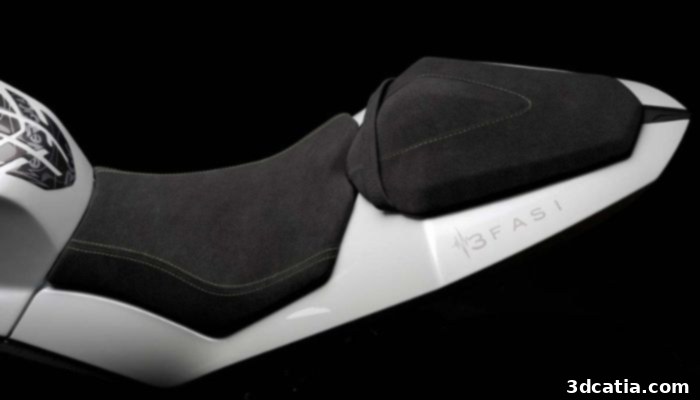
Photo Credits: Gianluca Muratori
The Customized Honda CBF 250 by Born Motor Co. Showcases 3D Printing Efficiency
BORN Motor Co., located in Calella, near Barcelona, has established itself as a specialist in the production of high-end, exquisitely deconstructed motorcycles. The integration of 3D printing into their workflow has dramatically revolutionized and accelerated their entire creative process, encompassing everything from initial design conceptualization and rigorous testing phases to the final manufacturing of bespoke components. By deploying the versatile BCN3D Sigma 3D printer, BORN engineers now possess the capability to produce functional, end-use parts using a diverse array of advanced materials, including durable nylon, robust PETG, and resilient ABS, catering to a wide spectrum of applications across their motorcycle designs.
This additive manufacturing technology has become an indispensable and integral part of the company’s operational framework. It empowers BORN’s designers to conceptualize and produce more intricate and complex parts than ever before, yielding substantial savings in terms of time, effort, and overall production costs. The efficiency gained through 3D printing allows the design team to reallocate valuable resources and focus their creative energies on higher value-added components and strategic design challenges. This optimization not only streamlines the development cycle but also significantly enhances the innovation and overall performance of the meticulously crafted motorcycles designed by BORN Motor Co., setting new benchmarks in custom bike manufacturing.
The Bespoke Kawasaki 966, Masterfully Customized by Mr Martini with 3D Printing
The renowned Italian customizer brand, Mr Martini, has consistently pushed the boundaries of motorcycle design, and their latest endeavor showcases a significant leap forward through the strategic exploitation of 3D printing technologies and the incorporation of high-performance additive materials. For the featured Kawasaki 966, Mr Martini forged a collaborative partnership with Fabula 3D and LATI3Dlab to meticulously create several key elements of the bike, most notably its distinctive bodywork.
To meticulously shape the bike’s side panels and other intricate internal components, the teams leveraged advanced carbon-fiber-reinforced filaments, specifically LATAMID 12 AM H2 K/15 and LATER G HT AM K/10. These specialized materials were chosen for their exceptional combination of strength and inherent flexibility, critical attributes for motorcycle components that must withstand various stresses while contributing to the vehicle’s aesthetic. Thanks to the collective expertise of these three partners, the resulting components are not only visually striking but also engineered for superior performance, exhibiting impressive resistance to both heat and deformation. This innovative application of 3D printing technology and its advanced material components has now become an essential and indispensable part of Mr Martini’s unique creative process, allowing for unparalleled design freedom and functional integration in their bespoke motorcycle projects.
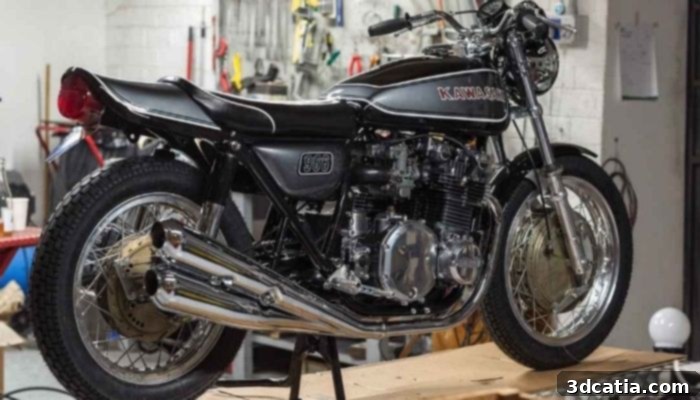
Photo Credits: LATI
“Light Rider”: The World’s Pioneering Fully 3D-Printed Motorcycle
APWorks, a wholly-owned subsidiary of the Airbus Group, has solidified its reputation as a true pioneer in the field of additive manufacturing. Demonstrating unparalleled innovation, APWorks designed what is widely recognized as the world’s first entirely 3D-printed motorcycle. This groundbreaking vehicle, aptly named the “Light Rider,” is constructed primarily from Scalmalloy®, an exclusive, high-performance material developed by APWorks. Weighing an astonishingly mere 35 kg, this project, while a testament to a long-standing vision, stands as one of the most significant achievements of its kind.
Through the strategic application of metal 3D printing combined with their innovative Scalmalloy® material, APWorks was able to engineer an ultralight frame weighing a mere 6 kg. This remarkable feat made the Light Rider approximately 30% lighter than conventional electric motorcycle models, drastically improving its power-to-weight ratio. Propelled by a powerful 6 kW electric motor, the Light Rider boasts impressive acceleration, capable of reaching 80 km/h in just a few seconds. Crucially, an advanced algorithm was employed to meticulously optimize the Light Rider’s intricate frame structure. This computational design process ensured maximum material efficiency, effectively reducing its overall weight while simultaneously guaranteeing more than sufficient resistance and structural integrity to withstand the dynamic stresses and demands of everyday riding, truly pushing the boundaries of what is possible in vehicle design and manufacturing.
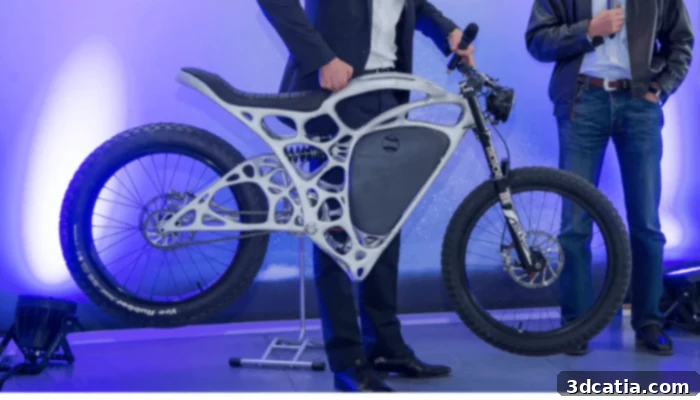
Photo Credits: Airbus
NERA: BigRep’s Visionary Fully 3D-Printed Electric Bike Prototype
Designed and brought to life by industrial 3D printer manufacturer BigRep, the NERA bike represents a genuine revolution in vehicle prototyping. Its name, derived from its sleek black aesthetic, perfectly suits its status as the world’s first electric bike prototype to be almost entirely 3D printed, remarkably composed of only 15 primary parts. Conceived by visionary designer Marco Mattia Cristofori, in close collaboration with BigRep’s expert team, NERA was engineered from the ground up as a highly functional, fully customizable, and truly innovative vehicle, showcasing the vast potential of large-format additive manufacturing.
Every single structural and aesthetic component of the NERA was specifically designed to be manufactured exclusively using BigRep’s state-of-the-art large-format FFF (Fused Filament Fabrication) 3D printers and its proprietary range of advanced materials. For instance, the handles, seat, tires, and bumpers were printed using flexible and durable TPU 98A, offering both comfort and resilience. Rigid structural parts were crafted from ProHT, while PLA was utilized to introduce vibrant color accents, and PETG was chosen for its light-reflecting properties in strategic areas. This ambitious project demonstrates the capability of BigRep’s technology to produce complex, multi-material functional prototypes. Only a handful of essential components, such as the electric motor, battery unit, crucial wiring, and intricate control systems, were not 3D printed, underscoring the nearly complete additive manufacturing approach taken for this groundbreaking electric bike.
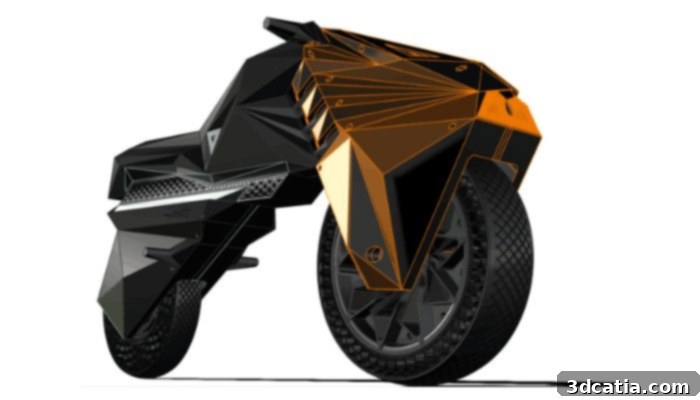
Photo Credits: BigRep
3D Printed Components Elevate E-Racer’s Rugged Electric Motorcycle
Among the innovative motorcycles making their mark in the contemporary market by integrating 3D printing into their manufacturing processes is E-Racer’s “Rugged” electric motorcycle. This remarkable vehicle was developed in a significant partnership with WASP, a company known for its expertise in large-format 3D printing. The Rugged underwent a comprehensive redesign, evolving from its original 2018 model to an optimized version slated for production and distribution in 2020. To drastically accelerate this redesign and production timeline, E-Racer strategically enlisted WASP to manufacture several key components of the bike.
WASP successfully 3D printed a range of critical parts, including the crankcase, the rider’s seat, the rear section, essential side frames, and the tank. The new design approach championed by 3D printing allowed for the simplification of complex component shapes, which not only improved the overall functionality and structural integrity of the bike but also significantly contributed to a reduction in the motorcycle’s total weight. The parts were meticulously 3D printed using durable ABS material, known for its impact resistance. Following printing, they underwent a precise sanding process and were then coated with a protective layer, ensuring enhanced durability and superior resistance to varying weather conditions. This collaboration vividly demonstrates how additive manufacturing can streamline design iterations, improve performance, and accelerate the commercialization of advanced electric vehicles.
The Distinctive V13 Bike by Vagabund Moto, Enhanced by 3D Printing
Vagabund Moto, an Austrian company renowned for its exceptional motorcycle customization, distinguishes itself through a profoundly modern and artistic approach to transforming classic two-wheelers. They specialize in converting traditional motorcycles into unique, avant-garde models, meticulously adhering to contemporary standards before offering them for sale. At the very core of their innovative manufacturing process lies the strategic integration of 3D printing, a technology that empowers them to achieve unparalleled precision and customization.
This advanced technology enables Vagabund Moto to design and produce bespoke components with incredible accuracy and design freedom, as exemplified in their captivating Honda NX650, affectionately christened “V13.” Utilizing Polyamide 12, a material celebrated for its strength, flexibility, and excellent surface finish, numerous critical parts were 3D printed. These included the distinctive fuel tank, the sculpted rear end, specialized air filter covers, custom switch housings, and precisely engineered blinker brackets. Thanks to the capabilities of additive manufacturing, Vagabund Moto consistently guarantees a flawless finish and seamless integration of these newly designed parts into every motorcycle they meticulously recreate. This approach beautifully marries traditional craftsmanship with cutting-edge technological innovation, resulting in motorcycles that are truly one-of-a-kind masterpieces, pushing the boundaries of custom vehicle design.
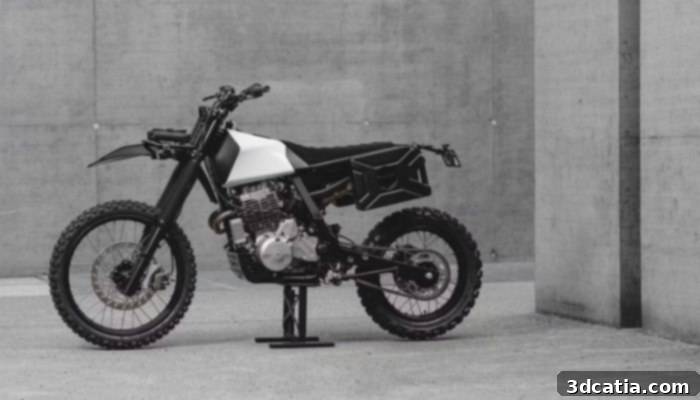
Photo Credits: Vagabun Moto
These examples clearly demonstrate how 3D printing and additive manufacturing are not just trends, but fundamental technologies reshaping the motorcycle industry. From enhancing performance and enabling unprecedented customization to accelerating development cycles and reducing costs, the benefits are undeniable. As materials and printing technologies continue to evolve, we can expect even more radical innovations in two-wheeled transportation.
What are your thoughts on these innovative 3D printed motorcycles and their revolutionary components? Let us know in a comment below or connect with us on our LinkedIn, Facebook, and Twitter pages! Don’t forget to sign up for our free weekly Newsletter here to get the latest 3D printing news delivered straight to your inbox. You can also find all our compelling videos on our YouTube channel. If your interest extends to more 3D printing news within the dynamic automotive and transportation sectors, we invite you to visit our dedicated page HERE.