
3D Printing Notre Dame: Concr3de’s Innovative Approach to Restoration with Ash and Stone
The devastating fire that engulfed Notre Dame Cathedral on April 15, 2019, left the world in shock and raised profound questions about the future of this iconic Parisian landmark. Beyond the immediate tragedy, the blaze presented an unprecedented challenge for preservationists and architects: how to faithfully and efficiently restore a structure steeped in nearly a millennium of history. In the wake of this catastrophe, Dutch stone 3D printer manufacturer Concr3de emerged with a groundbreaking proposal, suggesting the application of its advanced 3D printing technology to rebuild significant elements of the cathedral, including its renowned gargoyles. This innovative approach not only promises a pathway to restoration but also introduces a sustainable method that honors the cathedral’s past by incorporating the very materials affected by the fire.
Concr3de is no stranger to the intricate demands of historical heritage restoration using cutting-edge 3D technologies. Their impressive portfolio includes significant projects such as the reconstruction of elements of the Arch of Palmyra, a testament to their expertise in replicating complex historical structures with precision and authenticity. Building on this experience, the company put forward a compelling vision for Notre Dame: utilizing the ashes and debris from the fire itself as a key ingredient in 3D printing the lost architectural features. This proposition is not merely about replication; it’s about integrating the cathedral’s recent history into its future, creating a tangible link between the past and the present.
A Vision for Layered History and Accelerated Reconstruction
Eric Geboers, the visionary founder of Concr3de, articulated the philosophy behind their proposal in an interview with Dezeen. He recounted the somber moment when the cathedral’s spire collapsed, an event that galvanized their commitment to finding a meaningful solution. Geboers stated, “We saw the spire collapse and thought we could propose a way to combine the old materials with new technology to help speed up the reconstruction and make a cathedral that is not simply a copy of the original but rather a cathedral that would show its layered history proudly.” This statement encapsulates a core principle of their approach: to avoid a mere sterile replica and instead craft a restoration that respectfully acknowledges its journey, including the scars left by the fire. By embedding the fire’s remnants into the new fabric of the cathedral, Concr3de aims to create a living monument that tells its full story.
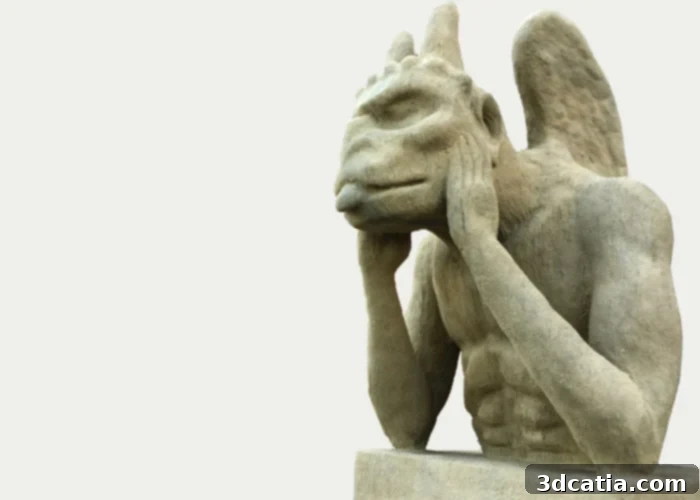
A 3D printed gargoyle showcasing Concr3de’s material and aesthetic capabilities for the Notre Dame restoration | Credits: Concr3de
Demonstrated Capability: Recreating Le Stryge
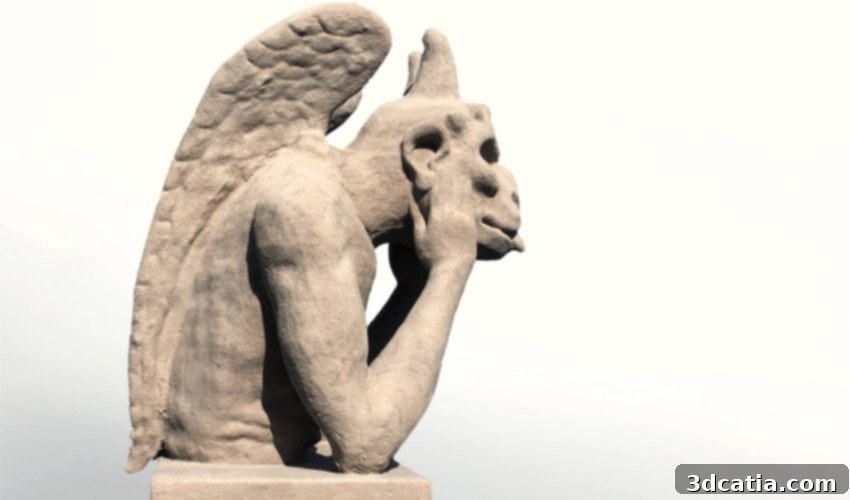
To underscore the feasibility of their ambitious plan, Concr3de had already taken proactive steps to demonstrate their capabilities. Prior to the fire, they utilized advanced 3D scanning techniques to precisely reproduce Le Stryge, one of the famous demonic statues perched atop the gothic cathedral in Paris. Le Stryge, a creation of the renowned 19th-century architect Eugène Viollet-le-Duc during his extensive restoration work on Notre Dame, is an iconic symbol of the cathedral’s intricate artistry and historical evolution. The material chosen for Concr3de’s replica was a carefully formulated mixture of limestone and ash, meticulously engineered to match the distinctive yellowish-grey hue of Notre Dame’s original stone. This successful recreation serves as compelling evidence that the company possesses both the technical prowess and the material expertise required for such a monumental undertaking. It proves that not only can they replicate complex architectural features with high fidelity, but they can also achieve material consistency and aesthetic accuracy that is crucial for historical preservation.
The Material Innovation: Reusing History for Restoration
The heart of Concr3de’s innovative proposal lies in its commitment to sustainable and historically informed material usage. The company proposes to create all the other lost parts of Notre Dame—from intricate carvings to structural elements—using a unique blend primarily composed of the cathedral’s own damaged stone, dust, and, crucially, ash from the fire. This approach moves beyond traditional restoration methods that might rely on newly quarried stone or synthetic materials, which, while functional, can sometimes detract from the original character and provenance of a historic site. By incorporating the actual remnants of the fire, Concr3de aims to imbue the reconstructed elements with an undeniable sense of continuity and authenticity. This method transforms destruction into a resource, echoing the very spirit of resilience that historical buildings often represent. The environmental benefit of this strategy is also significant, as it drastically reduces waste and minimizes the demand for new raw materials, aligning with modern sustainability practices in heritage conservation.
The Technical Process: Efficiency Through Additive Manufacturing
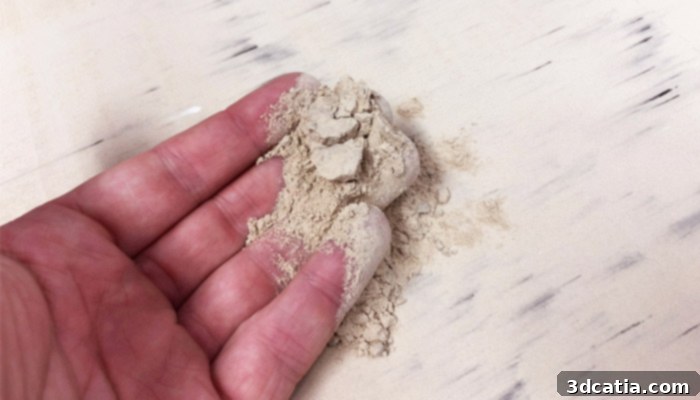
Elaborating on the technical execution of their vision, Eric Geboers provided a detailed insight into the 3D printing process. He explained, “We would crush and mix the stone and ash into a fine powder, that is loaded into a large inkjet 3D printer. The printer deposits thin layers of the powder and prints an ink on top of each layer, solidifying the powder to each other. Prints are then depowdered, and can immediately be put into the building.” This description outlines a binder jetting additive manufacturing process, where a liquid binding agent is selectively jetted onto a powder bed, layer by layer, to build a solid object. This method is particularly well-suited for creating complex geometries and offers several advantages for large-scale architectural restoration.
Key Advantages of Concr3de’s 3D Printing Approach:
- Rapid Reconstruction: Geboers emphasized the potential for speed, stating, “we could start reconstruction almost immediately, without need for new expensive and hard to find materials.” Traditional stone carving and fabrication are labor-intensive and time-consuming. 3D printing can significantly compress timelines for producing intricate components, accelerating the overall restoration effort.
- Resource Optimization: The ability to reuse existing debris as primary material eliminates the search for specialized quarries or the logistical challenges of transporting large volumes of new stone. This not only reduces costs but also minimizes the environmental footprint of the restoration.
- Reduced Labor Costs and Skill Requirements: “we also don’t need to train a large crew,” Geboers noted. While skilled artisans remain invaluable for certain aspects of restoration, 3D printing can automate the creation of many complex forms, thereby reducing the demand for highly specialized manual labor for repetitive or structurally challenging elements. This allows expert craftsmen to focus on areas where their unique skills are indispensable.
- Enhanced Durability and Precision: Modern additive manufacturing processes can achieve high levels of precision and material consistency, potentially leading to components that are structurally sound and accurately match the original designs based on digital scans.
- Community Engagement and Transparency: The proposal also envisions a restoration process that is more open and engaging. Geboers suggested, “The Notre-Dame would be able to reopen within several months, and people would be able to participate and interact with the restoration.” This innovative approach could allow the public to witness the reconstruction in real-time, fostering a deeper connection with the monument’s revival.
- Preservation of Embedded History: Perhaps most poignantly, Geboers highlighted, “We wouldn’t need to discard and waste the materials that have so much history embedded inside them, and can instead reuse them for the renovation.” This principle is central to their philosophy, ensuring that the historical essence of the cathedral is literally built back into its new form, preserving the memory and narrative of its past.
The Broader Impact: A Paradigm Shift in Heritage Restoration
Concr3de’s proposal for Notre Dame transcends mere technological application; it represents a potential paradigm shift in the field of heritage restoration. By demonstrating that destructive events like fires can provide raw materials for renewal, it champions a circular economy model within architectural conservation. This approach challenges conventional wisdom by integrating the very agents of destruction into the fabric of reconstruction, offering a powerful narrative of rebirth. The scale of the Notre Dame project, coupled with the global attention it commands, makes it a pivotal case study for future restorations of historical landmarks worldwide. If successful, this method could inspire similar initiatives, fostering more sustainable, efficient, and historically authentic preservation practices across diverse cultural heritage sites.
While over €1 billion has been pledged to rebuild Notre Dame, ensuring the restoration won’t be short of funds, the central issue facing architects and conservationists now revolves around the philosophical question of which version of the cathedral should be rebuilt. Should it be a faithful replica of its pre-fire state, an interpretation that incorporates modern elements, or, as Concr3de suggests, a restoration that proudly displays its layered history, including the fire’s remnants? The debate is complex, involving deep discussions about historical accuracy, artistic interpretation, and the role of modern technology in preserving cultural heritage. Concr3de’s innovative use of 3D printing and material recycling offers a compelling argument for a path that is both pragmatic and deeply respectful of the cathedral’s storied past.
For those interested in delving deeper into Concr3de’s visionary work and the specifics of their technology, more information can be found on their official website HERE. Additionally, the insightful interview with Eric Geboers that informed much of this discussion is available on Dezeen’s website HERE. These resources provide a comprehensive look at the intricate details and forward-thinking philosophy behind this ambitious restoration proposal.
Engage with the Future of Heritage Preservation
What are your thoughts on Concr3de’s pioneering proposal to leverage 3D printing technology for the Notre Dame restoration, incorporating the very ashes of the fire? Do you believe this innovative approach offers the best path forward for preserving and rebuilding such a crucial piece of world heritage? We invite you to share your perspectives and join the conversation on our Facebook and Twitter pages! Your insights are invaluable as we explore the intersection of technology and historical preservation. Don’t forget to sign up for our free weekly Newsletter, to stay updated with all the latest news, innovations, and discussions in the dynamic world of 3D printing, delivered straight to your inbox!