
Germany’s Additive Manufacturing Future at Risk: Industry Demands Reversal of Funding Cuts
Germany, a long-standing powerhouse of industrial innovation, faces a critical juncture regarding its commitment to additive manufacturing (AM), often referred to as 3D printing. Despite initial strong governmental declarations of support for this transformative technology, recent budget proposals have omitted crucial funding, sparking widespread alarm and fierce criticism from across the additive manufacturing industry. This surprising U-turn by the German government has drawn sharp rebukes from key players, including the organizers of Formnext – the world’s largest 3D printing trade fair – and numerous experts who warn of severe long-term consequences for Germany’s economic competitiveness and technological leadership.
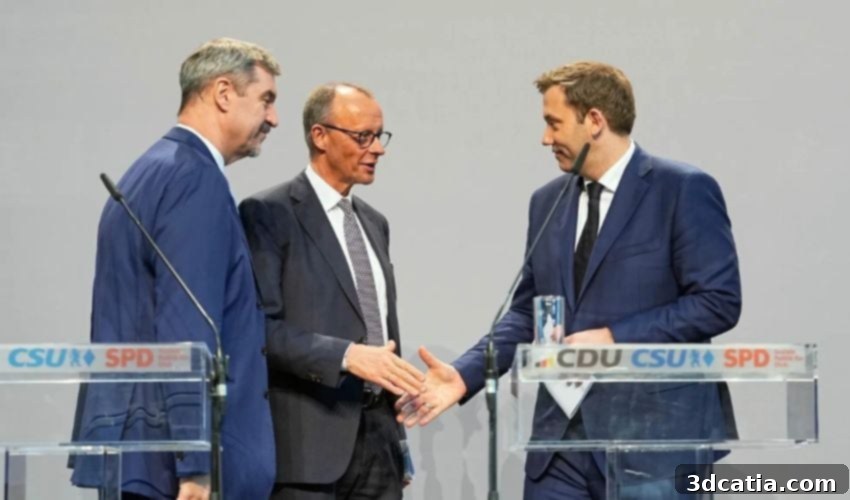
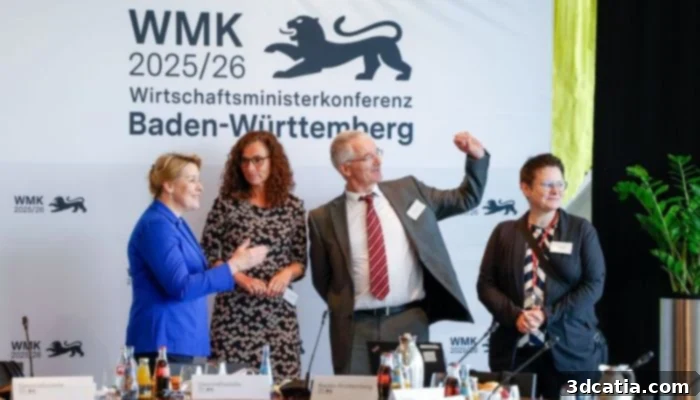
The controversy stems from the coalition agreement of the current government, formed by the CDU, CSU, and SPD under Chancellor Friedrich Merz. Early in their term, the government unequivocally stated, “We support lightweight technology, additive manufacturing, and 3D printing” as a cornerstone of their strategy to bolster the German economy. This commitment was explicitly outlined under the section “Innovation Boost for the Economy,” clearly indicating that additive manufacturing held a permanent and vital position on the government’s innovation agenda. This promising stance was further reinforced at a significant meeting of state economic ministers in Stuttgart, where minutes recorded, “The conference of economic ministers welcomes that the promotion of lightweight technologies, additive manufacturing, and 3D printing continues to be part of the federal policy objectives, which is an important signal that should now be backed up with concrete measures.” These consistent affirmations painted a clear picture of sustained government backing, fostering optimism within the industry for a strategic and well-funded future.
Formnext Leaders Raise Alarms Over German AM Industry’s Future
The recent unveiling of the government’s latest budget proposal has delivered an unexpected and unwelcome shock. Despite prior assurances, the document makes no specific mention of additive manufacturing, nor does it allocate additional funds under the term lightweight construction, a sector intrinsically linked with AM in previous drafts. Instead, the proposal limits funding to merely fulfilling “previous commitments” under the guise of “completion of the lightweight construction program.” This significant departure from earlier policy signals a concerning shift, leaving the additive manufacturing community to question the government’s dedication to an industry it previously championed.
As the highly anticipated Formnext trade fair approaches in Frankfurt, the sentiment among the German additive manufacturing community is increasingly one of dismay and urgency. Sascha Wenzler, Vice President of Formnext at Mesago Messe Frankfurt, articulated the industry’s profound disappointment, asserting that the German government is making a “critical mistake” that risks undermining the potential of numerous forward-looking technologies. Wenzler warned, “I see the world-leading position of the German AM industry at risk in the long term. This would certainly also affect the innovation capacity of many German industrial sectors.” His statement underscores the broader implications of these funding cuts, extending beyond the AM sector to impact the foundational innovative capabilities of German industry as a whole.
Christoph Stüpker, also a Vice President of Formnext, echoed Wenzler’s concerns, emphasizing the potential for Germany to lose ground to other industrial powerhouses like China and the United States. These nations are making substantial, long-term investments in additive manufacturing, recognizing its strategic importance. Stüpker stressed, “For German AM companies to continue enabling innovation across large parts of the industry, we also need government support for this sector, which is so important for the entire industry.” He highlighted that without robust government backing, German companies would struggle to maintain their competitive edge, innovate, and continue to serve as a vital engine for technological advancement across diverse industrial applications, from automotive to aerospace and medical technology.
The implications of this policy shift are vast. Additive manufacturing is not merely a niche technology; it is a fundamental pillar of Industry 4.0, offering unparalleled advantages in customization, design freedom, lightweighting, material efficiency, and localized production. These benefits contribute directly to increased economic resilience, reduced supply chain vulnerabilities, and enhanced sustainability goals. A withdrawal of support at this critical juncture could stifle research and development, deter private investment, and ultimately lead to a brain drain of talent to more supportive economies. Germany’s global leadership in mechanical engineering and high-tech manufacturing is intrinsically linked to its ability to adopt and master advanced technologies like AM. Losing momentum now could mean relinquishing a significant strategic advantage built over decades.
Urgent Calls for Reconsideration from Leading Industry Experts
This sudden change in government policy appears to align with the highly debated “debt brake,” a constitutional rule limiting federal borrowing. While fiscal responsibility is paramount, critics argue that applying such stringent measures to innovative, high-growth sectors like additive manufacturing is short-sighted and detrimental to long-term economic health. It risks replicating the “innovation deficits” observed in previous coalitions that prioritized austerity over strategic investment. Christian Seidel from the Munich University of Applied Sciences expressed the initial optimism, stating that there was significant hope “that additive manufacturing would receive systematic support both in the short and medium term in order to remain in the leading group in the global competition.” The current decision shatters this hope, leaving a void where proactive industrial policy should be.
The backlash from other prominent industry experts is equally robust. Markus Heering, Managing Director of the Additive Manufacturing Working Group at VDMA (Germany’s mechanical engineering industry association), underscored the foundational importance of AM. He emphasized, “For domestic machinery and plant engineering, innovations from industry and research, including advanced AM solutions, are extremely important. This is a key factor in developing technological leadership and maintaining Germany’s technological sovereignty. We therefore call for strong political commitment.” Heering’s statement highlights that AM is not an isolated technology but an enabler for Germany’s entire industrial ecosystem, driving advancements in mechanical engineering, which is a backbone of the German economy. The lack of government support could impede the progress of these interconnected industries, making Germany less competitive on a global scale.
The Global Race for Additive Manufacturing Dominance
While Germany debates its commitment, other nations are aggressively investing in additive manufacturing. Countries like China and the United States have recognized AM’s potential to revolutionize supply chains, create high-tech jobs, and enhance national security. Both governments have launched extensive initiatives, funding research, infrastructure, and workforce development to secure their leadership in this field. For instance, the U.S. has invested heavily through organizations like America Makes, focusing on public-private partnerships to accelerate AM adoption. China, in its “Made in China 2025” strategy, has identified AM as a priority, pouring significant resources into establishing a robust domestic 3D printing industry. Against this backdrop of international competition, Germany’s retrenchment sends a concerning signal, suggesting a willingness to cede its hard-earned advantages. This could result in German companies, once pioneers, becoming followers, relying on foreign technology and innovation.
A Call for Transparency and Strategic Investment
The ball is now in the court of the coalition government under Friedrich Merz. The industry’s unified and fervent demands for a reconsideration of this policy cannot be ignored. A transparent and comprehensive statement from the government is urgently needed, outlining its definitive plans to support lightweight technologies, additive manufacturing, and 3D printing. Such clarity is especially crucial as the industry gears up for its annual highlight, Formnext in November, where global eyes will be on Germany’s stance on AM innovation. Reassuring the industry of a long-term strategy, backed by concrete funding and policy measures, would not only alleviate current concerns but also reinforce Germany’s reputation as a reliable and forward-thinking industrial leader. Failure to do so risks isolating Germany’s AM sector and jeopardizing its critical role in the nation’s economic future. For those interested in the foundational coalition agreement, an English version can be accessed HERE.
What are your thoughts on the AM industry’s strong criticism of the German government’s funding decisions? Share your perspective in a comment below or engage with us on our LinkedIn or Facebook pages! Don’t forget to subscribe to our free weekly Newsletter to receive the latest 3D printing news directly in your inbox. You can also explore all our videos on our YouTube channel. For more insights into 3D printing advancements within the aerospace and defense sectors, visit our dedicated page HERE.
Cover Image Credit: Michael Kappeler | dpa