
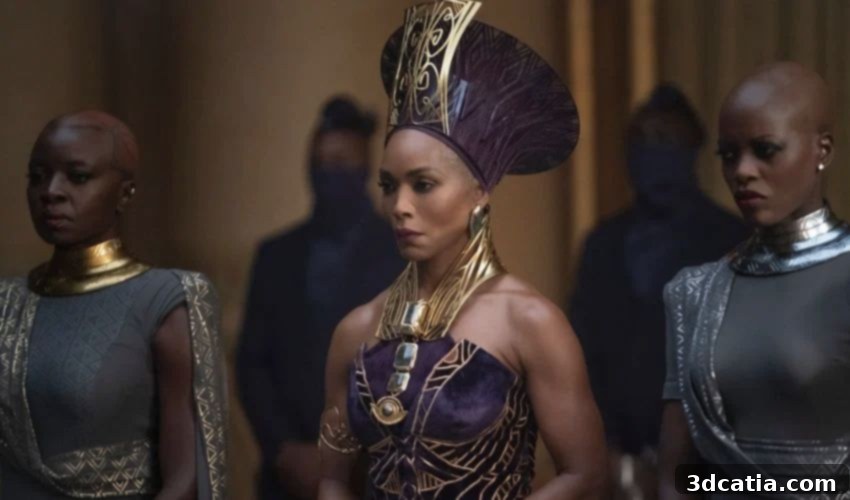
3D Printing in Film: Crafting Iconic Costumes for Black Panther’s Wakanda
The magic of cinema often lies in its ability to transport audiences to fantastical worlds, and at the heart of this illusion is an intricate tapestry of storytelling, visual effects, and groundbreaking technology. Among the most exciting applications of modern innovation in filmmaking is the integration of 3D printing, a revolutionary process that is redefining the creation of props, sets, and, most notably, elaborate costumes. Movie enthusiasts worldwide have undoubtedly been captivated by Marvel’s ‘Black Panther: Wakanda Forever,’ a cinematic triumph that quickly garnered immense popularity shortly after its release. Beyond its compelling narrative and powerful performances, the film’s visual grandeur, particularly its stunning array of costumes, has left an indelible impression. These garments are not just aesthetically pleasing; they are triumphs of design and engineering, often featuring intricate details that are partially realized through cutting-edge 3D printing technology.
Leading this innovative charge is the acclaimed Austrian designer Julia Koerner, a visionary celebrated for her work that seamlessly melds the disciplines of architecture, advanced 3D technology, and high fashion design. Koerner’s distinctive approach has earned her numerous accolades and a formidable reputation within both the design and technological communities. Given her unparalleled expertise in merging digital fabrication with wearable art, it comes as no surprise that she was enlisted for the Black Panther films, a cornerstone of the Marvel cinematic universe, to bring these extraordinary costumes to life. Her involvement underscores a growing trend in Hollywood: leveraging additive manufacturing to achieve creative visions previously deemed impossible or prohibitively complex.
The production of ‘Black Panther: Wakanda Forever’ marked a significant renewed collaboration between Julia Koerner and the Oscar-winning costume designer Ruth Carter. Carter, an icon in her field, is renowned for her profound influence on cinematic aesthetics, particularly her groundbreaking work in bringing Afrofuturism to the big screen – an achievement for which she rightfully earned an Academy Award. Together, Koerner and Carter formed a formidable team, pooling their respective talents to craft some of the film’s most eye-catching and impressive costume pieces. Their collective genius culminated in the design and production of a magnificent 3D-printed crown and a complementary necklace, pivotal accessories worn by Angela Bassett, who delivers a powerful performance as Queen Ramonda. These pieces are not merely decorative; they serve as critical elements in defining Queen Ramonda’s regal stature and the advanced, technologically sophisticated culture of Wakanda.
For many ardent Marvel fans and enthusiasts of additive manufacturing (AM), the integration of 3D printing in ‘Wakanda Forever’ was less of a surprise and more of an anticipated continuation. The predecessor to this 2022 sequel, the critically acclaimed 2018 film ‘Black Panther,’ also extensively utilized 3D printing technology for its most iconic costumes. In the original film, Queen Ramonda’s grand crown, a symbol of her authority and grace, alongside her elaborate shoulder coat, were similarly brought to fruition through advanced 3D printing techniques. This consistent adoption across both films highlights additive manufacturing’s proven value and indispensable role in achieving the desired futuristic aesthetic and intricate detailing that define Wakanda’s visual identity. It demonstrates that 3D printing is not just a passing trend but a core methodology for creating unparalleled cinematic experiences.
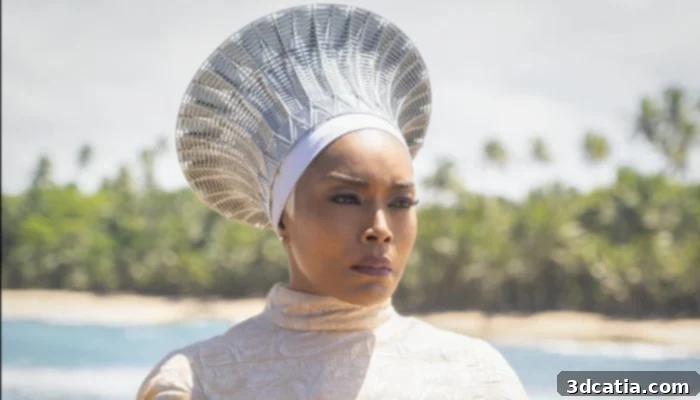
The crown from the 2018 film was also additively manufactured by Koerner (Image: Marvel/ Disney)
3D Printing: Revolutionizing Movie Costumes and Prop Design
As previously detailed, the 2022 cinematic release of ‘Black Panther: Wakanda Forever’ continued the tradition of incorporating elaborately 3D-printed components into its breathtaking costumes. The collaborative synergy between Julia Koerner and Ruth Carter, the latter an Oscar recipient for her visionary work in popularizing Afrofuturism on the big screen, proved instrumental. Their reliance on advanced digital design technologies allowed them to conceptualize and execute highly complex and intricate designs that would be virtually impossible to achieve with traditional crafting methods. These sophisticated designs were then brought to life through additive manufacturing, specifically utilizing the selective laser sintering (SLS) process. SLS is a powerful powder bed fusion technique that builds objects layer by layer from a bed of powdered material, fused by a high-power laser. This method is particularly valued for its ability to produce parts with exceptional detail, intricate geometries, and robust mechanical properties, making it ideal for the demanding requirements of film production.
While the specific 3D printer employed for the creation of the ‘Wakanda Forever’ elements remains undisclosed, it is worth noting Koerner’s prior experience. In previous projects, she has successfully utilized high-performance machines like the J750 3D printer from Stratasys to produce her intricate parts. Such advanced multi-material printers demonstrate the capabilities available to designers seeking unparalleled detail and color fidelity in their 3D prints. The fundamental reason behind Marvel’s decision to embrace additive manufacturing for pieces like Queen Ramonda’s crown and necklace is straightforward yet profound: these items possess an extremely complex structural integrity and level of detail that traditional manufacturing methods simply could not replicate with the desired precision, efficiency, or aesthetic quality. Conventional techniques, such as hand-sculpting, molding, or even advanced metalworking, often face limitations in creating hollow, lattice-like, or organic forms that additive manufacturing excels at.
Once again, Julia Koerner and Ruth Carter masterfully showcased the immense power of integrating costume design, digital design, and 3D printing. Their synergistic collaboration effectively demonstrates that these three disciplines, when working in perfect concert, deliver a multitude of unparalleled benefits to the film industry. These advantages span the entire production pipeline, from the initial conceptualization and iterative design stages to the final fabrication and eventual wear by the actors on set. The ability to rapidly prototype, test different iterations, and achieve a perfect fit tailored to the performer’s body geometry significantly streamlines the creative process. Moreover, 3D printing allows for the creation of lightweight yet durable pieces, crucial for actors who must perform stunts or wear elaborate costumes for extended periods. This fusion of artistry and technology not only pushes the boundaries of visual storytelling but also enhances the comfort and practicality for those bringing these characters to life.
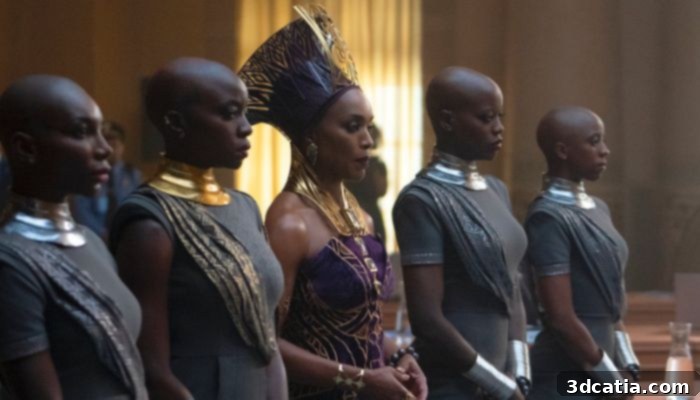
The crown and necklace were also 3D-printed for the new film (Image: Marvel/ Disney)
Beyond the immediate benefits of intricate design and structural complexity, 3D printing offers broader implications for the future of film production. It liberates designers from the constraints of traditional materials and manufacturing processes, fostering unprecedented creative freedom. This freedom allows for the visualization and realization of truly imaginative concepts, contributing significantly to world-building and character authenticity, especially in genres like science fiction and fantasy. For Black Panther, the use of such advanced manufacturing techniques perfectly aligns with Wakanda’s identity as a technologically superior nation, making the costumes themselves a narrative element. They are not just clothes; they are an extension of the culture and innovation they represent, enhancing the immersive experience for the audience.
The rapid prototyping capabilities of 3D printing also play a critical role in meeting the tight deadlines inherent in film production. Designers can quickly iterate on designs, make adjustments based on feedback from directors or actors, and produce final pieces with remarkable speed. This agility prevents costly delays and allows for greater artistic refinement within a constrained timeline. Furthermore, for unique, one-off pieces like a queen’s crown, 3D printing can often be more cost-effective than commissioning highly specialized artisanal handcrafting, which might involve expensive custom molds or intricate manual labor for every minute detail. The ability to produce durable and aesthetically perfect props and costumes on demand signifies a major leap forward for the industry.
As technology continues to advance, we can anticipate even more sophisticated applications of 3D printing in filmmaking. From wearable electronics seamlessly integrated into fabrics to smart costumes that react to environmental changes or actor movements, the potential is boundless. The success of collaborations like that between Julia Koerner and Ruth Carter in the Black Panther universe serves as a powerful testament to the transformative potential of additive manufacturing. It underscores how this innovative technology is not only enhancing the visual splendor of films but also empowering storytellers to bring their most ambitious visions to life with unparalleled detail and authenticity, ultimately enriching the cinematic experience for audiences worldwide. The integration of digital design and physical production has become an indispensable tool in the modern filmmaker’s arsenal, promising a future where the only limit is imagination itself.
Have you had the opportunity to witness the new Marvel movie and marvel at the intricate 3D-printed elements within? We invite you to share your thoughts and reactions in a comment below! You can also join the conversation and connect with us on our vibrant social media platforms, including LinkedIn, Facebook, and Twitter. Don’t miss out on the latest advancements and news in the world of 3D printing; remember to sign up for our free weekly Newsletter here, ensuring that all the cutting-edge developments are delivered straight to your inbox! For visual enthusiasts, you can also explore all our insightful videos and exclusive content on our dedicated YouTube channel. Stay informed, stay connected, and keep exploring the incredible possibilities of additive manufacturing!
*Cover photo credits: MARVEL / DISNEY 2022