
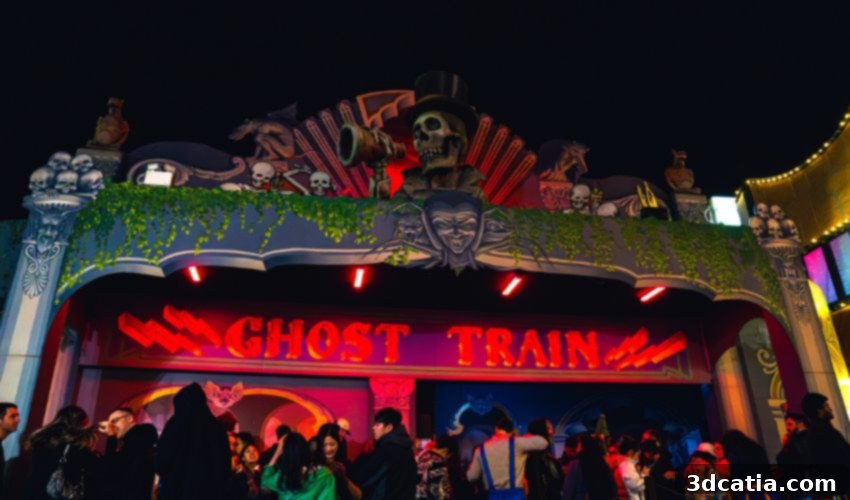
Reviving a Spooky Icon: How 3D Printing Transformed Luna Park Melbourne’s Historic Ghost Train for Its 90th Anniversary
Luna Park Melbourne, an enduring symbol of joy and wonder in Australia, first opened its iconic mouth entrance to eager visitors in 1912, making it one of the oldest continually operating amusement parks in the world. While its origins trace back to 1912, one of its most cherished and enduring attractions, the Ghost Train, has been terrifying and delighting guests since its debut in 1934. For decades, it has stood as a beacon of classic amusement park thrills, offering a unique journey through shadowy realms filled with ghastly ghouls, chilling scares, and unexpected surprises. Today, this historic dark ride holds a special place, being one of the only original attractions of its kind still in operation globally. As Luna Park celebrated a significant milestone – the Ghost Train’s 90th anniversary – the park embarked on an ambitious refurbishment project, ensuring this beloved spooky adventure remains thrilling and relevant for generations to come, just in time for the Halloween season.
A Legacy of Spooks: The Ghost Train’s Enduring Appeal
The Ghost Train at Luna Park Melbourne is more than just a ride; it’s a treasured institution, deeply embedded in the cultural fabric of Melbourne. From the moment visitors step aboard the eerie train cars, they are whisked away into a world of suspense and fright. Each turn and drop reveals meticulously crafted scenes, designed to evoke a sense of nostalgic terror. The ride’s unique charm lies in its commitment to traditional dark ride mechanics, providing an immersive experience that has captivated millions over its long history. Its longevity is a testament to its timeless appeal, a blend of classic scare tactics and an undeniable sense of fun that transcends generations. Preserving this legacy while enhancing the experience for modern audiences was the core challenge and inspiration behind its recent revitalization.
Modernizing a Classic: The Vision Behind the Renovation
Leading the charge for this ambitious renovation was acclaimed designer Edward Felix, tasked with the delicate balance of honoring the past while injecting new life into the beloved attraction. Felix’s vision embraced a groundbreaking approach, seamlessly combining cutting-edge 3D printing technology with traditional hand-crafting techniques. This innovative blend was crucial not only for achieving intricate details and creative freedom but also for working within the practical constraints of budget and timeline. The project aimed to deliver an updated experience that felt both fresh and familiar, ensuring the Ghost Train retained its unique spirit while meeting contemporary expectations for immersive entertainment.
The Power of Additive Manufacturing: Bambu Lab’s Crucial Contribution
At the heart of this modern makeover was the strategic application of 3D printing, a technology that proved indispensable for realizing Felix’s intricate designs. Bambu Lab, a leader in the additive manufacturing space, supplied the advanced 3D printers that became the workhorses of the project. Their Bambu Lab X1C printers, renowned for their precision and multi-color FFF (Fused Filament Fabrication) capabilities, allowed Felix and his team to push the boundaries of creativity and efficiency. The ability to rapidly prototype and produce highly customized components was a game-changer, demonstrating how additive manufacturing can revolutionize the preservation and enhancement of historical attractions.
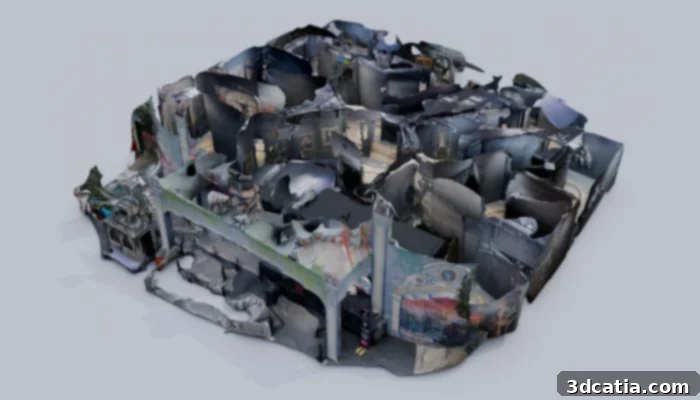
The 3D scan of the Ghost Train ride, crucial for the redesign process.
The renovation process began with a meticulous 3D scan of the entire Ghost Train ride. This critical first step allowed the design team to create a comprehensive digital twin, a precise virtual model of the attraction. Working with this digital representation offered unparalleled flexibility, enabling them to experiment with various redesign concepts without consuming physical resources or committing to costly errors. This virtual playground ensured that every new element and modification could be perfected digitally before any material was printed, significantly streamlining the design and production workflow. Once the digital designs were finalized and approved, the physical transformation began in earnest, bringing the conceptual plans to vivid life.
The versatility of the Bambu Lab X1C printers truly shone throughout the project. Using FFF technology, which is known for its ability to produce robust and detailed parts, Felix’s team crafted an astonishing array of elements for the ride. This included intricately designed gas lamp sconces that now cast an eerie, atmospheric glow, elaborate candelabras that add a touch of gothic elegance to the spooky scenes, and custom cases for LED lighting that enhance the visual effects with modern efficiency. Perhaps one of the most remarkable feats of 3D printing was the creation of an entire faux library, complete with hundreds of custom-designed book spines, shelves, and decorative elements. Each item, from the smallest detail to larger set pieces, was printed with precision, showcasing the immense potential of 3D printing for theme park attractions.
Edward Felix elaborated on the profound impact of 3D printing on the project, highlighting benefits far beyond mere customization. “Using Bambu Lab 3D printers allowed us to create an entirely new set of experiences for the ride while ensuring all parts were easy to maintain and replace,” Felix stated. This ease of maintenance and replacement is a critical advantage for amusement park attractions, where wear and tear are constant considerations. The durability and replicability of 3D printed parts mean that future repairs will be significantly simpler and more cost-effective. Felix further explained the tireless contribution of the printers: “The printers worked tirelessly, producing everything from custom book spines in the new library scene to realistic candle holders and even structural elements hidden from view.” This underscores the technology’s ability to create both visible aesthetic components and crucial underlying structures, all with unprecedented efficiency and design freedom.
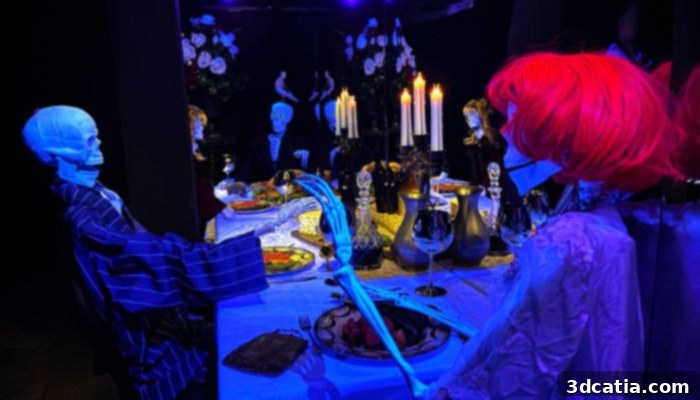
One of the revitalized Ghost Train sets, showcasing intricately 3D printed candelabras.
A Symphony of Old and New: Hand-Crafted Details and Heritage Preservation
While 3D printing provided the foundation for customization and efficiency, the project also deeply respected the Ghost Train’s heritage by incorporating traditional artistry. Felix’s team brought in skilled artisans to add a crucial hand-crafted touch, ensuring the renovated ride retained its authentic, vintage charm. Painters meticulously hand-painted wallpaper patterns, crafting bespoke spooky portraits, and detailed scenic pictures that seamlessly blended with the new 3D printed elements. This thoughtful fusion of innovative technology and time-honored techniques was paramount to preserving the very spirit of the Ghost Train. It allowed the ride to evolve while maintaining the nostalgic aesthetic that fans have cherished for decades.
Felix himself articulated the profound significance of this approach: “Revitalizing the Ghost Train was a rare opportunity to honor a historical treasure while injecting new life into it.” This philosophy guided every decision, from the choice of colors to the thematic elements. “We wanted to stay true to the ride’s roots while ensuring it remains an exciting experience for guests of all ages,” he added. This commitment to both preservation and innovation ensures that the Ghost Train will continue to enchant a new generation of visitors, offering both a glimpse into the past and a taste of future possibilities in entertainment design.
The Impact and Future of Heritage Attractions
The successful renovation of the Ghost Train has been met with widespread acclaim. Nathan Klassen, CEO of Luna Park Melbourne, expressed his profound appreciation for the project, emphasizing its broader significance. “This renovation is more than just an update – it’s a celebration of Luna Park’s rich history and a commitment to keeping that history alive in a way that modern audiences can appreciate,” Klassen remarked. He added, “We’re thrilled to have worked with Edward and his team on this project.” His words underscore the delicate balance achieved: modernizing an attraction without losing its soul. This project sets a powerful precedent for how other historical amusement parks and cultural institutions can leverage advanced technologies like 3D printing to preserve their heritage while enhancing their appeal.
The challenges of maintaining aging rides are immense, often involving sourcing obsolete parts or undertaking costly custom fabrication. The Ghost Train project demonstrates that additive manufacturing offers a viable, cost-effective, and highly customizable solution to these issues. By enabling the rapid production of bespoke parts and intricate set pieces, 3D printing extends the lifespan of beloved attractions, making their continued operation more sustainable. It bridges the gap between traditional craftsmanship and modern demands, ensuring that iconic rides like the Ghost Train can continue to create memories for decades to come. This fusion of heritage preservation and cutting-edge technology not only safeguards the past but also paves the way for a more innovative future for amusement park design and historical restoration.
What are your thoughts on the team’s innovative use of additive manufacturing for preserving and enhancing historical attractions? Let us know in a comment below or share your views on our LinkedIn, Facebook, and Twitter pages! Don’t forget to sign up for our free weekly newsletter here for the latest 3D printing news straight to your inbox! You can also find all our videos on our YouTube channel, offering deeper dives into fascinating applications of 3D technology.
*All Photo Credits: Edward Felix