
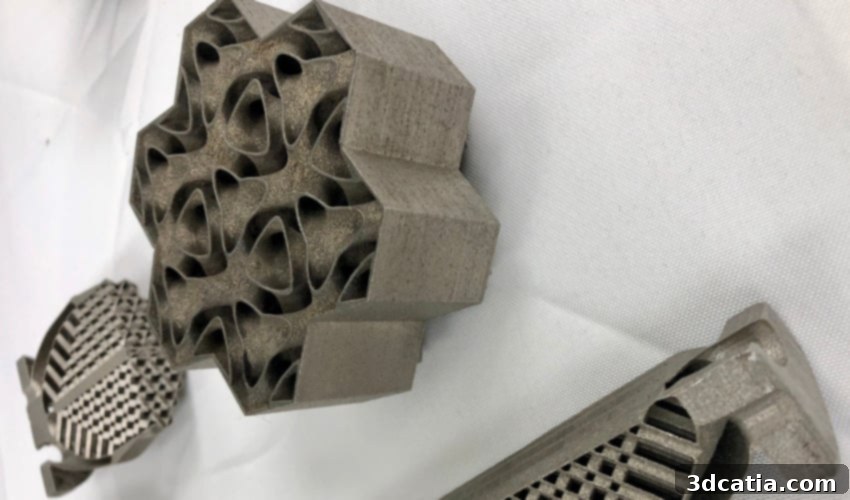
Revolutionizing Water Access: How DARPA and GE are Harnessing 3D Printing to Extract Potable Water from Thin Air for Global Challenges and Military Needs
Access to fresh, potable (drinkable) water stands as one of the most pressing humanitarian and logistical challenges confronting millions across our planet today. This critical issue is particularly acute in arid regions, many of which are now grappling with exacerbated water stress as global warming drives temperatures relentlessly upward, accelerating desertification. Yet, beyond the immediate human impact, this looming crisis holds significant implications for an arguably surprising stakeholder: the United States military. Recognizing the profound operational and strategic hurdles posed by water scarcity, the Defense Advanced Research Projects Agency (DARPA) has taken a decisive step. DARPA awarded General Electric Company (GE) a substantial $14.3 million grant to spearhead a groundbreaking four-year initiative under its Atmospheric Water Extraction (AWE) program. The ambitious goal of this project, christened AIR2WATER, is to engineer a prototype system capable of literally conjuring water out of thin air, promising a transformative solution for water-stressed environments. This innovative endeavor will leverage a sophisticated blend of cutting-edge additive manufacturing techniques, novel material science innovations, and advanced thermal processes.
The scale of the global water crisis is staggering, underscored by sobering statistics. According to the World Wildlife Fund, a staggering “1.1 billion people do not have access to water and approximately 2.7 billion experience instances of water scarcity.” This dire situation is not merely a contemporary problem; it is projected to worsen dramatically in the coming decades, propelled by escalating global temperatures, expanding desertification, and surging population demands. The ramifications extend far beyond civilian populations, posing an immense challenge for military operations. For the U.S. military, ensuring a consistent supply of clean, safe water for troops deployed in remote or hostile environments, as well as for critical humanitarian missions, presents a monumental logistical nightmare. Transporting water often necessitates extensive air and ground vehicle convoys traversing vast distances and treacherous terrain. This arduous task not only consumes a disproportionate amount of resources but also incurs an exorbitant financial cost, reportedly accounting for about one-third of the Department of Defense’s (DoD) entire budget. Furthermore, the act of acquiring and transporting water is fraught with danger. A chilling report by the AEPI revealed that 10-12% of U.S. Marine Corps casualties in Iraq and Afghanistan were directly attributable to missions involving the movement of fuel and water. Given these severe logistical, financial, and human costs, the development of innovative, self-sustaining methods for providing potable water is not merely a convenience but a paramount national security priority, thus forming the compelling impetus behind DARPA’s AWE program.
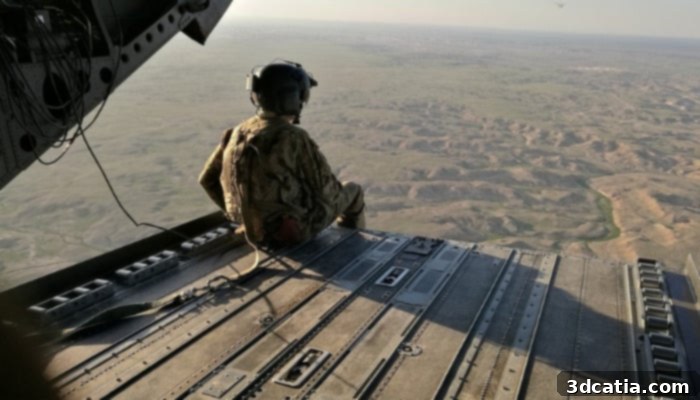
The AIR2WATER device aims to provide soldiers with critical access to potable water in challenging arid areas.
GE and the Groundbreaking AIR2WATER Device: Innovation in Atmospheric Water Extraction
The envisioned solution to this global and military predicament is the AIR2WATER project, an acronym standing for “Additively Manufactured, Integrated Reservoir to Extract Water using Adsorbents and Thermally-Enhanced Recovery.” For this significant $14.3 million endeavor, GE is tasked with designing and developing a prototype that is not only highly efficient but also compact and lightweight enough to be easily carried by soldiers, enabling its deployment and use even in forward operating bases. This revolutionary device will generate potable water by leveraging advanced sorbent materials – substances specifically engineered to absorb or adsorb liquids or gases from the surrounding atmosphere. Once these materials have captured sufficient moisture, a uniquely designed, additively-manufactured heat exchanger will apply controlled thermal energy. This heat causes the sorbent materials to release the absorbed water vapor, which is then condensed into liquid, ready for consumption. This sophisticated cycle promises a reliable source of water in environments where traditional methods are unfeasible. To achieve this ambitious feat, GE has assembled a multidisciplinary team, collaborating with distinguished scientists and engineers from the University of California at Berkeley, the University of Chicago, and the University of South Alabama. The ultimate goal for the AIR2WATER prototype is to produce a sufficient daily supply of water to sustain approximately 150 troops, drastically reducing the logistical burden and risks associated with water transportation.
Additive manufacturing, more commonly known as 3D printing, is poised to be an absolutely critical component at the heart of the AIR2WATER project’s success. GE researchers will play a pivotal role, not only in the development of the physical hardware but also in leading the overall system integration. This involves seamless coordination with the broader project team, which is dedicated to crucial aspects such as advanced material development, precise modeling of mass transfer and absorption kinetics, and the integration of artificial intelligence for optimized performance. A particular focus for GE will be the intricate 3D design and the subsequent integration of the specialized sorbent materials directly into the additively-manufactured heat exchangers. The inherent advantages of 3D printing—such as the ability to create complex geometries, optimize internal structures for enhanced thermal transfer, and produce lightweight, consolidated components—are indispensable for building an efficient and portable device. GE boasts extensive and significant experience in this domain, having established itself as a prominent leader within the Aerospace manufacturing sector, particularly through its groundbreaking additive manufacturing projects. Their expertise in designing and producing mission-critical components for engines and aircraft through 3D printing provides a solid foundation for the innovative engineering required for AIR2WATER’s unique heat exchange system. This deep well of experience will be crucial in pushing the boundaries of what is possible in atmospheric water extraction technology.
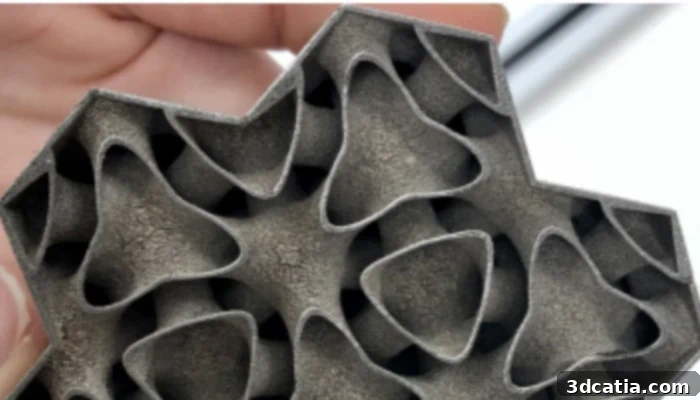
Additively manufactured heat exchangers being printed at the Additive Manufacturing Lab at GE Research, a key component of the AIR2WATER prototype (photo credits: GE Research).
Additive Manufacturing and its Expanding Role in Military Strategy
The U.S. military’s interest in the transformative potential of 3D printing is not a recent development, and the AIR2WATER project is merely the latest illustration of a broader strategic shift. The defense sector has increasingly recognized additive manufacturing as a game-changer for enhancing operational readiness, streamlining logistics, and improving supply chain resilience. For example, Xerox recently announced that its innovative liquid metal 3D printer, ElemX, was adopted by the Naval Postgraduate School (NPS) in California. This acquisition is part of a joint research project aimed at exploring new additive manufacturing capabilities specifically tailored for the Navy and Marine Corps. A key objective is to enable the rapid fabrication of replacement parts for critical equipment and even entire ship components while vessels are deployed far out at sea, drastically reducing downtime and dependence on traditional supply chains. This capability for on-demand manufacturing in austere environments is invaluable.
Similarly, the U.S. Air Force (USAF) has proactively forged strategic partnerships over the past year with leading additive manufacturing companies, including GE, Essentium, and Optomec. These collaborations are designed to accelerate the development of novel applications for AM technologies, particularly in the maintenance and rapid creation of spare parts for their extensive aircraft fleets. The ability to produce complex components on demand, at the point of need, offers significant advantages in reducing inventory costs, accelerating repair cycles, and ensuring the continued operational readiness of vital assets. Beyond these specific examples, the broader implications of additive manufacturing for military strategy are vast. It enables the customization of gear for individual soldiers, accelerates prototyping for new weapon systems, and supports the development of more durable and lightweight equipment. This technology provides an unparalleled ability to rapidly innovate and adapt to evolving threats and operational requirements.
The Broader Impact and Future of Atmospheric Water Extraction
The AIR2WATER project is emblematic of a wider trend within the U.S. military to embrace cutting-edge technologies to solve complex challenges. As global climate patterns continue to shift and water resources become increasingly strained, solutions like atmospheric water extraction will become not just valuable, but essential. The success of the AIR2WATER prototype, especially its potential to supply 150 troops daily with potable water, could redefine military logistics and significantly mitigate the risks associated with water transport in conflict zones or disaster relief operations. The technology’s compact and lightweight design, facilitated by advanced additive manufacturing, makes it ideal for deployment in remote or austere environments where traditional water infrastructure is non-existent or compromised.
Furthermore, the innovations stemming from DARPA’s AWE program and GE’s leadership in the AIR2WATER project have immense potential beyond military applications. Scaled-down or adapted versions of this technology could provide sustainable, decentralized access to clean drinking water for civilian populations suffering from chronic water scarcity, particularly in developing nations or regions affected by natural disasters. Imagine communities in arid zones no longer solely dependent on unreliable rainfall or distant, contaminated sources, but rather equipped with devices that literally pull life-sustaining water from the air around them. This represents a paradigm shift in how we approach global water security, offering a beacon of hope for millions. The synergy between government-funded advanced research, private sector innovation, and academic collaboration is driving forward solutions that address some of humanity’s most urgent needs. This latest research project is just one of many pivotal initiatives being spearheaded by the U.S. military as they delve deeper into how additive manufacturing applications can be optimally integrated and utilized across various operational fields, from maintaining complex machinery to ensuring the fundamental survival needs of deployed personnel. You can find out more information about the AIR2WATER project HERE.
What are your thoughts on this groundbreaking project and the potential of extracting water from thin air? Share your insights and opinions in a comment below or join the conversation on our Facebook, Twitter and LinkedIn pages! Don’t miss out on the latest advancements in 3D printing and related technologies—sign up for our free weekly Newsletter here and get the most current 3D printing news delivered straight to your inbox!
Thumbnail photo credits: GE Research