
NematX Pioneers Next-Generation High-Performance 3D Printing with Liquid Crystal Polymers
Additive manufacturing has transformed countless industries, offering unparalleled design freedom, rapid prototyping capabilities, and the potential for on-demand production. Plastics, owing to their inherent advantages such as cost-effectiveness, exceptional versatility, and natural water resistance, have naturally become highly favored materials within this evolving landscape. They find diverse applications, serving as filaments for Fused Deposition Modeling (FDM), fine powders for Selective Laser Sintering (SLS), and specialized resins for Stereolithography (SLA). However, despite their widespread use, the primary application for many conventional plastics in 3D printing has historically been limited to prototyping. This limitation arises because standard plastics often lack the mechanical strength, thermal stability, and environmental resistance required for demanding end-use components.
Recognizing this critical gap, there’s a growing imperative within the additive manufacturing sector to transcend prototype development and enable the creation of functional, durable end-use parts. This drive has spurred innovation, leading to the development of advanced, high-performance plastics specifically engineered to meet the stringent requirements of various industries. Among the innovative players at the forefront of this evolution is NematX, a dynamic startup founded in 2020, dedicated to pushing the boundaries of what’s possible with polymer additive manufacturing.
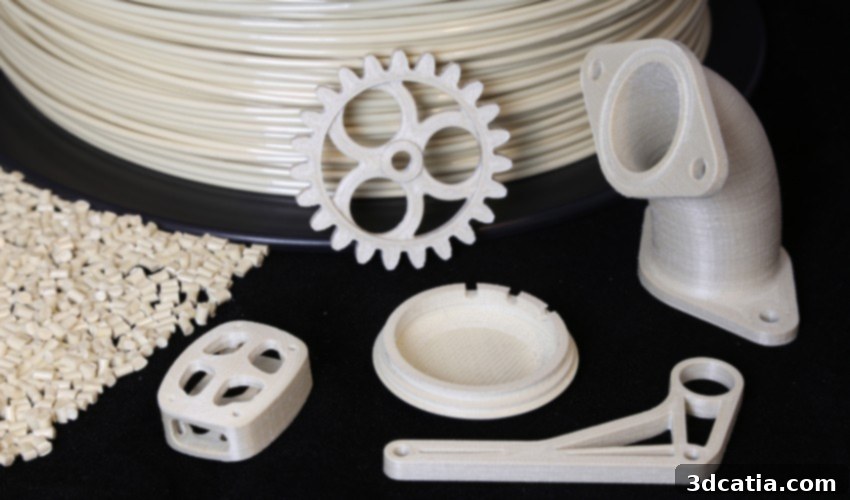
NematX, a pioneering Swiss company, is revolutionizing the realm of high-performance plastics by specializing in the development of groundbreaking filaments. Their unique approach involves reimagining traditional filament development through the innovative application of Liquid Crystal Polymers (LCPs). LCPs are a class of thermotropic polymers renowned for their highly ordered molecular structure, which provides exceptional mechanical and thermal properties. By harnessing the intrinsic advantages of these materials, NematX’s filaments are engineered to deliver unparalleled performance. These advanced filaments boast a remarkable strength, reported to be up to 10 times greater than that of commonly used high-performance polymers like PEEK (Polyether Ether Ketone), and can withstand extreme temperatures exceeding 250°C. Such extraordinary properties make them ideally suited for the production of critical end-use parts across a spectrum of highly demanding sectors, including aerospace, medical technology, and specialized industrial applications.
The company’s proprietary “Nematic 3D printing” technology, which leverages the unique characteristics of LCPs, has garnered significant recognition within the industry. This innovative approach earned NematX a coveted position as one of the winners of the prestigious Startup Challenge at Formnext Connect, a testament to its disruptive potential. To gain deeper insights into this transformative technology and the vision behind NematX, we had the privilege of interviewing Silvan Gantenbein, the inventor of this groundbreaking technology, as well as the Chief Technology Officer and co-founder of NematX.
3DN: Can you introduce yourself and explain your connection to additive manufacturing?

Silvan Gantenbein
Certainly. I am Silvan Gantenbein, and I am deeply immersed in the world of additive manufacturing, particularly through my role as CTO and co-founder of NematX. Our company stands at the forefront of developing a novel class of high-performance plastics specifically tailored for additive manufacturing. NematX emerged as a spin-off from ETH Zurich, a renowned institution for scientific and technological research. Our distinctive achievement lies in being the first company to successfully make liquid crystal polymers (LCPs) genuinely accessible and viable for 3D printing. Historically, this extraordinary class of materials has predominantly found its utility in highly specialized fields, such as the electronics sector due to their excellent dielectric properties, and in the form of high-strength fibers for demanding applications. Our core mission at NematX is to harness the outstanding, often untapped, properties inherent in LCPs and strategically apply them to additive manufacturing processes, thereby not only utilizing their existing benefits but also further enhancing their performance capabilities to meet future industrial demands.
3DN: How did the idea to found NematX come about, and what inspired this pioneering venture?
The genesis of NematX was rooted in my academic journey and a deep conviction regarding the potential of 3D printing. During my university studies, I developed an intensive interest in additive manufacturing. As an aspiring materials scientist, I quickly became convinced that there was significant untapped potential to dramatically elevate the quality and performance of components produced through polymer 3D printing. I observed that while 3D printing offered incredible geometric freedom, the material properties often lagged behind those achievable with conventional manufacturing methods, especially for high-stress applications. This realization spurred me to dedicate my doctoral thesis to addressing this challenge. My goal was clear: to develop not only suitable advanced materials but also optimized additive manufacturing processes that could, one day, credibly replace traditional metals and composites in various demanding applications. The initial prototypes resulting from my research were truly revelatory, demonstrating exceptionally high strength and stiffness values for polymers – properties that were previously unimaginable. These remarkable results quickly attracted considerable interest from diverse markets and industries, confirming the substantial need for such innovation. This overwhelming positive feedback and market validation ultimately motivated me to establish NematX, with the express purpose of making this groundbreaking technology industrially accessible and commercially viable, thereby bridging the gap between advanced materials research and practical application.
3DN: Could you elaborate on how your unique “Nematic 3D printing” technology works and the transformative possibilities it unlocks?
Our “Nematic 3D printing” technology represents a holistic approach, meticulously engineered around three core interdependent elements, with the material and its precise processing at the absolute center. Firstly, we meticulously produce our proprietary filaments from highly specialized liquid crystal polymers (LCPs). Unlike isotropic polymers, LCPs possess a naturally ordered molecular structure, which is crucial to their superior properties. Secondly, we utilize FFF/FDM printers, but critically, these systems are equipped with an extrusion mechanism that has been extensively optimized and refined by our team to handle the unique rheological characteristics of LCPs. This optimization ensures that the material is processed under conditions that promote optimal molecular alignment during deposition. Thirdly, and equally vital, we integrate special design algorithms that complement the material and process. These algorithms allow us to predict and influence the flow and solidification behavior of the LCPs, ensuring that the molecular orientation is maximized and precisely controlled throughout the printed component. This combined synergy enables us to produce plastic components with unprecedented and superior properties.
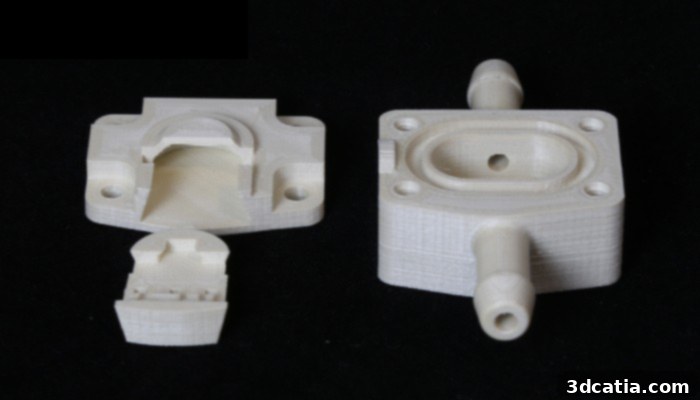
To put it simply, our 3D printing technology grants us an extraordinary level of control over the molecular orientation of our materials during the printing process. This precise molecular alignment, akin to arranging fibers in a composite material, results in significantly enhanced mechanical and thermal properties that far surpass what is achievable with conventional polymer processing methods, where molecular chains often orient randomly. For instance, the aligned molecular chains can better resist forces, leading to higher tensile strength, stiffness, and impact resistance. Furthermore, this controlled orientation also contributes to improved thermal stability and chemical resistance. When combined with the inherent shaping freedom offered by additive manufacturing, this breakthrough opens up entirely new areas of application. We are seeing immense potential for structural components in lightweight construction, where high strength-to-weight ratios are critical, as well as for a wide array of industrial applications operating under extremely harsh environmental conditions, where material robustness is paramount.
3DN: What do you believe is the significance and the genuine opportunities of 3D printing with high-performance polymers in critical sectors like aerospace, medicine, and electronics?
The importance of high-performance polymers in these highly demanding markets – aerospace, medicine, and electronics – cannot be overstated. Due to their stringent quality requirements, specialized polymers like PEEK and ULTEM are already well-established. These industries frequently require components with intricate geometries and a high degree of individualization, such as custom medical implants or complex aerospace brackets. Conventional manufacturing methods, like injection molding or machining, often become uneconomical or technically challenging for small production runs and highly complex component designs. This inherent limitation is precisely why these industries embraced additive manufacturing at a very early stage. They recognized its unique ability to produce complex parts without the need for expensive tooling and with reduced lead times.
Accordingly, we foresee tremendous potential for 3D printing, especially when utilizing truly high-performance polymers, within these specific areas. The critical determinant for widespread adoption and sustained success is ensuring that the properties of additively manufactured plastic components, as well as the manufacturing processes themselves, consistently meet and exceed the rigorous performance and reliability requirements of these demanding markets. This means achieving not just adequate, but superior mechanical strength, thermal resistance, chemical inertness, and long-term durability. This is precisely the objective we are striving to achieve with our Nematic 3D printing technology and our advanced LCP materials – to deliver components that not only meet but redefine the benchmarks for performance in these critical applications, allowing for innovation in design and functionality that was previously unachievable with polymers.
3DN: For which sectors is the integration of Nematic technology particularly interesting, and why? Can you provide insights into some of your current customers?
Our Nematic technology offers a unique combination of component properties that truly sets it apart, making it particularly appealing for applications in the most demanding environments. We achieve unprecedented mechanical properties for unreinforced polymers, coupled with a remarkable temperature resistance exceeding 250°C. Furthermore, our components exhibit exceptional chemical and biological resistance, which is crucial for longevity and safety in specialized contexts. Given these superior attributes, we are strategically focused on key target markets: aerospace, medical technology, and specialized industrial applications.
In the aerospace sector, our materials can contribute to lighter, more fuel-efficient aircraft by replacing metal components, while maintaining structural integrity under extreme temperatures and pressures. For medical technology, biocompatibility and the ability to withstand harsh sterilization cycles are paramount; our LCPs fit this perfectly for custom surgical instruments, implants, or diagnostic equipment. In specialized industrial applications, our materials are ideal for components exposed to aggressive chemicals, high temperatures, or requiring high precision and wear resistance in challenging operational settings.
Regarding our current customer base, we are proud to collaborate with well-known companies within the electronics industry, where high-performance, precision components are essential, and in vacuum technology, where material outgassing and thermal stability are critical concerns. For our longer-term strategic markets of aerospace and medical technology, we have already established significant initial partnerships. These collaborations are crucial, as they allow us to engage directly with industry leaders and work hand-in-hand to develop industry-specific products and processes that are meticulously tailored to meet their unique and evolving needs. This focused approach ensures our technology directly addresses real-world challenges and delivers tangible value.
3DN: Where do you envision NematX being in the next five years, and what are your strategic goals?
Our vision for NematX in the next five years is ambitious yet firmly grounded in our technological strengths. We have set ourselves the clear goal of offering a competitive, comprehensive solution for the digital production of plastic components that possess truly unprecedented properties. This isn’t merely about selling materials; it’s about providing an integrated ecosystem that includes advanced materials, optimized processes, and supporting expertise. Within this five-year timeframe, we aim to have successfully configured our Nematic technology and LCP materials for a diverse range of market-specific applications, thereby building a robust and cross-industry customer base. Our complete solution is designed to provide significant performance and cost advantages over conventional manufacturing methods. We are particularly targeting companies that manage a large product mix with frequently changing designs and those requiring small to medium production runs, where the flexibility and cost-effectiveness of additive manufacturing, combined with our superior material properties, offer a compelling proposition. We envision becoming the go-to provider for polymer components that demand extreme performance, pushing the boundaries of what is currently achievable with plastics in additive manufacturing.
3DN: Do you have any final words or insights you would like to share with our readers?
Absolutely. As a dedicated provider of a complete solution for additively manufactured high-performance polymer components, NematX is continuously enthusiastic about exploring new fields of application and identifying novel challenges where our technology can make a significant impact. We warmly invite and are always happy to support interested companies in evaluating and selecting potential 3D printing projects where our advanced LCP materials and Nematic technology could offer a distinct advantage. We firmly believe that close collaboration and continuous feedback are vital for innovation. Accordingly, we actively and continuously strive to identify new challenges, gather valuable inputs, and uncover emerging needs that can guide the further development and refinement of our technology and materials. Our ultimate aim is to partner with forward-thinking industries to unlock the full potential of high-performance polymer additive manufacturing and create solutions that were previously unattainable. We encourage anyone intrigued by the prospect of integrating cutting-edge materials into their designs to reach out to us and explore the possibilities.
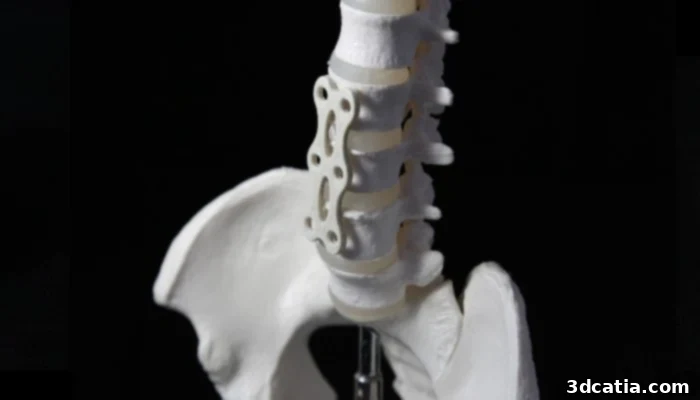
Example of a medical application (photo credits: NematX)
You can find out more about NematX and their revolutionary technology by visiting their official website HERE. What are your thoughts on NematX’s groundbreaking Nematic 3D printing technology and its potential to transform industries? We encourage you to share your perspectives in a comment below or engage with us on ourFacebook,Twitter andLinkedIn pages! Don’t miss out on the latest advancements in additive manufacturing; sign up for our free weeklyNewsletter here and receive the most recent 3D printing news directly in your inbox!