
Unlocking Innovation: Your Weekly Dive into the Top 5 3D Printing Breakthroughs
Welcome back to another exciting Sunday showcase of the week’s most impactful 3D printing videos! Additive manufacturing continues to push boundaries across diverse sectors, and this compilation highlights some of the most compelling recent developments. We kick things off with a crucial perspective from the Financial Times, dissecting why 3D printing is poised to become an indispensable pillar for the future of US manufacturing. Following this, prepare to be amazed as Japanese sports equipment innovator Hayabusa unveils the world’s first 3D printed boxing gloves, demonstrating groundbreaking design and performance enhancements. Our journey then takes us into the operational heart of additive manufacturing, exploring how AMFG software empowers Decathlon to scale its 3D printing operations. We’ll also witness a rigorous “baptism of fire” for Sintratec SLS 3D parts in an Empa customer story, showcasing their resilience in extreme conditions. Finally, we celebrate a significant deal as an Adelaide-based business secures a contract to supply the US Department of Defense with 3D printed components. These stories collectively illustrate the profound and accelerating impact of additive manufacturing on innovation, efficiency, and industrial transformation. Grab a coffee, settle in, and enjoy this week’s remarkable insights into the world of 3D printing!
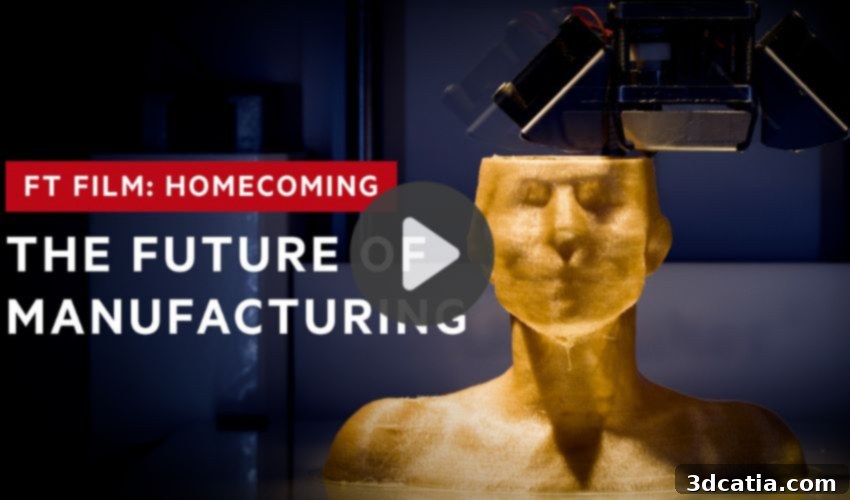
Top 1: Why 3D Printing is Vital to the Success of US Manufacturing
In a compelling film from the Financial Times, global business columnist Rana Foroohar delves into the critical role that additive manufacturing technology will play in reinvigorating US manufacturing. The film powerfully articulates how recent global disruptions – from the COVID-19 pandemic and the war in Ukraine to the escalating challenges of climate change – have starkly exposed the inherent vulnerabilities of extended, often brittle, global supply chains. These events underscore an urgent need for greater resilience, localized production, and agility within national manufacturing ecosystems. 3D printing emerges as a pivotal solution to these complex challenges, offering the ability to foster innovation and create employment in an increasingly deglobalized world. By enabling on-demand, distributed manufacturing, it significantly reduces reliance on distant suppliers and complex logistics networks, thereby mitigating risks and shortening lead times. Industries ranging from aerospace and automotive to healthcare have already embraced 3D printing for its unparalleled capabilities. NASA, for example, leverages it for producing lightweight, complex spacecraft components, while leading car manufacturers utilize it for rapid prototyping and the creation of highly customized, performance-enhancing parts. In the medical field, the technology is revolutionizing patient care through custom prosthetics, surgical guides, and even bioprinted tissues. Beyond these applications, 3D printing holds immense potential to revolutionize the entire supply chain paradigm. Instead of physically shipping finished parts and products across continents, companies can transmit digital design files to local, regional 3D printing facilities, enabling rapid, on-demand production closer to the point of need. This paradigm shift promises substantial reductions in shipping costs, lead times, and the environmental footprint associated with global transportation. These are just a few of the compelling arguments presented in the short film, making an undeniable case for the indispensable importance of 3D printing in securing the future competitiveness and resilience of US manufacturing. Watch the video below to gain deeper insights into how businesses can harness this transformative technology to thrive in the dynamic global marketplace.
Top 2: Hayabusa Unveils First Ever 3D Printed Boxing Gloves
Innovation in sports equipment has reached a new pinnacle with the launch of the T3D boxing glove by Hayabusa, the esteemed Japanese sports equipment company. This groundbreaking product represents a monumental leap forward, proudly claiming the title of the first-ever boxing glove constructed using additive manufacturing. The T3D glove features an intricately designed 3D printed lattice structure integrated with a liquid polymer network, meticulously engineered to create precisely tuned zones within the glove. This revolutionary construction method allows for an unprecedented level of control over the glove’s physical properties, offering a tailored response to impact and providing superior protection. The captivating video below offers an exclusive glimpse into the innovative design philosophy and advanced production techniques employed by Hayabusa in bringing these pioneering 3D printed boxing gloves to fruition. This technological marvel ushers in a new era for combat sports equipment, delivering a suite of benefits that were previously unattainable with conventional manufacturing techniques. Athletes can now experience enhanced customization, allowing for a fit and feel optimized for individual performance. The advanced material science and intricate lattice design significantly boost durability, ensuring the gloves withstand the rigors of intense training and competition. Crucially, the engineered zones provide vastly improved shock absorption, distributing impact forces more effectively to protect the hands and wrists. Furthermore, the precise structure offers superior wrist support, minimizing the risk of injury. These collective advancements translate directly into improved performance for athletes, empowering them to train harder, longer, and with greater confidence. Hayabusa’s T3D glove is not merely a product; it’s a testament to how 3D printing is reshaping the future of athletic gear, making the impossible, possible.
Top 3: AMFG Software Helps Decathlon Scale Their Additive Manufacturing Business
This week, sports innovation continues to captivate our attention, moving from groundbreaking equipment to the operational backbone that supports its creation. Our next featured video illuminates how AMFG software is fundamentally transforming the way Decathlon, another global leader in sports equipment manufacturing, manages and scales its additive manufacturing operations. As companies increasingly adopt 3D printing for prototyping, tooling, and even end-use parts, the complexity of managing these workflows can become a significant bottleneck. Decathlon, recognizing the need for efficiency and scalability, has seamlessly integrated AMFG’s advanced Manufacturing Execution System (MES) software into its existing workflow. This strategic integration has enabled Decathlon to automate crucial aspects of its 3D printing process, from initial order management and production scheduling to rigorous quality control checks and post-processing coordination. The benefits of this automation are multifaceted and profound. It has dramatically improved operational efficiency, reducing manual errors, streamlining communication, and accelerating production cycles. More importantly, this enhanced efficiency has provided Decathlon with the robust infrastructure required to effectively scale its additive manufacturing business, allowing the company to handle significantly larger order volumes and expand its capacity to innovate. The video offers valuable insights through direct interviews with key members of Decathlon’s additive manufacturing team. They articulate firsthand how AMFG’s software has empowered them to overcome previously daunting challenges, optimize their manufacturing processes, and unlock new levels of productivity and flexibility. For any business contemplating or currently engaged in additive manufacturing, this interview is a must-watch. It provides a clear demonstration of the tangible benefits of leveraging advanced software automation: increased efficiency, superior quality control, and the critical scalability needed for global brands and businesses to remain competitive and agile in the rapidly evolving landscape of modern manufacturing.
Top 4: Baptism of Fire for Sintratec SLS 3D Parts! – Empa Customer Story
Pushing the boundaries of material science and manufacturing, researchers from Empa, the renowned Swiss Federal Laboratories for Materials Science and Technology, share a compelling customer story that truly puts Sintratec SLS 3D printing technology to the ultimate test. Their experience highlights the remarkable capabilities of Selective Laser Sintering (SLS) for producing intricate, precise, and exceptionally durable parts, specifically tailored for demanding, high-temperature applications – including critical components designed to aid in the fight against wildfires. The video vividly demonstrates the inherent advantages of SLS 3D printing, notably its unparalleled ability to create complex geometries and internal structures quickly and efficiently, designs that would be impossible or prohibitively expensive to achieve using traditional manufacturing methods. This precision allows for optimized performance and functionality in extreme environments. However, the researchers are candid about the challenges encountered throughout their process. They discuss the necessity for incredibly precise temperature control during the sintering phase to ensure material integrity and consistent part properties. Furthermore, they elaborate on the complexities of post-processing, which is crucial for achieving the desired surface finish, dimensional accuracy, and optimal mechanical properties for these high-stress applications. This case study underscores how organizations like Empa are at the forefront of advanced manufacturing, continually expanding the frontiers of what’s possible with 3D printing. It provides a more in-depth explanation of how this technology is not only enabling the production of custom parts for some of the most arduous, high-temperature scenarios imaginable – from aerospace engine components and industrial turbines to innovative tools for emergency services – but also demonstrating the robustness and reliability of these advanced materials and processes when subjected to a true “baptism of fire.”
Top 5: Adelaide Business Enters into Deal to Supply US Department of Defense
Rounding out our week of groundbreaking 3D printing news, we turn our attention to a significant development in the defense sector. In an insightful discussion with Andrew at ausbiz, CEO Ryan Millar elaborates on a pivotal reseller agreement with Phillips Corporation and the monumental deal secured by Adelaide-based 3D printing company AML3D. This agreement positions AML3D to supply the highly demanding US Department of Defense with specialized 3D printed components, leveraging their advanced Wire Additive Manufacturing (WAM) technology. This landmark deal is a powerful testament to the rapidly growing importance of 3D printing in modern defense strategies and its potential to profoundly revolutionize traditional manufacturing processes within the military-industrial complex. The advantages offered by 3D printing technology, particularly WAM, are incredibly compelling for the defense industry. These include substantial cost-effectiveness, achieved through optimized material usage and the ability to produce parts on-demand, reducing waste and inventory. Crucially, the technology dramatically improves lead times for critical components, ensuring rapid availability and enhancing military readiness by minimizing reliance on lengthy, vulnerable supply chains. Furthermore, 3D printing offers unparalleled design flexibility, allowing for the creation of complex geometries that can lead to lighter, stronger, and more functionally integrated components – essential attributes for high-performance military applications. The ability to manufacture specialized tools, spare parts, and customized equipment directly in theater or at local bases provides an unprecedented logistical advantage. For AML3D, this deal signifies not just commercial success, but also a profound validation of their innovative WAM technology and its industrial maturity. It highlights a broader shift in how defense organizations are embracing additive manufacturing to enhance operational efficiency, foster innovation, and bolster national security. Watching the video provides an informative and engaging deep dive into the tangible benefits of 3D printing in the defense industry and showcases the immense potential for forward-thinking companies like AML3D that are at the vanguard of this technological revolution.
We hope this week’s selection of top 3D printing videos has offered valuable insights into the dynamic and transformative power of additive manufacturing across various industries. From fortifying national manufacturing capabilities and revolutionizing sports equipment to streamlining industrial operations and enhancing defense strategies, 3D printing continues to prove its indispensable value. The discussions around supply chain resilience, material innovation, software automation, and strategic defense applications truly underscore the versatility and impact of this incredible technology. We are eager to hear your thoughts on these developments, particularly the Financial Times film and its implications for the future of manufacturing. Let us know what resonated with you most in a comment below, or join the conversation on our LinkedIn, Facebook, and Twitter pages! For those who wish to stay continuously updated with the very latest 3D printing news, remember to sign up for our free weekly Newsletter here, delivered straight to your inbox. You can also explore our extensive library of videos and compelling content by visiting our official YouTube channel. Happy watching and stay curious about the future of manufacturing!