
Transforming Art Access: How 3D Printing Empowers the Visually Impaired at Lancaster City Museums
In a groundbreaking initiative that bridges the worlds of cultural heritage and advanced technology, Lancaster City Museums has partnered with Lancaster University and Galloway’s Society for the Blind in Morecambe. This innovative collaboration focuses on leveraging 3D printing technology to create tactile relief versions of select paintings from the museum’s esteemed art collection. The primary goal of this visionary project is to dramatically enhance accessibility, offering individuals with visual impairments an unprecedented opportunity to engage with, appreciate, and experience magnificent artworks in a truly immersive and tactile manner. This project is not just about viewing art; it’s about feeling it, understanding its composition through touch, and integrating a new dimension of sensory appreciation into the traditional museum visit. The ambitious endeavor is being expertly guided by two dedicated university engineering students, who are working closely with both the Museum and Galloway’s, bringing academic rigor and innovative spirit to this important social cause.
Traditionally, the experience of art and museums has been predominantly, if not exclusively, a visual one. For sighted visitors, the act of stepping into a gallery and beholding masterpieces is a cornerstone of cultural engagement. The very notion of not being able to see these visual treasures would indeed seem to contradict the essence of an art exhibition. Consequently, it has historically been challenging to envision how individuals without sight could meaningfully interact with renowned paintings and truly admire their beauty without the visual component that defines them. However, thanks to the forward-thinking “Feeling as Seeing” initiative spearheaded by the Lancaster City Museum, and made possible with the transformative power of additive manufacturing, these barriers are now being systematically dismantled. This pioneering effort ensures that people with visual impairments will no longer be spectators to the visual world of art but active participants, given the rich opportunity to enjoy famous pieces of art through a novel, tactile perspective. This project represents a significant step forward in making cultural institutions truly inclusive for all members of the community.

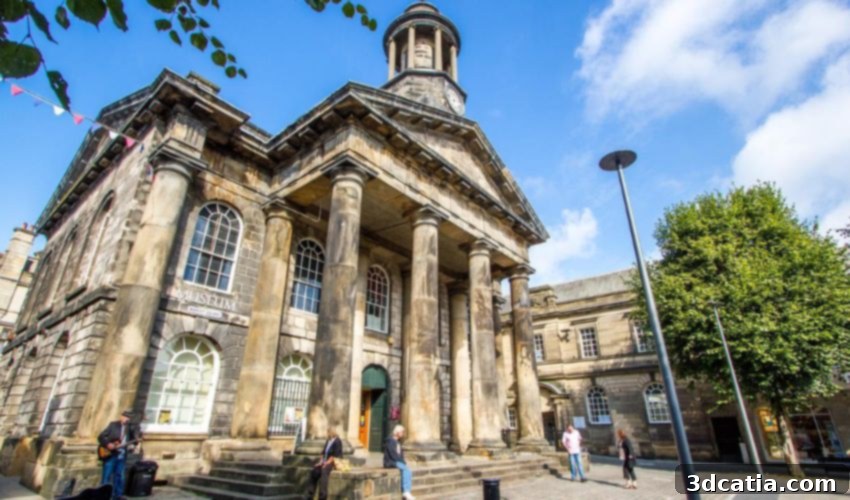
Inside the Lancaster City Museum, a welcoming space for all art lovers.
The “Feeling as Seeing” Project: Crafting Tactile Art Experiences
The initiative, aptly named the ‘Feeling as Seeing project’, is at the forefront of employing cutting-edge 3D printing technologies to generate intricate relief versions of the paintings on display at the Lancaster City Museums. These specially crafted 3D printed pieces are designed with a profound purpose: to enable those unable to see the original artwork to form a tangible impression by touching and exploring its three-dimensional representation. The process of “feeling” the artwork is conceptually analogous to reading Braille; instead of deciphering characters, visitors interpret the contours, textures, and spatial relationships within a painting. This tactile engagement allows for an intimate connection with the artwork, translating visual elements into physical sensations. While the exact 3D printing technologies and specific materials slated for use in this groundbreaking process have yet to be fully disclosed, the team is exploring options that balance durability, tactile sensitivity, and fidelity to the original art. It is also highly anticipated that each 3D printed relief will be augmented with an individual audio description, providing vital contextual information, historical background, and nuanced interpretations that further enrich the non-visual experience.
Designing for Touch: The Collaborative Development Process
The creation of these specialized tactile reliefs is a meticulously collaborative process, emphasizing user-centered design. Both Lancaster University, with its engineering expertise, and the Lancaster City Museum are working hand-in-hand with representatives from Galloway’s Society for the Blind. Critically, this collaboration includes direct input from people with sight loss themselves, ensuring that the developed methods are truly effective and yield the best possible results for the intended audience. Their feedback is invaluable in shaping the design choices, material selections, and overall presentation of the tactile art. Professor Claudio Paoloni, a distinguished figure from the School of Engineering at Lancaster University, expressed immense enthusiasm for the project, encapsulating its core mission: “One of the missions of Engineering is to find solutions for overcoming barriers. I am delighted that the School of Engineering has contributed, in collaboration with the Lancaster City Museum and Galloways, our expertise in 3D printing, to offer those with sight loss a new way to enjoy the wonderful artworks of the Lancaster City Museum.” This statement underscores the transformative potential of engineering to address societal challenges and foster greater inclusion within cultural spheres. The involvement of engineering students also provides an invaluable educational experience, allowing them to apply their technical skills to real-world problems with significant social impact, contributing to a more empathetic and accessible future.
Beyond Vision: The Engineering and Artistic Challenges
Creating effective tactile reliefs from two-dimensional paintings presents a unique set of engineering and artistic challenges. The process typically begins with high-resolution 3D scanning of the original artwork, or detailed analysis of digital images, to capture its intricate details and composition. The challenge then lies in translating these visual nuances into a meaningful tactile experience. Not every visual detail can, or should, be replicated in a relief; often, the key is to interpret and simplify, emphasizing core elements, lines, and forms that convey the essence of the painting. Different 3D printing technologies might be considered, such as Fused Deposition Modeling (FDM) for robust, larger reliefs, or Stereolithography (SLA) and PolyJet technologies for finer details and varying textures. The choice of material is equally crucial: it must be durable enough for repeated handling, safe, and possess a pleasant tactile quality. The goal is not just to make a bumpy surface, but to create a ‘language’ of touch that allows individuals to discern depth, texture, and composition, forming a mental image akin to what a sighted person would perceive. This intricate process requires a deep understanding of both art interpretation and additive manufacturing capabilities, ensuring that the final product is both artistically resonant and technically sound.
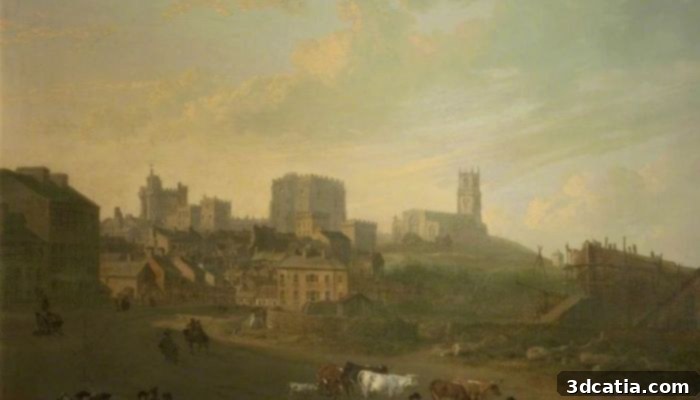
“Lancaster from Cable Street” by Julius Caesar Ibbetson, one of the first paintings to be transformed into a tactile relief.
A Future of Inclusive Art: Broader Implications and Long-Term Vision
The “Feeling as Seeing” project holds a far broader vision than just a single exhibition. Its long-term goal is to seamlessly integrate the 3D printing process into the museum’s operational framework, ensuring that relief versions of paintings become a standard feature for all future exhibitions. This commitment signifies a dedication to making art permanently and universally accessible to those without the ability to see, embedding inclusivity into the very core of the museum’s mission. Imagine a future where every new acquisition or curated show automatically includes tactile versions, accompanied by rich audio descriptions, creating a truly multi-sensory environment. This initiative sets a powerful precedent, demonstrating how cultural institutions can leverage technology to break down barriers and enrich the lives of diverse audiences. It serves as an inspirational model for other museums and galleries worldwide, encouraging them to explore similar applications of 3D printing for accessibility. By sharing their methodology and findings, Lancaster City Museums and Lancaster University have the potential to spark a global movement towards more inclusive cultural experiences, fostering a greater appreciation for art across all sensory dimensions. To find out more about this pioneering work and other initiatives, you can visit the museum’s official website HERE.
This project also highlights the vital role of education and community engagement. The involvement of university students not only provides practical experience but also cultivates a new generation of engineers and designers who are acutely aware of accessibility needs and equipped to tackle them creatively. Moreover, the direct collaboration with Galloway’s Society for the Blind ensures that the solutions developed are genuinely tailored to the needs of the visually impaired community, moving beyond theoretical assumptions to practical, impactful results. It’s a powerful testament to how technology, when guided by empathy and collaboration, can profoundly transform access to culture and knowledge, making art a shared experience for everyone. This progressive approach positions Lancaster City Museums as a leader in digital innovation for cultural inclusion, fostering a richer, more diverse engagement with heritage and creativity.
What are your thoughts on this incredible initiative to 3D print tactile versions of paintings, offering people with visual impairments a revolutionary way to experience art? We invite you to share your perspectives in a comment below. Join the conversation and connect with us on our LinkedIn, Facebook, and Twitter pages! Don’t forget to sign up for our free weekly Newsletter here to receive the latest 3D printing news, insights, and innovations straight to your inbox. You can also explore all our compelling videos and interviews on our dedicated YouTube channel, where we delve deeper into the world of additive manufacturing and its boundless applications.
*All Photo Credits: Lancaster City Museums