
Nurturing Tomorrow’s Innovators: The Essential Role of Additive Manufacturing Education and Training
The landscape of global industry is undergoing a profound transformation, driven significantly by advanced technologies. Among these, additive manufacturing, commonly known as 3D printing, has emerged as far more than just an experimental concept. It has solidified its position as a cornerstone technology, fundamentally reshaping design, production, and supply chains across diverse sectors. In this dynamic environment, the imperative to equip future professionals with robust skills in 3D printing is not merely an advantage; it is an absolute necessity for continued innovation and competitiveness. Educational institutions, particularly technological training centers like IMH Campus in Spain, are at the forefront of this revolution, spearheading change directly from their classrooms and workshops.
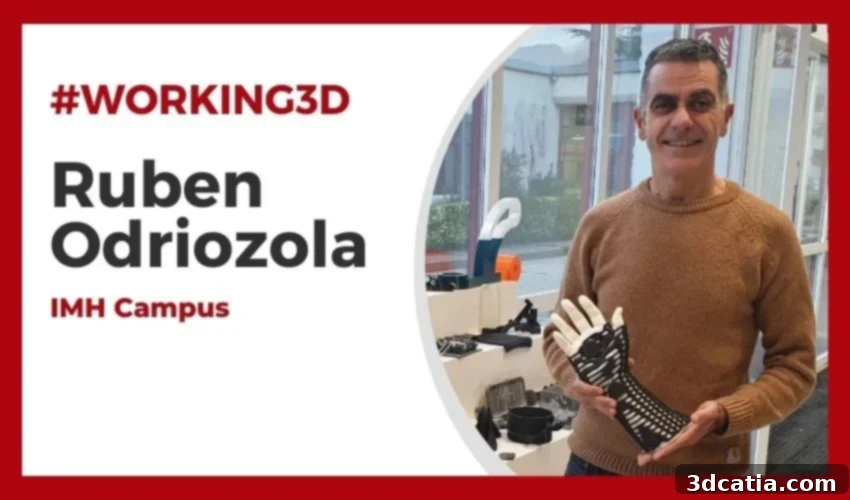
To gain a deeper understanding of this critical shift, we recently had the privilege of speaking with Ruben Odriozola. As a distinguished professor of additive manufacturing at the IMH Campus, Mr. Odriozola offered invaluable insights into how this groundbreaking technology is meticulously integrated into the training curricula for both technicians and engineers. Our discussion also explored the unique challenges and opportunities inherent in teaching within a sector that is evolving at an unprecedented pace. Furthermore, we delved into why 3D technologies have transcended being merely specialized tools to become indispensable competencies for the industrial professionals who will shape the future.
Could you please introduce yourself and your background?
Certainly. My name is Ruben Odriozola, and I hold the positions of professor and Head of the Additive Manufacturing Department at the IMH (Machine Tool Institute) located in Elgoibar, Gipuzkoa. My professional journey at the IMH began in 2000, where for many years I served as a mechanical workshop teacher. During that period, my focus was on conventional machining techniques, CNC programming, automated systems, and a range of related subjects vital to traditional manufacturing processes. However, approximately three years ago, I embarked on a significant career transition, shifting my primary focus and specialization entirely to the exciting and rapidly expanding field of additive manufacturing. This move reflected the IMH’s strategic commitment to integrating cutting-edge technologies into its curriculum and my personal passion for embracing innovation.
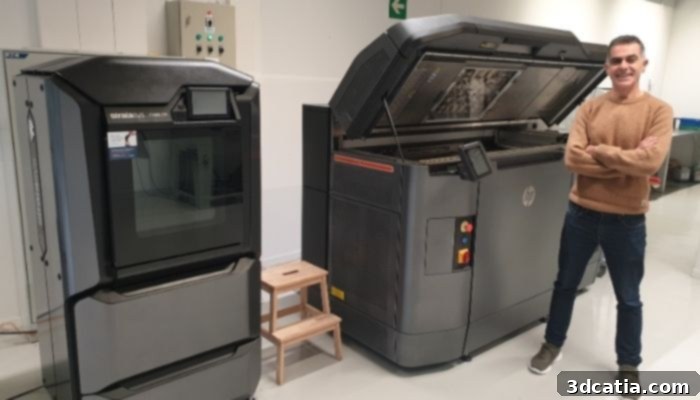
Photo Credits: Ruben Odriozola
This academic year marks my third course as a dedicated professor of additive manufacturing. My teaching responsibilities encompass a comprehensive range of subjects, including advanced modeling for AM, intricate slicing and 3D printing techniques, essential post-processing methodologies, and the critical aspects of handling, repair, and cost analysis within additive manufacturing workflows. Beyond my direct teaching duties, I also play a pivotal role as the responsible head for the Advanced Manufacturing and Autonomous Robotics Nodes at the Tknika center. This involves a strategic oversight function where we engage in technology watch and foresight activities across various strategic areas, subsequently disseminating our findings and insights. Furthermore, I am actively involved in two significant research projects: one focused on Metal Additive Manufacturing in collaboration with Tknika, and another compelling project titled “Additive vs. Machining,” which involves cooperative efforts with other vocational training centers throughout the Basque Country. These projects underscore our commitment to both advancing the technology and ensuring its practical application and integration into industrial practice.
How did you first discover and become involved with additive manufacturing?
My initial foray into the world of additive manufacturing began approximately a decade ago, when the IMH became a proactive participant in the pioneering IKASLAB project. This visionary initiative was instrumental in promoting and establishing the first dedicated 3D printing classroom within our institution. This foundational setup was equipped with an initial suite of five Tumaker FDM 3D printers, complemented by two advanced 3D scanners and the necessary computing infrastructure. It was during my active involvement in this seminal project that I was first introduced to, and subsequently captivated by, the immense potential of 3D printing.
From that moment onward, I found myself truly amazed by the transformative power of the 3D printing world. The ability to realize geometrically complex, even impossible, designs that were previously unattainable with conventional manufacturing methods was particularly striking. The sheer versatility offered by a growing array of different printable materials further deepened my fascination. As the IKASLAB project progressed and the technology matured, we continued to expand our capabilities and machinery portfolio. This included acquiring advanced machines from leading manufacturers such as Makerbot, Ultimaker, Stratasys, as well as industrial-grade systems like the JCR 1000 and JCR 600. Today, our facility boasts an impressive array of six distinct additive manufacturing technologies, evenly split between three polymer-based systems and three sophisticated metal-based systems. This continuous investment underscores our commitment to providing students with exposure to the latest and most relevant technologies in the field.
What is your current role and what does a typical day entail for you?
As previously mentioned, my primary role at the IMH currently revolves around being a professor in additive manufacturing. This specialization constitutes a rigorous one-year higher vocational training program, meticulously designed to prepare students for the demands of the modern industrial landscape. In addition to my direct teaching responsibilities, I also bear the crucial task of coordinating this specialized program, ensuring its curriculum remains relevant and cutting-edge. Furthermore, I am entrusted with the management of the entire Additive Manufacturing Department within the IMH, an institution deeply rooted in machine tool expertise. This managerial aspect involves overseeing equipment, resources, and departmental strategy.
Beyond my duties at IMH, I actively collaborate with Tknika, which serves as a vital innovation center. In this capacity, I lead the Advanced Manufacturing and Autonomous Robotics Nodes. This involves a strategic and forward-looking approach where we conduct extensive technology watch activities and foresight analysis across various strategic technological domains. The objective is to identify emerging trends, assess their potential impact, and share the comprehensive results of this research with our network and the wider industry. My daily routine, therefore, is a dynamic blend of direct student instruction and intricate project management. Presently, I am deeply engrossed in two significant projects. The first is focused on Metal Additive Manufacturing, where our research endeavors are concentrated on investigating and optimizing the integration of advanced simulation systems within Direct Energy Deposition (DED) technologies. This aims to enhance predictability and performance in metal printing. The second project, aptly titled “Additive vs Machining,” is an intensive comparative study. It involves manufacturing identical parts using two distinct metallic additive manufacturing technologies—Laser Metal Deposition (LMD) and Selective Laser Melting (SLM)—with different materials, specifically titanium and an aluminum alloy (AlSi10Mg). We then subject these 3D printed parts to machining processes, rigorously comparing various metrics such as production times, overall costs, surface finish, and structural integrity. This comparative analysis provides invaluable data for industry adoption decisions, highlighting the synergies and trade-offs between additive and subtractive manufacturing.
Why do you believe it is crucial to incorporate additive manufacturing into engineering and manufacturing program curricula?
It is unequivocally clear that additive manufacturing is a leading, indeed transformative, technology. When discussions turn to the realm of advanced manufacturing, additive manufacturing consistently appears at the very pinnacle of innovation. Its ability to create complex geometries, customize parts on demand, and use novel materials fundamentally changes what is possible in product development and production. Therefore, its inclusion in engineering and manufacturing curricula is not merely beneficial but absolutely essential. At the IMH, we recognized the growing importance of this field many years ago, and we have been offering additive manufacturing courses for a significant period. However, the truly qualitative leap in our commitment and offering occurred three years ago with the introduction of our specialized Vocational Training program in Additive Manufacturing. This program was groundbreaking, being the first of its kind at a national level in Spain and remaining the sole specialization of its kind in the entire Basque Country. This pioneering initiative ensures that any individual who successfully completes our rigorous program enters the workforce with an exceptionally high level of specialized training, backed by 270 hours of invaluable practical experience in real-world settings and a fully approved degree. Such comprehensive preparation is vital for professionals to thrive in an industry increasingly reliant on sophisticated 3D printing solutions, enabling them to contribute meaningfully from day one.
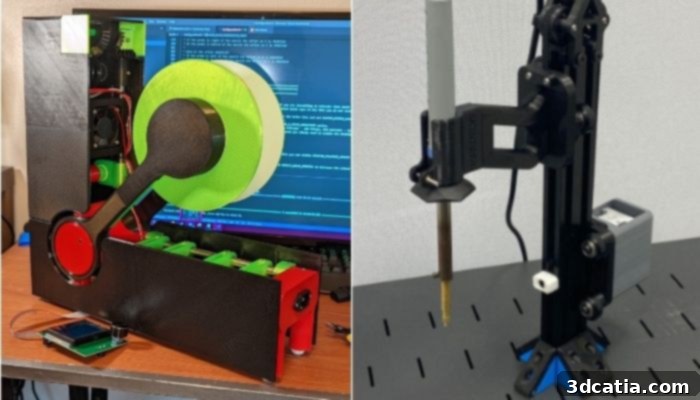
3D printed Polyformer (left) and 3D printed inserter (right) (photo credits: Ruben Odriozola).
How do you ensure that students are adequately prepared to adapt to the constantly evolving landscape of 3D technologies?
Preparing students for the rapid evolution of 3D technologies requires a pedagogical approach that emphasizes comprehensive and adaptable training. In our additive manufacturing program at IMH, we are committed to delivering exactly that. We meticulously address every critical phase of the 3D printing process, ensuring a holistic understanding. This begins with an in-depth exploration of various AM technologies, followed by specialized modules on structure design and topological optimization, crucial for maximizing part performance and material efficiency in additive manufacturing. We then move into the practical aspects of modeling, slicing, and actual 3D printing. The curriculum also extensively covers 3D mesh scanning and repair, essential skills for reverse engineering and quality control, along with detailed instruction on post-processing techniques, and the vital considerations of handling, repair, and cost implications associated with additive manufacturing.
Crucially, within each module, the topics are regularly reviewed and updated to reflect the latest advancements and emerging trends in the field, ensuring students are consistently learning about the most current evolution of these technologies. A cornerstone of our program is the extensive practical training component, which includes 270 hours of real-world experience gained through internships with companies in the sector. This invaluable hands-on exposure allows students to apply theoretical knowledge, work directly with the specific technologies and workflows utilized by leading industrial players, and develop practical problem-solving skills in a professional environment. Furthermore, our approach emphasizes exposure to a broad spectrum of additive manufacturing technologies. Students gain practical experience with systems ranging from FDM (Fused Deposition Modeling), SLA (Stereolithography), and MJF (Multi Jet Fusion) for polymers, to LMD (Laser Metal Deposition), SLM (Selective Laser Melting), and even Binder Jetting for metals. Combined with hands-on practice using both structured light and laser scanners, we meticulously ensure that our students not only observe and understand but are also actively prepared to operate and innovate across a diverse array of advanced manufacturing technologies, making them highly versatile and adaptable professionals.
In which sectors or industries do you observe the highest demand for professionals trained in additive manufacturing?
The demand for professionals skilled in additive manufacturing is rapidly expanding across numerous sectors, reflecting the technology’s versatile applications. We observe a significant integration of additive manufacturing for producing end-use parts, particularly in specialized fields such as dental implants, where custom precision is paramount. Beyond direct product manufacturing, many companies are leveraging AM for supplying parts to third parties, especially for critical applications like tooling, jigs, fixtures, and rapid prototyping across various industries. For these demanding applications, metal additive manufacturing technologies are often preferred, offering the strength and durability required. Other companies, particularly those focused on polymer applications, extensively utilize HP MJF (Multi Jet Fusion) or SLS (Selective Laser Sintering) technologies to produce functional parts with excellent mechanical properties.
Generally, industries that historically work with metals, such as automotive, aerospace, medical, and heavy machinery, have been early and enthusiastic adopters of AM as a complementary technology within their production ecosystems. These sectors recognize AM’s ability to create lighter, more complex, and more efficient components. Beyond direct industrial application, there is also a robust demand within research and development. Leading research centers, including prominent institutions like Tekniker, Tecnalia, and Ideko, are heavily invested in 3D printing. They possess a wide array of 3D printers and conduct extensive research in both polymer and metal additive manufacturing, pushing the boundaries of what the technology can achieve. Furthermore, the ecosystem around AM is also growing, with companies specializing in post-processing technologies for 3D printed parts. These include vital steps such as sandblasting for surface finishing, steaming for smoothing, and dyeing for aesthetic and functional purposes. All these various companies, whether they are end-users, service bureaus, research institutions, or post-processing specialists, critically require skilled operators. These operators must possess a deep familiarity with the operation of diverse 3D printers, in addition to proficient knowledge in designing and scanning to create parts and prototypes that are not only valid but optimized for these advanced manufacturing technologies. The breadth of these needs highlights the widespread and increasing demand for well-rounded AM professionals.
What advice would you offer to someone aspiring to become a professor of additive manufacturing?
For anyone aspiring to become an additive manufacturing professor, the journey begins with an intrinsic curiosity and a genuine passion for the world of 3D printing. This innate enthusiasm is fundamental because the field is constantly evolving, requiring continuous learning and adaptation. Beyond passion, a deep and comprehensive mastery of the technology and its myriad applications is absolutely essential. This involves thoroughly understanding the different processes within additive manufacturing, such as FDM, SLA, SLS, MJF, DED, and SLM, along with their respective strengths, limitations, and optimal use cases. Proficiency in 3D scanning and reverse engineering is also critical, as it allows for the digitization of physical objects and the recreation or modification of designs. A solid grasp of various materials – polymers, metals, ceramics, composites – including their properties, processing requirements, and post-processing needs, is equally vital. Crucially, a professor must remain perpetually updated with the latest trends, research breakthroughs, and industrial developments in the additive manufacturing industry, subscribing to journals, attending conferences, and monitoring market innovations.
Gaining extensive hands-on experience is non-negotiable. This means actively operating a variety of 3D printers, performing routine maintenance, troubleshooting common issues, and experimenting with different printing parameters. It also includes practical experience in scanning parts using various types of 3D scanners and mastering the use of advanced 3D design software for creating, optimizing, and preparing parts for additive manufacturing. Networking and staying connected within the professional community are also key. Participate actively in trade shows, conferences, and specialized workshops to meet industry professionals and exchange knowledge. Engage with webinars and online forums dedicated to additive manufacturing to stay abreast of current discussions and challenges. Regularly consult specialized websites like 3Dnatives, follow influential figures and companies on social media, watch educational content on YouTube, and read specialized blogs to absorb diverse perspectives and insights. Most importantly, to be an effective professor, one must cultivate a pedagogical approach centered on practical application. This means consistently developing and implementing hands-on projects and experiential learning opportunities so that students can learn by doing. This active engagement fosters a deeper understanding, critical thinking skills, and the practical competence necessary for success in this dynamic and innovative field.
What do you think of the role of a professor in additive manufacturing? Let us know in a comment below or on our LinkedIn, Facebook, and Twitter pages! Don’t forget to sign up for our free weekly Newsletter here, the latest 3D printing news straight to your inbox! You can also find all our videos on our YouTube channel.