
Revolutionizing Automotive Manufacturing: Driving Innovation with Additive Manufacturing and BASF Forward AM
The automotive industry stands as a pioneering sector in the widespread adoption of additive manufacturing (AM) technologies. What began primarily as a tool for rapid prototyping has rapidly evolved into a sophisticated method for creating functional, end-use components. This transformative shift is not merely a trend but a fundamental re-shaping of production processes, driven by the compelling advantages that 3D printing offers. According to a significant study published by SmarTech Publishing, the market for additive manufacturing within the automotive sector is projected to achieve a staggering $5.3 billion in revenue by 2023, with an even more impressive forecast of $12.4 billion by 2028. These figures underscore the immense potential and rapid integration of these technologies into automotive manufacturing.
Over the coming decade, experts anticipate that the automotive segment will cement its position as the single largest market within the entire global 3D printing industry. This phenomenon, often referred to as Additive Automotive, signifies a future where 3D printing is not just supplementary but central to vehicle design, development, and production. A key player actively propelling this growth and innovation is Forward AM, the specialized additive manufacturing division of the German chemical giant, BASF. With unparalleled expertise in material science, Forward AM not only develops advanced materials but also provides comprehensive support and consulting to companies eager to harness 3D printing for achieving automotive excellence and groundbreaking innovation.
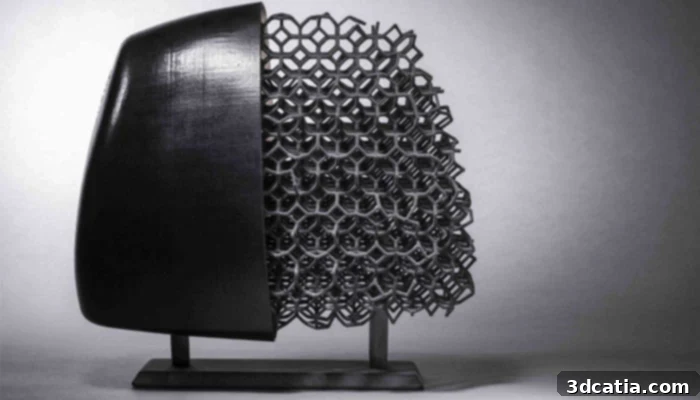
The evolution of materials has encouraged AM adoption in the automotive field | Credits: BASF Forward AM
Forward AM was established in 2017 with a clear and ambitious objective: to develop and supply high-performance materials specifically engineered for industrial 3D printing applications. In a relatively short span, this dedicated division has successfully cultivated one of the most extensive and diverse ranges of materials available in the additive manufacturing sector today. Leveraging their deep knowledge in polymer science and a thorough understanding of industrial adoption challenges, Forward AM has also pioneered sophisticated post-processing solutions and specialized consulting services. These offerings are designed to assist companies across various industrial sectors, particularly automotive, in elevating their additive manufacturing capabilities and integrating these advanced processes seamlessly into their workflows. Complementing these services, the French company Sculpteo, now owned by BASF, provides professional online 3D printing services, facilitating on-demand production of prototypes, unique individual products, and efficient short-run manufacturing.
Additive Manufacturing’s Transformative Role in the Automotive Industry
Leading car manufacturers worldwide have enthusiastically embraced additive manufacturing technologies, integrating them across various stages of their production cycles. Prestigious brands like Audi, BMW, and Ferrari, for instance, utilize 3D printing extensively, even for critical components in their high-performance Formula 1 cars. The applications of additive manufacturing within the automotive sector are remarkably diverse, but they can be broadly categorized into three pivotal areas, each offering distinct advantages:
- Prototyping: Still the most widely adopted application, rapid prototyping allows engineers to quickly develop, test, and iterate on different part designs. This significantly accelerates the product development cycle, enabling faster validation of concepts and reducing the time-to-market for new vehicles and components. The ability to produce multiple design variations economically and rapidly is invaluable in the highly competitive automotive R&D landscape.
- End-use Parts: This category has seen a significant surge in recent years, largely thanks to advancements in both materials and hardware. Additive manufacturing now enables the production of functional components that are integrated directly into vehicles. According to the latest State of 3D Printing report from Sculpteo, an impressive 50% of companies leveraging 3D printing in the past year have done so for producing end-use parts. This includes everything from complex interior components and customized trim pieces to specialized brackets and performance-critical parts.
- Jigs & Fixtures: Often referred to as tooling parts, jigs and fixtures are indispensable in accelerating traditional manufacturing processes. Jigs are tools designed to guide cutting or machining tools precisely in a production line, ensuring accuracy and repeatability. Fixtures, on the other hand, securely hold workpieces in a specific location relative to the machine bed, facilitating consistent and efficient assembly or processing. 3D printed jigs and fixtures offer unparalleled customization, ergonomic benefits, and rapid production, dramatically reducing lead times and costs associated with conventional tooling.
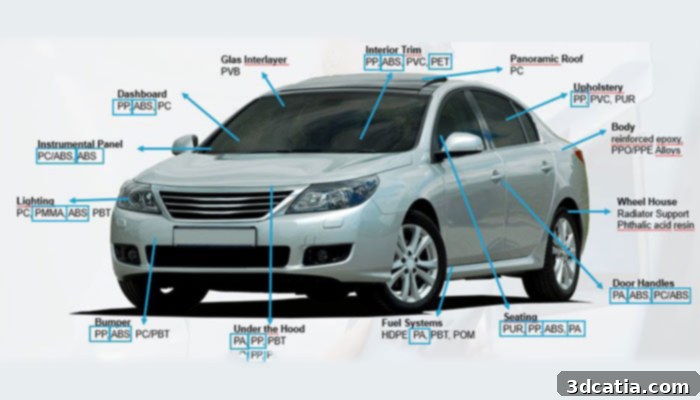
AM can be used for various types of vehicle parts | Credits: BASF Forward AM
The strategic adoption of 3D printing technologies offers multifaceted benefits beyond mere cost reduction and increased production efficiency. It has profoundly opened the door to widespread mass customization, allowing Original Equipment Manufacturers (OEMs) to offer truly unique and personalized components. This capability empowers OEMs to cater to individual customer preferences, providing tailored parts and accessories for their cars, thereby enhancing customer engagement and brand loyalty. Moreover, the design freedom inherent in additive manufacturing allows for the creation of complex geometries and lightweight structures that are simply impossible or uneconomical to produce with traditional manufacturing methods, leading to improved vehicle performance, fuel efficiency, and reduced material waste.
Forward AM’s Unwavering Commitment to Automotive Innovation
While Forward AM is globally recognized for its deep expertise in material science within the additive manufacturing industry, its significant experience and commitment to the automotive sector are equally noteworthy. This extensive automotive knowledge has been meticulously cultivated through strategic collaborations with a wide array of manufacturers and their associated OEMs. For these partners, the German company provides a comprehensive suite of services, including advanced simulation, precise post-processing, and cutting-edge 3D printing services. Their holistic approach ensures that the adoption of additive manufacturing is meticulously planned and expertly executed, guaranteeing successful implementation and optimal outcomes. BASF Forward AM has been instrumental in numerous projects across the automotive sector; two particularly compelling case studies highlight their transformative impact:
Forward AM and Daimler: Accelerating Engine Mount Development
The enduring partnership between Daimler and Forward AM dates back several years, originating from Daimler’s urgent need to accelerate the development process for engine mounts. These critical components are essential for ensuring the stability of the engine and managing NVH (noise, vibration, harshness) behavior, which directly impacts passenger comfort and vehicle longevity. The primary goal was to transition from traditional injection molding to 3D printing, a move that necessitated rigorous material testing and validation. Daimler also sought to significantly reduce costs by compressing development cycle times. After extensive testing, they ultimately selected Ultrasint® PA6 MF, a high-performance polyamide with exceptional mechanical and thermal stability, perfectly suited for Powder Bed Fusion (PBF) technologies. The adoption of Ultrasint® PA6 MF enabled rapid prototyping, drastically reducing development time from weeks (typical for injection molding) to a mere matter of days. This substantial acceleration not only saved considerable time and resources but also allowed for faster iteration and optimization of the engine mounts, leading to superior final products and quicker vehicle integration.
Forward AM and OECHSLER: Optimizing Motorcycle Saddle Design
OECHSLER, a leading specialist in polymer processing, collaborated with Forward AM to develop innovative, latest-generation motorcycle saddles. The core objective was to create a prototype that dramatically improved upon existing motorcycle saddle designs, focusing on comfort, weight reduction, and manufacturing efficiency. Leveraging the unparalleled design freedom offered by 3D printing, the saddle was engineered as a single, integrated piece featuring an advanced lattice structure. This innovative approach significantly reduced both manufacturing and assembly times by eliminating the need for multiple components and complex joining processes. For this application, they utilized Forward AM’s Ultrasint® TPU01, a material renowned for its excellent long-term shock absorption properties and superior flexibility, making it ideal for high-performance applications. Its unique characteristics also make it perfectly suitable for series production using HP Multi Jet Fusion technology. The simplified assembly process meant no gluing was required, and the top cover could be attached without traditional metal staples. Furthermore, the 3D printed saddle achieved a remarkable 25% weight reduction compared to conventional designs, directly translating into less material usage, improved motorcycle performance, and enhanced fuel efficiency.
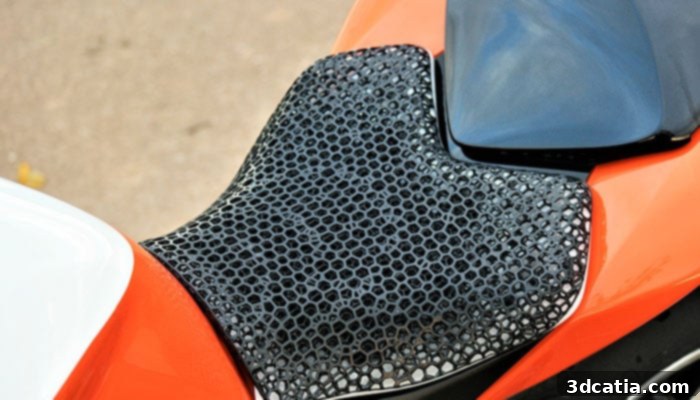
Optimized saddle thanks to AM technology and materials | Credits: BASF Forward AM
Through these and countless other collaborations, Forward AM consistently demonstrates its pivotal role in helping a growing number of companies within the automotive sector successfully implement and leverage the myriad benefits of 3D printing technology. Their holistic approach, combining material expertise with application-specific engineering and consulting, ensures that clients can unlock the full potential of additive manufacturing for innovation, efficiency, and competitive advantage. For those seeking to delve deeper into their comprehensive solutions for the automotive industry, an in-depth webinar is available, or you can contact them directly HERE.