
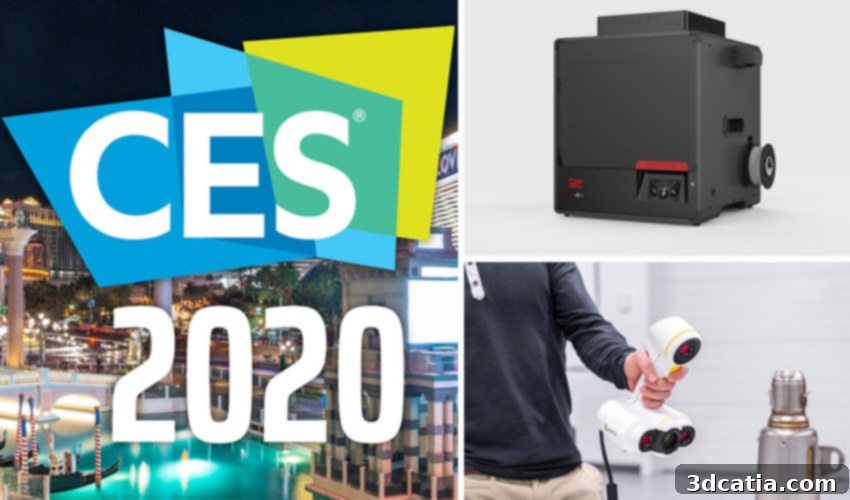
Unveiling the Future: Top 3D Printing Innovations and Technologies at CES 2020
The Consumer Electronics Show (CES) stands as the world’s premier gathering for those eager to discover groundbreaking technological advancements. Each year, this colossal event draws hundreds of thousands of participants to Las Vegas, transforming the city into a vibrant hub of innovation where the latest high-tech products, connected objects, and diverse technologies are showcased. In 2019, CES boasted an impressive attendance of over 175,000 international visitors and featured 4,400 exhibitors, cementing its status as a critical platform for technological discourse and commerce. Building on this legacy, CES 2020, which opened its doors on January 7th, continued to captivate countless curious visitors and industry professionals. For the additive manufacturing sector, CES 2020 was a pivotal event, with numerous key players from the 3D printing industry converging to present their cutting-edge products, services, and materials. This provided an invaluable opportunity for us to delve into the exciting unveilings of new 3D printers, revolutionary applications, and innovative materials that promise to redefine manufacturing and design.
The consistent and robust presence of the additive manufacturing sector at CES 2020 underscored its growing importance within the broader technology landscape. This year, the event hosted a significant contingent of 76 exhibitors specializing in 3D printing and associated technologies, a figure comparable to the 79 exhibitors from the previous year, demonstrating consistent industry engagement and sustained innovation. This diverse group included renowned manufacturers of 3D printers, such as industry leaders Formlabs and Markforged, alongside Global 3D Systems, showcasing a wide array of solutions from desktop to industrial-grade machines. Furthermore, the exhibition floor featured prominent 3D scanner manufacturers like Artec3D, whose sophisticated devices are crucial for reverse engineering, quality inspection, and creating precise digital models for 3D printing. The concentration of these innovative companies under one roof provided attendees with a comprehensive look at the state of the art in 3D printing, highlighting advancements in hardware, software, and materials that are making additive manufacturing more accessible, efficient, and versatile than ever before, shaping the future of product development and customization.
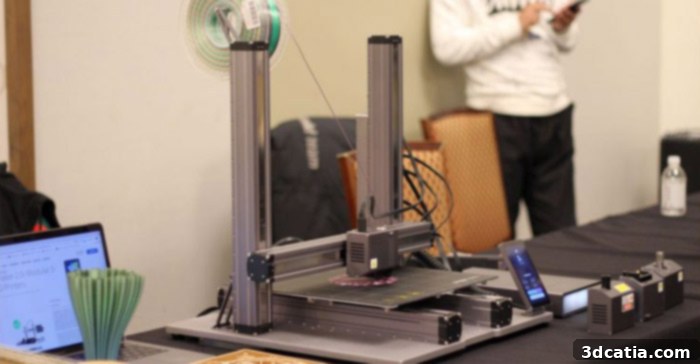
Snapmaker was among the distinguished 3D printing exhibitors at CES 2020, presenting their versatile solutions to the global audience.
Groundbreaking 3D Printers Unveiled at CES 2020
CES consistently serves as a prestigious launchpad for new hardware, and the 2020 event was no exception for the dynamic 3D printing industry. Manufacturers leveraged this global stage to introduce innovative machines that push the boundaries of desktop and professional additive manufacturing. These new offerings addressed a range of user needs, from enhanced color capabilities and multi-functional versatility to advanced material processing, signaling a robust evolution in accessible and powerful fabrication tools.
XYZprinting’s da Vinci Color 5D: A Multifunctional Revolution
Year after year, the renowned manufacturer XYZprinting has strategically utilized the international platform of CES to unveil one or more of its groundbreaking desktop 3D printers, consistently pushing the envelope of accessible additive manufacturing. At CES 2020, the company made a significant splash by introducing the da Vinci Color 5D for the first time. This innovative machine represents a paradigm shift in desktop fabrication, moving beyond conventional 3D printing to offer a truly multi-functional ecosystem. The da Vinci Color 5D is primarily an extrusion 3D printer, but its unique selling proposition lies in its integrated capabilities for precise laser engraving and even high-quality 2D printing on paper, making it an unprecedented “5D” device designed to cater to a broad spectrum of creative and professional needs. Building upon the successful foundation of the da Vinci Color mini model, this new iteration is capable of producing full-color parts up to a generous build volume of 230 × 180 × 180 mm. It achieves this remarkable feat by ingeniously combining Fused Deposition Modeling (FDM) technology for structural integrity with advanced Inkjet technologies for vibrant, high-resolution color application, ensuring both strength and aesthetic appeal. Fernando Hernandez, EMEA Marketing Director of XZYprinting, passionately articulated the vision behind this product, stating: “The da Vinci Color 5D is designed with a broad user base in mind, yet it will prove exceptionally valuable to small businesses and individual designers. Its combination of high-quality printing, unparalleled ease of use, and multi-faceted capabilities truly sets it apart. The inclusion of both 2D printing and laser engraving alongside its core 3D printing functionality makes the da Vinci Color 5D a world first and positions it as the most comprehensive and user-friendly desktop 3D printer ever developed. This machine empowers entrepreneurs and manufacturers, giving them the unprecedented ability to bring their diverse creations to life with a single, integrated solution, fostering innovation and efficiency across various applications.” This statement underscores XYZprinting’s unwavering commitment to delivering versatile and accessible tools that democratize advanced manufacturing techniques, allowing users to move seamlessly between conceptualization, rapid prototyping, and small-scale production with a single, highly capable device.
Snapmaker 2.0: The Ultimate 3-in-1 Fabrication Hub
In the realm of hybrid manufacturing solutions, Snapmaker continued to impress at CES 2020 by introducing an enhanced version of its acclaimed 3-in-1 printer, the Snapmaker 2.0. This innovative machine seamlessly integrates a 3D printer, a powerful laser engraver, and a precise CNC milling machine into a single, compact, and highly adaptable unit. The original Snapmaker garnered significant attention for its modularity and versatility, empowering makers and small businesses alike. The 2.0 iteration builds upon this success with substantial improvements designed to enhance performance, reliability, and user experience. A key enhancement in the Snapmaker 2.0 is the integration of a CAN (Controller Area Network) data bus extension. This advanced communication protocol significantly improves the transmission of information between the various modules and the main control unit, enabling more reliable, faster, and efficient operation. This upgrade ensures smoother transitions between functions, enhances the overall precision and responsiveness of the machine, and makes it even more robust for a wide array of intricate projects. The Snapmaker 2.0 is meticulously designed for makers, hobbyists, educators, and small businesses who require a versatile tool capable of handling diverse fabrication tasks without the need to invest in multiple specialized machines. Its unparalleled ability to switch effortlessly between additive manufacturing (3D printing), subtractive manufacturing (CNC milling), and creative fabrication (laser engraving) makes it an invaluable asset for rapid prototyping, intricate crafting, comprehensive educational purposes, and efficient small-batch production. This strong focus on multi-functionality, ease of use, and enhanced connectivity positions the Snapmaker 2.0 as a truly comprehensive desktop fabrication solution, empowering users to bring complex and multi-faceted designs to life with unprecedented flexibility and efficiency.
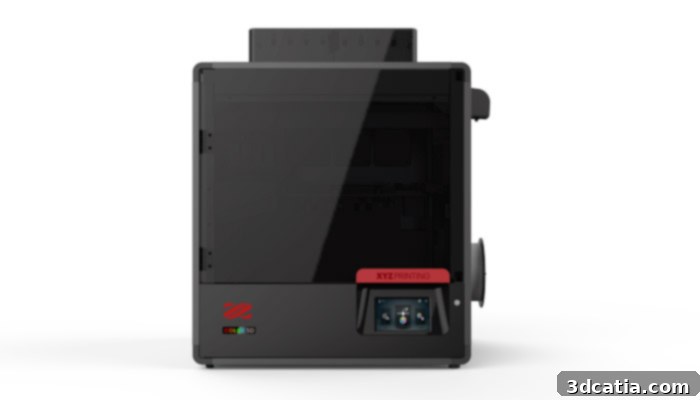
The da Vinci Color 5D 3D printer from XYZprinting showcases integrated 2D printing and laser engraving capabilities for versatile desktop fabrication.
Volumic STREAM ULTRA SC: Award-Winning Sustainability
The French manufacturer Volumic also made a significant impact at CES 2020 with the introduction of its cutting-edge STREAM ULTRA SC machine. This advanced professional 3D printer distinguished itself by earning two prestigious CES awards, a testament to its exceptional design, performance, and forward-thinking philosophy. One award recognized its outstanding innovation in the highly competitive 3D printing category, acknowledging its technical prowess, precision engineering, and significant contribution to the advancement of additive manufacturing technologies. The second, equally important, award highlighted its profound commitment to sustainability and eco-design, a rapidly growing and crucial consideration in modern manufacturing and product development. The STREAM ULTRA SC’s dual recognition underscores a critical and welcome shift in the industry, where unparalleled performance is increasingly evaluated alongside environmental responsibility. Volumic’s achievement signals that high-quality, professional 3D printing can indeed be achieved with a strong focus on sustainable practices, encompassing aspects from efficient material usage to optimized energy consumption and conscientious end-of-life considerations for its components. This machine is meticulously designed for demanding professional use, offering unparalleled precision, reliability, and robust performance, while simultaneously setting a new benchmark for environmentally conscious manufacturing processes. Its success at CES 2020 powerfully demonstrates that true innovation in 3D printing is not just about speed, accuracy, or material capabilities, but also profoundly about creating solutions that are inherently better for the planet and align seamlessly with the evolving demands of a more sustainable and responsible future. The STREAM ULTRA SC stands as a beacon for what is possible when cutting-edge technology converges with a strong, principled commitment to ecological principles, proving that advanced manufacturing can indeed be green.
Advanced 3D Scanners for Enhanced Digitization and Design
Beyond the exciting realm of new 3D printers, CES 2020 also showcased significant advancements in 3D scanning technology, which plays an absolutely crucial role in enabling and accelerating various additive manufacturing workflows. High-quality and user-friendly 3D scanners are essential tools for accurately capturing real-world objects for applications such as precise reverse engineering, rigorous quality control and inspection, comprehensive archival purposes, and the creation of immaculate digital twins for personalized production and digital fabrication.
peel 3D’s peel 2 CAD: Streamlined Workflow for Designers
On the 3D scanner front, the innovative Canadian manufacturer peel 3D presented an exciting new solution tailored specifically for design professionals: the peel 2 CAD. This professional and highly portable 3D scanner is expertly engineered to simplify the often-complex and time-consuming process of digitizing physical objects and seamlessly integrating them directly into Computer-Aided Design (CAD) software environments. The peel 2 CAD is meticulously designed for exceptional ease of use, allowing seasoned professionals and even those relatively new to 3D scanning to capture intricate geometries with remarkable precision and efficiency. What truly sets the peel 2 CAD apart is its enhanced and intelligent workflow, which is specifically tailored for direct and robust compatibility with popular CAD software platforms. The company strongly emphasized this crucial integration, stating: “Peel 2 CAD makes it exceptionally easy to set up and perform 3D scans, providing immediate and robust integration with leading CAD software. Thanks to this innovative new solution, users can drastically reduce the time traditionally spent processing raw scanned files – a notorious and often tedious bottleneck in many contemporary design workflows – and instead allocate more valuable time to innovative design projects or higher value-added tasks that truly drive real business impact and foster creativity.” This acute focus on significantly reducing post-processing overhead is a monumental advantage for engineers, product designers, artists, and architects who routinely rely on converting complex physical objects into accurate digital models for further modification, detailed analysis, or subsequent 3D printing. The peel 2 CAD thus represents a vital and transformative tool for streamlining the entire design and manufacturing cycle, fostering greater creativity and operational efficiency by minimizing the technical barriers that traditionally exist between the physical and digital worlds of design and production.
Innovative 3D Printing Applications Making Waves at CES
CES isn’t just about the unveiling of new hardware; it’s also a dynamic showcase for how existing and emerging technologies are being applied in novel, impactful, and often unexpected ways. At CES 2020, 3D printing continued to demonstrate its immense versatility and transformative power across various industries, from cutting-edge automotive design to highly personalized cosmetics, proving its inherent capability to revolutionize product development, manufacturing processes, and ultimately, consumer experiences.
Rinspeed MetroSnap: Modular Mobility Enhanced by 3D Printing
In the highly competitive and rapidly evolving automotive sector, the visionary Swiss car manufacturer Rinspeed captured significant global attention by unveiling its groundbreaking electric and autonomous concept car, the MetroSnap. This futuristic vehicle is a compelling testament to the power of modular design, featuring ingeniously interchangeable cabins, cleverly termed “Pods,” which users can effortlessly mount onto a unique, universal chassis, known as the “Skateboard.” This truly innovative concept allows for unparalleled flexibility, enabling the MetroSnap to seamlessly transform from a comfortable passenger vehicle to an efficient delivery van or even a versatile mobile office with remarkable ease and speed. Our particular interest, of course, naturally gravitated towards the integral and pivotal role of 3D printing in bringing this ambitious concept car to vivid life. Rinspeed strategically partnered with Stratasys, a global leader in additive manufacturing solutions, leveraging their advanced Fused Deposition Modeling (FDM) and sophisticated PolyJet technologies. These distinct and powerful 3D printing methods were employed to meticulously design and produce approximately thirty crucial exterior and interior parts for the MetroSnap. The parts created ranged from highly functional components, essential for the vehicle’s operation, to intricate aesthetic elements that defined its modern look. These included critical parts such as the vehicle’s unique license plate, various display frames integrated within the cabin, and crucial power sockets that supported its electric functions. The strategic adoption of 3D printing allowed Rinspeed to rapidly iterate on design ideas with unparalleled speed, produce complex geometries that would be difficult or prohibitively costly with traditional manufacturing methods, and customize parts specifically tailored to the modular nature of the vehicle. This exemplifies how additive manufacturing is not only accelerating prototyping cycles in the automotive industry but also fundamentally enabling entirely new paradigms of vehicle design, unprecedented levels of customization, and enhanced functionality, paving the way for more adaptable, sustainable, and resource-efficient mobility solutions for the future.
Amore Pacific: Personalized Skincare with 3D Printed Facial Masks
The cosmetics sector, an industry often at the forefront of personalization and bespoke consumer experiences, also witnessed significant innovation at CES 2020, thanks to the revolutionary capabilities of 3D printing. The South Korean beauty giant Amore Pacific unveiled a groundbreaking system for 3D printing facial masks, marking a significant leap forward in personalized skincare. What makes this innovation particularly compelling and impactful is its inherent ability to customize masks precisely according to the individual user’s specific skin type, unique facial contours, and particular needs. By leveraging advanced diagnostics and detailed data analysis of the user’s skin condition, the system can meticulously create a hydrogel mask that is perfectly tailored, effectively addressing unique concerns such as excessive dryness, problematic oiliness, or specific problem areas that require targeted treatment. To achieve this unprecedented level of personalization and intricate detail, the company reportedly designed a specialized multi-material machine exclusively dedicated to the precise creation of these sophisticated hydrogel masks. This dedicated hardware allows for the accurate and controlled deposition of different active ingredients and the formation of complex mask structures, all optimized for maximum efficacy and targeted results. This pioneering innovation from Amore Pacific serves as a powerful and timely reminder of a similar initiative launched by Neutrogena approximately a year earlier, which also focused intently on personalized skincare products via advanced 3D printing technology. The emergence of such sophisticated, highly customized solutions from major global beauty brands signals a profound and growing trend towards hyper-personalization in the cosmetics industry, a revolution powered by the inherent flexibility, precision, and efficiency offered by additive manufacturing. Consumers are increasingly seeking products that are tailored specifically to them, moving away from generic solutions, and 3D printing is proving to be a key enabling technology for this evolving market demand, promising a future where beauty products are truly unique to each individual, enhancing both effectiveness and consumer satisfaction.
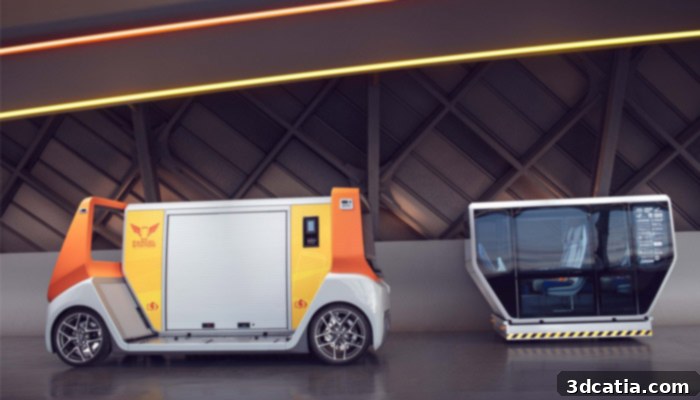
The innovative Rinspeed MetroSnap concept car integrates approximately thirty meticulously designed 3D printed parts, showcasing additive manufacturing’s vital role in advanced automotive design and rapid prototyping.
The Broader Impact of 3D Printing at CES 2020
While the specific innovations in printers, scanners, and applications highlighted above offer a compelling glimpse into the dynamic and rapidly expanding world of additive manufacturing, CES 2020 also underscored several overarching trends that are profoundly shaping the industry’s trajectory. A significant and noticeable focus was placed on **accessibility and user-friendliness**, with many manufacturers striving to make complex 3D printing technologies more intuitive, manageable, and economically viable for a broader audience, ranging from enthusiastic hobbyists to burgeoning small businesses. The XYZprinting da Vinci Color 5D and Snapmaker 2.0 perfectly exemplify this trend, consolidating multiple functionalities into single, easy-to-use, and highly versatile devices, thereby lowering the barrier to entry for advanced fabrication. **Sustainability** emerged as another critical and increasingly prominent theme, as powerfully evidenced by Volumic’s award-winning STREAM ULTRA SC. This indicates a growing awareness and deep commitment within the 3D printing community to develop environmentally responsible solutions, actively reducing waste, optimizing material consumption, and enhancing energy efficiency throughout the entire product lifecycle, from design to disposal. Furthermore, the strong push towards **personalization and customization**, visibly demonstrated in Amore Pacific’s intelligent facial mask system and Rinspeed’s innovative modular vehicle, unequivocally highlights 3D printing’s unique and unmatched capability to cater to individual needs and preferences on an unprecedented scale. This potential for mass customization is poised to fundamentally transform diverse industries ranging from precision healthcare to bespoke consumer goods. Finally, the seamless **integration of technologies** – combining 3D printing with complementary processes such as 2D printing, laser engraving, CNC milling, and advanced CAD software – points unmistakably towards a future where additive manufacturing is not merely an isolated process but an integral and indispensable part of a holistic digital fabrication ecosystem. CES 2020 vividly demonstrated that 3D printing is rapidly maturing, evolving significantly beyond niche applications to become a foundational and indispensable technology that drives groundbreaking innovation across virtually every sector of modern industry and consumer life.
It is truly challenging to encapsulate all the exciting new 3D printing features and groundbreaking applications that were showcased at CES 2020, nor to list every single interesting innovation hidden within the sprawling aisles of the convention center. The sheer volume and diverse nature of advancements presented by exhibitors made it abundantly clear that additive manufacturing is on an accelerated trajectory of growth and innovation, continually pushing the boundaries of what is possible. For those eager to explore the full breadth of what CES 2020 offered to the world of technology, we highly recommend visiting the event’s official website to delve deeper into the showcased technologies and discover even more insights into the captivating future of electronics and manufacturing. Your journey into the future of tech begins there!
What were your most memorable impressions of CES 2020 and the exciting future you envision for 3D printing? We would absolutely love to hear your thoughts, perspectives, and insights! Please feel free to share your comments below or engage with us actively on our Facebook and Twitter pages. To stay consistently updated with all the latest news, emerging trends, and groundbreaking innovations in the dynamic world of 3D printing, remember to sign up for our free weekly Newsletter, delivering cutting-edge information and exclusive content straight to your inbox!