
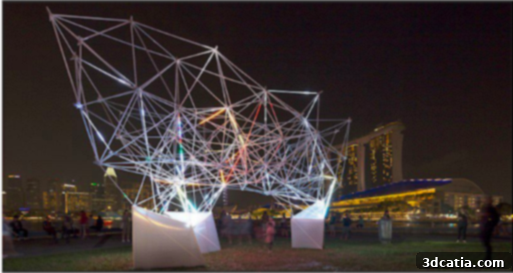
Revolutionizing Art and Architecture: Singapore’s Interactive 3D Printed Light Installation at iLight Marina Bay
The convergence of cutting-edge technology and creative expression is reshaping our perception of art and urban spaces. In a groundbreaking move, 3D printing is making significant inroads into the art world, epitomized by a spectacular mesh-like art installation unveiled at the prestigious iLight Marina Bay festival in Singapore. This innovative structure, a testament to the boundless possibilities of digital fabrication, was meticulously designed by esteemed professors Felix Raspall and Carlos Bañón from the Singapore University of Technology and Design (SUTD). Their primary objective with this remarkable piece was to eloquently demonstrate the powerful synergy and inherent functionality of integrating advanced 3D printing techniques with intricate architectural components, pushing the boundaries of what is traditionally considered feasible in design and construction.
The iLight Marina Bay festival stands as an annual beacon of creativity and sustainability, drawing international acclaim for its diverse array of light art installations. This vibrant event curates works from a global roster of talented artists, each tasked with a crucial mission: to utilize environmentally friendly materials or energy-saving lighting solutions. The festival’s overarching purpose extends beyond mere aesthetic appeal; it actively seeks to highlight the pressing need for environmental consciousness and to inspire attendees to integrate sustainable practices into their daily lives. By showcasing art that is both visually captivating and ecologically responsible, iLight Marina Bay effectively transforms public spaces into dynamic educational platforms, encouraging a collective shift towards a more sustainable future.
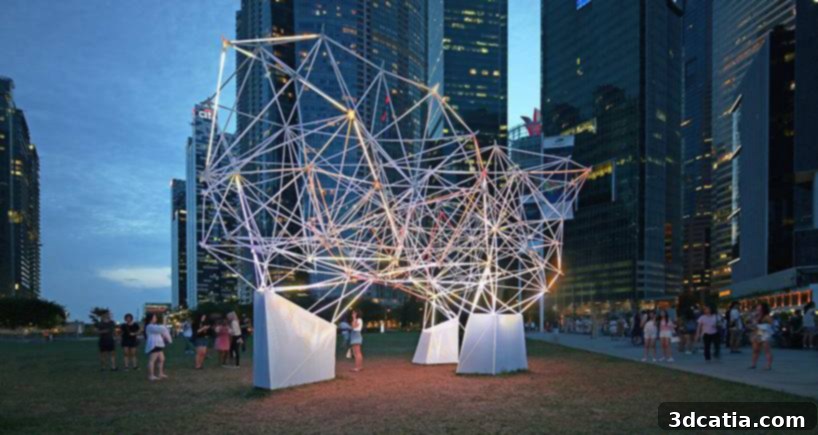
The structure includes LED pixels that react when a visitor is present.
The installation, aptly titled “Ultra Light Network” as referenced in its accompanying video, represents a pinnacle of interactive design and engineering prowess. Conceived by the visionary duo Bañón and Raspall, it manifests as a truly unique 3D printed, lightweight, and luminous tetrahedral mesh. This colossal yet ethereal structure spans an impressive 10 meters in length, 6 meters in width, and 3 meters in height, occupying a significant presence within the festival landscape. Its captivating brilliance is powered by an astounding array of over 50,000 individual LED pixels, each a tiny point of light contributing to a grand, dynamic display. These pixels are not merely static; they are intelligently controlled by a sophisticated algorithm running across five microcontrollers. The magic truly unfolds through the integration of three ultrasonic sensors strategically positioned at the base of the structure. These sensors actively detect the presence of visitors, triggering a mesmerizing, real-time light show that responds directly to human interaction. This seamless blend of art, technology, and human engagement transforms a passive viewing experience into an active, participatory one, making each encounter uniquely personal and unforgettable.
The intricate network of slender tubes that form the structural backbone of this installation is a marvel of material science and digital fabrication. These tubes are meticulously crafted from advanced polymers, specifically a combination of translucent ABS (Acrylonitrile Butadiene Styrene) and nylon. This material choice is pivotal, as it allows the polymers to effectively diffuse light, creating a soft, ambient glow that emanates from within the structure. Each individual tube precisely houses custom-made LED light bulbs, ensuring uniform illumination and maximizing the visual impact. Beyond their light-diffusing properties, these selected polymers offer exceptional structural integrity. Their unique composition grants them both high resilience and remarkable flexibility, enabling the entire structure to gracefully withstand the stresses of thermal expansion and contraction, as well as various environmental factors. This durability is crucial for an outdoor installation designed to captivate audiences over an extended period, showcasing the practical application of 3D printing in creating robust yet aesthetically refined architectural elements.
Professors Raspall and Bañón are no strangers to the realm of innovative 3D printed art and architecture. Their previous work includes a striking 3D printed fibrous mesh pavilion, which garnered significant attention when it was installed in the atrium of SUTD. However, this new interactive light structure at iLight Marina Bay represents a significant evolution in their artistic and technological journey. It transcends their earlier creations by introducing a highly engaging and dynamic interactive experience. This crucial element allows the public to not only observe but also participate in the art, thereby directly experiencing the profound wonders that 3D printing can bestow upon various sectors, including, but not limited to, contemporary art, urban design, and responsive architecture. Such installations serve as vital educational tools, demystifying advanced technologies and illustrating their immense potential for creating beautiful, functional, and sustainable solutions in our built environment.
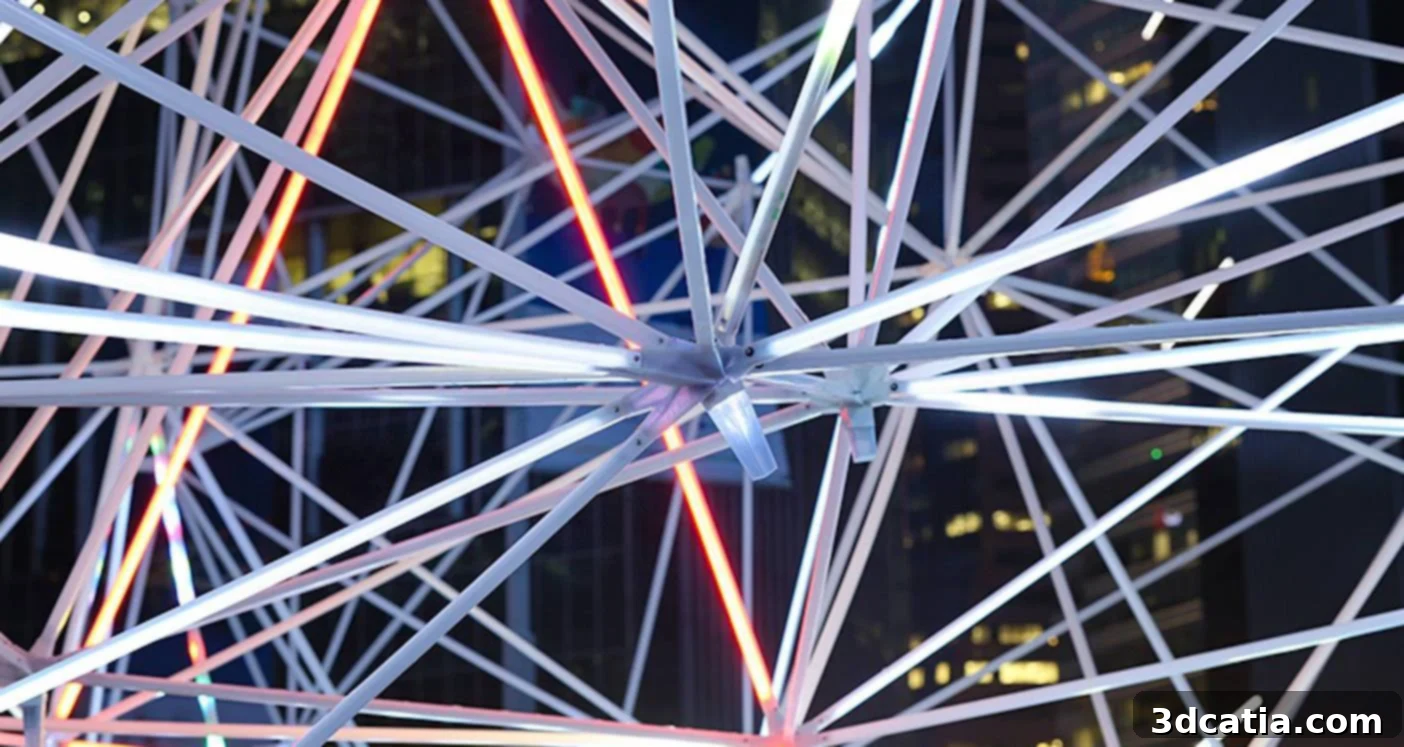
A close up of the 3D printed structure.
The success of the “Ultra Light Network” installation underscores the growing relevance of digital fabrication in fostering sustainable urban development. By utilizing 3D printing, the designers were able to achieve complex geometries and optimized material use that would be challenging, if not impossible, with traditional construction methods. This approach aligns perfectly with the iLight Marina Bay festival’s core ethos of promoting sustainability. 3D printing inherently allows for precise material deposition, minimizing waste and enabling the creation of lightweight components that reduce the overall carbon footprint associated with transportation and assembly. Furthermore, the use of durable polymers ensures the longevity of the installation, reducing the need for frequent replacements and contributing to a circular economy model in art and design. This project serves as a compelling case study for how advanced manufacturing techniques can be harnessed to create environmentally conscious and visually stunning public artworks.
The Singapore University of Technology and Design (SUTD) plays a pivotal role in nurturing such innovative projects. As a leading institution focused on design and technology, SUTD fosters an environment where interdisciplinary collaboration thrives. Professors Raspall and Bañón, through their research and artistic endeavors, exemplify SUTD’s commitment to pushing the boundaries of what’s possible in architecture, engineering, and art. Their work not only showcases technical prowess but also explores the philosophical implications of technology on human experience and interaction with urban spaces. This interactive installation, for instance, transforms a static architectural form into a dynamic entity that responds to its inhabitants, blurring the lines between observer and participant and redefining the traditional art-viewer relationship. It’s a prime example of how smart architecture can engage and inspire a diverse audience.
The future of architectural design and public art is undoubtedly shaped by such pioneering efforts. The integration of parametric design, digital fabrication, and responsive technologies opens up unprecedented avenues for creating adaptive and intelligent environments. Imagine cityscapes where buildings subtly react to human presence, where public art installations breathe and change with the rhythm of urban life, or where architectural elements not only provide shelter but also engage, entertain, and educate. The “Ultra Light Network” is a tangible step towards realizing this vision, demonstrating that art can be more than just visually appealing; it can be a living, breathing component of our shared spaces, continuously evolving and interacting with its audience. This kind of experiential art resonates deeply with contemporary audiences, offering memorable encounters that foster a greater appreciation for both technology and artistic expression.
For those keen to delve deeper into the captivating allure of this architectural innovation and witness its interactive brilliance firsthand, we highly recommend exploring the comprehensive video documentation. It provides a dynamic perspective on the installation’s intricate details and its vibrant, responsive light sequences, offering a deeper understanding of its engineering and artistic merit.
What are your thoughts on this remarkable fusion of 3D printing, interactive technology, and sustainable art? Do you believe that groundbreaking creations like the “Ultra Light Network” will play a crucial role in propelling 3D printed art and responsive architecture further into the mainstream, influencing future design paradigms and public spaces? We invite you to share your insights and engage in the conversation by leaving a comment below or by reaching out to us on our Facebook and Twitter pages! Your perspectives are invaluable as we explore the evolving landscape of digital fabrication and its transformative impact on creativity and innovation.