
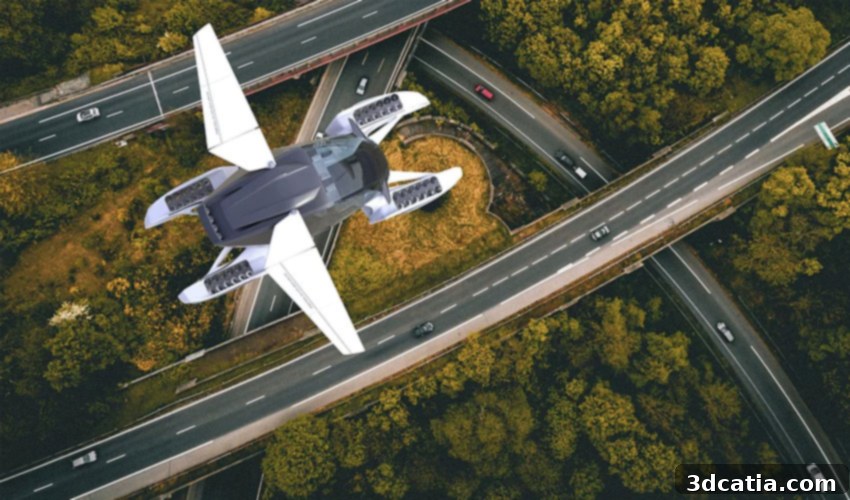
Hoversurf Formula: The 3D-Printed Flying Car Redefining Urban Mobility
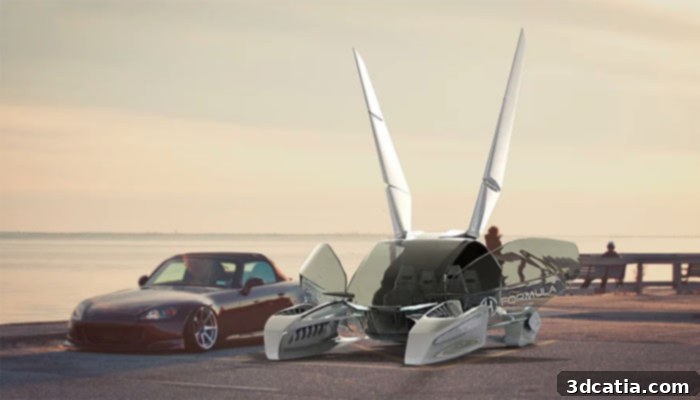
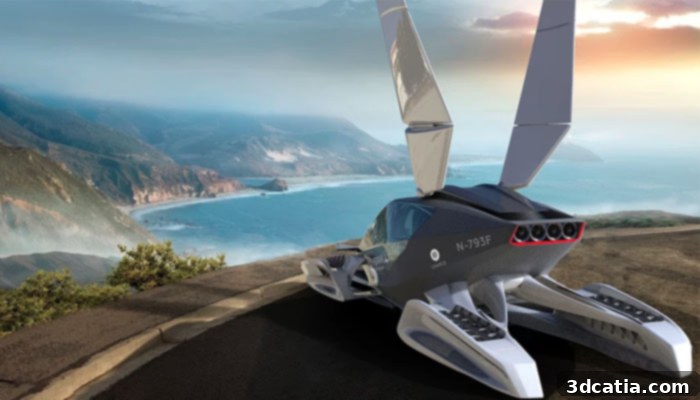
The concept of flying cars has long been relegated to the realm of science fiction, a futuristic dream depicted in movies like *Back to the Future*. However, Hoversurf, an innovative company operating between Moscow and San Francisco, has turned this dream into a tangible reality with their groundbreaking creation: the “Formula” flying car. This ambitious project isn’t just a prototype; it was scheduled for release in 2018, showcasing a bold vision for personal air mobility that integrates cutting-edge 3D printing technology with advanced aerospace engineering. The Formula is designed as a 5-seater vehicle, distinguished by its revolutionary use of 3D-printed metal and carbon fiber components, setting a new benchmark for what’s possible in vehicle manufacturing and personal transportation.
Hoversurf’s journey into the world of flying vehicles is built upon a solid foundation of expertise in drone manufacturing. The company has already demonstrated its capabilities with successful models like the Cargo Drone and the Scorpion, both of which serve as a testament to their innovative approach to unmanned aerial vehicles. These earlier ventures provided invaluable experience in developing robust, efficient, and reliable aerial platforms, knowledge that has been directly applied to the far more complex challenge of creating a passenger-carrying flying car. The Formula represents the culmination of this expertise, Hoversurf’s most ambitious and potentially transformative achievement to date.
The Evolution of Flying Cars and 3D Printing
The automotive sector has seen an increasing adoption of advanced technologies, primarily aimed at streamlining production processes and reducing manufacturing costs. However, Hoversurf’s Formula takes this trend to an entirely new level by integrating 3D printing – or additive manufacturing – into the core design and production of a flying car. This fusion of technologies marks a significant milestone, opening up unprecedented possibilities for vehicle design, material efficiency, and rapid prototyping in the nascent field of urban air mobility.
What makes the Formula truly stand out is Hoversurf’s pragmatic philosophy. As articulated by their staff, many previous flying car projects have been conceived solely for a distant future, often impractical for everyday use due to issues like parking and operational complexity. Hoversurf, however, asserts that the Formula was “created for the present and will be part of your daily life very soon.” This ambitious declaration underscores their commitment to developing a flying vehicle that is not just technologically advanced but also seamlessly integrates into modern urban lifestyles. While the journey to mass production and widespread adoption presents numerous challenges, Hoversurf’s focus on immediate practicality distinguishes their approach in a crowded field of futuristic concepts.
The Power of 3D Printing: Crafting the Formula
The choice of 3D printing for the Formula’s components is not merely a novelty; it is a strategic decision that unlocks critical advantages for a vehicle designed to fly. Additive manufacturing allows for the creation of complex geometries and optimized internal structures that are impossible or cost-prohibitive with traditional methods. For a flying car, weight is paramount, and 3D printing excels at producing lightweight parts with exceptional strength. By precisely depositing material layer by layer, designers can minimize waste and create components that are strong where needed and lighter elsewhere, significantly improving the vehicle’s lift-to-weight ratio and overall performance.
The Formula extensively utilizes both 3D-printed metal and carbon fiber parts. Carbon fiber, known for its incredible strength-to-weight ratio, is a material that can be engineered to be even harder than steel while being substantially lighter. This makes it an ideal choice for aerospace applications where structural integrity and minimal mass are crucial. The combination of advanced metals and carbon fiber, precisely manufactured through 3D printing, ensures that the Formula is not only robust and safe but also highly efficient in flight. This technological synergy allows Hoversurf to push the boundaries of conventional vehicle design, creating a more aerodynamic, durable, and energy-efficient flying machine.
Performance and Environmental Responsibility
Hoversurf has released tantalizing details about the Formula’s performance capabilities, painting a picture of a truly high-speed personal air vehicle. The company claims the Formula can achieve a top speed of up to 320 km/h (approximately 200 mph) and boasts an impressive range of up to 450 km (about 280 miles). Such specifications position the Formula not merely as a novelty but as a viable option for inter-city travel or significantly reducing commute times within congested urban landscapes. These performance metrics, combined with its 5-seater capacity, suggest a practical and efficient mode of transportation for individuals and families alike.
Crucially, the Formula is powered by electric motors, aligning with a global push towards sustainable transportation. This electric propulsion system offers several key benefits. Firstly, it allows the vehicle to travel almost silently, a vital consideration for public acceptance and integration into residential areas. Noise pollution is a major concern for future urban air mobility solutions, and Hoversurf’s commitment to quiet operation addresses this head-on. Secondly, the electric motors make the Formula environmentally respectful, producing zero direct emissions during flight. This commitment to sustainability is paramount in an era where environmental impact is a critical factor in the development of new technologies, especially in transportation.
From Concept to Reality: Challenges and Aspirations
At the time of its announcement, the Hoversurf Formula was firmly in the concept phase, though the company stated that the necessary work to manufacture a prototype had been completed. This progression from concept to a demonstrable model is a critical step in gaining investor confidence and public trust. Hoversurf projected an ambitious mid-2018 release date with an estimated price tag of $97,000. This price point, while significant, positions it within the high-end luxury vehicle market, potentially making it accessible to early adopters and niche markets eager to embrace the future of personal flight.
However, developing such a revolutionary vehicle is fraught with challenges. The aerospace industry operates under stringent safety regulations, and obtaining certification for a radically new flying car design is a monumental undertaking that typically spans many years. Even with significant progress on a prototype, the path to commercial release involves extensive testing, regulatory approvals, and manufacturing scalability. The initial skepticism surrounding whether a futuristic project like the Formula could truly release without a fully operational prototype reflects the inherent complexities of bringing such an innovation to market. Nevertheless, Hoversurf’s track record of producing working hovercrafts provides a degree of encouragement, demonstrating their capability to translate bold ideas into functional machines. This blend of ambition and proven engineering prowess suggests that while the timeline might be fluid, the vision remains compelling.
The Future of Personal Air Mobility
Hoversurf’s Formula stands as a testament to the burgeoning field of Personal Air Mobility (PAM) and Urban Air Mobility (UAM), where numerous companies are vying to redefine how we travel. The integration of 3D printing into the very fabric of a flying car, coupled with electric propulsion, positions the Formula at the forefront of this revolution. It exemplifies how advanced manufacturing techniques can accelerate innovation, allowing for faster iterations, optimized designs, and more efficient production of complex vehicles. As battery technology improves and autonomous flight systems become more sophisticated, the dream of everyday flying cars moves ever closer to widespread realization.
The implications of successful flying car development are vast, potentially transforming urban planning, commuting, and logistical operations. Imagine a future where traffic jams are circumvented not by expanding roads, but by utilizing a third dimension of transportation. While regulatory frameworks, infrastructure development (like vertiports and charging stations), and public acceptance are significant hurdles that remain, companies like Hoversurf are laying the groundwork for this future. Their commitment to building a practical, present-day flying solution could be the catalyst that propels the entire industry forward.
Whether the Hoversurf Formula ultimately becomes a widespread reality or serves as a foundational step for future innovations, its introduction has undoubtedly captured the imagination and pushed the boundaries of what is considered possible. The blend of advanced materials, electric power, and the efficiency of 3D printing makes it a fascinating case study in modern engineering. If you’re ready to explore this incredible vision and perhaps even envision yourself taking off in a flying car, we encourage you to visit the official Hoversurf website to learn more.
Has Hoversurf’s ambitious Formula flying car captured your imagination? We’d love to hear your thoughts on this groundbreaking innovation! Share your comments below or connect with us on our Facebook and Twitter pages. Don’t forget to sign up for our free weekly Newsletter to stay updated with all the latest news in 3D printing and beyond, delivered straight to your inbox!