
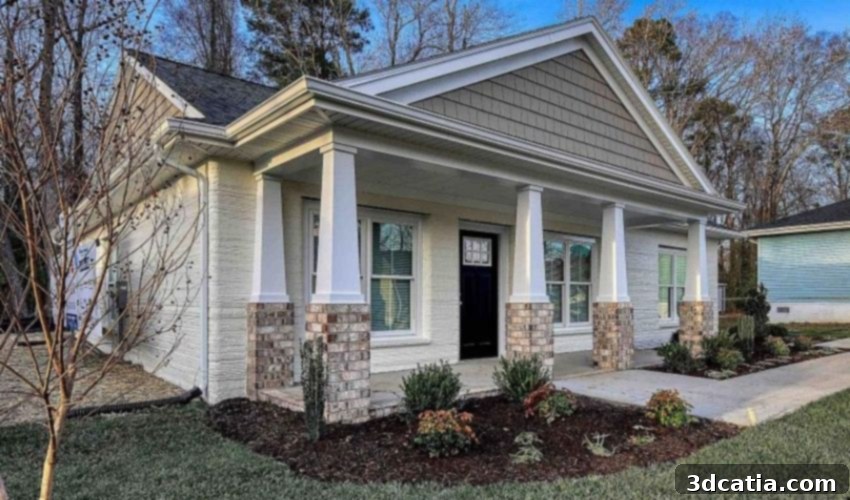
Habitat for Humanity’s First 3D Printed Home: A New Era for Affordable Housing Solutions
In a heartwarming development that signals a significant leap forward for affordable housing initiatives, a family has officially moved into Habitat for Humanity’s first ever completed 3D printed home. This groundbreaking residence, finalized just weeks ago, stands as a testament to an innovative partnership between Alquist, a pioneer in 3D printing home construction, and Habitat for Humanity Peninsula and Greater Williamsburg. Their collaborative effort directly targets the pressing shortage of affordable homes across the United States, offering a tangible solution to a pervasive societal challenge.
The completion and occupancy of this home underscore a growing trend witnessed throughout the year: 3D printing in the construction sector is rapidly transitioning from experimental concept to practical, livable reality. As more 3D printed houses become habitable, this technology emerges not merely as a novelty but as a pivotal innovation capable of addressing homelessness and the global housing crisis on an unprecedented scale. This project in Virginia, in particular, showcases the immense potential for rapid and cost-effective home building.
Many will recall earlier reports about Habitat for Humanity’s ambitious project to build a 3D printed home in Arizona. While that specific endeavor is still in progress, this Virginia home has reached a monumental milestone: full completion and occupancy. What makes this achievement even more remarkable is the construction timeline—the structural elements of the home were printed in an astounding 12 hours. This drastically reduces the weeks, or even months, typically required for conventional home construction, signifying a revolutionary shift in building efficiency. Beyond speed, 3D printing offers substantial cost savings, impacting both material expenditure and labor time, making it an incredibly attractive prospect for organizations dedicated to expanding affordable housing, including Habitat for Humanity and Alquist.
Following its rapid completion, the innovative 3D printed home was proudly sold to April and her family of two. A core principle of Habitat for Humanity is to make homeownership accessible, and this was exemplified in the mortgage terms. April’s monthly payments, which comprehensively cover real estate taxes and homeowner’s insurance, will not exceed 30% of her income, ensuring long-term affordability and financial stability for the family. While no further specific projects have been formally announced by this particular partnership, both Alquist and Habitat for Humanity have expressed keen interest in continuing their exploration of 3D printing’s numerous benefits for creating sustainable, affordable homes for communities in need, promising a future filled with more such transformative initiatives.
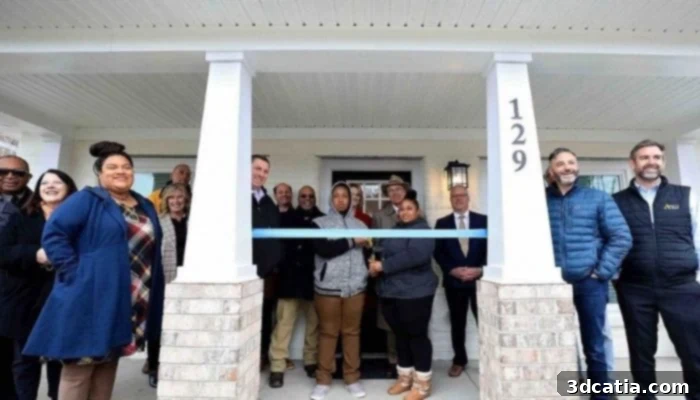
April and her family have moved into Habitat’s first 3D printed home (photo credits: Habitat for Humanity)
Why Habitat for Humanity Embraces 3D Printing for Affordable Housing
The United States has grappled with an affordable housing crisis for many years, a challenge that has only intensified in recent times. Various factors have exacerbated housing shortages, including the profound economic ripple effects of the COVID-19 pandemic, climate change leading to widespread home destruction and population displacement, and significant economic migration patterns. These elements collectively contribute to a scarcity of housing options and a surge in prices, pushing homeownership out of reach for millions of families.
Habitat for Humanity, an organization tirelessly working to build homes and hope, highlights the gravity of this situation on its website. Citing data from the National Association of Home Builders, they emphasize a stark reality: “for every $1000 increase in the price of a home, 153,967 families are priced out.” This statistic becomes even more alarming when considering the current market dynamics, characterized by fierce bidding wars fueled by housing shortages and the increasing trend of larger investment companies acquiring residential properties. Such an environment creates an insurmountable barrier for low-to-moderate income families aspiring to homeownership, deepening the crisis.
For Alquist 3D, a visionary leader in construction additive manufacturing, 3D printing presents an optimal and innovative solution to these complex housing issues. Their corporate philosophy centers on leveraging technology to democratize access to safe and affordable shelter. Alquist’s website meticulously details the critical importance of embracing technologies like 3D printing, especially in light of the dramatic escalation in traditional lumber prices. Since 2020, the cost of an average home built with conventional materials has surged by an additional $36,000, creating an even wider affordability gap. Habitat for Humanity further underscores this impact, asserting that this increase effectively places more than 5.5 million families beyond the purchasing power for new houses, pushing the dream of homeownership further out of reach.
The challenge is particularly pronounced in rural regions, where traditional building costs often outweigh the potential selling price, even as demand for housing grows. This economic imbalance makes it difficult for developers to justify new construction using conventional methods. To address these disparities and make housing more accessible, Alquist 3D utilizes advanced 3D printers from leading manufacturers like COBOD, employing durable and readily available concrete as the primary building material. This approach allows them to undertake projects in multiple states, systematically working towards reducing the overall cost of housing and critical infrastructure in under-served areas, thereby fostering economic growth and social equity.
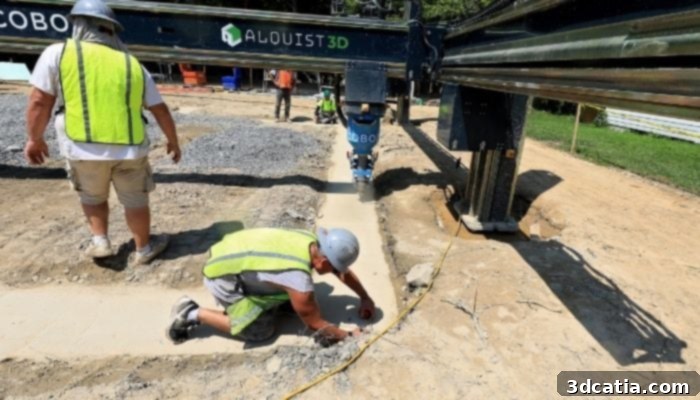
Photo Credits: Consociate Media
In their latest collaborative triumph, Alquist 3D partnered with Habitat for Humanity to bring this innovative vision to life, creating a comfortable and spacious 1,200-square-foot home featuring three bedrooms and two bathrooms. Alquist’s decision to embrace 3D printing for its residential projects stems from the technology’s inherent ability to dramatically reduce construction timelines while simultaneously enhancing overall efficiency. A company representative eloquently articulated the ideal synergy between 3D printing and the mission of affordable housing, stating, “For seven years we have been trying to figure out how to drop the cost of housing and that’s how we found 3D. When you look at Habitat’s mission it’s essentially the same. How do we make housing affordable for people in need?” This shared vision underscores the profound potential of this partnership to create lasting impact.
The benefits of 3D printing extend beyond mere speed and cost. This technology minimizes construction waste, as material is deposited precisely where needed, reducing environmental impact compared to traditional methods. Furthermore, 3D printing allows for greater design flexibility, potentially enabling unique architectural features and improved structural integrity. The use of robust materials like concrete also contributes to the longevity and resilience of these homes, making them more durable in various climatic conditions. As the technology evolves, we can expect even greater advancements in material science and printing techniques, further solidifying 3D printing’s role in future construction.
Adding another layer of innovation, this specific 3D printed home comes equipped with advanced smart home technology. Each residence includes a Raspberry Pi-based monitoring system, seamlessly integrating modern conveniences with practical functionality. This intelligent system is designed to provide comprehensive indoor environment monitoring, enhancing comfort and safety for the occupants. It also offers robust security features and facilitates efficient emergency management, providing peace of mind. Crucially, the system optimizes energy consumption, helping residents save on utility bills and reduce their carbon footprint. Moreover, it continuously analyzes occupant comfort levels and space utilization, offering insights that can inform future home designs and ensure maximum livability. This blend of cutting-edge construction and smart home technology truly defines a modern, efficient, and affordable living space. For more detailed information on this pioneering project, visitors can explore Habitat for Humanity’s dedicated website HERE.
The implications of projects like these are vast. Construction 3D printing holds the promise of revolutionizing not just affordable housing, but also disaster relief efforts, providing rapid shelter in emergency zones. It can also help address skilled labor shortages in the construction industry, as automated processes take over much of the intensive labor. However, challenges remain, including the need for updated building codes to accommodate this new technology, ongoing research into diverse and sustainable printing materials, and public education to build trust and acceptance of 3D printed homes. Overcoming these hurdles will pave the way for wider adoption and a future where innovative construction methods play a central role in solving global housing challenges.
What are your thoughts on this exciting advancement? Would you consider living in a 3D printed home, or do you believe this technology truly holds the answer for addressing housing issues in the US and beyond? We invite you to share your perspectives in the comments section below or join the conversation on our LinkedIn, Facebook, and Twitter pages! Don’t miss out on the latest innovations and industry news – sign up for our free weekly Newsletter here, delivered straight to your inbox. You can also discover more about 3D printing’s impact by exploring all our insightful videos on our YouTube channel.