
Pedal Towards Purity: How Rolloe’s Air-Purifying Bike Wheels Combat Urban Pollution
In an era where urban centers worldwide grapple with the severe challenges of air pollution, innovative solutions are more critical than ever. While the shift from cars to bicycles already marks a significant stride towards cleaner air and healthier cities, a groundbreaking invention is poised to take this commitment to environmental sustainability a substantial step further. Imagine a future where every pedal stroke doesn’t just transport you, but actively cleanses the air around you. This ambitious vision is becoming a reality thanks to London-based industrial designer Kristen Tapping, who conceptualized and developed Rolloe – an innovative bicycle wheel engineered to actively purify the air from harmful pollutants. This pioneering design integrates advanced filtration technology directly into the bicycle, transforming everyday commutes into powerful acts of environmental restoration. Rolloe’s development leverages modern manufacturing techniques, with several key components expertly 3D printed, showcasing how cutting-edge technology can be harnessed for ecological benefit.
Kristen Tapping’s inspiration for Rolloe stems from a deep concern for the escalating environmental issues plaguing our cities. Her research highlights alarming statistics regarding urban air quality, painting a stark picture of the challenges ahead. For instance, road transport is identified as a primary culprit, responsible for a staggering 70% of nitrogen dioxide emissions and 30% of hazardous particulate matter in the air. These pollutants are not just an aesthetic concern; they pose serious health risks, contributing to respiratory illnesses, cardiovascular problems, and reduced life expectancy for urban dwellers. Governments globally are increasingly responding to this crisis through various initiatives, such as establishing dedicated cycling lanes, investing in expansive bike-sharing programs, and promoting electric bicycle adoption to encourage greener transportation habits. In parallel, additive manufacturing, commonly known as 3D printing, has emerged as a transformative force in the cycling industry. It facilitates the creation of lighter, more efficient, and highly customizable two-wheeled vehicles, reducing material waste and streamlining production and logistical processes. Rolloe exemplifies this synergy, demonstrating how 3D printing can be ingeniously applied not just to enhance bike performance, but to integrate active air purification directly into the cycling experience, making every journey a contribution to cleaner urban environments.
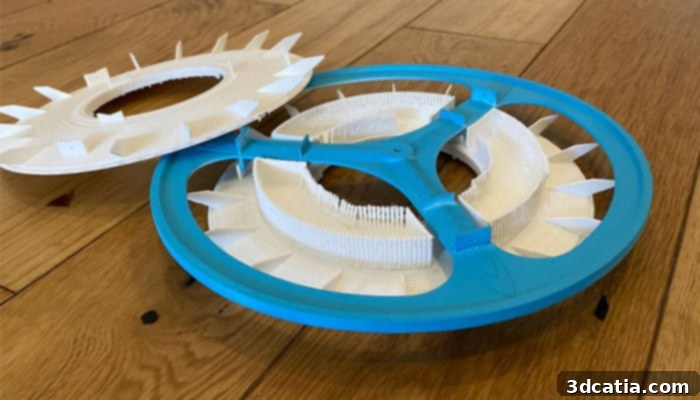
Kristen Tapping designed several prototypes of the Rolloe wheel using advanced 3D printing techniques. (All image credits: Kristen Tapping)
Addressing Urban Air Pollution: The Urgent Need for Innovative Solutions
The invisible threat of air pollution profoundly impacts the quality of life in our cities. Beyond the statistics, the daily reality for millions involves breathing air contaminated with a cocktail of harmful substances. Particulate matter (PM2.5 and PM10), nitrogen oxides (NOx), sulfur dioxide (SO2), and volatile organic compounds (VOCs) are just a few of the pollutants linked to a myriad of health problems, from asthma and bronchitis to heart disease and certain cancers. The World Health Organization (WHO) consistently highlights air pollution as one of the largest environmental health risks, responsible for millions of premature deaths annually. This grim reality underscores the desperate need for multifaceted approaches to environmental remediation. While large-scale governmental policies and industrial regulations are crucial, individual actions and community-level innovations like Rolloe offer a powerful complementary strategy. Empowering citizens to become part of the solution, even during their daily commute, fosters a sense of collective responsibility and can significantly amplify the impact of broader environmental efforts.
For years, the conversation around sustainable urban transport has largely focused on reducing emissions at the source. Shifting from fossil-fuel-powered vehicles to electric cars, public transport, and especially cycling, has been a key strategy. Bicycles, in particular, represent a zero-emission mode of transport that promotes physical health and reduces traffic congestion. However, even cyclists are exposed to the pollutants generated by other vehicles. Rolloe introduces a paradigm shift by turning the bicycle into an active environmental agent, capable not only of avoiding pollution but also of mitigating existing contamination. This innovative approach moves beyond passive sustainability to active restoration, marking a pivotal moment in the evolution of eco-friendly urban mobility. By actively drawing in and filtering airborne toxins, Rolloe bicycles offer a personal protective measure for the rider while simultaneously contributing to the overall improvement of urban air quality for everyone.
The Engineering Behind Rolloe: A Closer Look at its 3D-Printed Components and Filtration System
Rolloe: A Project to Benefit the Environment
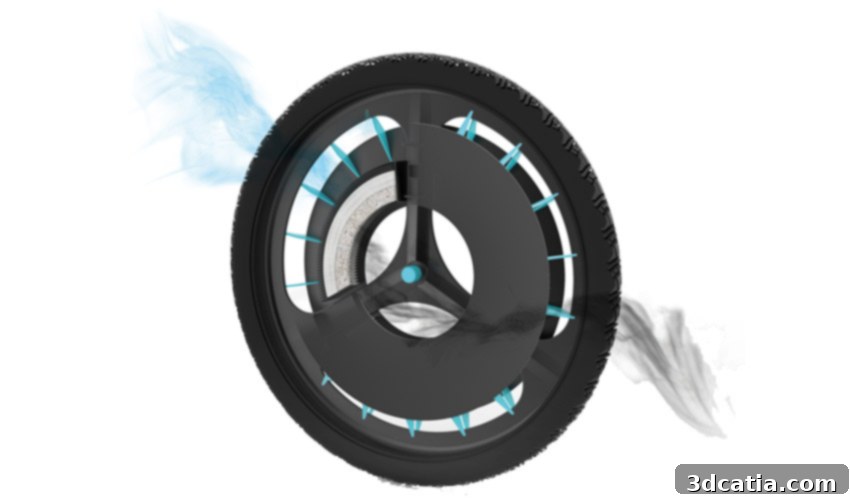
The Rolloe wheel is a testament to thoughtful industrial design, integrating several components crafted for both durability and efficiency. Its structure cleverly combines parts made through advanced manufacturing processes, including 3D printing and traditional injection molding, chosen for their optimal material properties and production scalability. The core of the wheel features two robust rims, equipped with strategically placed ABS (Acrylonitrile Butadiene Styrene) fins, alongside a strong nylon disc. Both ABS and nylon are thermoplastics renowned for their exceptional resistance to impact and wear, making them ideal choices for the rigorous demands of urban cycling. For the central axle, a critical load-bearing component, stainless steel was selected for its superior strength and corrosion resistance, ensuring long-term reliability and safety. This careful material selection and manufacturing approach underscores a commitment to both performance and environmental impact.
The true genius of Rolloe lies within its sophisticated filtration system, seamlessly integrated into the wheel’s design. Air is efficiently channeled through an inner cylindrical opening within the rim, where it undergoes a multi-stage purification process. Once filtered, the now cleaner air is expelled outwards through the same external fins that initially directed the incoming air. This continuous flow mechanism allows for impressive purification rates, with calculations indicating that a single Rolloe wheel could purify air at a rate of approximately 0.665 cubic meters per kilometer traveled. This significant volume highlights the potential for widespread environmental impact, particularly when deployed across a fleet of urban bicycles. The innovative design ensures that the air purification happens dynamically as the bike moves, leveraging the natural airflow created by motion.
Kristen Tapping meticulously designed a three-tiered filtration system, each component targeting specific types of pollutants to ensure comprehensive air purification. She elaborates: “The first filter is a natural loofah sponge, chosen for its sustainable properties and effectiveness in trapping large particles such as dust, debris, and larger allergens. This filter is not only washable and reusable but also 100% biodegradable, aligning perfectly with the project’s eco-conscious ethos. Following this initial stage, the air passes through a HEPA (High-Efficiency Particulate Air) filter. This type of filter is renowned for its ability to capture microscopic airborne particles, including pollen, pet dander, and smaller dust particles, down to 0.3 microns with high efficiency. Like the loofah sponge, the HEPA filter in Rolloe is designed to be washable, extending its lifespan and reducing waste. Finally, the third and crucial filter is an activated carbon filter. This specialized filter is engineered to adsorb individual gas molecules, making it exceptionally effective at trapping volatile organic compounds (VOCs) – common emissions from vehicles and industrial processes – and even eliminating unpleasant odors present in urban air.” Kristen also points out a practical aspect of the design, specifying that these filters will require replacement roughly every 250 kilometers, a manageable maintenance schedule for city cyclists.

Three distinct filters are cleverly inserted within the rim of the Rolloe wheel to efficiently capture a wide range of air pollutants.
The Transformative Potential of 3D Printing in Sustainable Design
The development of Rolloe perfectly illustrates the profound impact of additive manufacturing on sustainable product design. 3D printing offers unparalleled flexibility, allowing designers like Kristen Tapping to rapidly prototype and iterate on complex geometries that would be challenging or impossible with traditional manufacturing methods. For Rolloe, this meant the ability to fine-tune the aerodynamic fins, internal air channels, and filter housing to maximize purification efficiency while maintaining structural integrity. The use of materials like ABS and nylon in 3D printing further underscores this advantage, as these robust thermoplastics can be precisely deposited layer by layer, minimizing material waste compared to subtractive manufacturing. This precision also enables the creation of lightweight yet strong components, crucial for a bicycle wheel where performance and durability are paramount.
Beyond prototyping, 3D printing holds immense promise for the scaled production of innovative products like Rolloe. It allows for on-demand manufacturing, reducing the need for large inventories and lowering logistical carbon footprints. Furthermore, the localized production capabilities of 3D printing could enable Rolloe wheels to be manufactured closer to their point of use, further cutting down on transportation emissions. The ability to customize components, even for mass production, opens doors for future iterations of Rolloe, potentially allowing for specialized filters tailored to specific regional pollutants or different wheel sizes without significant retooling costs. This technological synergy between sustainable design principles and advanced manufacturing techniques positions Rolloe not just as a product, but as a blueprint for future eco-conscious engineering.
The Future Vision: Scaling Impact and Fostering Community Engagement
Rolloe is currently undergoing rigorous testing and refinement, with Kristen Tapping exploring various filtering methods to optimize its performance. However, the initial calculations already paint an incredibly promising picture of its potential impact. Consider the implications if all Santander Cycles in London—the city’s extensive bike-sharing system—were equipped with Rolloe wheels. Kristen’s estimates suggest that this widespread adoption could lead to the filtration of an astonishing 79,865 cubic meters of air annually. To put this into perspective, that volume is approximately four times the size of London’s iconic Trafalgar Square. Such a deployment would transform urban cycling from a passive sustainable choice into an active, city-wide air purification network, making a tangible difference to public health and environmental quality.
Beyond its immediate environmental benefits, Kristen envisions a future where Rolloe integrates smart technology to maximize its impact and foster a robust community. The idea is to equip each Rolloe wheel with a sophisticated tracking device. This device would not only allow for real-time location tracking of the bike and precise calculation of distance traveled but also empower users to share their journeys and the amount of air they’ve filtered with a dedicated community platform. Imagine an app where cyclists can see their collective contribution to cleaner air, compete with friends, or even visualize “clean air zones” created by their efforts. This gamified approach, combined with transparent data sharing, is designed to cultivate a powerful social commitment and dramatically increase public awareness of pollution problems. By turning air purification into an engaging and measurable activity, Rolloe aims to inspire greater participation in cycling and elevate collective environmental stewardship.
The long-term vision for Rolloe extends beyond individual bikes to integrate with broader smart city initiatives. Data collected from Rolloe wheels could provide invaluable insights into localized pollution hotspots, helping urban planners make more informed decisions about infrastructure development, traffic management, and green space allocation. Imagine maps showing real-time air quality improvements directly linked to cycling activity. This rich dataset could also inform policy decisions, demonstrating the efficacy of sustainable transport initiatives with hard, verifiable metrics. The scalability of Rolloe is immense, with potential for adoption in bike-sharing schemes worldwide, integration into personal bicycles, and even adaptation for other mobile applications. Kristen Tapping’s project offers a compelling glimpse into a future where technology, design, and environmental consciousness converge to create cleaner, healthier, and more connected urban environments. You can find more comprehensive details about this groundbreaking project and its ongoing development by visiting Kristen Tapping’s official website HERE.
As we look towards a greener future, the concept of air-purifying bike wheels like Rolloe represents a significant leap forward. Do you believe that such innovative solutions will become commonplace in our cities, fundamentally altering our approach to urban air quality and sustainable mobility? We invite you to share your thoughts and predictions in the comments section below, or engage with us on our vibrant social media platforms, including Facebook and Twitter. Don’t miss out on the latest advancements and breaking news in the world of 3D printing and sustainable technology; sign up for our free weekly Newsletter to receive curated insights directly to your inbox!