
Revolutionizing the Beautiful Game: How 3D Printing is Transforming Soccer Equipment and Beyond
The world of 3D printing, or additive manufacturing, has expanded rapidly from niche applications to a wide array of industries, including construction, automotive, aerospace, and medicine. Its versatility has also found a significant foothold in sports, offering innovative solutions for both recreational enthusiasts and professional athletes. From high-performance cycling backpacks and intricate Formula 1 components to advanced athletic footwear from giants like Nike and Adidas, 3D printing is consistently pushing boundaries. Today, we’re diving into the global phenomenon of soccer (football), exploring how additive manufacturing is specifically being utilized to enhance equipment, infrastructure, and even fan engagement.
Beyond the Pitch: 3D Printing in Stadium Design and Fan Merchandise
While the immediate thought of 3D printing in soccer might conjure images of futuristic gear, its applications extend far beyond the players themselves. Additive manufacturing plays a crucial role in broader aspects of the sport, including stadium development and creating unique fan experiences. Consider, for instance, the intricate planning behind the controversial 2022 World Cup stadiums in Qatar. Faced with the extreme environmental challenges of the desert — intense heatwaves and unpredictable winds — engineers and architects turned to 3D-printed models for vital testing.
FIFA reported that a specialized wind tunnel was constructed in Qatar, where 1:300 scale models of the proposed stadiums underwent rigorous aerodynamic testing. This rapid prototyping approach allowed designers to analyze and optimize stadium structures for spectator comfort and athlete performance under harsh conditions. Professor Saud Abdul Aziz Abdu Ghani from Qatar University elaborated on the sophisticated simulations: “We can display the temperature for each level, add variables like sweat production and crowd size, then run the simulation and observe the impact on stadium temperatures.” This level of detailed analysis, made possible by precise 3D-printed scale models, was indispensable for ensuring suitable conditions in a challenging environment.

Stadiums of the 2022 Qatar World Cup (Credit: Qatar’s SCQA)
Beyond these highly complex technological applications, 3D printing has also gained immense popularity among hobbyists and crafters in the soccer community, particularly for creating personalized merchandise. This manufacturing technology offers an accessible and affordable way to produce unique items that celebrate the sport. For instance, if you want to create a detailed figure of a favorite player for a friend, 3D printing makes it straightforward. Online community platforms such as Cults or Thingiverse host a vast collection of ready-to-print models, ranging from player statues and stadium replicas to team logos and accessories. This democratization of manufacturing allows fans to engage with their passion in creative new ways, producing bespoke items that are impossible to find in mass-produced stores. The ability to customize and personalize gifts or collectibles adds a unique touch, making 3D printing a valuable tool for soccer enthusiasts looking to express their fandom.
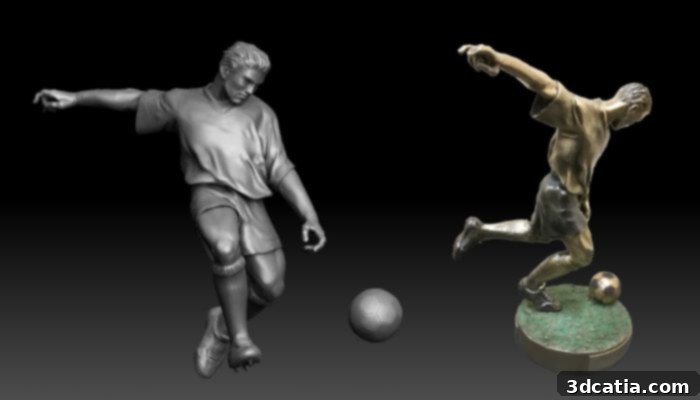
Sample 3D Player Models (Image Credit: Evgeniy Borisenko )
Innovating Performance: 3D-Printed Soccer Gear, from Toe to Head
When considering the integration of 3D printing into soccer, perhaps the most exciting and impactful applications lie within the essential equipment that defines the game. Additive manufacturing is rapidly transforming how soccer gear is designed, produced, and customized, offering unparalleled advantages in performance, protection, and fit for players at all levels. From the intricate soles of soccer shoes to the specialized padding in goalkeeper gloves and protective face masks, 3D printing is enabling innovations previously thought impossible. Below, we’ll explore pioneering companies and their products that are currently leveraging additive manufacturing to create cutting-edge items for both professional and amateur soccer players.
Soccer Shoes: The Foundation of Performance
The development of 3D-printed soccer shoes presents a formidable challenge due to the complex requirements of the footwear. Soccer boots demand a unique combination of lightweight yet durable materials, studded soles for optimal grip on various ground types, and adherence to strict professional regulations concerning cleat length and material composition to ensure player safety. Traditionally, achieving both customization and high performance has been difficult and costly. However, 3D printing offers a groundbreaking solution by allowing for an unprecedented level of personalization, a key selling point for innovative companies like the German startup IMOTANA.
IMOTANA specializes in producing tailor-made soccer shoes, leveraging advanced 3D scanning technology to capture the exact contours of an individual’s feet. This ensures a perfect, custom fit that traditional mass-produced shoes cannot match. The manufacturer emphasizes that peak athletic performance in any sport is only truly achievable when equipment is precisely tailored to the athlete’s unique body shape. Benjamin Dorsch, CEO and co-founder of IMOTANA, brought this vision to life. With years of experience as a development manager at a prominent footwear manufacturer, where he designed high-end soccer shoes for established brands (including those worn by the German national team during their 2024 World Cup victory), Dorsch was driven by a constant desire for innovation. He realized the full potential of his ideas could only be achieved through the founding of IMOTANA.
The innovative concept for IMOTANA’s 3D-printed soccer shoes initially took root on Kickstarter, a testament to community-driven innovation. Over two years, Benjamin Dorsch and his dedicated team, including Matthias Leibitz, Manuel Meier, and Matthias Lang, collaborated with approximately 1,200 enthusiastic supporters to refine and develop their groundbreaking footwear. These custom soccer shoes offer a multitude of advantages inherent to 3D printing technology: significantly reduced weight for enhanced agility, vast design possibilities for aesthetic and functional customization, and, most crucially, an unparalleled custom fit derived from precise 3D foot scans. The soles themselves can be adjusted based on the specific playing surface, promising “zero energy loss and super performance” through their innovative metal screw-in studs. The iterative design process, informed by continuous community feedback, led to truly appealing and high-performing designs.
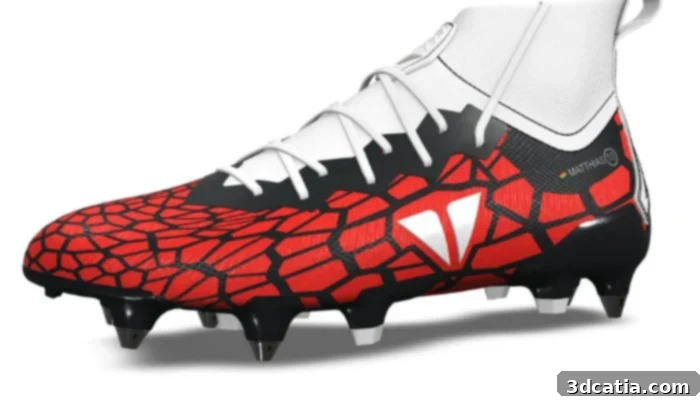
An early 3D model of the shoes (Credit: IMOTANA)
IMOTANA’s project primarily targets amateur players, providing them with the unique opportunity to acquire custom-made soccer shoes at a more accessible price point – a luxury often unattainable with traditional manufacturing methods outside of professional soccer. By leveraging 3D printing, the team can offer individually tailored shoes at a much lower cost per unit, which is a significant advantage for customers with specific foot issues, such as wide feet, or simply those seeking optimal comfort and performance. For hobby soccer players and serious amateurs, this represents a compelling alternative to conventional shoe brands. However, it is worth noting that current 3D printing technology, according to our research, is not yet universally advanced enough to fully meet all the rigorous demands for professional-grade soccer cleats, particularly concerning long-term durability and specific material properties required at the elite level. Nonetheless, the rapid advancements in additive manufacturing suggest this barrier may soon be overcome.
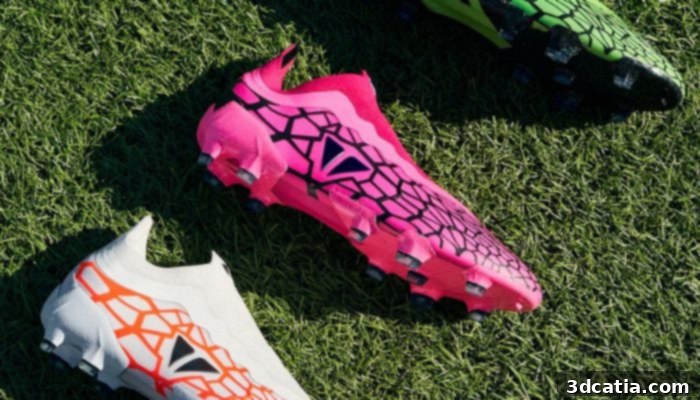
(Credit: IMOTANA)
Cleat Guards: Essential Protection for Footwear Longevity
Whether custom-made through 3D printing or manufactured traditionally, all soccer shoes, especially those designed for performance, require proper maintenance and protection. Safeguarding the cleats is a responsibility every player should take seriously to ensure the longevity and effectiveness of their footwear. In this domain, 3D printing again offers innovative solutions, most notably exemplified by the specialized cleat guards developed by Hypsole.
The dedicated team behind Hypsole invested many years in meticulously developing an optimal design for a protective structure capable of perfectly covering a wide variety of cleat and shoe styles. The genesis of this idea came from Jes Christian, now CEO of Hypsole, who as an athlete herself, pondered the best way to protect her own valuable footwear. The design process was complex, requiring a delicate balance between function and aesthetics, alongside careful consideration of materials and manufacturing processes. Christian recounts the extensive development journey: “We went through hundreds of design modifications and prototypes, including different materials and production processes for different parts, before landing on the current versions.” This iterative approach, characteristic of additive manufacturing, was crucial for perfecting the product.
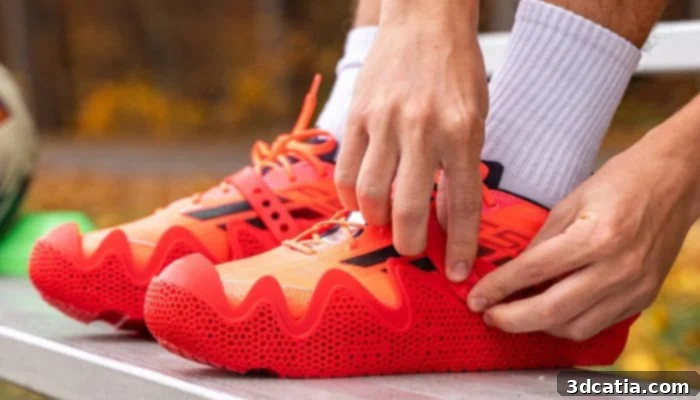
(Credit: Hypsole)
Initially, Hypsole planned to use conventional manufacturing methods involving molds for their cleat guards. However, this strategy faced a significant hurdle when the intricate design proved too complex for traditional casting processes. Rather than abandoning the innovative concept, Christian explored alternative technologies and discovered Carbon’s pioneering Digital Light Synthesis (DLS) technology. She recalls the pivotal moment: “When I came across Carbon and their technology, it was the first time I’d heard about a company successfully mass-producing 3D printed products with sports-performance-grade materials.” This discovery was a game-changer; the DLS process eliminated the physical limitations imposed by molds, enabling the production of these complex cleat guards with precision and consistency thanks to DLS.
Venturing into the 3D printing industry wasn’t without its challenges for Hypsole. Although the high costs associated with mold creation were eliminated, the team now encountered higher individual unit costs inherent to early-stage additive manufacturing. Instead of wrestling with physical constraints in the product’s structure, they now focused on optimizing support structures to ensure efficient and cost-effective production. Christian emphasizes their adaptability: “We handled those challenges by adjusting to the realities presented to us, and by making design modifications to reduce costs, maintain quality, and improve printability.” Furthermore, the Hypsole cleat guards represented an entirely novel product category, providing considerable design freedom but simultaneously necessitating intensive product testing and validation. The developers quickly recognized and appreciated the iterative benefits of 3D printing technologies during this phase. As Christian noted, “The process of 3D printing was and will continue to be so incredibly valuable during the testing and iterating periods in a way that molding simply cannot be.“
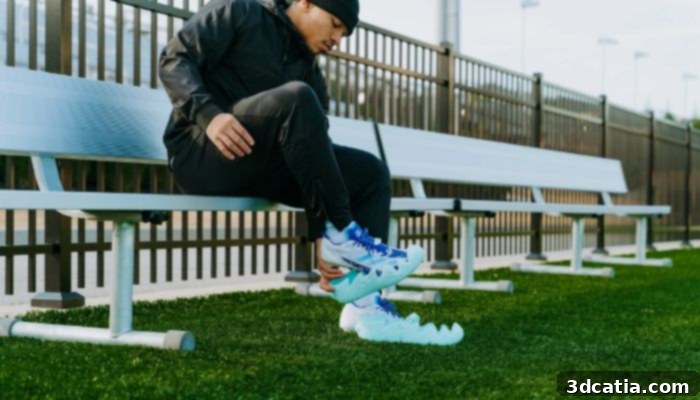
Beyond soccer, the guards can also be used for lacrosse, baseball, softball, and rugby (Credit: Hypsole)
The Hypsole cleat guards are a testament to thoughtful design and respect for athletes, demonstrating excellence in both aesthetics and functionality. Designed for ease of use, they are not limited to soccer but are suitable for a wide array of sports, including lacrosse, baseball, softball, and rugby. The primary goal behind their creation is to simplify athletes’ routines, allowing them to effortlessly transport their gear, protect their most vital equipment, and ultimately save valuable time. This innovative application of 3D printing highlights its potential to solve practical problems for athletes across various disciplines, enhancing convenience and extending the lifespan of expensive sports equipment.
Goalkeeper Gloves: Enhanced Grip and Protection
For any goalkeeper, the right pair of gloves is absolutely crucial, serving as both a primary tool for performance and a vital piece of protective equipment against injury. A key component of a high-quality goalkeeper glove is the “impact zone,” which is engineered to provide an optimal balance of stability, flexibility, and shock absorption. Traditionally, these critical impact zones were constructed from materials like TPU (Thermoplastic Polyurethane) or latex. However, this year marked a significant innovation with the release of the Reusch Attrakt Fusion Carbon 3D, a groundbreaking goalkeeper glove featuring an impact zone entirely crafted from complex 3D-printed structures.
The Attrakt Fusion Carbon 3D represents a pioneering project for the nearly 90-year-old company, marking its first foray into incorporating 3D-printed elements into its product line. Always committed to embracing new designs and improving performance, the Reusch team collaborated extensively with Carbon to develop this unique pair of goalkeeper gloves. The synergy between Reusch’s goalkeeping expertise and Carbon’s additive manufacturing capabilities proved to be transformative. The Goalkeeping Production Manager at Reusch explained the profound benefits: “3D printing gave us a unique opportunity to create a punch zone with precise energy return, improved impact response, and reduced weight.” This allowed for a level of customization and performance optimization previously unattainable with conventional methods.
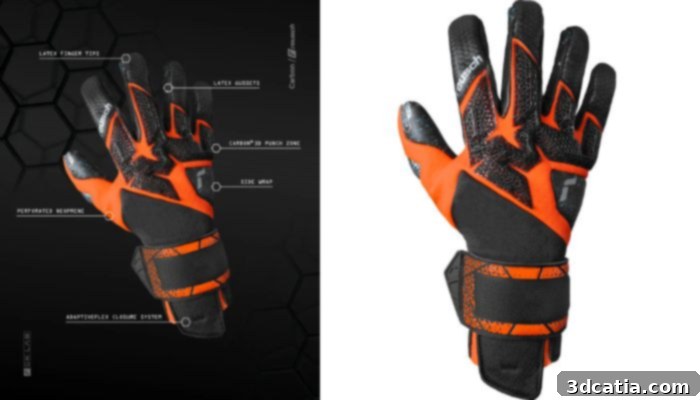
(Credit: Reusch/Carbon)
The utilization of Carbon DLS technology was instrumental, enabling the Reusch team to engineer flexible, high-performance, and incredibly complex structures with impeccably smooth surfaces. Such intricate designs would have been practically impossible to achieve using traditional materials and manufacturing techniques. However, integrating these rigid 3D-printed structures seamlessly into the soft fabric parts of the glove presented a unique set of challenges. As Reusch highlighted, “We had to redefine bonding methods, rethink how the element behaves on a flexible textile, and communicate clear performance benefits.” Close collaboration with Carbon and other manufacturing partners was key to overcoming these hurdles, ultimately leading to an ideal combination of advanced materials and structural design. The inherent soft and flexible properties of the chosen materials were preserved, unexpectedly granting the design team even greater creative freedom than they initially anticipated.
Moreover, the development of these pioneering goalkeeper gloves necessitated strict adherence to existing safety and material compliance standards. While regulations for gloves may not be as stringent as for other sporting equipment, the product still had to meet the exceptionally high expectations of professional athletes and product developers concerning flexibility, durability, and comfort. The unique composition of the glove, particularly the intricate 3D-printed structures of the impact zone, unequivocally showcases the transformative potential of 3D printing in the creation of specialized soccer equipment. This innovative approach not only enhances performance through optimized design but also paves the way for future advancements in athlete protection and comfort in the sport.
The 3D-printed structure of the impact zone (Credit: Reusch/Carbon)
Protective Face Masks: Safeguarding Athletes’ Return to Play
The sight of a soccer player wearing a face mask during a game often sparks curiosity, yet it underscores the critical role of protective equipment in enabling injured athletes to continue competing safely. A notable instance occurred during the 2022 World Cup in Qatar when Son Heung-min, captain of the South Korean national team, surprised many by appearing on the pitch in a carbon fiber face mask. This was due to a recent facial injury, and the mask was crucial for protecting his still-sensitive eye socket. He was not alone; Croatian player Josko Gvardiol also donned a similar mask during a match against Japan. These high-profile examples inspired Simone Gallozzi, an avid Italian soccer fan and research fellow at the Università Politecnica delle Marche, to dedicate his thesis to exploring the immense potential of additive manufacturing, specifically for creating protective masks in the world of soccer.
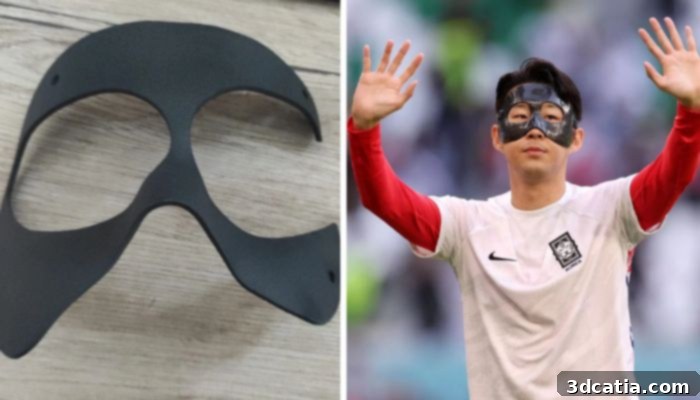
Simone Gallozzi’s protective mask (Left, Credit: Simone Gallozzi); Son Heung-min at the 2022 Qatar World Cup (Right, Credit: Maddy Meyer / FIFA)
Gallozzi’s idea stemmed from observing Napoli player Osimhen, who began wearing protective masks after sustaining a severe facial injury in a 2021 collision, necessitating facial surgery. As both a fervent soccer enthusiast and a keen follower of 3D printing technology, Gallozzi sought to investigate how custom protective masks could be more efficiently produced using additive manufacturing. While the masks worn by players like Son Heung-min were likely crafted based on a three-dimensional model of the athlete’s face, with carbon fibers meticulously applied layer by layer, Gallozzi argued that 3D printing directly from a 3D scan could dramatically streamline this process. By eliminating an intermediate step of creating a physical model, significant waste could also be reduced. As Gallozzi pointed out, “with 3D printing, the process could be significantly faster by simply scanning the athlete’s face and producing the mask directly, without the need to create a physical model.” This direct manufacturing approach not only saves time but also allows for unparalleled precision and customization, crucial for an athlete’s comfort and protection.
The ability to rapidly produce customized protective gear has profound implications for athlete recovery and return-to-play timelines. In Heung-min’s case, his participation in the Qatar World Cup remained uncertain for an extended period due to his injury. Similarly, Osimhen faced a prolonged sideline stint because of his head injury. Protective masks, particularly those custom-made with 3D printing, truly live up to their name by allowing “athletes to return to play sooner after an injury—much earlier than they would be able to without this type of protective equipment. In fact, the mask protects the injured area from further impact and helps prevent new injuries,” Gallozzi emphasizes. In his comprehensive study, Gallozzi designed a specific protective mask and printed it using PA603CF, an advanced carbon composite material known for its strength and lightweight properties. For those interested in delving deeper into the specifics of his work, Gallozzi’s full thesis is available HERE.
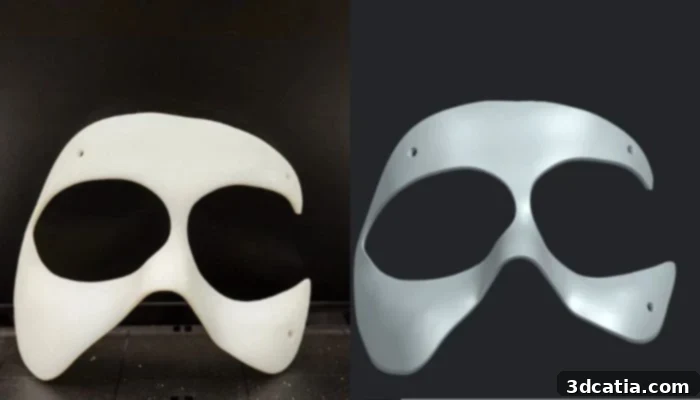
The first prototype of the mask (left) and the 3D model based on a facial scan (right). (Credit: Simone Gallozzi)
The Future of 3D Printing in Soccer: Customization, Performance, and Accessibility
After examining these compelling examples of 3D printing’s application in soccer equipment and infrastructure, a crucial question arises: what does the future hold for additive manufacturing in this dynamic industry? Experts across the board express overwhelmingly positive sentiments. Jes Christian of Hypsole highlights that 3D printing is exceptionally well-suited for customizing sports equipment to precisely fit individual athletes. She elaborated on this profound benefit: “Bodies are so unique, and elite athletes are tasked with learning and understanding their bodies at an elite level. With that understanding comes an understanding about how, for example, one’s left foot might need a slightly wider toe box than their right.” This emphasis on individual anatomical differences underscores the transformative potential of 3D printing in optimizing athlete performance and comfort. Reusch echoed this sentiment, noting that 3D printing possesses “enormous potential for tailoring performance, fit, and protection.“
Interestingly, Simone Gallozzi posits that professional sports teams, particularly within the affluent world of soccer, are uniquely positioned to fully leverage the advantages of 3D printing. He argues that budget constraints are often less of an issue for professional clubs, enabling them to “fully leverage the benefits of this technology, such as extreme product customization.” This contrasts sharply with the current reality that 3D printing can be expensive. Reusch, for instance, openly stated that the manufacturing costs for their Attrakt Fusion Carbon 3D gloves were higher than those for their traditionally produced latex or TPU gloves. Gallozzi also reinforced the point about the significant costs associated with current 3D-printed production methods. This highlights a key tension: while the benefits of customization and performance are clear, the economics of scale are still a work in progress for many additive manufacturing applications in sports.

Professional athletes in particular could benefit from the adaptability of the technology (Credit: Brad Smith)
It is evident that, in its current state, additive manufacturing may not yet be suitable for widespread mass production due to cost and speed considerations. However, what manufacturers might currently sacrifice in cost advantages, they gain exponentially in unparalleled customization options and vast modification potential, as amply demonstrated by the specific product examples highlighted in this article. Our interviewees universally emphasize that the application of 3D printing in sports equipment is still very much in its nascent stages, with immense room for growth and innovation. Gallozzi, for example, identifies powder-based printing technologies as particularly promising for future developments. He predicts: “with the development of advanced powder materials—such as those that incorporate carbon fiber, or combine strength, lightness, and flexibility—I believe 3D printing will play an increasingly important role in the future of sports equipment.“
Christian shares this optimistic outlook, highlighting the continuous advancement of 3D printing technologies for athletes at all levels. “I think it’s just going to continue to get faster, better, and cheaper, until one day in the not-too-distant-future when these kinds of customizations are available to players at all levels.” Despite the initial challenges and ongoing technical hurdles, 3D printing has consistently shown its capacity to significantly enhance product properties, leading to even higher-performing and safer equipment, as vividly illustrated by the innovative cleat protectors, custom shoes, protective masks, and specialized goalkeeper gloves featured in this article. Reusch confidently assured us that only a small fraction of 3D printing’s full potential in sports equipment has been tapped. “We’re just beginning to see how it can complement traditional materials in goalkeeping,” they remarked, hinting at a future where additive manufacturing becomes an indispensable tool in elevating athletic performance across soccer and beyond.
What are your thoughts on this exploration into the evolving world where soccer equipment meets 3D printing? We extend our sincere gratitude to all our interview partners whose insights made this comprehensive article possible. Share your comments below or engage with us on our LinkedIn or Facebook pages! Don’t forget to sign up for our free weekly Newsletter to receive the latest 3D printing news directly in your inbox. You can also explore all our insightful videos on our YouTube channel.
*Cover Photo Credit: dpp Media