
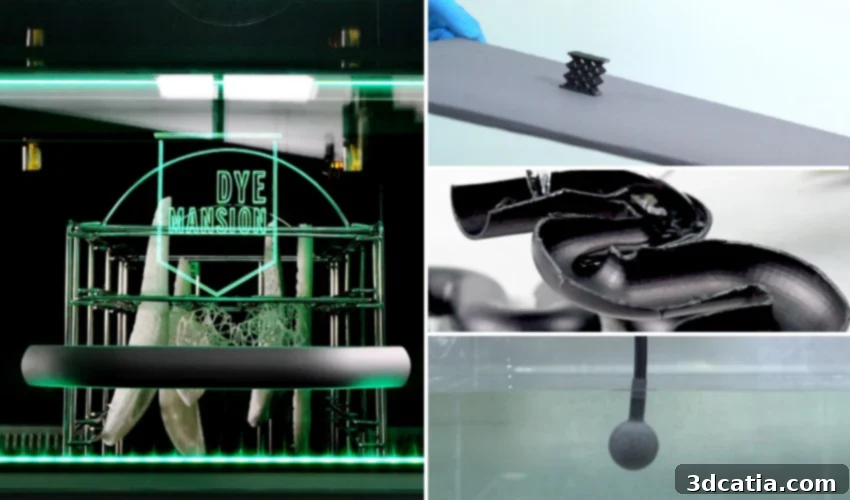
Transforming 3D Prints: DyeMansion’s VaporFuse Surfacing Delivers Green, Industrial Post-Processing Excellence
In the dynamic world of additive manufacturing, significant attention is often given to groundbreaking printing technologies and sophisticated modeling software. However, the crucial final stage of the production workflow, post-processing, often remains an unsung hero. Yet, it is this essential step that truly refines a 3D-printed part, giving it its final aesthetic appeal, desired color, and critical functional properties. It’s the process that elevates a raw print into a market-ready product, effectively “sealing the deal” on its usability and quality. While several innovators are striving to advance this critical area, one particular solution has recently captured widespread attention: **VaporFuse Surfacing** (VFS). Developed by the leading additive manufacturing company DyeMansion, VFS, in conjunction with its innovative Powerfuse S hardware, represents a significant leap forward. This solution is not just about enhancing aesthetics; it’s committed to delivering industrial-grade post-processing that is both highly effective and environmentally responsible.
DyeMansion, a rapidly expanding company based in Munich, has garnered international recognition for its pioneering efforts. This was notably underscored when the European Innovation Council (EIC) selected DyeMansion as a recipient in its inaugural “Green Deal” call. This prestigious initiative saw the EIC distribute over EUR 307 million to 64 game-changing “Green Deal” startups, chosen from over 2,000 applications. These selected companies are pivotal in contributing to the ambitious objectives of the European Green Deal Strategy and the comprehensive Recovery Plan for Europe. DyeMansion’s inclusion highlights its dedication to developing sustainable industrial solutions that align with Europe’s vision for a greener, more resilient future, reinforcing their status as a leader in eco-conscious additive manufacturing.

Since its inception in 2015, DyeMansion has firmly established itself as a global leader in providing advanced finishing systems specifically designed for plastics in 3D printing. The company made an immediate impact by launching the DM60, the world’s first integrated coloring solution for 3D printed parts. This initial success laid the foundation for what has evolved into a comprehensive “Print-to-Product” workflow. Today, DyeMansion offers an end-to-end post-processing ecosystem that meticulously transforms raw 3D prints into high-quality, finished products. This workflow encompasses crucial steps such as precise part cleaning, two distinct surfacing options to achieve varied finishes, and an advanced coloring process compatible with virtually any 3D polymeric technology and material available on the market. This integrated approach ensures that every part achieves optimal aesthetics, functionality, and durability.
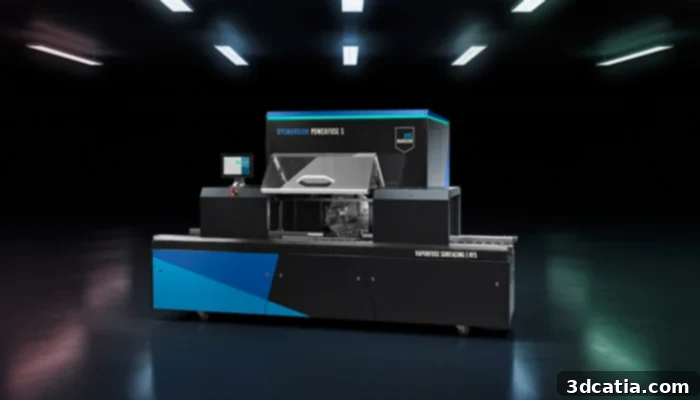
The Powerfuse S Solution with VaporFuse Surfacing Technology | Credits: DyeMansion
Unlocking Enhanced Part Performance with VaporFuse Surfacing
VaporFuse Surfacing (VFS) stands out as a groundbreaking green industrial technology specifically engineered to dramatically enhance the properties of 3D printed parts. This innovative vapor polishing process delivers sealed and exceptionally smooth surfaces, leading to significant improvements across several key performance metrics. By reducing surface roughness to an absolute minimum, VFS fundamentally transforms the part’s characteristics, offering enhanced airtightness, superior protection against bacterial growth, and increased overall part strength. The technology is remarkably versatile, proving suitable for finishing parts produced using a wide array of additive manufacturing techniques, including laser sintering (SLS), HP Multi Jet Fusion (MJF), and even FDM. Furthermore, VFS is compatible with an extensive range of polymeric materials, from robust PA12 to flexible TPU and other soft elastomers. A recently published test series meticulously showcases the remarkable and measurable results that VaporFuse Surfacing consistently achieves:
- Achieving Perfectly Sealed Surfaces: One of the most significant advantages of VFS is its ability to drastically reduce surface roughness by over 80%, affecting both external and internal geometries. This process effectively seals the micro-pores inherent in 3D printed parts, creating a truly smooth and impermeable surface. The result is a dramatically improved flow of liquids and gases through or over each component, critical for applications requiring precise fluid dynamics or enhanced hygiene.
- Optimized & Productive Spray Painting: VaporFuse Surfacing revolutionizes the traditional spray painting process for 3D printed parts. By creating an exceptionally smooth and consistent surface, VFS effectively replaces the often-necessary priming step. This not only streamlines the production workflow but also substantially reduces the time and material required for painting, often cutting these resources down to a mere third of what would otherwise be needed.
- Significantly Improved Airtightness: For parts with very thin wall thicknesses, achieving airtightness can be a significant challenge. VFS overcomes this by sealing the surface, enabling even delicate components to become perfectly airtight. This capability offers unprecedented design freedom, allowing engineers to create lighter, more intricate parts with less manufacturing material, while still ensuring their functional integrity in applications like fluid reservoirs or enclosed housings.
- Substantially Reduced Friction: The ultra-smooth surfaces produced by VaporFuse Surfacing technology exhibit over 40% less friction compared to untreated parts. This reduction translates directly into diminished abrasion, less wear and tear, and the complete elimination of chafing effects. Such improvements are invaluable for components with moving parts, significantly extending their operational lifespan and reducing maintenance requirements.
- Enhanced Stability and Durability: VFS treatment imbues printed parts with greater flexibility and a marked reduction in embrittlement. This leads to components that are more robust, resilient, and capable of withstanding higher stresses and impacts without fracturing. The improved stability ensures that parts maintain their structural integrity and performance over extended periods, even in demanding environments.
- Effective Bacteria Inhibition: Critical for hygiene-sensitive applications, VFS protects surfaces from bacterial growth by eliminating the microscopic crevices where microorganisms can thrive. This makes VFS-treated parts much easier to clean and disinfect thoroughly. The resulting washable surfaces are resistant to a wide range of chemical and oily products, ensuring no residues are left behind after cleaning, which is essential for medical, food, and consumer goods industries.
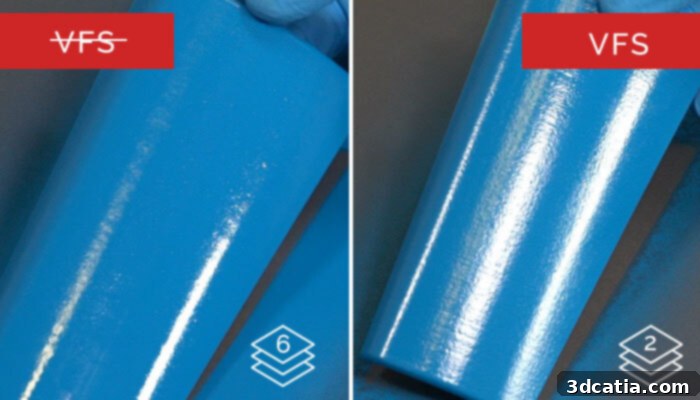
By using VFS technology, time and material are reduced to only a third when applying spray paint | Credits: DyeMansion
To further illustrate the tangible benefits of VaporFuse Surfacing, consider its profound impact on the efficiency of spray painting. Rigorous testing has conclusively demonstrated that an untreated 3D printed part typically necessitates six layers of paint to achieve sufficient gloss and opacity for a satisfactory finish. In stark contrast, an identical part that has undergone VaporFuse treatment requires only two layers to achieve the exact same aesthetic and functional effect. This remarkable reduction in paint layers translates directly into substantial savings in material, labor, and time, streamlining post-production processes. Moreover, for certain applications, the superior surface quality achieved with VaporFuse Surfacing eliminates the need for a separate priming step altogether, further enhancing efficiency and cost-effectiveness.
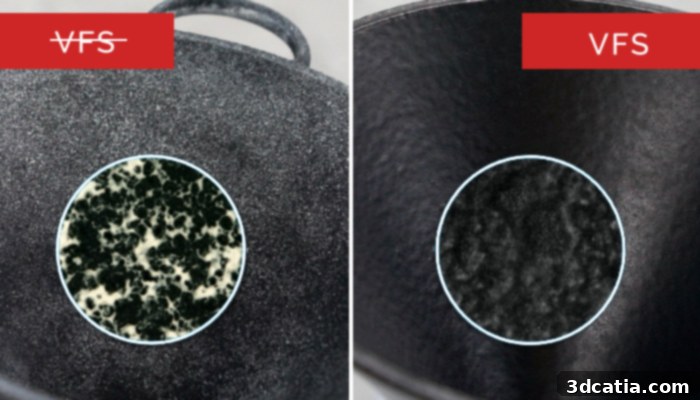
No residue (in this case oil & oil remover) is visible on the surface of the VaporFuse treated part. | Credits: DyeMansion
Another compelling illustration of VaporFuse’s efficacy lies in its ability to enhance the cleanliness of components. In a controlled experiment, both an untreated and a VFS-treated part were subjected to an identical process: oil was applied to their surfaces, followed by an oil remover. After a brief waiting period, the oil was initially wiped off with a cloth, and the components were then thoroughly washed. Subsequent examination under a microscope revealed striking differences in residual contaminants. The image above clearly depicts that only the component previously treated with VaporFuse Surfacing could be completely cleaned, exhibiting no visible traces of oil or oil remover. This demonstrates VFS’s exceptional capability to create surfaces that are not only smoother but also significantly easier to sanitize and maintain, which is paramount in sensitive industries.
VaporFuse Surfacing: Expanding Fields of Application
The array of property improvements delivered by VaporFuse Surfacing — particularly the creation of sealed surfaces that are easier to clean, exhibit reduced friction, and offer increased part stability — opens up entirely new frontiers for additive manufacturing across diverse industries. These enhanced characteristics make VFS an indispensable technology for a multitude of sector-specific applications, transcending mere prototyping to enable high-performance end-use parts:
- Industrial Applications: VFS-treated parts are ideal for demanding industrial environments, including robust air and liquid pipes requiring superior leak integrity, durable tool inserts for extended lifespan, and protective covers that are easy to clean and maintain. Its improved friction properties also benefit gears, bearings, and moving mechanisms.
- Automotive Applications: In the automotive sector, VFS is perfect for visible interior parts where aesthetics and tactile feel are crucial, as well as for functional components like air and liquid pipes that demand high reliability and resistance to fluids. Lightweighting possibilities also expand with enhanced material properties.
- Consumer Applications: For consumer products, VFS elevates items such as high-quality eyewear, comfortable and hygienic (sport) helmets, durable bicycle seats, and safe, easily cleanable toys for children. The smooth, bacteria-resistant surfaces are particularly beneficial for products in frequent contact with skin.
- Medical Applications: The stringent requirements of the medical field benefit immensely from VFS. It’s perfectly suited for patient-specific orthotics and prostheses, protective masks requiring high levels of hygiene, laboratory equipment, and centrifuges that need to withstand rigorous cleaning and sterilization protocols without degradation.
- Food & Beverage Applications: In applications where direct contact with food or beverages is involved, VFS excels. This includes components for pick & place robotics, protective covers for machinery, and pipes for fluid conveyance, all benefiting from the solvent’s food-contact approval and the resulting hygienic, easy-to-clean surfaces.
- Aerospace Applications: The aerospace industry can leverage VFS for lightweight, yet robust visible interior parts, comfortable and durable seat inserts, and protective covers. The improved stability and reduced friction contribute to parts with enhanced longevity and performance under operational stresses.
Ultimately, it is the transformative combination of sealed, exceptionally smooth surfaces—which are inherently easier to clean, exhibit significantly less frictional effects, and boast increased overall stability—that empowers VaporFuse Surfacing to unlock entirely new application possibilities, pushing the boundaries of what 3D printed parts can achieve.
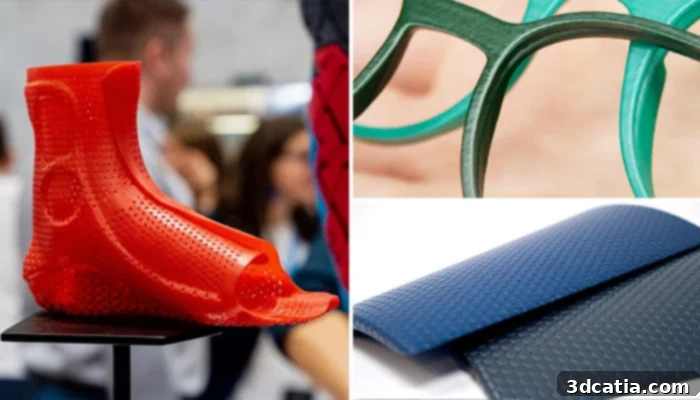
Multiple sectors can benefit from the adoption of the VFS technology | Credits: DyeMansion
A Green & Industrial Solution: Prioritizing Sustainability and Safety
For decades, chemical smoothing in post-processing has been predominantly associated with the use of aggressive and often hazardous chemicals. These traditional methods frequently generated toxic waste, leaving a detrimental impact on the ecological footprint of manufacturing operations. Beyond environmental concerns, such processes posed significant health risks to operators, as many of the solvents used were classified as CMR (carcinogenic, mutagenic, and reprotoxic) substances. This critical need for a safer, more environmentally responsible, yet equally effective post-processing solution became increasingly apparent, driving innovation in the additive manufacturing industry.
Responding to this imperative, DyeMansion made a significant breakthrough in 2019 with the launch of the Powerfuse S. This state-of-the-art vapor polishing system was meticulously engineered not only to meet but to exceed all contemporary industrial health and safety standards. The Munich-based company developed the Powerfuse S with a foundational commitment to the principle of economic sustainability. This guiding philosophy ensures that while fostering long-term economic growth and profitability, the solution simultaneously avoids any negative repercussions on the social, environmental, and cultural aspects of the community. It’s a holistic approach that prioritizes responsible innovation without compromise.
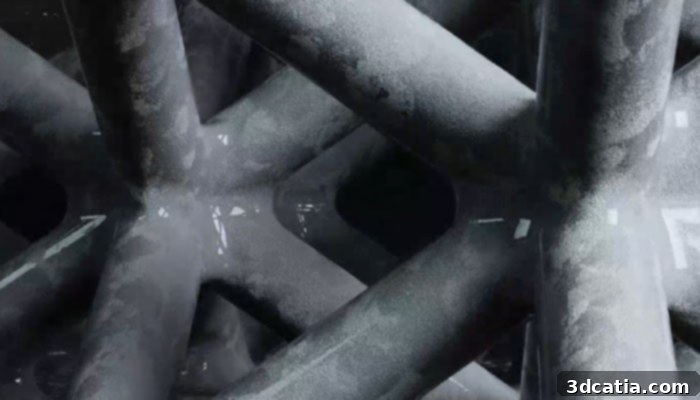
Finishing with VFS technology is done with an eco-friendly solvent | Credits: DyeMansion
DyeMansion’s unwavering adherence to sustainable principles is exemplified by the “VaporFuse Eco Fluid,” a proprietary solvent integral to the Powerfuse S system. This solvent represents a significant advancement in industrial safety and environmental responsibility. Unlike hazardous predecessors, it is a non-CMR solvent, completely free from carcinogenic, mutagenic, or reprotoxic substances, ensuring maximum operator safety. Moreover, it is inherently eco-friendly and has received critical approval for the processing of plastics intended for food contact, complying with strict regulations such as EU 10/2011. This certification opens doors for additive manufacturing in highly regulated industries. Beyond its safe composition, the Powerfuse S system itself is designed for maximum sustainability. It operates on a completely closed-circuit principle, featuring an integrated recovery system for the solvent. This innovative design eliminates the production of waste, making the entire process remarkably clean and efficient. Furthermore, the system is engineered for industrial-scale integration and autonomy, capable of operating continuously 24 hours a day, 7 days a week, and is fully compatible with Industry 4.0 standards for smart manufacturing environments.
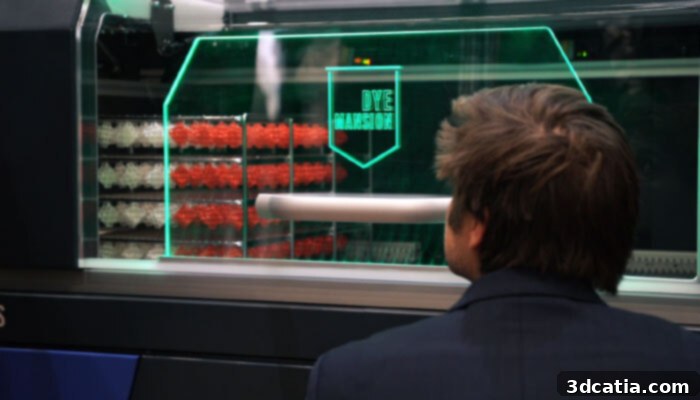
The solution does not produce waste, due to the closed-circuit chamber | Credits: DyeMansion
Meet the PowerFuse S: Experience Next-Generation Post-Processing
Are you eager to learn more about the revolutionary Powerfuse S system and the transformative capabilities of VaporFuse Surfacing technology? You have an excellent opportunity to discover everything about this cutting-edge solution at Formnext Connect 2020, running from November 10th to 12th. For tickets and further detailed information, please click HERE.
For additional comprehensive details regarding VaporFuse Surfacing and the Powerfuse S system, you can explore the dedicated resources available HERE or watch the informative video provided below. If you’re considering applying this innovative technology to your own 3D printed parts, DyeMansion offers a fantastic opportunity to start with a free benchmark, allowing you to experience the transformative results firsthand.
What are your thoughts on VaporFuse Surfacing and its profound impact on post-processing, extending far beyond conventional aesthetics to deliver superior functional performance and environmental benefits? We invite you to share your insights and comments below, or engage with us on our Facebook and Twitter pages! Don’t forget to sign up for our free weekly Newsletter to receive all the latest news and innovations in 3D printing directly in your inbox!