
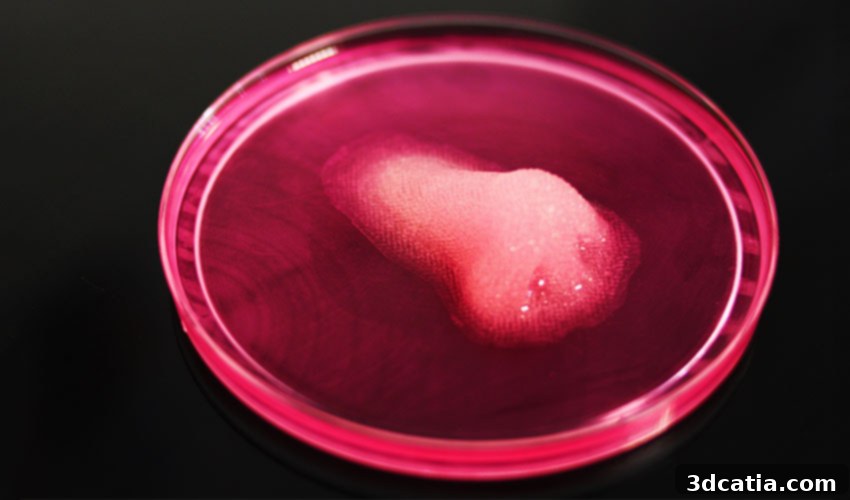
Unlocking Tailor-Made Healthcare: REGEMAT 3D’s Pioneering Role in Bioprinting and Advanced Medical 3D Printing
REGEMAT 3D, a trailblazing company headquartered in Granada, Spain, has dedicated nearly a decade to specializing in advanced medical additive manufacturing. As a true pioneer in the burgeoning field of bioprinting within Spain, REGEMAT 3D is actively driving critical research and widespread adoption of these revolutionary technologies across the nation and beyond. Their work stands as compelling evidence that personalized, tailor-made medicine is not a distant dream but an approaching reality. This paradigm shift extends beyond established areas like prosthetics, implants, and orthotics, deeply impacting the bioprinting sector itself. This sector holds immense promise for transforming the pharmaceutical industry, enabling more effective drug testing, and ultimately paving the way for the creation of functional organs. We recently had the privilege of sitting down with Jose Manuel Baena, the visionary founder behind both Breca Health Care and REGEMAT 3D. An acknowledged expert in bioprinting and personalized medicine, Baena generously shared insights into his groundbreaking projects and articulated the critical importance of integrating 3D printing technologies into hospital environments to revolutionize patient care.
3DN: Can you present your link with additive manufacturing technologies?
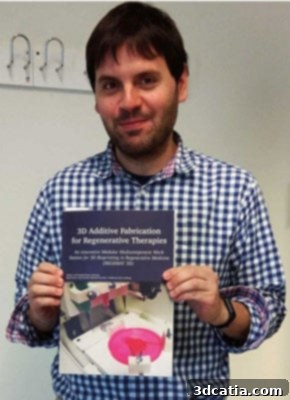
Jose Manuel Baena
My journey into the world of advanced manufacturing and biomedical engineering began with a strong academic foundation. Born in Valencia, Spain, in October 1983, I embarked on my higher education by studying industrial engineering in my home city. This passion for engineering then took me abroad, first to Braunschweig, Germany, and later to Oxford, United Kingdom, where I successfully earned my master’s degree in engineering. Recognizing the immense potential of engineering in healthcare, I further specialized by studying biomedical engineering in Buenos Aires, Argentina. Most recently, I culminated my academic pursuits by presenting my PhD in biomedicine at the prestigious University of Granada. This diverse educational background has provided me with a unique interdisciplinary perspective, blending industrial innovation with critical medical applications, which has been instrumental in my career path.
My professional foray into additive manufacturing commenced over a decade ago when I initiated a pioneering project focused on manufacturing custom implants at an institute in Valencia. This initial experience quickly revealed the immense, untapped potential of 3D printing in the medical sector. Driven by this realization and a clear vision for personalized patient care, I made the strategic decision to establish the first Spanish company dedicated exclusively to the 3D printing of medical devices. Thus, BRECA Health Care was founded in 2010, marking a significant milestone in Spain’s medical technology landscape. Our core mission at BRECA Health Care is the production of highly personalized medical devices. We leverage cutting-edge 3D printing techniques to create custom titanium implants, and devices made from advanced biocompatible materials such as PEEK, as well as personalized prostheses, precise cutting guides for complex surgical reconstructions, and detailed biomodels for pre-operative planning. Even more than 10 years ago, it became profoundly clear to me that 3D printing wasn’t just an emerging technology but an undeniable necessity in the healthcare sector. The fundamental truth is that every patient possesses a unique anatomy, rendering the concept of generic, one-size-fits-all prostheses and implants largely inefficient and, at times, suboptimal. This understanding continues to fuel our commitment to innovation and personalization in medical device manufacturing.
The advantages of custom-made prostheses are profound and transformative for patient outcomes. The foremost benefit lies in our unparalleled ability to reconstruct a patient’s anatomy with absolute precision. Unlike off-the-shelf solutions, our customized approach ensures that each device perfectly mirrors the unique biological structure of the individual. Beyond functional restoration, there is a significant aesthetic component. By meticulously obtaining the patient’s geometry through advanced 3D scanning technologies, we can perform sophisticated “mirror” operations. This technique allows us to replicate healthy anatomical structures, using them as a template to create a totally personalized and symmetrical design for the affected area. This not only restores function but also significantly improves the patient’s physical appearance and confidence. Furthermore, we excel in manufacturing bespoke surgical guides, meticulously crafted to facilitate accurate reconstructions. These guides enable surgeons to perform precise interventions using the patient’s own tissues, optimizing integration and healing. Looking ahead, we are rapidly advancing towards incorporating bioprinted materials into these reconstructions, promising even more natural and biologically compatible solutions for patients in the near future.
3DN: What were the first steps of REGEMAT 3D in the bioprinting industry?
Building on the success and insights gained from BRECA Health Care, and fueled by a forward-thinking vision for regenerative medicine, the REGEMAT 3D project was conceived. This ambitious initiative, a collaborative effort with the esteemed Dr. Juan Antonio Marchal, was launched in 2011. It represented a pivotal moment, as REGEMAT 3D embarked on the groundbreaking development of the first Spanish commercial 3D bioprinter. This was a critical step in democratizing access to advanced bioprinting technology. The company itself was formally founded in 2015, and since then, our reach has expanded exponentially, with REGEMAT 3D systems now being utilized by researchers and medical professionals in approximately 25 countries worldwide.
Our journey into bioprinting was driven by a profound realization: 3D printing offers an unprecedented capability to create complex three-dimensional cell cultures using specialized bioinks. This innovation allows scientists and clinicians to study our cells within an environment that closely mimics the complexity and dynamics of a living organism, moving beyond traditional two-dimensional cell cultures. This advancement has opened doors to groundbreaking research, enabling us to generate functional tissues and organs *in vitro*. These models are invaluable for recreating specific lesions, understanding disease progression, and crucially, serving as living test models for the evaluation of new drugs. This capability has the potential to significantly reduce the reliance on animal testing, offering a more ethical and often more accurate preclinical assessment. From the outset, we have committed substantial investment and expertise to the development of these technologies, always maintaining a highly clinical approach, ensuring that our innovations translate directly into tangible benefits for patient care and medical advancement.
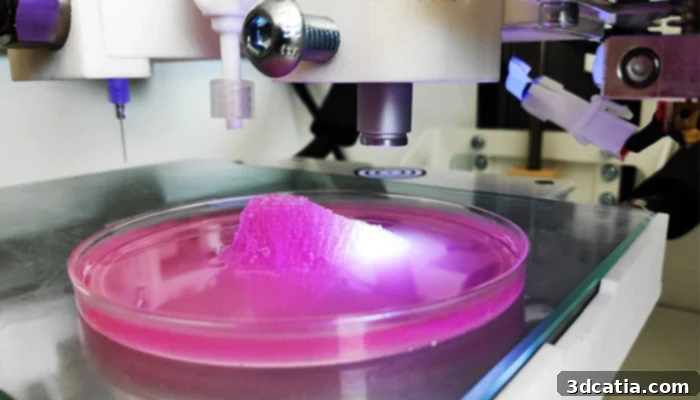
Bioprinted tissues are developing | Credits: REGEMAT 3D
REGEMAT 3D has distinguished itself on the global stage by being the first company worldwide to offer highly adaptable bioprinting systems tailored to each specific tissue application. This bespoke approach is fundamental to achieving accurate and reproducible results in regenerative medicine. We actively foster deep collaborations with leading researchers across various institutions, working hand-in-hand to optimize our technology and unlock novel applications. Our goal is to ensure that the scientific breakthroughs achieved in the lab are not just theoretical but can be translated into practical, effective clinical applications, bridging the gap between cutting-edge research and patient treatment.
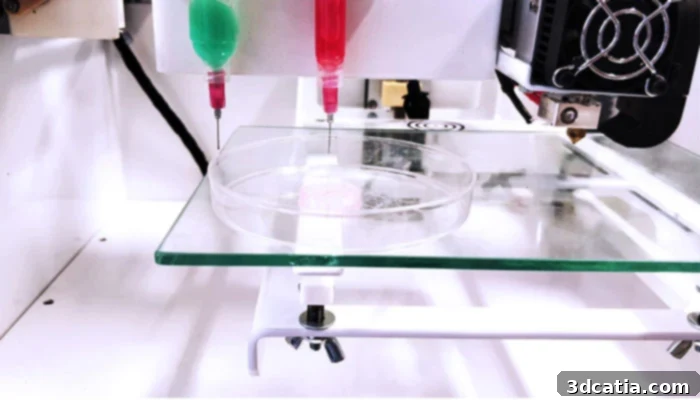
While bioprinting enables cells to behave in a manner akin to a living organism, the critical challenge lies in properly promoting the production of *functional* tissue. It’s not enough for cells to survive; they must organize, mature, and perform their biological functions effectively. This complex process necessitates a sophisticated biomanufacturing strategy. At REGEMAT 3D, we meticulously work on adapting not only the bioprinting system itself but also the bioreactor environments where the printed tissues mature. This integrated approach ensures that the newly formed tissue develops functionality, mimicking natural biological structures. This holistic methodology—considering the entire biomanufacturing pipeline from printing to maturation—is what fundamentally differentiates REGEMAT 3D from many other companies operating in this rapidly evolving field. Our focus on functional tissue generation ensures that our technology is geared towards real-world clinical efficacy.
3DN: What are the projects that REGEMAT 3D is currently developing?
REGEMAT 3D is at the forefront of numerous innovative projects, both internally and through collaborations with our global network of users and research partners. Some of the most exciting current applications being developed by our users include critical advancements in corneal regeneration, offering hope for restoring vision to countless individuals. We are also deeply involved in creating sophisticated tissue models for drug development, allowing pharmaceutical companies to test new compounds with greater precision and ethical responsibility. Our technology is being utilized for the bioprinting of various complex tissues, including skin, heart tissue, cartilage, and bone, each holding immense potential for regenerative therapies. A significant ethical outcome of this work is the tangible reduction in animal testing, as our bioprinted models offer superior alternatives for preclinical studies.
Beyond these broad applications, we are engaged in several highly specialized research projects in partnership with hospitals and academic institutions. For instance, we are developing biodegradable meshes infused with chondrocytes, designed to promote robust cartilage regeneration, addressing chronic joint pain and injuries. Another crucial area of focus is improving the treatment of colon cancer through the bioprinting of advanced tumor cell models, enabling researchers to study cancer progression and test therapies in a patient-specific manner. Additionally, we are actively testing innovative 3D models specifically engineered to regenerate cartilage lesions, aiming to provide more effective and lasting solutions for patients suffering from degenerative joint conditions. These diverse projects underscore our commitment to pushing the boundaries of what is possible with bioprinting and translating these scientific advancements into practical clinical benefits.
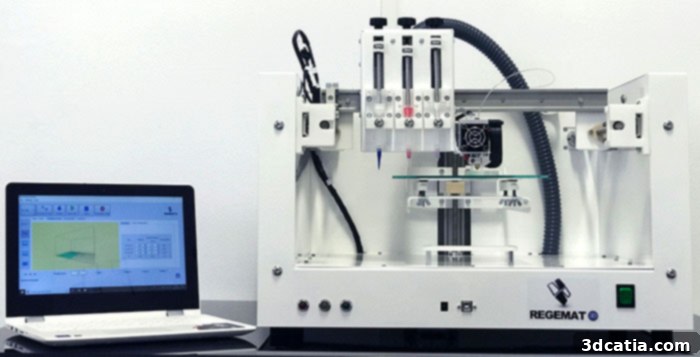
The 3D bioprinter developed by REGEMAT 3D | Credits: REGEMAT 3D
3DN: How do you help hospitals to get started with bioprinting? What role do they have to play in this technology’s development?
Bioprinting, while currently making significant strides primarily in the realm of research and development, is on the cusp of a major transition. Its true transformative power will be unleashed when it is seamlessly integrated into the clinical phase, directly providing innovative solutions for patients. The potential for tissue regeneration, particularly when facilitated with a patient’s own cells, is immense. This autologous approach not only promises to accelerate the healing of injuries but also enables less invasive interventions, thereby conserving valuable healthcare resources and allowing patients to achieve significantly faster and more complete recoveries. Hospitals are not merely recipients of this technology; they are crucial partners in its evolution and deployment. Their clinical insights, patient access, and operational expertise are indispensable for translating laboratory breakthroughs into routine medical practice.
At REGEMAT 3D, our core philosophy revolves around a clinical-first approach. We don’t just develop technology; we meticulously adapt it to specific medical applications, always keeping the patient and clinical outcomes at the forefront. This commitment distinguishes us in the bioprinting landscape. We are uniquely positioned as one of the few bioprinting companies that actively implements medical devices and develops 3D technologies with clinical applications as our ultimate goal. This means our systems are designed from the ground up for safety, efficacy, and ease of integration into clinical workflows, ensuring that our innovations are not just scientifically intriguing but clinically relevant and impactful.
Through our comprehensive programs, REGEMAT 3D empowers hospitals and research centers to gain complete mastery over bioprinting technology, specifically tailored to their unique research and clinical objectives. We provide extensive training, ongoing support, and customized solutions to ensure that each institution can maximize the potential of their bioprinting systems. Furthermore, we actively cultivate and facilitate access to our vibrant community of current users. This network fosters invaluable connections among researchers and clinicians, enabling them to share experiences, exchange best practices, troubleshoot challenges, and collaboratively accelerate the pace of innovation. This collaborative ecosystem is vital for driving the continuous development and successful implementation of bioprinting in diverse clinical settings, collectively moving towards a future of personalized and regenerative medicine.
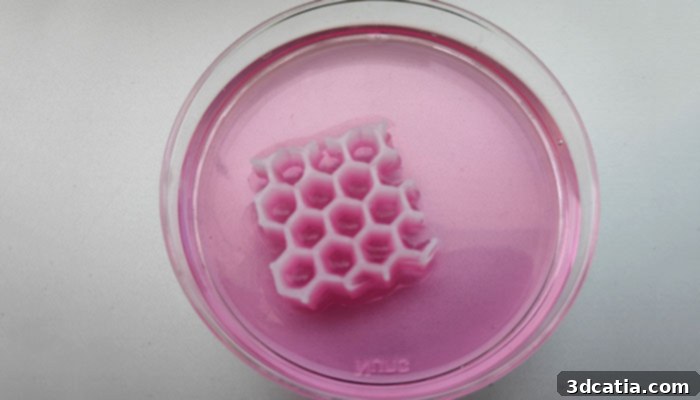
Developing tissues | Credits: REGEMAT 3D
3DN: Where do you see REGEMAT 3D in the coming years?
Looking ahead, we envision REGEMAT 3D as a leader in creating incredibly complex geometries that mirror the intricate design of our own anatomy. Our goal is to develop capabilities to print sophisticated meshes and scaffolds that not only provide structural support but also actively promote the seamless integration of peripheral tissue into medical devices. This will lead to more biologically cohesive and functional implants and regenerative solutions. These advanced technologies are already garnering significant acceptance and excitement within the research community, and we anticipate a rapid translation of these findings into clinical practice. In the coming years, we expect to see the emergence of innovative new treatments for regenerating various wounds and damaged tissues, offering patients faster healing and improved quality of life.
While perhaps a more distant future, the ultimate aspiration for bioprinting, and for REGEMAT 3D’s contributions, is the ability to generate complex, fully functional organs. This revolutionary capability holds the promise of dramatically reducing the agonizing waiting lists for patients requiring life-saving transplants, fundamentally altering the landscape of organ donation and transplantation. The market potential for this field is immense; indeed, some independent agencies are forecasting a robust growth trajectory, projecting the bioprinting sector to exceed €4,000 million by 2025. REGEMAT 3D is strategically positioned to be at the forefront of this transformative growth, driving both the scientific innovation and the clinical implementation that will define the future of medicine.
3DN: Any last words for our readers?
It’s an incredibly exciting time for healthcare, particularly in Spain, where new technologies are rapidly being adopted and championed by leading hospitals. We firmly believe that 3D printing and the bioprinting of tissues will transition from novel concepts to become integral parts of daily life within hospitals in the very near future. This integration will usher in an era of more personalized, highly specific, and ultimately more successful treatments. The direct beneficiaries will be patients, who will experience a significant improvement in their quality of life, benefiting from therapies precisely tailored to their individual needs. Furthermore, the Spanish health system stands to gain immensely from reduced delays in treatment and lower overall costs, thanks to the efficiencies and effectiveness brought by these advanced manufacturing processes.
It is crucial to understand that while we are rapidly advancing the capability to create functional tissue in the laboratory, ensuring its seamless integration with the surrounding native tissues within the body is a complex challenge. This integration does not occur instantly. To bridge this gap, it is often necessary to create a custom-made synthetic medical device. This device serves a dual purpose: it provides the essential structural support for the bioprinted living tissue, helping it maintain its form and position, and it actively promotes the biological integration of the bioprinted material into the host tissue. This synergistic approach, combining advanced synthetic scaffolds with living bioprinted components, is key to achieving successful and lasting regenerative outcomes. For more detailed information about our pioneering work and the technologies we are developing, please visit our official website HERE, and for a visual insight into our operations, watch our video below.
What are your thoughts on REGEMAT 3D’s groundbreaking contributions to the bioprinting sector and the future of personalized medicine? We invite you to share your insights in a comment below, or connect with us on our Facebook and Twitter pages! Don’t miss out on the latest advancements in 3D printing; sign up for our free weekly Newsletter to receive all the news directly in your inbox!