
Building Unbreakable Foundations: How Metal Additive Manufacturing Revolutionizes Supply Chain Resilience
The past few years have undeniably exposed significant vulnerabilities within our intricately woven global supply chains. When these critical lifelines falter, the repercussions are far-reaching, triggering a cascading domino effect that can cripple entire industries. This became starkly evident with the onset of the COVID-19 pandemic and has continued to manifest through subsequent global upheavals. Virtually every sector has grappled with unprecedented supply chain disruptions, yet the most profound concerns center on vital infrastructure industries such as oil and gas, energy, and transportation. These sectors are particularly susceptible, especially amidst escalating international turmoil and geopolitical tensions.
A critical factor exacerbating this fragility is the heavy reliance on a limited number of suppliers for many essential parts. This single-source dependency creates significant points of failure, making industries vulnerable to even minor production interruptions, logistical bottlenecks, or unforeseen events affecting these few key manufacturers. Without innovative and robust solutions, the world faces a continued cycle of shortages, economic instability, and operational challenges. However, this dire outlook is not without hope; a transformative solution is emerging that promises to redefine industrial resilience and security: metal additive manufacturing.
Understanding the Vulnerabilities of Modern Supply Chains
For decades, the global manufacturing landscape prioritized efficiency, often at the expense of resilience. Just-in-time (JIT) inventory systems, lean manufacturing principles, and extensive globalized supply networks were designed to minimize costs and maximize throughput. While effective in stable environments, this model proved brittle when confronted with Black Swan events like a global pandemic, natural disasters, or significant geopolitical conflicts. The lack of buffer stock, the concentration of manufacturing in specific regions, and the reliance on long, complex transportation routes became glaring weaknesses.
The impact on critical infrastructure industries is particularly alarming. Imagine the consequences of a crucial component shortage for an offshore oil rig, a power generation plant, or a commercial aircraft. Delays in receiving a replacement part, whether due to a factory shutdown thousands of miles away or a shipping crisis in a major waterway, can result in immense financial losses, operational downtime, and even compromise public safety. These industries often require highly specialized parts, sometimes with low production volumes, making them less attractive for mass production and further consolidating their supply to a handful of expert manufacturers. This creates a precarious situation where the failure of one supplier can grind essential services to a halt, affecting millions.
Harnessing Metal AM for Enhanced Supply Chain Agility and Security
Metal additive manufacturing (AM), commonly known as metal 3D printing, offers a paradigm shift in how parts are produced and distributed, presenting a powerful antidote to many of the current supply chain woes. By enabling companies to create truly distributed supply chains, metal AM allows for the production of needed components across numerous locations, significantly closer to the point of utilization. This decentralized approach fundamentally alters the traditional manufacturing model, moving away from centralized production hubs and long-haul logistics.
The core concept is remarkably simple yet profoundly impactful: engineers require only access to an industrial metal 3D printer, the appropriate metal powder material, and a validated digital design file. With these three elements, they possess the capability to produce a vast array of high-performance parts virtually anywhere in the world. This capability opens doors to unprecedented levels of flexibility, speed, and security in manufacturing. Let’s delve into the specific benefits:
Localized, On-Demand Production
One of the most significant advantages of metal AM is its ability to facilitate localized, on-demand manufacturing. Instead of ordering parts from a single factory on another continent and waiting weeks or months for delivery, companies can print components at regional manufacturing hubs, or even on-site, dramatically reducing lead times and transportation costs. This capability is invaluable for industries that require rapid replacement of critical parts or need to service remote operations. Furthermore, by printing parts only as they are needed, businesses can minimize reliance on large physical inventories, which are costly to maintain, susceptible to damage, and can quickly become obsolete. This shift toward a “digital inventory” – where design files are stored digitally and parts are produced on demand – represents a more efficient, sustainable, and responsive manufacturing model.
Mitigating Geopolitical Risks and Single-Point Failures
Distributed manufacturing networks powered by metal AM significantly reduce exposure to geopolitical instability and mitigate the risks associated with single points of failure. If a conflict, natural disaster, or trade dispute impacts a specific manufacturing region or supplier, other distributed facilities can pick up the slack, ensuring continuity of supply. This geographic diversification makes supply chains inherently more robust and resilient. Companies gain greater control over their production capabilities, reducing their dependence on external factors and enhancing overall operational security. For sensitive industries, this level of control and redundancy is not just a benefit but a strategic imperative.
Innovation and Customization
Beyond resilience, metal AM unlocks new frontiers in part design and performance. The technology allows for the creation of complex geometries and internal structures that are impossible with traditional manufacturing methods. This enables engineers to optimize parts for lightweighting, improved thermal management, enhanced strength-to-weight ratios, and consolidated assemblies. The ability to customize parts rapidly for specific applications or even for individual machines means that industries can continuously innovate and adapt, rather than being constrained by off-the-shelf components. From aerospace components to specialized tools for the energy sector, metal AM empowers a new generation of high-performance, tailored solutions.
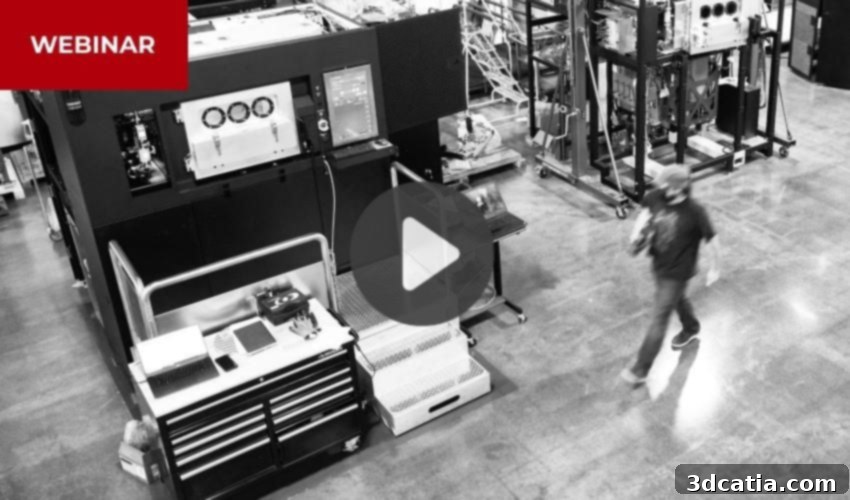
To further explore these revolutionary advancements and understand how leading companies are already implementing these strategies, 3Dnatives hosted a critical webinar titled “Optimizing Distributed Supply Chains Through Metal Additive Manufacturing”. This event brought together industry experts to dissect the latest developments in metal AM and showcase tangible examples of how they enable companies worldwide to build more resilient and agile supply chains. The discussion covered not only the technological capabilities but also the strategic implications and practical considerations for adoption. For those who missed it, the replay is an invaluable resource:
Meet the Experts: Driving Innovation in Metal Additive Manufacturing
The insights shared during the 3Dnatives webinar were brought to life by a panel of distinguished speakers, each offering unique perspectives and deep expertise in the field of additive manufacturing and its applications in industrial settings. Their contributions highlighted the practical steps and strategic thinking required to leverage metal AM for robust supply chain optimization.
Speakers:
- William Priest
- Riccardo Tosi
William Priest serves as the Sales Director for UK & Nordics at Velo3D, where he is instrumental in developing and executing the sales strategy across this vital region. Holding a Mechanical Engineering degree from the University of Exeter, William commenced his professional journey as a Design Engineer with Red Bull Racing. His career path then led him to Dyson’s pioneering EV program as an Advanced Design Engineer. In 2020, he transitioned to HiETA Technologies, a company specializing in product design, development, and production through the exploitation of thermal management and lightweighting via Additive Manufacturing, before assuming his current pivotal role at Velo3D.
Riccardo Tosi, the Technical Sales Engineer Leader at Velo3D, is a fervent enthusiast and expert in the rapidly evolving additive manufacturing world. With an impressive career spanning over two decades in manufacturing, Riccardo possesses a diverse background that encompasses more than 10 years in additive manufacturing, alongside extensive experience in production, research and development, and CNC machining. He dedicated several years as a Senior Research Engineer focusing on Directed Energy Deposition (DED) technologies at the Manufacturing Technology Centre (MTC) while simultaneously earning his Engineering Doctorate in metallurgy, specializing in Electron Beam Powder Bed Fusion (EB-PBF) from the University of Birmingham. Prior to joining Velo3D, he held a Research Fellow position at the Singapore Centre for 3D Printing and served as an Application Team Lead for another prominent provider of metal AM solutions, bringing a wealth of practical and theoretical knowledge to his current role.
Madeleine Prior is the English Content Specialist for 3Dnatives, recognized as the leading international online magazine dedicated to 3D Printing and Additive Manufacturing. As an integral member of the 3Dnatives team, Madeleine is responsible for curating and defining the content that caters to its English-speaking audience. Her role involves meticulously tracking and reporting on the latest news, trends, and implications within the additive manufacturing sector, ensuring readers receive timely and insightful updates from across the industry.
Join the Conversation: Shaping the Future of Manufacturing
The challenges facing global supply chains are significant, but the solutions offered by metal additive manufacturing are equally powerful and transformative. By embracing distributed manufacturing, industries can move beyond merely reacting to disruptions and instead proactively build systems that are inherently resilient, efficient, and innovative. The insights shared by leading experts like William Priest, Riccardo Tosi, and Madeleine Prior provide a clear roadmap for navigating this new era of industrial production.
We invite you to delve deeper into these crucial discussions. You can register for upcoming webinars or access replays of past events, including the one discussed above, for free HERE. We encourage you to engage with our content and share your thoughts. Will you be attending future webinars? Let us know in a comment below or connect with us on ourLinkedIn,Facebook, andTwitter pages! Don’t forget to sign up for our free weeklyNewsletter here to receive the latest 3D printing news straight to your inbox. You can also find all our informative videos and expert interviews on ourYouTube channel, a rich resource for anyone interested in the future of additive manufacturing.