
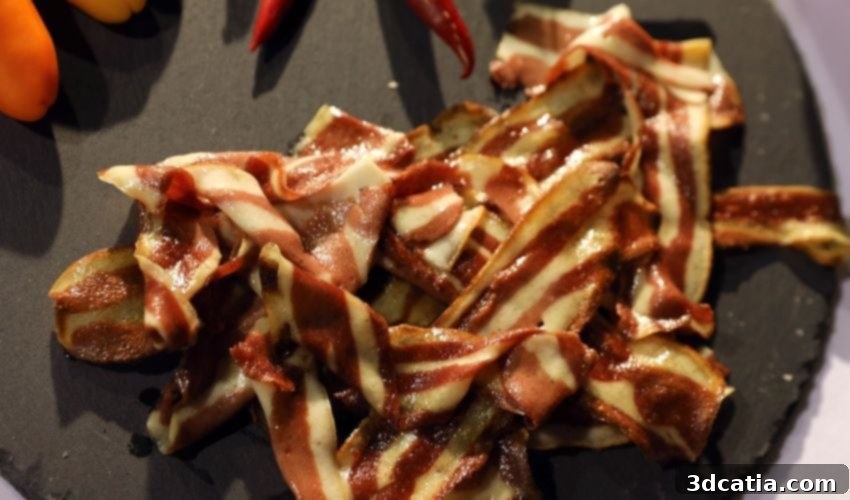
Spain’s Culinary Revolution: Cocuus and Foodys Lead the Way with 3D Printed Plant-Based Bacon
The global food landscape is undergoing a profound transformation, spearheaded by the remarkable rise of plant-based products. What was once considered a niche market for vegans and vegetarians has now blossomed into a mainstream phenomenon, driven by growing consumer awareness of health, sustainability, and ethical concerns. Across many European nations, supermarkets now dedicate significant shelf space to an ever-expanding array of plant-based alternatives, from burgers and sausages to surprising innovations like plant-based tuna, salmon, and even pork. These products are meticulously crafted to emulate the taste, texture, and culinary versatility of their animal-derived counterparts, often making it challenging for consumers to distinguish between them. This powerful trend is not merely confined to northern Europe; it is making significant inroads into Southern European markets, with Spain emerging as a vibrant hub of innovation. At the forefront of this Spanish plant-based revolution are two pioneering companies: Cocuus and Foodys. These firms have continuously championed the consumption of meat alternatives and are widely recognized as leaders in introducing cutting-edge plant-based products to the Spanish market. Their latest groundbreaking endeavor, a delectable 3D printed plant-based bacon, is now capturing significant attention and setting new benchmarks for the future of food.
Foodys, a company deeply committed to fostering a more sustainable food system, has a proven track record of bringing innovative plant-based products to market. In recent years, they have successfully launched popular items such as plant-based burgers and nuggets, all designed with the core philosophy of imitating familiar food models to encourage a seamless transition away from traditional meat. The fundamental objective behind Foodys’ entire product line is to provide delicious, accessible alternatives to meat, thereby promoting environmental sustainability and offering healthier dietary choices. While Foodys focuses exclusively on plant-based innovations, Cocuus operates with a broader technological scope. Cocuus is a leading force in advanced 3D printing technology, applying its expertise across four distinct and fascinating areas within the food industry. Their capabilities range from 3D printing meat using plant-based ingredients or cultured cells, to directly printing traditional meat products, and even developing what they term “softmimic” — nutrient-dense purees that are ingeniously crafted to resemble real food items in appearance and form. It is through the synergistic combination of these diverse technological strengths and innovative approaches that Cocuus and Foodys were able to collaborate and successfully bring their revolutionary 3D printed plant-based bacon from concept to reality.
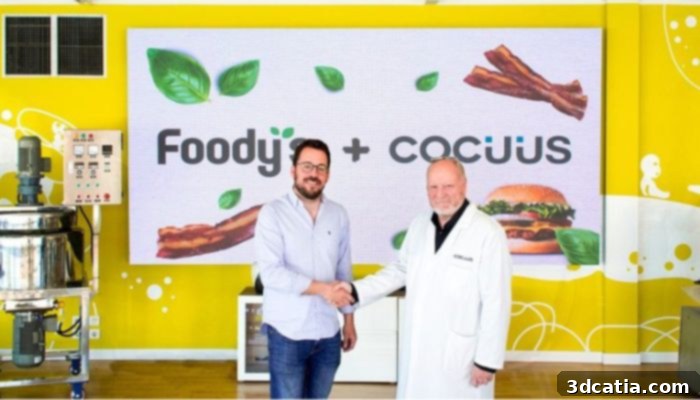
A photo to commemorate the start of the project between Foodys and Cocuus (photo credits: Foodys and Cocuus)
A Landmark Partnership: Building the Future of Sustainable Food Production
The ambitious collaboration between Cocuus and Foodys officially commenced just a few months ago, driven by a shared vision to establish nothing less than the world’s first large-scale plant-based 3D printed organic food facility. This groundbreaking project signifies a pivotal moment for the food industry, moving beyond small-batch prototyping to industrial-scale production of highly innovative food items. While other forward-thinking companies, such as REVO FOODS, are also making strides in producing large quantities of 3D printed plant-based foods, the unique aspect of the Cocuus and Foodys partnership lies in their commitment to developing a comprehensive, dedicated production facility from the ground up. This integrated approach promises unparalleled control over quality, scale, and efficiency. The immediate impact of this joint venture has been remarkably clear: the production of their innovative 3D printed plant-based bacon requires significantly fewer resources and results in a dramatically reduced environmental footprint compared to traditional animal farming. This efficiency is eloquently encapsulated by a statement from Cocuus: “We are able to reproduce in five minutes the bacon that two pigs produce in a lifetime.” This astonishing comparison highlights the profound potential of this technology to transform food production, offering a truly sustainable alternative that could fundamentally alter our relationship with food resources and the planet.
What Is 3D Printed Bacon and Why Is It a Healthier Choice?
For many, the concept of “3D printed bacon” might conjure images of futuristic laboratories, leaving you to ponder the fundamental differences between this novel creation and the traditional bacon we’re all familiar with. Beyond the obvious distinction that one originates from plants and the other from an animal, the innovation from Cocuus and Foodys offers significant advantages, particularly concerning health. We all know that conventional bacon, beloved for its savory taste, is also notoriously high in fat, often saturated fat, which, as Homer Simpson’s dietary habits comically illustrate, isn’t conducive to optimal health when consumed in large quantities. This is precisely where Cocuus and Foodys’ plant-based bacon truly shines. By utilizing advanced 3D printing technology, they are able to craft bacon-like strips from a meticulously formulated, healthier base material. This innovative process allows for precise control over the nutritional profile. As a result, their 3D printed bacon boasts only a third of the fat content found in traditional pork bacon. Crucially, the fat it does contain primarily consists of unsaturated fatty acids, which are widely recognized for their health benefits, including supporting cardiovascular health, in stark contrast to the saturated fats prevalent in animal-derived pork fat.
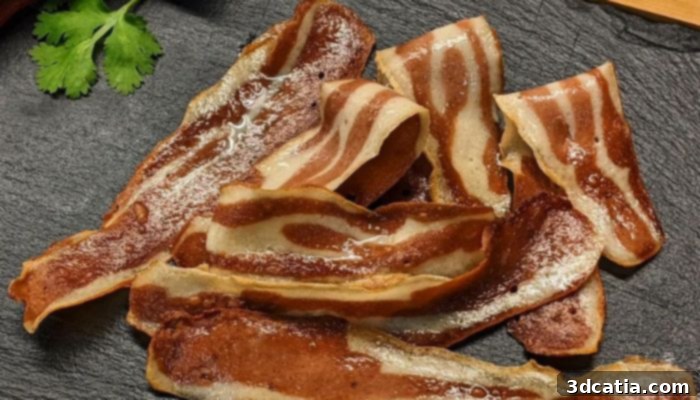
The 3D printed bacon from Foodys and Cocuus is not only healthier than the animal-based original because it is plant-based (photo credits: Foodys and Cocuus)
The exceptional properties and unique appeal of this 3D printed bacon are largely attributed to its thoughtfully selected plant-based ingredients. Instead of relying on pork fat, the product is expertly crafted using ingredients such as olive oil, apples, and carrots. Olive oil, a staple of the healthy Mediterranean diet, contributes beneficial monounsaturated fats and a rich flavor profile. Apples and carrots not only add natural sweetness and color but also contribute dietary fiber and essential nutrients. This innovative ingredient blend is precisely why this bacon alternative, emerging from a sophisticated 3D printer, represents a significantly healthier choice compared to traditional animal-based bacon. Consequently, the target audience for this revolutionary product extends far beyond just vegans or vegetarians. It is also designed to appeal to a much broader demographic: individuals who are actively seeking to improve their diets, reduce their meat consumption, or simply adopt a healthier lifestyle. The goal is to provide accessible and appealing options that make the transition to healthier eating easier and more enjoyable. However, for many devoted bacon enthusiasts, the promise of health benefits alone might not be a sufficient argument to sway them from their beloved original. Recognizing this, Cocuus and Foodys have invested considerable effort and ingenuity into meticulously mimicking both the distinctive texture and the rich, savory taste of real bacon as closely as possible, ensuring that the alternative is not just healthy but also deeply satisfying for true connoisseurs.
From Innovation to the Supermarket Aisle: 3D Printed Bacon Hits the Market
The journey of this pioneering 3D printed bacon from research and development to the consumer market has been swift and successful. Recently, this innovative plant-based product officially became available in Spanish supermarkets, notably gracing the shelves of Carrefour stores across various regions of Spain. This strategic placement in a major supermarket chain marks a significant milestone, indicating a move from niche specialty stores to mainstream retail, thereby enhancing accessibility for a wider consumer base. The availability in Carrefour is a testament to the product’s readiness for mass consumption and the confidence that both Cocuus and Foodys, along with the retailer, have in its market appeal. This launch is not merely the culmination of their current efforts; it also represents a stepping stone towards future innovations. Both companies are now actively engaged in developing an even broader range of new plant-based foods. Their ambitious plans include creating plant-based alternatives for popular seafood items, such as tuna and other seafood, with the aim of diversifying their product portfolio. This expansion is designed to create a comprehensive offering that caters to various tastes and preferences, ultimately attracting an even wider array of new customers who are exploring plant-based diets or simply looking for sustainable, healthier options. The coming months will undoubtedly reveal how well this groundbreaking new product is received by the market. Will the Spanish public embrace this culinary innovation with open arms, or are consumers still adapting to the rapid pace of change in food technology? The true test lies in consumer acceptance and sustained demand. As the world watches, one question lingers: on your next holiday to the sunny shores of Mallorca, will you seize the opportunity to experience the taste of the future and try this revolutionary 3D printed bacon?
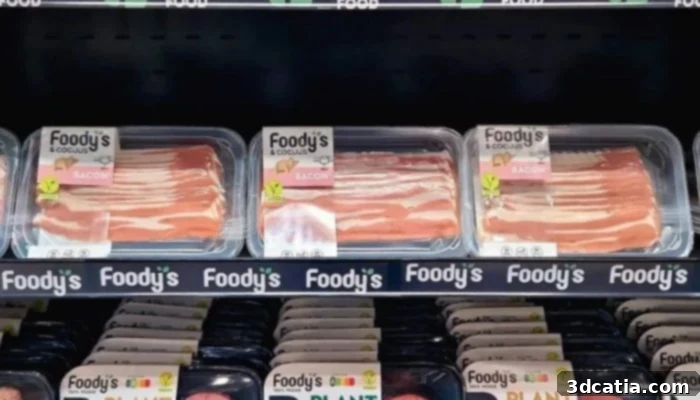
3D-printed bacon is making its way onto the shelves of Spanish supermarkets (photo credits: Carrefour)
The advent of 3D printed plant-based bacon by Cocuus and Foodys signifies more than just a new food product; it marks a significant leap forward in food technology, sustainability, and public health. This innovation challenges traditional food production paradigms and offers a tangible solution to some of the most pressing environmental and health challenges facing our world today. What are your thoughts on 3D printed bacon as a plant-based alternative to animal products? Do you believe it holds the key to a more sustainable and healthier future? We invite you to share your opinions and insights in a comment below or join the conversation on our LinkedIn, Facebook, and Twitter pages! Don’t forget to sign up for our free weekly Newsletter here to receive the latest 3D printing news straight to your inbox! You can also find all our compelling videos on our YouTube channel, offering deeper dives into the fascinating world of additive manufacturing and its applications.
*Cover Photo Credits: Foodys and Cocuus