
Revolutionizing Space Technology: Advanced 3D Printed Sensors Propel NASA Missions Forward
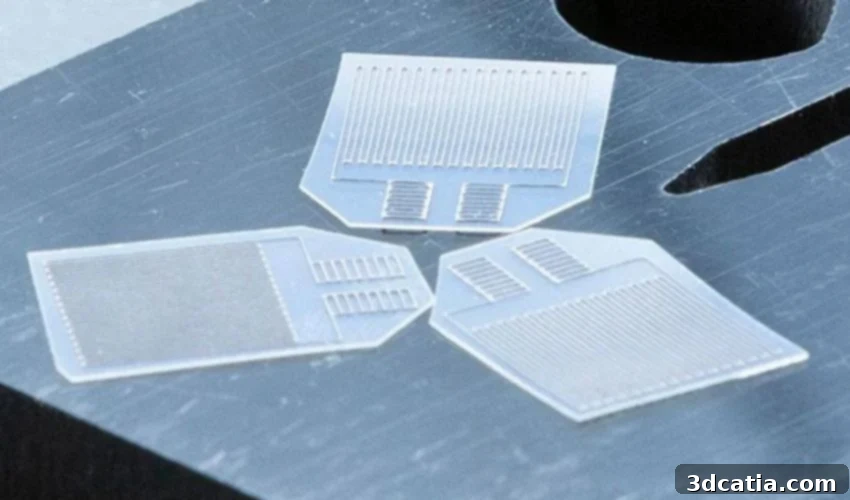
The aerospace sector stands at the forefront of industries profoundly transformed by the advancements in additive manufacturing. This innovative technology, often referred to as 3D printing, enables the creation of highly intricate, optimized, and exceptionally lightweight components with unprecedented speed and efficiency. Its impact extends far beyond aerospace, yet this domain undeniably showcases its most groundbreaking applications. A pivotal moment illustrating this synergy between space exploration and advanced manufacturing recently unfolded, marking a significant leap forward in technological capability. A collaborative team from the FAMU-FSU College of Engineering, a joint institution between Florida A&M University and Florida State University, successfully pioneered the development of 3D printed sensors specifically designed for NASA. This remarkable achievement signifies a monumental stride in leveraging 3D printing to craft high-performance, durable components, promising a new era of possibilities for both future space missions and the broader landscape of advanced manufacturing.
This ambitious research endeavor was spearheaded by Professor Subramanian Ramakrishnan from the Department of Chemical and Biomedical Engineering, who skillfully guided a multidisciplinary team composed of bright engineering students and seasoned engineers. Their collective expertise, combined with a strategic decision to embrace cutting-edge additive manufacturing technologies, empowered them to produce state-of-the-art sensors that demonstrably outperform conventional sensors currently employed in the demanding aerospace industry. This significant breakthrough is a direct outcome of the NASA-driven project titled “Additive Manufacturing of Electronics for NASA Applications,” a vital initiative that is slated to continue its impactful work for another year. To fuel this critical research and development, the universities were awarded a substantial grant of $300,000, further bolstered by the ongoing support and collaboration of experienced NASA engineers. This collaborative model ensures that the innovations are not only theoretical but are also rigorously tested and refined with direct input from the end-users in mind, setting a new standard for academic-industry partnerships in space technology development.

Professor Subramanian Ramakrishnan, project leader (Photo Credit: FAMU-FSU College of Engineering).
Sensors are indispensable pillars of modern aerospace endeavors, serving as the crucial interface that translates complex physical phenomena into intelligible electrical signals for computer processing. This fundamental capability allows engineers to meticulously understand and predict the intricate behavior of spacecraft systems, particularly when confronted with the extreme rigors and unforgiving conditions of the space environment. From monitoring temperature fluctuations and pressure differentials to detecting radiation levels and structural integrity, a diverse array of sensor types exists, each designed for highly specific functions. Among these, strain gauges hold a particularly significant position. These specialized sensors are absolutely instrumental in accurately measuring the deformation or strain experienced by objects, providing invaluable, real-time insights into the structural health and integrity of spacecraft components. During critical aerospace missions, these devices assume a paramount role, vigilantly monitoring systems continuously. Their unwavering vigilance is not merely beneficial; it is absolutely essential in detecting and averting any potential deformations or stresses that could compromise spacecraft safety, jeopardize mission success, or diminish operational efficiency. The ability to precisely monitor these factors ensures that assets remain robust and functional throughout their operational lifespan, even under the most demanding cosmic conditions.
3D Printing: Propelling Aerospace Innovation to New Frontiers
The development of these advanced strain gauges involved a sophisticated manufacturing process that synergistically combined the precision of 3D printing with an innovative laser baking method. These sensors, designed as flexible, insulating stampings, were meticulously fabricated using a specialized silver ink. The printing itself was executed with an nScrypt printer, a manufacturer renowned for its capabilities in printing on complex, curved surfaces—a crucial advantage for aerospace components that often feature non-planar geometries. Following the printing phase, the laser baking technique was applied, involving precisely localized heating of the ink to enhance its mechanical and electrical properties without reaching its melting point. This careful thermal treatment significantly improves the material’s conductivity, adhesion, and overall robustness, leading to a superior final product. The integration of both these cutting-edge techniques yielded sensors with optimal mechanical and electrical characteristics, surpassing the performance of their traditional counterparts. These newly developed sensors exhibit heightened accuracy and have consistently demonstrated superior performance in precisely measuring the deformation of objects, a critical function for ensuring the structural integrity of spacecraft.
Looking ahead to the next phase of sensor development, Professor Ramakrishnan shared an exciting vision: “We are also experimenting with novel ink formulations and process parameters that will result in new design rules and better methods for fast additive manufacturing of next-generation sensors at NASA.” This statement underscores a continuous commitment to innovation, exploring new material science and manufacturing techniques to push the boundaries of what is possible. The iterative development process aims not just to refine existing sensors but to entirely redefine the capabilities of future space-bound electronic components, making them more resilient, precise, and adaptable to the ever-increasing demands of deep space missions. The ability to rapidly prototype and iterate on these designs using additive manufacturing drastically shortens development cycles, allowing NASA to quickly integrate cutting-edge sensor technology into its upcoming missions.
This groundbreaking project vividly illustrates how space technology is continually redefining its boundaries through strategic investment in innovation and human capital. The two-year grant, generously awarded through NASA’s Science Mission Directorate (SMD) Bridge Program, extends beyond technological advancement. It specifically aims to advance diversity, equity, inclusion, and accessibility (DEIA) within NASA’s esteemed workforce and the broader U.S. science and engineering community. This dual focus ensures that while pioneering new technologies, NASA also cultivates a more diverse and inclusive talent pipeline for future generations. Professor Ramakrishnan emphasized the direct benefits for the students involved, stating, “Students will spend fall and spring semesters at the college and work with NASA scientists at one of the centers. They will have access throughout the year for mentorship opportunities and networking. The students will be learning while making a product to launch future rocket missions.” This unique experiential learning model provides invaluable hands-on training, connecting academic theory with real-world application, and inspiring the next generation of space innovators.
(Photo Credits: Florida State University)
The program’s profound emphasis on mentoring students and significantly expanding their hands-on training is critical for shaping NASA’s scientists, engineers, and leaders of tomorrow. It also serves a vital role in easing students’ transition to rigorous graduate school programs or directly into rewarding STEM careers. The direct involvement of experienced NASA personnel further enriches this educational experience. Beth Paquette, a distinguished aerospace engineer at NASA’s Goddard Space Flight Center in Greenbelt, Maryland, and Curtis Hill, a principal investigator at NASA’s Marshall Space Flight Center in Huntsville, Alabama, have both actively collaborated on this pivotal project. They are among the key experts who will work closely with the students, providing invaluable guidance, sharing their extensive knowledge, and offering practical insights into the complexities of real-world space engineering. This direct interaction with leading NASA professionals not only enhances the students’ technical skills but also provides unparalleled networking opportunities, opening doors to future collaborations and career paths within the nation’s premier space agency.
The successful development of these 3D printed sensors represents far more than just a technological achievement; it symbolizes a paradigm shift in how components for space missions are conceived, designed, and manufactured. Additive manufacturing offers inherent advantages for aerospace, including the ability to produce parts with optimized geometries that are lighter yet stronger, reducing fuel consumption and increasing payload capacity. It also enables rapid prototyping and customization, which are crucial for adapting to the dynamic and challenging requirements of space exploration. From fabricating complex rocket engine parts to creating bespoke satellite components, 3D printing is undeniably a cornerstone technology for the future of space. The potential applications of this sensor technology extend beyond Earth’s orbit, paving the way for more robust instruments on lunar missions, Mars expeditions, and deep-space probes. As NASA prepares for ambitious initiatives like the Artemis program and sustained human presence on the Moon, such advanced, custom-designed sensors will be critical for monitoring habitats, vehicles, and scientific experiments in extreme environments. This pioneering work by the FAMU-FSU College of Engineering not only enhances NASA’s immediate capabilities but also lays robust foundations for future innovations across the entire aerospace ecosystem, promising a more efficient, resilient, and exploratory future for humanity in space.
What are your thoughts on the groundbreaking potential of 3D printed sensors for NASA’s future missions? Share your insights and join the conversation in a comment below, or connect with us on our LinkedIn, Facebook, and Twitter pages! Don’t miss out on the latest advancements in additive manufacturing – be sure to sign up for our free weekly newsletter here to receive the newest 3D printing news directly to your inbox! You can also explore all our engaging videos and content on our YouTube channel.
*Cover Photo Credits: FAMU-FSU College of Engineering