
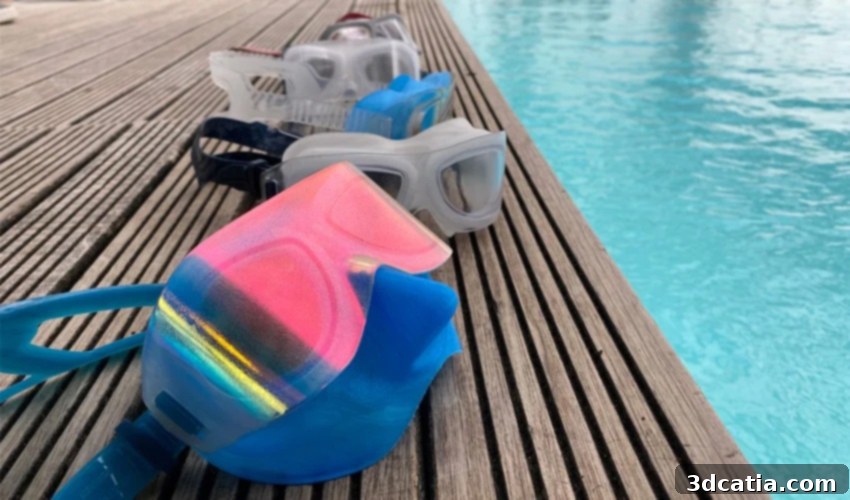
Decathlon’s Innovation in Sports Product Development: Leveraging Pollen AM for Right Material 3D Prototyping
Decathlon, the globally renowned French group synonymous with innovation in the sports and leisure industry, has consistently pushed the boundaries of product design and manufacturing. From the iconic 2-second tent to advanced diving masks and comprehensive windsurfing kits, the company’s commitment to cutting-edge solutions is evident. This dedication is fueled by a robust team of engineers and designers, reflected in over 65 patents filed in 2019 alone. A cornerstone of their innovative ecosystem is the “AddLab,” a specialized laboratory entirely devoted to additive manufacturing. This state-of-the-art facility significantly accelerates the development cycle, allowing for rapid iteration from initial concepts to functional prototypes and even finished parts. The AddLab boasts a diverse array of 3D printers, encompassing various technologies, from cost-effective Fused Deposition Modeling (FDM) to advanced Multi Jet Fusion systems. Among these sophisticated tools, Pollen AM’s technology plays a pivotal role. Decathlon has been a strategic investor in Pollen AM since the AddLab’s inception over six years ago, demonstrating a long-term vision for its potential. Currently, the AddLab operates two PAM Series P machines, which are instrumental in producing “right material” prototypes. These are not just visual mock-ups but functional prototypes engineered to closely mimic the mechanical and chemical properties of the final product’s material. This capability empowers Decathlon’s engineers and designers to rigorously validate product characteristics and functionalities early in the development process, regardless of design complexity. This strategic investment underscores Decathlon’s commitment to accelerating innovation while ensuring product quality and performance from the earliest stages.
Revolutionizing Prototyping: The Shift to Functional Material Testing
Historically, additive manufacturing gained prominence primarily for its rapid prototyping capabilities. A 3D printer offers companies the unparalleled advantage of quickly visualizing a product concept, enabling swift iterations based on preliminary designs. While this speed is invaluable for form and fit assessment, traditional 3D printing methods often fall short in providing accurate material characterization. For instance, how can engineers confidently test the mechanical resilience or chemical resistance of a future part if the prototype material does not accurately represent the final production material? Furthermore, how can product developers ensure that the performance results obtained from a 3D printed prototype will precisely correlate with those of an injection-molded or cast part? This is precisely where pellet 3D printing processes distinguish themselves and offer a significant advantage. Unlike filament-based printing, where material often undergoes more transformations during extrusion, pellet-based systems typically process raw material directly from pellets, akin to injection molding. This results in prototypes whose material properties are far more aligned with those of mass-produced parts. This critical distinction was a primary factor in Decathlon’s decision to adopt Pollen AM’s technology. The overarching goal was to produce prototypes using the exact same material grades destined for large-scale production, thereby ensuring that the prototypes’ characteristics were as close as possible to the final, consumer-ready product. This approach minimizes risks, reduces costly late-stage design changes, and significantly shortens the time-to-market for innovative sports equipment.
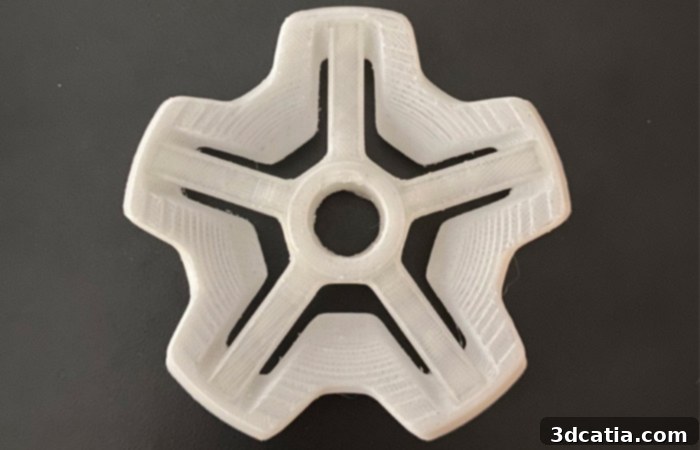
A prototype 3D printed ski pole basket (photo credits: Decathlon)
Achieving “Right Material Prototyping” with Pollen AM Technology
At the heart of Decathlon’s AddLab, Jimmy Gantier serves as the Right Material Prototyping Manager, overseeing all operations involving the Pollen AM machines. Jimmy elaborated on his critical role: “My primary responsibility is to meticulously manage both the material selection and the specific printing parameters. In practice, a designer or engineer approaches me with their 3D file, and crucially, provides the precise material that will be utilized for high-volume production. My task then involves characterizing this material to optimize its printability on the Pollen AM system. This meticulous process enables me to craft prototypes that are not merely visual representations but fully functional pieces suitable for rigorous use-testing or comprehensive laboratory analysis. We can directly study the behavior of the part using the ‘right material.’ For certain product categories, this capability allows us to iterate and modify products with unprecedented speed, entirely bypassing time-consuming, expensive, and energy-intensive traditional molding steps.” Currently, the PAM Series P machines are extensively used to 3D print a wide array of prototypes, frequently utilizing advanced elastomers such as TPE (Thermoplastic Elastomer), TPU (Thermoplastic Polyurethane), or SEBS (Styrene-Ethylene-Butylene-Styrene). These materials are particularly vital for water sports equipment, including highly specialized diving masks and various types of performance-enhancing soles. The volume of prototypes produced is dynamic, adapting to their size and complexity, yet a consistent theme is the meticulous control over the production rate, ensuring optimal efficiency and quality.
Case Study: Enhancing Diving Mask Development at SUBEA
Thomas, a product engineer at SUBEA, Decathlon’s dedicated brand for underwater sports, provided invaluable insights into how Pollen AM’s technology is revolutionizing their design processes. He explained: “Today, one of the most formidable challenges in designing a diving mask is guaranteeing its waterproof integrity across the widest possible spectrum of distinct facial structures. Our process typically begins with creating a preliminary 3D model, often drawing inspiration from existing facial contact points. Historically, before committing to the significant investment of an industrial mold – a process that takes approximately 10 weeks and can cost tens of thousands of euros – we had to undertake extensive physical testing. In recent years, our initial iterations often relied on prototype molds, which themselves demanded 8 weeks of lead time and nearly 10,000 euros. These were protracted and costly stages, frequently leading to systematic rework of the subsequent industrial molds. While digital simulation has remarkably reduced the number of iterations required for prototype molds, it hasn’t entirely eliminated their necessity. However, by augmenting our digital workflows with ‘right material prototyping’ thanks to Pollen AM, we envision a future where we can transition directly from a refined digital model to the final industrial mold, entirely bypassing intermediate prototype molds. This streamlined approach could potentially save us up to three months in development time and an estimated 20,000 euros in direct costs, not to mention the substantial reduction in CO2 emissions associated with manufacturing a mold in Asia and express-shipping dozens of physical parts by air.” To date, Decathlon has successfully deployed this innovative process for an initial concept, achieving successful validation of the prototype’s waterproofness. The teams are now diligently working to validate the precise correlation between these advanced 3D printed models and a closely matching model produced via traditional prototype molding, paving the way for broader implementation.
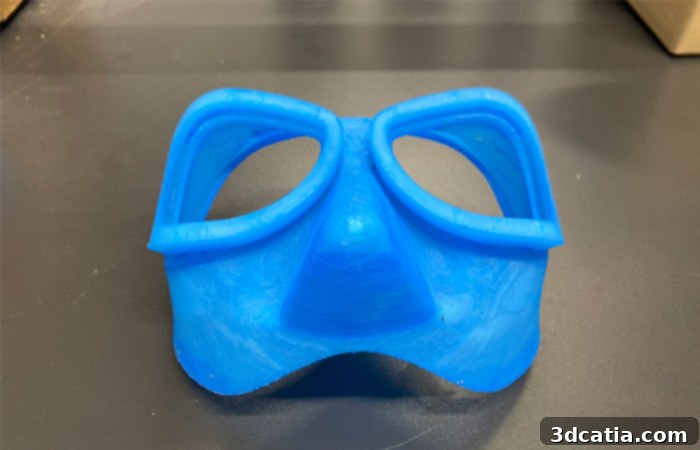
Different diving mask prototypes have been 3D printed (photo credits: Decathlon)
Technical Superiority and Versatility of Pollen AM Printers
A significant competitive advantage offered by Pollen AM’s 3D printers lies in their unparalleled capability to process a vast spectrum of elastomers, including those with exceptionally low Shore hardness. This results in prototypes exhibiting superior flexibility and true-to-life tactile properties. Decathlon fully leverages this versatility, enabling their designers to craft prototypes with precise Shore 00, Shore A, and/or Shore D hardnesses, thereby expanding their material exploration to encompass the broadest possible range of soft-touch materials. Beyond material versatility, the AddLab team, under Jimmy Gantier’s guidance, has invested considerable effort in optimizing the specific hooking plates and printing supports for each elastomer utilized. Jimmy has meticulously characterized every material, pairing it with the most effective soluble support system. This detailed approach not only facilitates the creation of increasingly intricate and complex designs but also dramatically accelerates the post-processing phase. As the supports are water-soluble, their removal requires no manual labor, eliminating the need for human intervention and freeing up valuable engineering time, allowing teams to focus on core design and testing rather than tedious clean-up.
Jimmy further highlighted another crucial benefit: “Another exceptionally important advantage of the Pollen AM machines is their multi-extrusion capability. We possess the unique ability to print with up to four distinct materials simultaneously, which presents incredibly exciting design opportunities. For example, when developing ski poles, I can simultaneously design a robust, very hard outer shell, a flexible elastomer rim for enhanced grip or comfort, and integrate soluble supports for easy removal. Within just a few hours, I can produce a multi-material prototype featuring highly complex geometry that accurately reflects the final product’s composition and function.” This multi-material capability extends beyond simple component creation; the two Pollen AM machines are also routinely employed to produce parts that precisely simulate overmolding processes, and they are frequently utilized for direct material replacement applications, enabling rapid testing of alternative material compositions without costly retooling.
Fostering Sustainable Innovation Through Additive Manufacturing
Decathlon’s teams are deeply committed to understanding and minimizing the environmental footprint of their products. Additive manufacturing, particularly when leveraging materials compatible with Pollen AM technology, aligns perfectly with this sustainability ethos. The significant time and financial savings inherent in this prototyping approach allow Decathlon to explore and test prototypes made with more environmentally virtuous materials with greater ease and frequency. By reducing waste, optimizing material usage, and streamlining the development cycle, Decathlon can integrate sustainability considerations much earlier into the product design process, paving the way for more eco-conscious sports equipment. This proactive approach underscores a broader commitment to innovation that not only enhances product performance but also respects the planet.
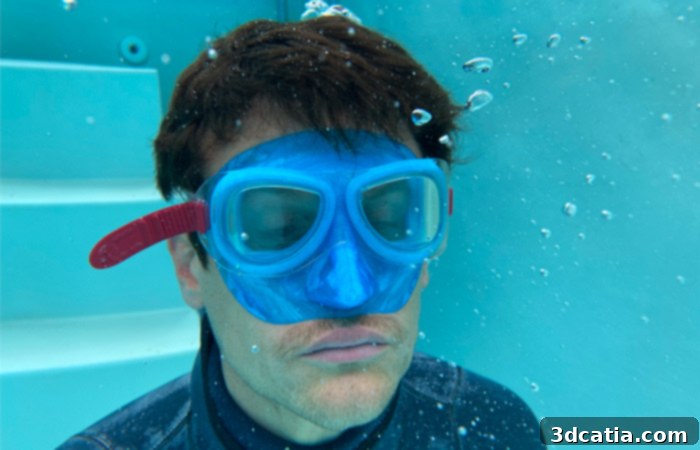
These prototypes have been tested (photo credits: Decathlon)
A Manufacturer Who Truly Listens: The Power of Collaboration
Decathlon’s success in maximizing the potential of Pollen AM’s technology is not solely due to the machines themselves, but critically, to a highly effective and symbiotic collaboration between the two companies. The French group actively produces regular reports and provides invaluable feedback to Pollen AM, detailing any encountered issues and suggesting potential, interesting developments. This open channel of communication enables Pollen AM to continuously refine its machines and develop targeted solutions. Jimmy elucidated the dynamic nature of this partnership: “Pollen AM proactively shares its latest innovations with me, and in turn, I provide them with our challenges and new ideas. We combine our perspectives and expertise to collectively devise the optimal solution for each specific material type. The exchanges are consistently constructive, fostering a genuine and indispensable relationship that has become integral to my daily work. I can unequivocally rely on their customer service, which is exceptionally responsive – a critically important factor when operating 3D printers, especially FDM systems, non-stop. We are extremely satisfied with our 3D printers, excelling across maintenance, material handling, and operational speed. Their ability to process all types of elastomers and simultaneously print multiple materials is a monumental advantage when our core objective is rigorous ‘right material prototyping.’”
The Pollen AM team reinforced this sentiment, adding: “While the FDM process has become widely democratized across various industries, a significant number of companies still rely on closed systems. These often restrict operators from fully enhancing their competence in the methodical aspects of FDM printing. For the past decade, Pollen AM has been committed to supplying open systems, and it is self-evident to us that our comprehensive support function is a fundamental pillar not only of our users’ success but also of our own continuous improvement. Our profound connection with Decathlon, and with our customers in general, allows us to remain intimately close to their day-to-day operational realities. This proximity enables us to effectively impart our methodical system expertise through specialized training modules or to directly address specific needs through targeted development initiatives, ensuring our technology evolves precisely with user requirements.”
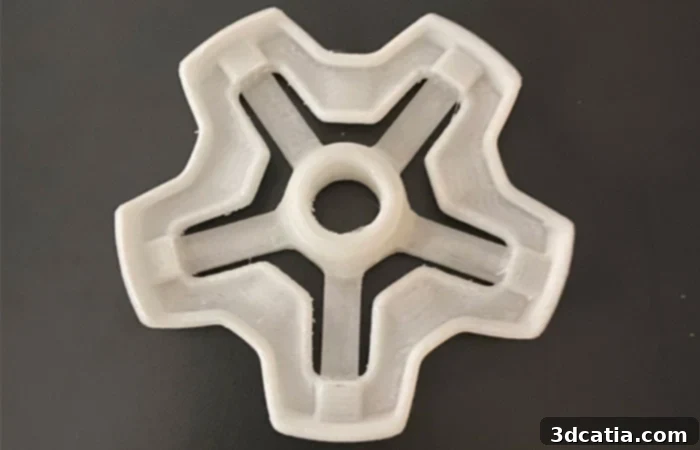
Photo Credits: Decathlon
Decathlon’s Vision for the Future: Pioneering Sustainable Materials
Jimmy Gantier revealed that Decathlon’s future strategic developments involving Pollen AM technology are primarily centered around advancing material innovation. A significant initiative is poised to commence, focusing on the rigorous testing of 100% biodegradable and bio-designed materials. This exciting project involves experimenting with granules derived from vegetable waste, with the ambitious objective of understanding whether their mechanical and chemical behaviors can be effectively integrated into Decathlon products. The ultimate goal is to explore new frontiers in sustainable product development, offering consumers high-performance sports equipment with a dramatically reduced environmental footprint. This forward-thinking approach exemplifies Decathlon’s commitment to not only leading in sports innovation but also championing ecological responsibility within the industry. To delve deeper into Pollen AM’s innovative solutions, you can find more information HERE.
Have you had experience with Pollen AM’s technology or utilized “right material prototyping” in your own development processes? We invite you to share your insights and experiences in the comments section below, or engage with us on our LinkedIn, Facebook, and Twitter pages! For the latest updates and breaking news in the world of 3D printing, don’t forget to subscribe to our free weekly Newsletter here, delivered directly to your inbox. You can also explore all our informative videos on our YouTube channel.